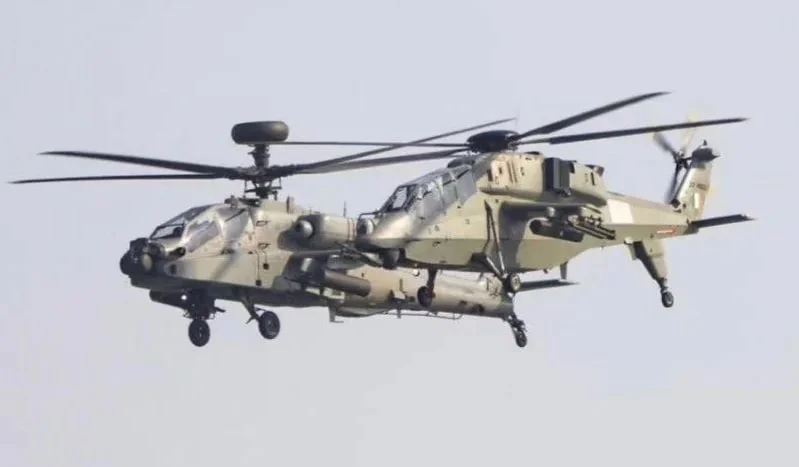
The Light Combat Helicopter (LCH) 'Prachand', developed by Hindustan Aeronautics Limited (HAL), has rapidly gained prominence within the Indian Air Force (IAF) as a key component in modern aerial warfare. Although initially designed as an attack helicopter, its ability to counter unmanned aerial vehicles (UAVs), or drones, has made it an invaluable asset in today’s battlefields. Since its induction in October 2022, the Prachand has become an essential tool for countering drone threats, particularly in high-altitude, challenging environments like those found in the Himalayas.
Designed for High-Altitude Operations
One of the standout features of the Prachand is its ability to operate efficiently in "hot and high" conditions—regions with high temperatures and altitudes. This design capability allows it to engage drones and other aerial threats in difficult terrains like India’s northern borders, which often lie at altitudes above 15,000 feet. The Prachand can reach heights of up to 20,000 feet, ensuring that it can intercept and destroy drones even in areas where other helicopters or ground-based systems may struggle to operate.
The ability to fly at speeds of up to 280 km/h, coupled with its rapid rate of ascent, allows the Prachand to quickly respond to drone incursions. In a combat scenario, speed and altitude are critical factors when engaging fast-moving aerial threats like drones, which often have small signatures and can maneuver unpredictably.
Equipped for Drone Destruction
What sets the Prachand apart as a dedicated "drone destroyer" is its impressive array of onboard weaponry and targeting systems. The helicopter is armed with a chin-mounted 20mm cannon, which is particularly effective for engaging small, agile drones at close ranges. In addition to the cannon, the Prachand can carry a variety of munitions, including air-to-air missiles and unguided rockets, providing it with the versatility to destroy drones and other aerial targets at different distances.
The helicopter’s sophisticated electro-optic pod enhances its ability to detect and target drones, even under adverse weather or visibility conditions. This is critical for identifying drones that may have a low radar cross-section and are difficult to detect using conventional radar systems. Additionally, the helmet-mounted display system allows pilots to engage targets with greater precision. With this system, pilots can simply look at the target—whether it be a drone or another threat—and the helicopter’s targeting system will lock on, significantly reducing reaction time during critical engagements.
Filling the Anti-Drone Gap
As drone technology becomes more advanced and accessible, they are increasingly being used in modern warfare, not only for surveillance but also for offensive operations, including the delivery of explosives. The rise of drones, both small and armed, poses a serious threat to ground forces, infrastructure, and air superiority. Many nations are seeking dedicated systems to counter this new threat, and India’s LCH Prachand fills this gap for the Indian Armed Forces.
While the Prachand was initially developed as a multi-role attack helicopter to engage ground targets and provide close air support, its anti-drone capabilities have brought it to the forefront of India’s defense strategy. Its ability to engage small, fast-moving UAVs—especially at high altitudes where drones might be used for reconnaissance or precision strikes—gives India a critical tool in countering airborne threats.
A Strategic Advantage
The Prachand’s role as a "drone destroyer" is likely to expand in the future, especially as drone warfare becomes an increasingly central aspect of modern conflicts. The agility, versatility, and high-altitude performance of the helicopter make it well-suited for India’s unique geographic and strategic challenges, particularly along the country’s borders with Pakistan and China, where drone incursions may become more common.
The Prachand’s successful integration into the IAF reflects India's focus on indigenous solutions for modern defense needs. As conflicts evolve and drones play a more significant role in both conventional and asymmetric warfare, the Prachand will undoubtedly remain a key player in ensuring India's aerial superiority and protection against the ever-growing drone threat.
——— End of Article ———