India’s Future Ready Combat Vehicle (FRCV) has captured the attention of military experts worldwide, especially in Serbia, for its innovative design and cutting-edge technologies. As India seeks to replace its aging fleet of T-72 main battle tanks, the FRCV promises to revolutionize the Indian Army’s armored capabilities, blending advanced features that address the challenges of modern warfare.
Serbian military analysts from RedEffect, a prominent YouTube channel focused on military technology, have praised the FRCV for its unique design, highlighting its dual turret configurations and sophisticated protective systems. Drawing comparisons to Russia’s T-14 Armata tank, the FRCV distinguishes itself by adapting to India’s specific operational needs, including the challenges posed by high-altitude combat along the India-China border.
One of the key innovations that impressed Serbian experts is the FRCV’s dual autoloader system. The unmanned turret variant features a combination of a carousel autoloader in the hull and a bustle autoloader in the turret. This rare design allows the tank to carry more ammunition and deploy longer Armor-Piercing Fin-Stabilized Discarding Sabot (APFSDS) rounds, which are more effective against modern armor. This hybrid autoloader system is not commonly seen in tanks, marking a significant advancement in tank firepower management.
The FRCV’s manned turret variant, while more traditional in its operation, also presents advantages. The turret is designed to be low-profile, improving the protection of the crew by keeping them lower in the hull, reducing their exposure to enemy fire. Unlike the unmanned variant, the manned turret uses manual loading, with ammunition stored near the driver for ease of access during combat.
One standout feature of the FRCV is its gun elevation capability. This allows the tank to engage targets effectively in mountainous regions, a critical advantage for India’s border operations with China. The gun itself is a 120mm smoothbore, which represents a shift from the rifled guns of India’s existing Arjun tanks. While it’s still unclear whether this gun will be sourced domestically or from foreign partners, its adaptability in various terrains makes it ideal for the diverse combat scenarios India faces.
In terms of protection, the FRCV boasts composite armor and advanced Explosive Reactive Armor (ERA) capable of withstanding both kinetic energy penetrators and high-explosive anti-tank rounds. This combination enhances the tank’s survivability against modern threats, from rocket-propelled grenades to anti-tank guided missiles. Some reports also suggest that the tank may feature active protection systems (APS) that use sensors and projectiles to intercept incoming threats, further enhancing its defensive capabilities.
The FRCV’s high-tech advancements don’t stop there. The tank is expected to come equipped with AI-powered systems, including automatic target tracking and a battle management system. These AI-driven features allow for faster and more precise engagement of enemy targets, improving reaction times in battle. The remote weapon station integrated with the FRCV also provides added firepower and flexibility for engaging infantry and lightly armored vehicles.
Weighing between 45 and 55 tons, the FRCV will be powered by a domestically developed 1,500-horsepower engine, ensuring it has the mobility to navigate rough terrains and rapidly respond to threats on the battlefield. This engine, combined with its advanced suspension system, will make the FRCV a nimble yet heavily armored vehicle.
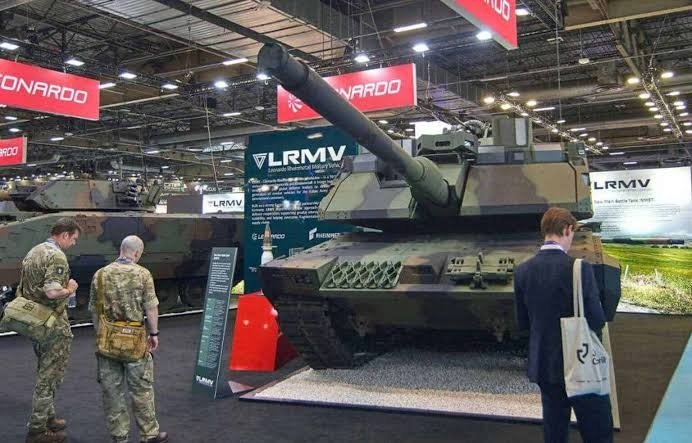
As India’s Defence Acquisition Council has given the green light to the FRCV project, the development process is moving ahead. The Indian Army faces the decision of whether to first adopt the manned turret variant before eventually transitioning to the more advanced unmanned version. Regardless of the choice, both variants represent a significant leap forward in India’s armored warfare capabilities.
Serbian military experts conclude that the FRCV, with its combination of advanced firepower, AI integration, and robust protection, is a strong contender to meet India’s future combat needs. The tank has the potential to play a critical role in securing India’s borders and asserting its armored strength in the region.
As the development progresses, the FRCV could become a benchmark in tank design, combining traditional heavy armor with the agility and intelligence required for modern warfare.
——— End of Article ———