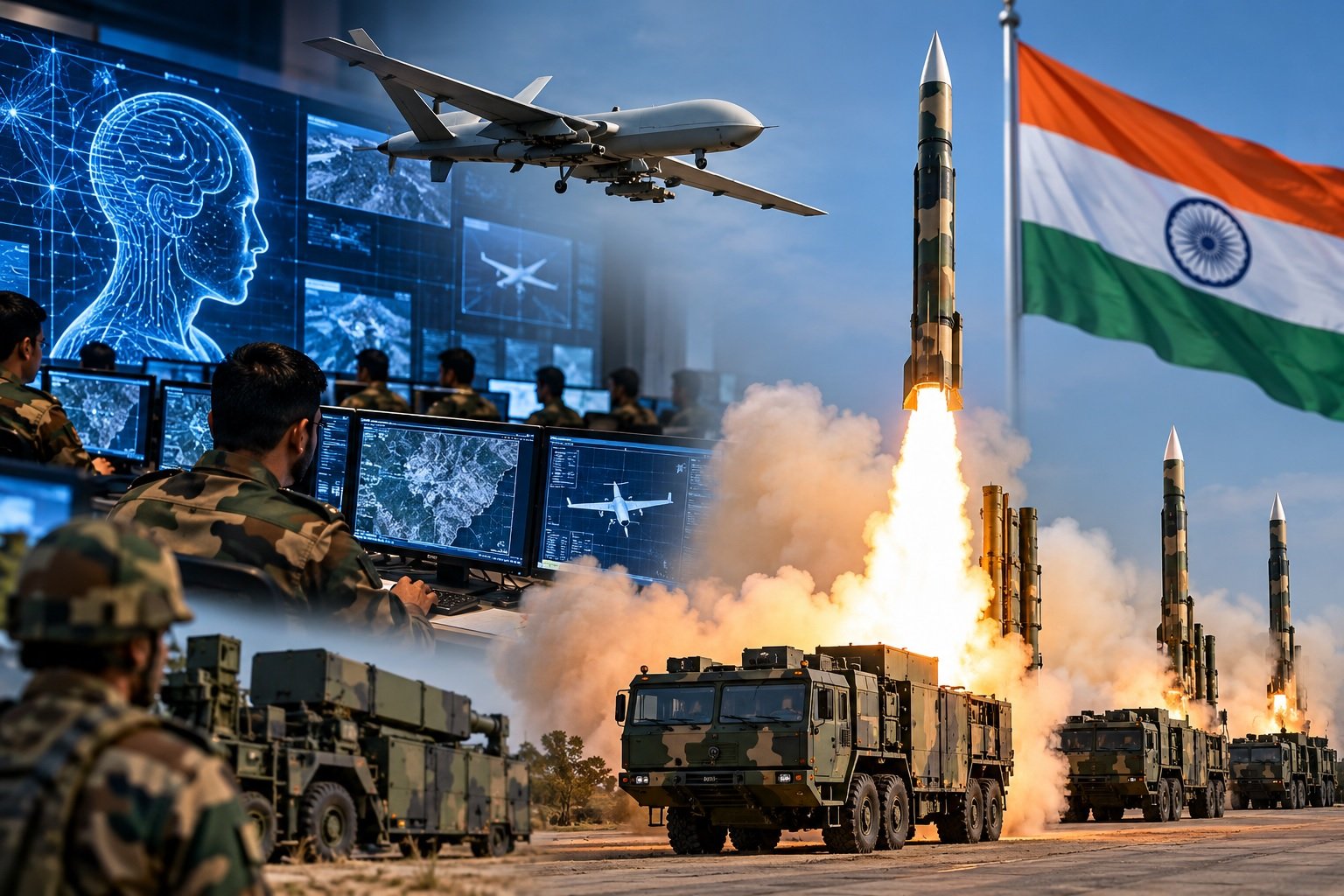
The Indian Ministry of Defence (MoD) has taken a major step toward strengthening the nation's military by issuing a request for information (RFI) for the procurement of 20,000 new-generation anti-tank guided missiles (ATGMs) and 1,500 launchers. These advanced ATGMs are specifically intended to bolster the Indian Army's ability to target and destroy heavily armored vehicles such as tanks, armored personnel carriers, and even low-flying helicopters. This development comes as part of India's broader military modernization efforts to improve its border security with Pakistan and China.
The missiles are to be procured under the "Buy (Indian-IDDM)" category, a policy that encourages local industry by mandating 60% indigenous content in all products. The ATGMs will be indigenously designed, developed, and manufactured, making them a vital contribution to India’s ‘Aatmanirbhar Bharat’ (self-reliant India) initiative. The RFI issued by the MoD specifies that these missiles will have to meet stringent requirements to perform across diverse terrains, from the deserts along the western border with Pakistan to the harsh high-altitude regions bordering China.
### Key Capabilities and Specifications of the ATGMs
The ATGMs being procured must have a range of no less than 4 kilometers, allowing Indian forces to engage enemy armored units from a safe distance. In terms of versatility, the RFI mandates that the weapon system should be operational in all types of terrain, including plains, deserts, mountainous regions up to 18,000 feet (about 5,500 meters), coastal zones, and islands. This ensures that the missiles can be deployed effectively in any strategic area, regardless of geographic or environmental challenges.
To operate effectively in these regions, the ATGMs must function in extreme weather conditions. The MoD has specified that the system should be fully operational in temperatures ranging from -45°C to 45°C, covering the broad spectrum of weather encountered in India’s challenging border areas. Furthermore, the system should work in conditions of rain, fog, dust, and humidity, ensuring operational readiness during day and night combat situations.
### Modular Design and Future Upgrades
The modular design of these next-generation ATGMs will ensure that the system is adaptable for future upgrades. This forward-thinking design feature means that the system can be easily modified without requiring significant structural changes. It will also facilitate the integration of newer technologies as they become available, extending the life cycle of the missile system and allowing the Indian Army to remain technologically agile on the battlefield.
### Broad Strike Capability
In terms of targeting, the ATGMs will be expected to destroy a wide variety of enemy assets. This includes not only heavily armored tanks but also light armored vehicles, combat vehicles, concrete structures, and even low-flying helicopters. The missiles will be capable of taking out static and moving targets, giving Indian forces a significant edge in combat. Additionally, the system should allow for rapid deployment and ease of integration with the existing network of weapons systems used by the Indian Army.
### Timeline and Indian Vendors
The RFI also calls for capable Indian vendors who can deliver the ATGMs, launchers, and simulators within four years of the contract’s award. As the procurement falls under the "Buy (Indian-IDDM)" category, this opens the door for Indian defense manufacturers to step up and contribute to the project. Indian defense giants like Bharat Dynamics Limited (BDL) and Larsen & Toubro, both with extensive experience in missile production, are likely to be contenders for this massive contract.
This move reflects India’s commitment to modernizing its military arsenal, reducing its reliance on foreign defense imports, and building a self-sufficient defense manufacturing ecosystem. By incorporating advanced ATGM technology into its forces, the Indian Army will enhance its strike capabilities along its sensitive borders, ensuring greater operational readiness in any future conflicts.
——— End of Article ———