In a remarkable cosmic discovery, India's AstroSat and NASA’s space observatories have captured dramatic eruptions from stellar wreckage surrounding a massive black hole. This event, observed by telescopes such as Chandra, Hubble, NICER, Swift, and AstroSat, has shed light on an extraordinary phenomenon where a black hole disrupts stars in its gravitational grip.
The discovery centers on a massive black hole that first tore apart a nearby star in 2019. Once the star was destroyed by the black hole’s powerful forces, its remnants formed a disk around the black hole, slowly spiraling inward. What makes this case unique is that, over time, this stellar debris disk has expanded outward, crossing paths with another nearby object—either another star or a smaller black hole—that was previously orbiting safely at a distance.
This new star now finds itself crashing through the debris disk approximately every 48 hours, generating spectacular bursts of X-rays. These bursts were detected by NASA's Chandra X-ray Observatory, providing astronomers with rare, valuable data. As the star repeatedly plows through the swirling debris, the intense collisions create an outpouring of X-ray emissions, akin to a diver repeatedly jumping into a pool and making splashes every time they hit the water.
Matt Nicholl from Queen’s University Belfast, the lead author of the study, compared the event to such a diving analogy. Each time the orbiting star crashes through the black hole’s disk, it causes an eruption of gas and X-rays, which scientists have observed as quasi-periodic eruptions (QPEs). These QPEs are semi-regular bursts of X-rays previously detected in galaxies but not fully understood until now. The debris disk has grown large enough that any object orbiting the black hole, with a period of about a week or less, is caught up in the violent interaction, resulting in bursts of energy.
The 2019 event, now named AT2019qiz, provided the first crucial link between two phenomena: tidal disruption events (TDEs) and QPEs. TDEs occur when a star gets too close to a black hole and is torn apart in a burst of light. Meanwhile, QPEs, which astronomers have been studying for years, were mysterious X-ray flashes observed in the centers of galaxies. This connection between TDEs and QPEs had been speculated but never confirmed until now.
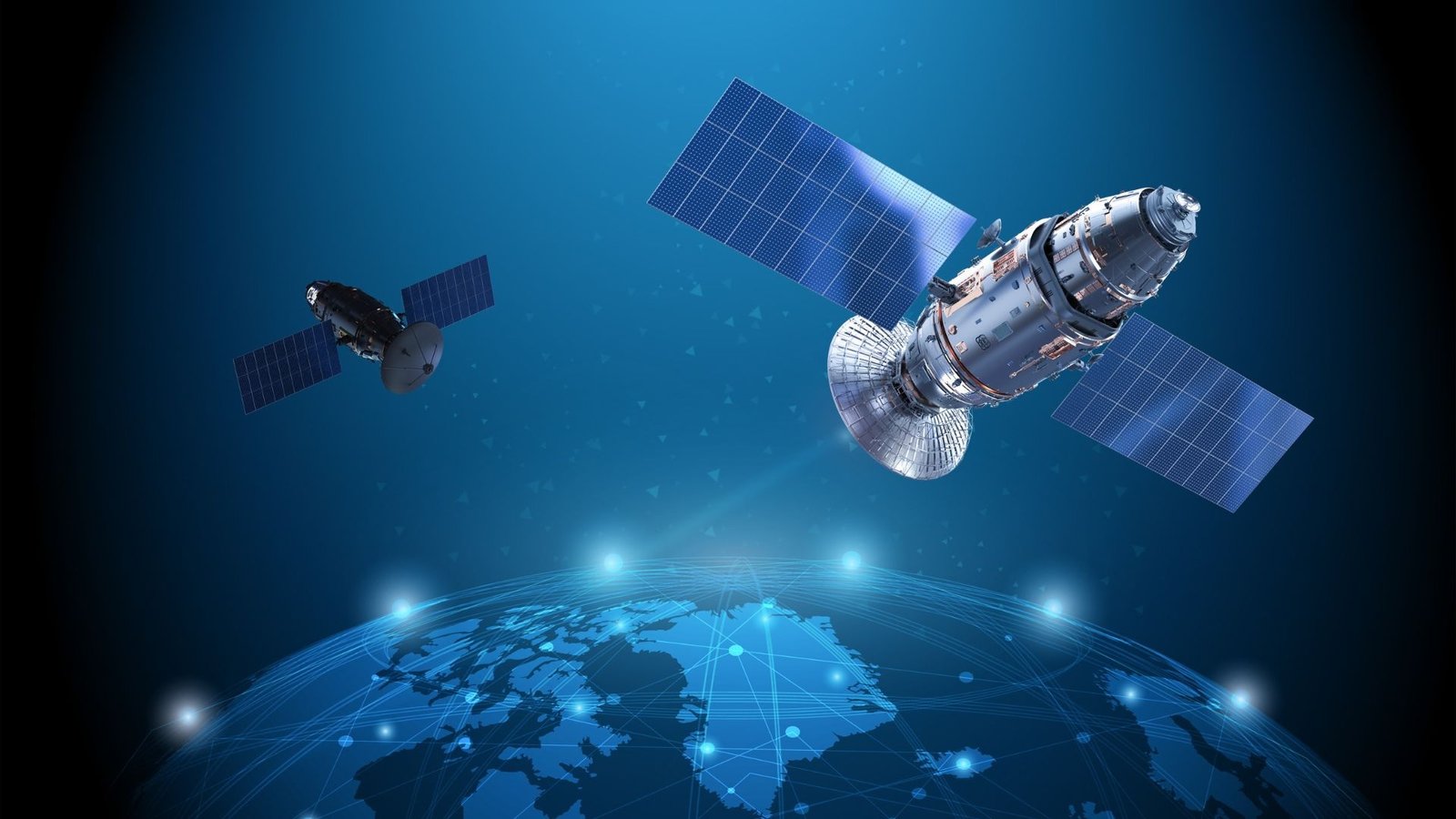
The discovery came from a combination of data collected by multiple space observatories. Chandra’s observations revealed the distinct bursts, while Hubble’s ultraviolet data allowed scientists to estimate the size of the black hole’s debris disk. NASA’s NICER instrument played a key role in capturing repeated X-ray bursts from AT2019qiz, cementing the finding that these eruptions occurred every 48 hours. India’s AstroSat and NASA’s Swift Observatory also contributed crucial data to verify this cosmic event.
This groundbreaking study not only connects two previously unlinked mysteries but also opens new avenues for understanding how massive black holes interact with their surroundings. The findings provide insight into the dynamic and violent nature of stellar death and the role of black holes in reshaping the cosmic environment. Scientists now have a clearer picture of how stellar debris from one event can collide with orbiting objects, creating repeated X-ray outbursts that can be observed across the universe.
By capturing this dramatic chain of events, India’s AstroSat and NASA’s observatories have helped unravel one of the most captivating and mysterious phenomena in the cosmos—providing a crucial step toward unlocking the secrets of black holes and their gravitational influence on surrounding stars and matter.
——— End of Article ———