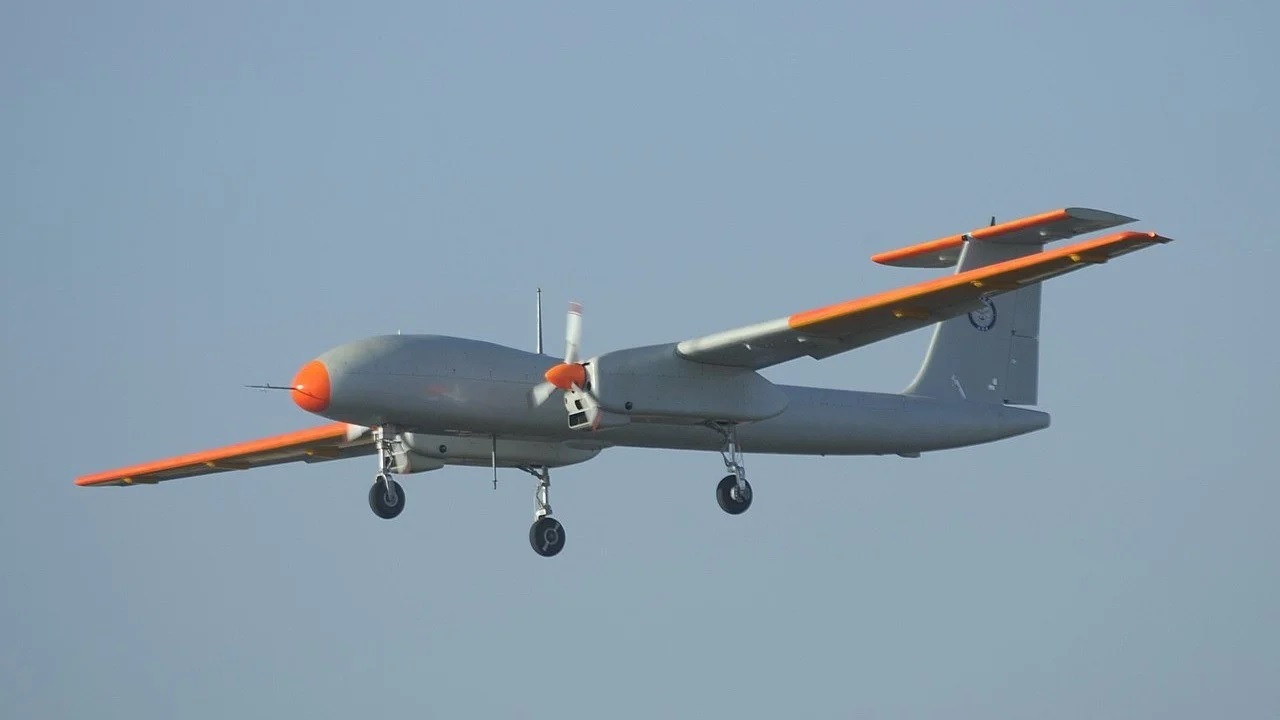
The Indian Navy is taking a significant stride toward enhancing maritime surveillance capabilities with plans to induct 10 indigenously developed Tapas (Tactical Airborne Platform for Aerial Surveillance) Medium Altitude Long Endurance (MALE) UAVs. This ambitious procurement aligns with India's broader goal of achieving self-reliance in defence technology while addressing immediate operational requirements with interim solutions.
Strategic Deployment in Andaman and Nicobar
The Andaman and Nicobar Islands, located at the crossroads of critical maritime trade routes, serve as a vital outpost for monitoring and securing the Indian Ocean. The deployment of Tapas UAVs at this location underscores the Navy's focus on strengthening its presence in a region witnessing increasing geopolitical activity. The UAVs will provide round-the-clock surveillance, enhancing the detection of threats such as illegal fishing, smuggling, and potential intrusions by hostile forces.
Tapas UAV: A Homegrown Surveillance Powerhouse
Developed by the Defence Research and Development Organisation (DRDO), the Tapas MALE UAV is designed to meet the specific needs of India's armed forces. It boasts an operational ceiling of 30,000 feet and an impressive endurance of up to 24 hours, making it ideal for long-range reconnaissance missions.
Key Specifications of Tapas:
- Payload Capacity: The UAV can carry multiple payloads weighing up to 350 kg, including synthetic aperture radar (SAR), electronic intelligence (ELINT), and electro-optical sensors.
- Range: It has an operational range of over 1,000 km, suitable for extensive maritime and land-based surveillance.
- Engine: Powered by a robust piston engine, ensuring fuel efficiency for prolonged missions.
- Communication Systems: Features advanced satellite communication (SATCOM) for beyond-line-of-sight (BLOS) operations.
Despite these impressive capabilities, the Tapas project has faced developmental challenges, particularly in achieving the Navy's stringent endurance and payload requirements. DRDO has been rigorously refining the design to reduce drag, enhance structural efficiency, and ensure operational reliability under diverse climatic conditions.
Drishti-10: A Stopgap Solution with Global Expertise
In parallel, the Indian Navy is procuring two Drishti-10 UAVs, a system developed by Adani Defence in collaboration with Elbit Systems of Israel. Based on the Hermes 900 Starliner, the Drishti-10 provides an immediate boost to surveillance capabilities while the Tapas undergoes final testing and production.
Drishti-10 Specifications:
- Endurance: Capable of missions lasting up to 36 hours, exceeding Tapas in this parameter.
- Payloads: Equipped with cutting-edge imaging systems, maritime patrol radars, and advanced communication systems for real-time data transmission.
- Proven Design: Leveraging the combat-proven platform of Hermes 900, the Drishti-10 offers reliability and performance in various operational scenarios.
The Drishti-10 complements the Navy’s existing fleet, which includes the formidable MQ-9 Sea Guardian UAVs sourced from the United States. Together, these systems enable a seamless transition toward indigenous solutions while ensuring no gaps in operational readiness.
A Two-Pronged Approach to Readiness
The Indian Navy's dual strategy—leveraging both interim foreign collaboration and indigenous technology—exemplifies its pragmatic approach to modernization. While the Tapas project embodies India's aspirations for self-reliance under the Atmanirbhar Bharat initiative, the procurement of Drishti-10 highlights the importance of operational immediacy in safeguarding national interests.
Moreover, the deployment of Tapas and Drishti-10 aligns with the Navy's long-term vision of integrating UAVs into network-centric warfare frameworks, enabling real-time intelligence sharing with manned platforms like P-8I Poseidon maritime patrol aircraft. This synergy enhances situational awareness and strengthens India’s maritime security architecture.
Future Prospects
As DRDO continues to refine the Tapas UAV, its successful induction into the Navy will serve as a landmark achievement for India's defence industry. The experience gained from this program is expected to pave the way for future developments, such as the Ghatak stealth UCAV, reinforcing India’s position in the global UAV market.
With the Andaman and Nicobar Islands set to become a hub for advanced UAV operations, India is poised to assert greater control over its maritime domain, ensuring security and stability in an increasingly contested region.
——— End of Article ———