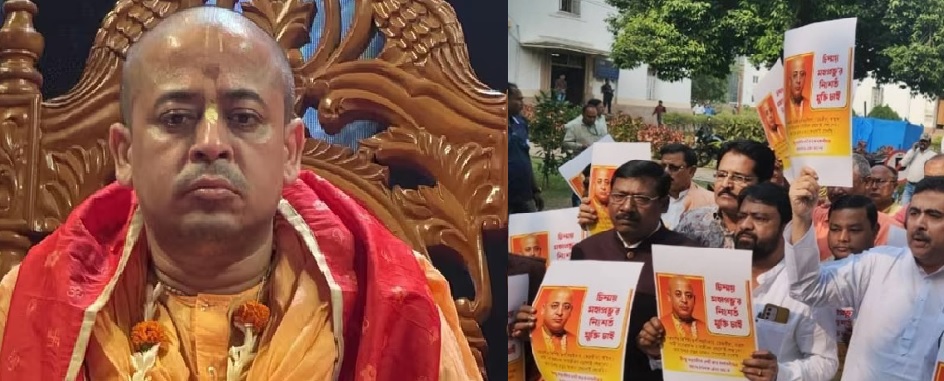
India has strongly voiced its concern over the arrest of Hindu leader Chinmoy Krishna Das Brahmachari, head of Pundarik Dham in Chittagong and a spokesperson for the Bangladesh Sanatan Jagaran Mancha. The incident has triggered a wave of disquiet in India, highlighting longstanding fears about the treatment of minorities in Bangladesh. Das was detained by the Detective Branch (DB) of Dhaka Metropolitan Police at the Hazrat Shahjalal International Airport on Monday and was denied bail during a court hearing on Tuesday.
The Indian Ministry of External Affairs (MEA), in a sharply worded statement, condemned the arrest, calling it deeply troubling. "This incident follows multiple attacks on Hindus and other minorities by extremist elements in Bangladesh," the MEA stated, adding that such actions threaten to erode the fabric of peaceful coexistence.
A Troubling Arrest Amid Ongoing Minority Persecution
Das’s arrest comes amidst rising concerns about the safety and rights of Hindus and other minorities in Bangladesh. The leader is a prominent figure in the International Society for Krishna Consciousness (ISKCON), an organization known globally for its message of peace and devotion. The Bangladeshi authorities accused him of undisclosed charges, sparking outrage across Hindu communities within and beyond Bangladesh.
The MEA highlighted a troubling pattern of violence against minorities in Bangladesh, including documented incidents of arson, looting, vandalism, and desecration of temples. While perpetrators of such violence often evade justice, Das’s peaceful advocacy for minority rights has landed him behind bars.
“It is deeply unfortunate that a spiritual leader representing legitimate concerns through peaceful gatherings faces prosecution, while violent offenders remain free,” the MEA noted, urging Bangladesh to ensure justice, safety, and the right to peaceful assembly for all minorities.
Widespread Protests and Global Outrage
The arrest has spurred protests across Bangladesh, particularly in Chittagong, where hundreds of Hindus gathered to demand Das’s release. Viral videos show police using force to disperse demonstrators, leaving many injured. These developments have drawn the attention of international organizations, including ISKCON, which issued a fervent appeal for Das’s immediate release.
“We are appalled by the baseless allegations against a peace-loving spiritual leader,” ISKCON said in a statement. “This is not just an attack on one individual but a direct affront to the Hindu community in Bangladesh. We urge both the Government of Bangladesh and the Government of India to take necessary steps to restore justice and peace.”
India’s Diplomatic Pressure
India’s government has called on Bangladesh to prioritize the safety of its minority communities, emphasizing the importance of respecting their rights to freedom of expression and assembly. The MEA’s statement underscores the broader implications of such incidents on bilateral relations, particularly in the context of shared cultural and historical ties.
A Persistent Struggle
While India’s call for action has brought global attention to the issue, the situation underscores the persistent challenges faced by minorities in Bangladesh. The Hindu community, though a significant part of the country’s heritage, continues to grapple with systemic marginalization and periodic violence.
By advocating for justice and accountability, India aims not only to support a spiritual leader but also to uphold the principles of secularism and tolerance in the region. However, achieving these goals requires concerted efforts from both governments to foster a climate of mutual respect and safety for all citizens.
This incident has reignited discussions about the importance of protecting minority rights and ensuring that acts of violence or discrimination are met with swift justice rather than impunity. The road to harmony, though challenging, is essential for sustaining the pluralistic ethos that both nations aspire to uphold.
——— End of Article ———