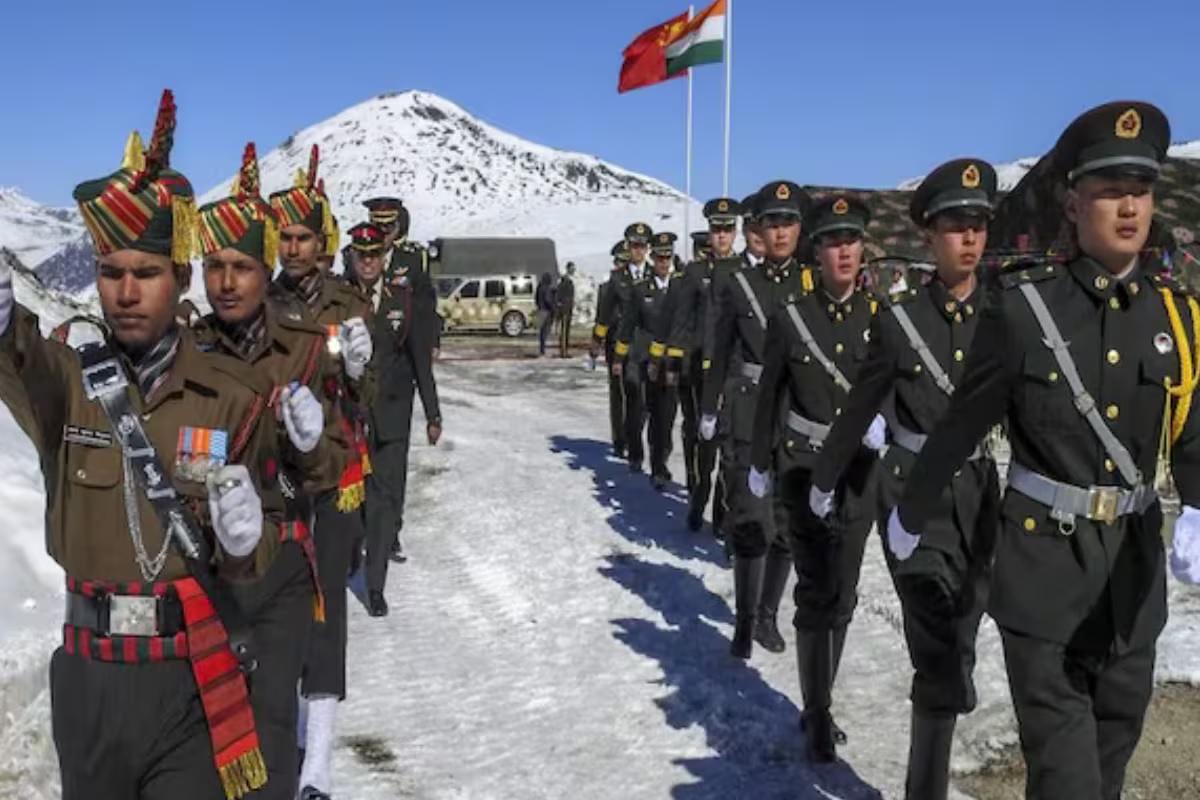
In a significant diplomatic development just ahead of Prime Minister Narendra Modi’s departure for the BRICS summit in Russia, India and China have reached a critical agreement on patrolling the Line of Actual Control (LAC) in the Himalayas. This breakthrough could mark a turning point in the ongoing tensions between the two nations, which have simmered since the deadly clashes in May 2020. Foreign Secretary Vikram Misri announced on Monday that these discussions have set the stage for "disengagement" along disputed border areas, potentially easing one of the most strained military standoffs in recent memory.
The agreement, which is focused on patrolling in two particularly sensitive zones—Depsang and Demchok—is seen as a step toward restoring stability in the region. These areas have been at the heart of the conflict, with troops from both sides facing off for months in precarious conditions. Misri highlighted the significance of these discussions, noting that the ongoing diplomatic and military talks were essential to reaching this stage of disengagement.
The Importance of Timing: Modi's BRICS Diplomacy
The timing of the agreement is notable, coming just before Modi's scheduled trip to Russia to participate in the BRICS summit. This year's summit holds extra importance, as new members—Iran, Egypt, Ethiopia, and the UAE—are joining the bloc. With Chinese President Xi Jinping also attending, speculation is growing over the possibility of a bilateral meeting between Modi and Xi on the sidelines. While there is no official confirmation of such a meeting, the agreement on LAC patrols may set a positive tone for any potential dialogue between the two leaders.
It’s worth remembering that tensions between India and China skyrocketed after the 2020 Galwan Valley incident, which resulted in the deaths of 20 Indian soldiers and an undisclosed number of Chinese casualties. This violent clash, the worst in decades, soured relations and led to a series of diplomatic and military talks aimed at de-escalation. However, until now, a long-term solution had remained elusive.
Behind China’s Sudden Agreement: Strategic Motivations
China’s agreement to the patrolling arrangement comes as a surprise to many, especially given its previously rigid stance on border issues. But there are hints that Beijing’s motivations might extend beyond just securing peace at the border. The broader geopolitical landscape provides some clues.
China has been grappling with increasing economic and diplomatic pressures in recent years, particularly from the West. The United States’ growing military alliances in the Indo-Pacific, coupled with the ongoing trade and tech wars, have put Beijing on the defensive. Additionally, China's slowing economy and its need to manage multiple border tensions—such as those with Taiwan and the South China Sea—could be driving its willingness to reduce friction with India, at least temporarily.
There’s also the looming BRICS summit itself. As one of the founding members of BRICS, China has a vested interest in ensuring that the summit runs smoothly, particularly given the expansion of the bloc. Any lingering tensions with India would undoubtedly overshadow the proceedings, something Beijing is likely eager to avoid. By agreeing to disengagement along the LAC, China may be hoping to demonstrate its commitment to multilateralism and regional stability, projecting itself as a responsible global player.
The Road Ahead: Can the LAC Disengagement Hold?
Despite this agreement, questions remain about how sustainable the disengagement will be. The LAC has been a flashpoint for decades, and mutual distrust between Indian and Chinese forces still lingers. While both sides have reaffirmed the importance of respecting the LAC and maintaining peace, the long history of conflict in the region suggests that real peace will require sustained effort and goodwill from both sides.
Furthermore, the situation along the LAC is not the only issue in India-China relations. Trade imbalances, competition in regional influence, and China’s ties with Pakistan continue to add layers of complexity to the bilateral relationship. The agreement may represent a temporary reprieve, but the underlying geopolitical tensions are far from resolved.
As Modi prepares to meet world leaders at the BRICS summit, the LAC agreement offers a glimmer of hope for improved India-China relations. But the question remains: Is this a genuine breakthrough or merely a short-term tactical move by China to focus on bigger geopolitical challenges elsewhere? Only time will tell if this disengagement will lead to lasting peace or if it’s just another chapter in the long, complicated history of India-China relations.
This agreement is certainly a step in the right direction, but the true test will be in its implementation and whether both nations can continue to move toward a permanent resolution of their border issues. For now, all eyes will be on Prime Minister Modi’s interactions with President Xi during the BRICS summit and how the two leaders navigate this delicate moment in their countries’ history.
——— End of Article ———