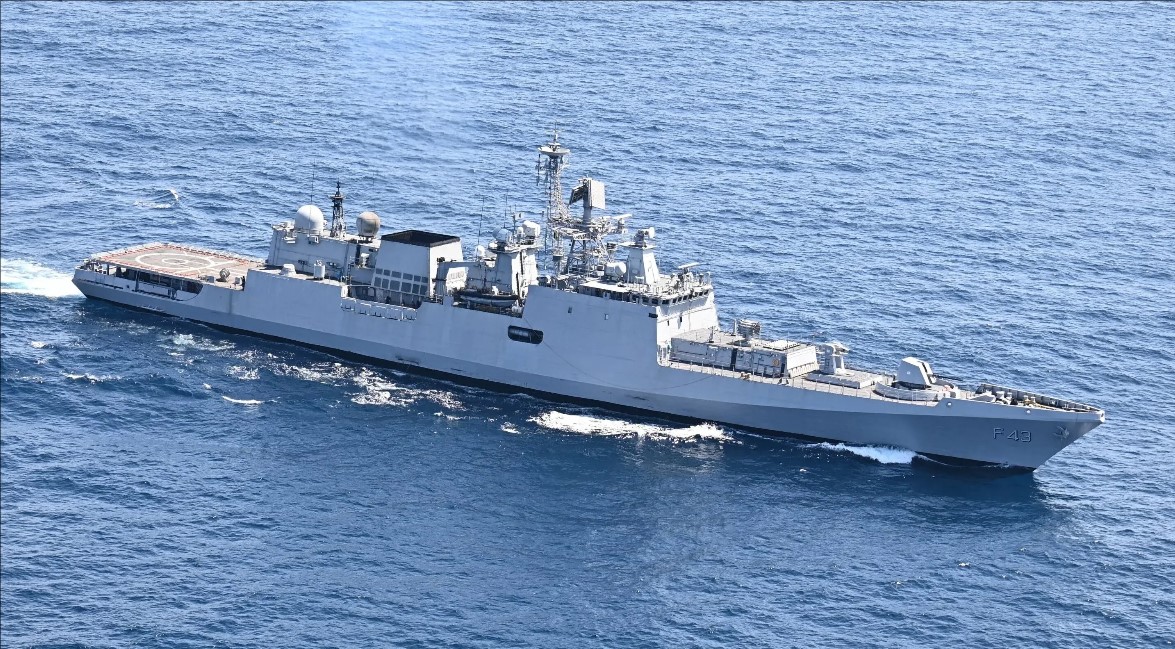
In a ceremony steeped in maritime tradition and diplomatic camaraderie, the Indian Navy commissioned the guided missile frigate INS Tushil at Kaliningrad, Russia. The event, graced by Defence Minister Rajnath Singh and Chief of Naval Staff Admiral Dinesh K Tripathi, marked not only the induction of a formidable warship but also a testament to the enduring strategic partnership between India and Russia.
INS Tushil is part of the Indian Navy's long-term strategy to modernize its fleet amidst growing geopolitical tensions and increasing maritime activities in the Indian Ocean Region. Built under the Project 1135.6 (Talwar-class) initiative, the frigate represents an advanced iteration of the Krivak III-class design, blending Russian engineering prowess with significant Indian contributions.
Origins of the Deal: A Discounted Win for India
The origin of INS Tushil lies in a $2.5 billion deal inked in 2016 between New Delhi and Moscow. The agreement covered the construction of four stealth frigates—two to be built at the Yantar Shipyard in Russia and two in India at Goa Shipyard Limited (GSL). Negotiations, which initially hovered at higher costs, resulted in significant discounts due to India's long-standing defense relationship with Russia. Moreover, India's commitment to sourcing advanced weaponry and technology from Russia facilitated favorable terms.
The collaboration also emphasized technology transfer and indigenous involvement. While the ships built in Russia showcased rapid delivery timelines, the Indian-built frigates are poised to incorporate even higher levels of local content, further bolstering India's "Aatmanirbhar Bharat" (self-reliant India) initiative.
Technical Marvel: Specifications of INS Tushil
The INS Tushil is a 3,900-tonne guided missile frigate stretching 125 meters in length and capable of reaching speeds over 30 knots. Its design reflects a leap in stealth technology, featuring reduced radar cross-section and enhanced stability. The frigate's composite superstructure and noise-dampening features are tailored to counter modern detection and surveillance technologies.
Key Features:
- Armament: The frigate is equipped with advanced BrahMos supersonic cruise missiles, providing it with unparalleled strike capabilities. It also carries Shtil-1 surface-to-air missiles for robust aerial defense.
- Combat Systems: Incorporates a state-of-the-art combat management system, integrating sensors and weaponry for real-time decision-making in high-stress combat scenarios.
- Radar Suite: Advanced radar systems ensure comprehensive tracking of aerial and surface threats.
- Propulsion: Twin gas turbine engines deliver impressive maneuverability and speed, crucial for multi-theater operations.
Additionally, the ship features extensive automation, reducing crew fatigue during long deployments and enhancing operational efficiency.
Collaborative Craftsmanship
The construction of INS Tushil involved close cooperation between Russian shipbuilders and an Indian oversight team stationed in Kaliningrad. With 26% indigenous content, key Indian defense firms like Bharat Electronics Limited (BEL) and BrahMos Aerospace contributed cutting-edge systems. Collaborations with Tata Nova Integrated Systems, Keltron, and Elcome Marine ensured that Indian expertise resonated throughout the project.
This blend of Indian and Russian technologies underscores the growing sophistication of India's defense manufacturing ecosystem. The frigate's enhanced local content also reflects India's ambition to emerge as a global hub for advanced defense technology.
Geopolitical Significance
INS Tushil's commissioning occurs at a time when the Indian Ocean witnesses increased activity by global naval powers, particularly China’s PLA Navy. With its formidable capabilities, the frigate strengthens India's maritime posture, ensuring the security of crucial sea lanes and bolstering regional stability.
The Road Ahead
As India and Russia deepen their defense cooperation, INS Tushil exemplifies what can be achieved through sustained collaboration. The frigate’s induction is not just a testament to technological excellence but also a harbinger of the future of India’s naval fleet—modern, resilient, and capable of meeting emerging challenges.
INS Tushil’s journey, from negotiation tables to Indian waters, is a powerful story of diplomacy, engineering brilliance, and shared vision. This warship is set to become a cornerstone of India's naval strategy, securing its maritime borders and asserting its role as a key player in global maritime affairs.
——— End of Article ———