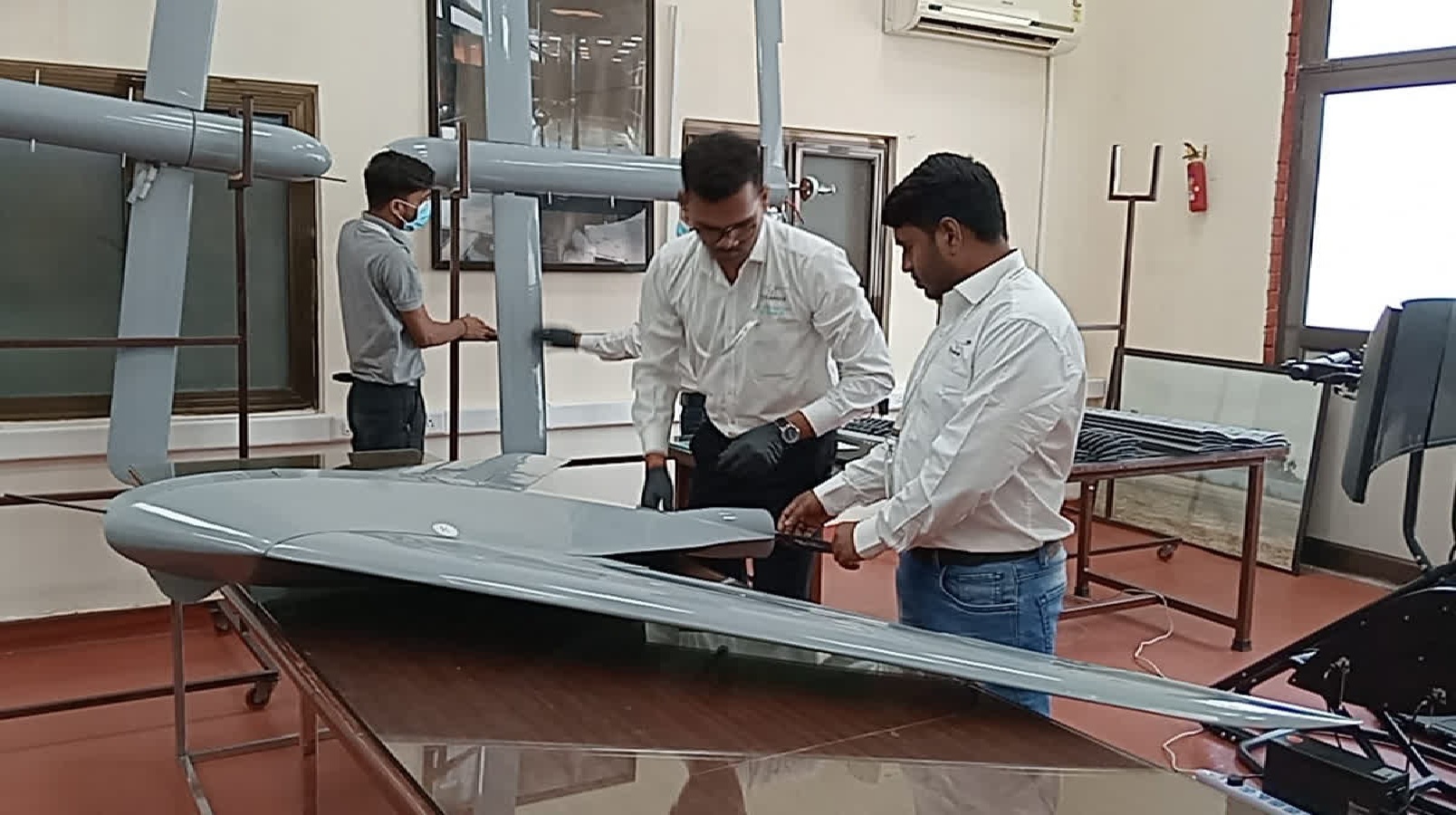
The Indian Institute of Technology (IIT) Kanpur has made significant strides in defence technology with the development of an advanced "suicide drone," an indigenous, self-destructing unmanned aerial vehicle (UAV) designed for tactical operations. This innovation holds the potential to strengthen India's self-reliance in defence, aligning with the nation’s drive towards indigenously developed military technologies.
Dubbed the "Kamikaze drone," this UAV is a formidable piece of engineering. It has been crafted by a team led by Professor Subramanyam Saderla from IIT Kanpur's Aerospace Engineering Department. Over two and a half years of dedicated research and development went into perfecting the drone. It features a lightweight, foldable fixed-wing design that stretches two meters in length, making it suitable for both reconnaissance and precise offensive missions.
Capabilities and Specifications
One of the most impressive attributes of the drone is its operational range of 100 kilometers. This range allows it to reach targets within just 40 minutes, depending on mission parameters. It can achieve speeds between 35-40 km/h during standard operation and accelerate up to a top speed of 180 km/h when required. Moreover, its endurance is remarkable; powered by a rechargeable system, the drone can operate for up to 4 hours, making it a highly versatile asset for prolonged missions.
The payload capacity stands at 2 kilograms, with a maximum warhead weight of 6 kilograms. This enables the drone to eliminate various enemy targets, from armored tanks to strategic installations. The UAV comes equipped with infrared sensors and a GPS system, offering real-time target tracking and precision. Interestingly, it can operate even without GPS support, using an artificial intelligence-based visual guidance system to find and engage targets autonomously, a crucial feature for missions in GPS-denied environments.
Another standout aspect is its stealth technology, designed to evade enemy radar systems. This capability, combined with its near-silent operation, significantly enhances the drone’s effectiveness in covert operations. The drone can function in both day and night conditions, and it remains effective in various weather situations. It can be launched via catapults or canisters, providing flexibility in deployment from different terrains or platforms.
Strategic Impact and Future Plans
This innovation comes at a crucial time as the Indian Army continues to seek modern solutions to bolster its offensive and surveillance capabilities. The drone’s development is supported under the Defence Research and Development Organisation's Young Scientist Laboratory (DYSL) initiative, aimed at harnessing young talent to push the boundaries of defence technology. IIT Kanpur expects to finalize trials and make the drone combat-ready within the next six months.
Looking forward, IIT Kanpur has high expectations for this technology, projecting significant economic impact. The institute has set an ambitious revenue target of Rs 1,500 crore over the next five years, reflecting the commercial and strategic potential of its drone innovations. Defence Minister Rajnath Singh’s recent visit to the institute underscored the importance of such developments, as he emphasized India’s growing stature as a drone technology hub.
Furthermore, IIT Kanpur has previously worked on other UAV projects, like the solar-powered "Maral" drone, aimed at sustainable and prolonged aerial surveillance. This continuous innovation pipeline highlights the institute’s crucial role in propelling India’s military tech ambitions.
Context and Global Comparisons
Kamikaze or suicide drones have gained prominence on the global stage, particularly in conflicts such as the ongoing Russia-Ukraine war and the Middle East clashes. They provide a cost-effective, high-impact solution for disabling high-value targets, and India's indigenous version represents a significant step in closing the technology gap with global drone powerhouses.
The development of this drone isn’t just about boosting military strength; it’s also a statement of India’s commitment to self-reliance and innovation in defence. As IIT Kanpur leads the way, there is growing anticipation of how this drone and future iterations will reshape the country's strategic capabilities.
——— End of Article ———