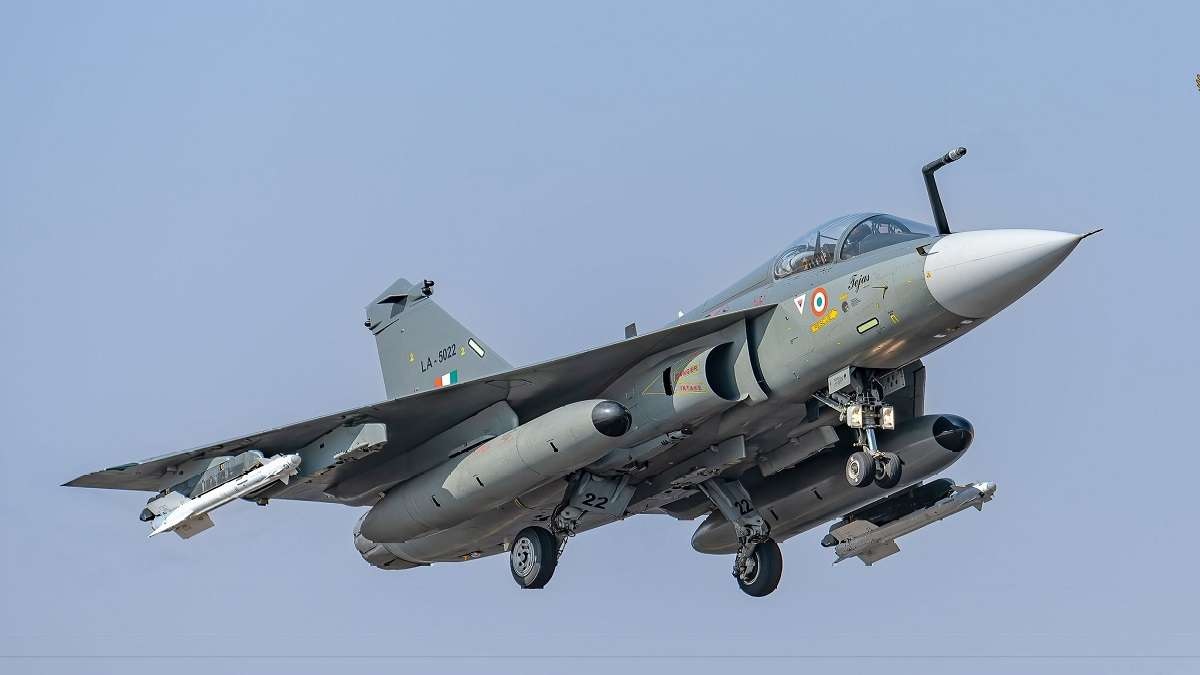
In a pivotal move to strengthen its air defense capabilities along the western frontier, the Indian Air Force (IAF) has deployed its Final Operational Clearance (FOC) Tejas Mk1 fighters. This decision, part of a broader strategy to phase out the aging MiG-21 fleet by 2026, marks a new chapter in the IAF’s modernization efforts. The Tejas, a light combat aircraft developed indigenously by Hindustan Aeronautics Limited (HAL), is being positioned as a direct replacement for the MiG-21, which has served the IAF for decades but is now nearing the end of its operational life.
The Tejas Mk1 FOC variants, with their enhanced combat capabilities, have been moved from the southern bases to the strategically crucial western sector. The Jamnagar Air Force Station, a key facility in this region, has been chosen for this deployment. This station serves as a hub for the IAF’s efforts to integrate both new and legacy aircraft as the MiG-21s are gradually retired. As the MiG-21 fleet reduces its operations, the Tejas Mk1 fighters are set to take over many of the roles traditionally handled by their predecessors.
One of the significant advantages of the Tejas over the MiG-21 is its advanced avionics and weaponry. The Tejas Mk1 FOC variants are now equipped with modern air-to-air missiles, including the Rafael Derby and the Russian-made Vympel R-77 (AA-12 Adder). These missile systems significantly enhance the Tejas' capabilities in both air-to-air and air-to-ground combat. With these upgrades, the Tejas is well-suited for a variety of combat scenarios, providing a substantial increase in operational effectiveness compared to the MiG-21.
Looking ahead, the Tejas Mk1A, an even more advanced variant, is slated to join the ranks of the IAF. Expected to be officially inducted by March 2025, the Mk1A will feature cutting-edge technology, including an Active Electronically Scanned Array (AESA) radar, providing superior surveillance and target tracking capabilities. HAL is set to deliver the first batch of Mk1A aircraft, with at least four aircraft planned for deployment at the Nal Airbase in Rajasthan. This base, situated in a region that directly faces Pakistan, will become a crucial hub for the upgraded Tejas fleet, offering enhanced combat readiness in the western sector.
The strategic deployment of the Tejas Mk1 fighters is designed to ensure that there is no gap in air defense as the MiG-21s are phased out. The transition allows the IAF to maintain continuous air superiority, especially in low to medium-threat environments. The Tejas, with its modern systems and superior maneuverability, is better equipped to counter evolving aerial threats. Its agility, combined with advanced missile systems, makes it a formidable asset in maintaining dominance over the region.
With the upcoming induction of the Tejas Mk1A and a continued focus on indigenous development, the IAF is not only preparing for future conflicts but also working to reduce its reliance on foreign aircraft. This shift aligns with India's broader goals of achieving self-reliance in defense technology, ensuring enhanced national security while strengthening domestic manufacturing capabilities.
As the MiG-21s make their exit, the Tejas Mk1 fighters are poised to play a central role in the IAF’s air defense strategy, marking a significant step forward in India’s quest for technological advancement and self-sufficiency in the defense sector.
——— End of Article ———