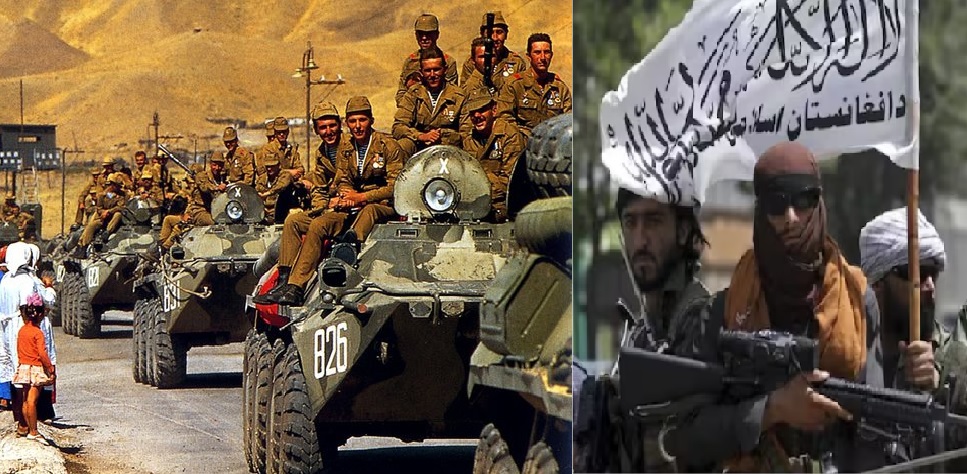
The Taliban, one of the most controversial movements in modern history, did not emerge overnight. Its roots are deeply tied to the geopolitics of the Cold War, the chaos of post-Soviet Afghanistan, and the ambitions of regional and global powers that sought to control the country’s direction. To understand who built the Taliban, it’s necessary to look back to the late 1970s and 1980s, when Afghanistan became the battlefield for a global ideological war between the United States and the Soviet Union.
The Beginning: Soviet Invasion and Mujahideen Resistance
The story begins in 1979, when the Soviet Union invaded Afghanistan to support a struggling communist regime. This invasion triggered a massive resistance movement known as the Mujahideen — Islamic fighters drawn from various ethnic and tribal backgrounds who opposed the Soviet-backed Afghan government.
The United States, viewing the invasion as a key Cold War threat, saw an opportunity to bleed the Soviet military through a proxy war. Through Operation Cyclone, one of the longest and most expensive covert operations in CIA history, Washington funneled billions of dollars in weapons and training to the Mujahideen.
However, the CIA did not work alone. The main channel for U.S. aid was Pakistan’s Inter-Services Intelligence (ISI), which controlled how the funds and weapons were distributed. Saudi Arabia matched much of the U.S. funding, providing money and promoting a strict interpretation of Islam — Wahhabism — which heavily influenced the ideology of many Afghan fighters.
After the Soviets: A Power Vacuum and Chaos
By 1989, the Soviet Union withdrew from Afghanistan. Three years later, the communist regime in Kabul collapsed. But instead of peace, the country fell into a brutal civil war among rival Mujahideen factions.
Afghanistan became fragmented — warlords, ethnic militias, and criminal networks controlled different provinces. The country’s infrastructure was destroyed, and lawlessness spread. Civilians faced extortion, kidnappings, and abuse at the hands of various militias.
It was during this chaos that the Taliban — meaning “students” in Pashto — emerged from the religious seminaries (madrassas) in Pakistan’s border regions, particularly around Quetta and Peshawar. Many of these madrassas were funded by Saudi money and influenced by Deobandi and Wahhabi interpretations of Islam.
The Taliban’s early members were mostly Pashtun students and former Mujahideen fighters who claimed to seek the restoration of order, the end of corruption, and the enforcement of Sharia (Islamic law).
Who Built the Taliban
While the Taliban’s roots were local, its structure and strength were not organic — they were engineered with significant outside help.
-
Pakistan’s Role:
Pakistan’s ISI was the main architect of the Taliban’s rise. After the civil war broke out, Islamabad sought a reliable force that could secure trade routes, counter rival Afghan warlords (especially those aligned with India or Iran), and ensure that Afghanistan remained within Pakistan’s strategic influence.The ISI trained Taliban fighters, supplied arms, and provided intelligence support. The Taliban’s leadership — including Mullah Mohammad Omar — maintained close links with Pakistani handlers.
-
Saudi Arabia:
Alongside Pakistan, Saudi Arabia offered financial support and legitimacy to the Taliban during its early rise. The kingdom viewed the movement as a bulwark against Iran’s Shiite influence in the region and a vehicle to expand Sunni conservatism. -
United States (Indirect Role):
Although the U.S. did not directly create the Taliban, its Cold War policies laid the groundwork. By empowering the Mujahideen and channeling billions through Pakistan without strong oversight, Washington indirectly helped build the infrastructure — training camps, networks, and ideology — that later evolved into the Taliban movement.
Why the Taliban Was Formed
The Taliban was built primarily for two interconnected reasons:
-
To Restore Order:
Afghanistan was collapsing under factional warfare. The Taliban initially gained public support by promising to eliminate warlords, disarm militias, and bring safety to roads and markets. -
To Serve Regional Strategic Goals:
For Pakistan, the Taliban offered a way to secure “strategic depth” — the idea of having a friendly regime in Kabul that could support Pakistan’s defense and limit Indian influence in Afghanistan.
Thus, while the Taliban claimed a religious mission, its formation also served geopolitical objectives for Islamabad and its allies.
Against Whom the Taliban Was Built
The Taliban was built against the Mujahideen warlords who had plunged Afghanistan into anarchy after the fall of the communist government. It was also positioned against the Northern Alliance, a coalition of non-Pashtun groups (Tajiks, Uzbeks, and Hazaras) led by figures like Ahmad Shah Massoud.
Later, as the movement gained strength, it also stood against Western influence and foreign military presence, which became central to its identity after the U.S.-led invasion in 2001 following the September 11 attacks.
A Creation That Turned Into a Global Force
The Taliban began as a product of war, ideology, and foreign intervention. Initially backed by Pakistan and Saudi Arabia, and indirectly shaped by U.S. Cold War policies, it evolved from a regional militia into a regime that ruled Afghanistan from 1996 to 2001 — and again after 2021.
What started as a movement to “cleanse” Afghanistan of corruption became a symbol of resistance and extremism, influencing global jihadist networks and reshaping regional power balances.
In essence, the Taliban’s creation reflects how foreign powers’ short-term strategies can produce long-term instability. Built to serve geopolitical interests, it became an uncontrollable force that continues to define Afghanistan’s modern history.
——— End of Article ———