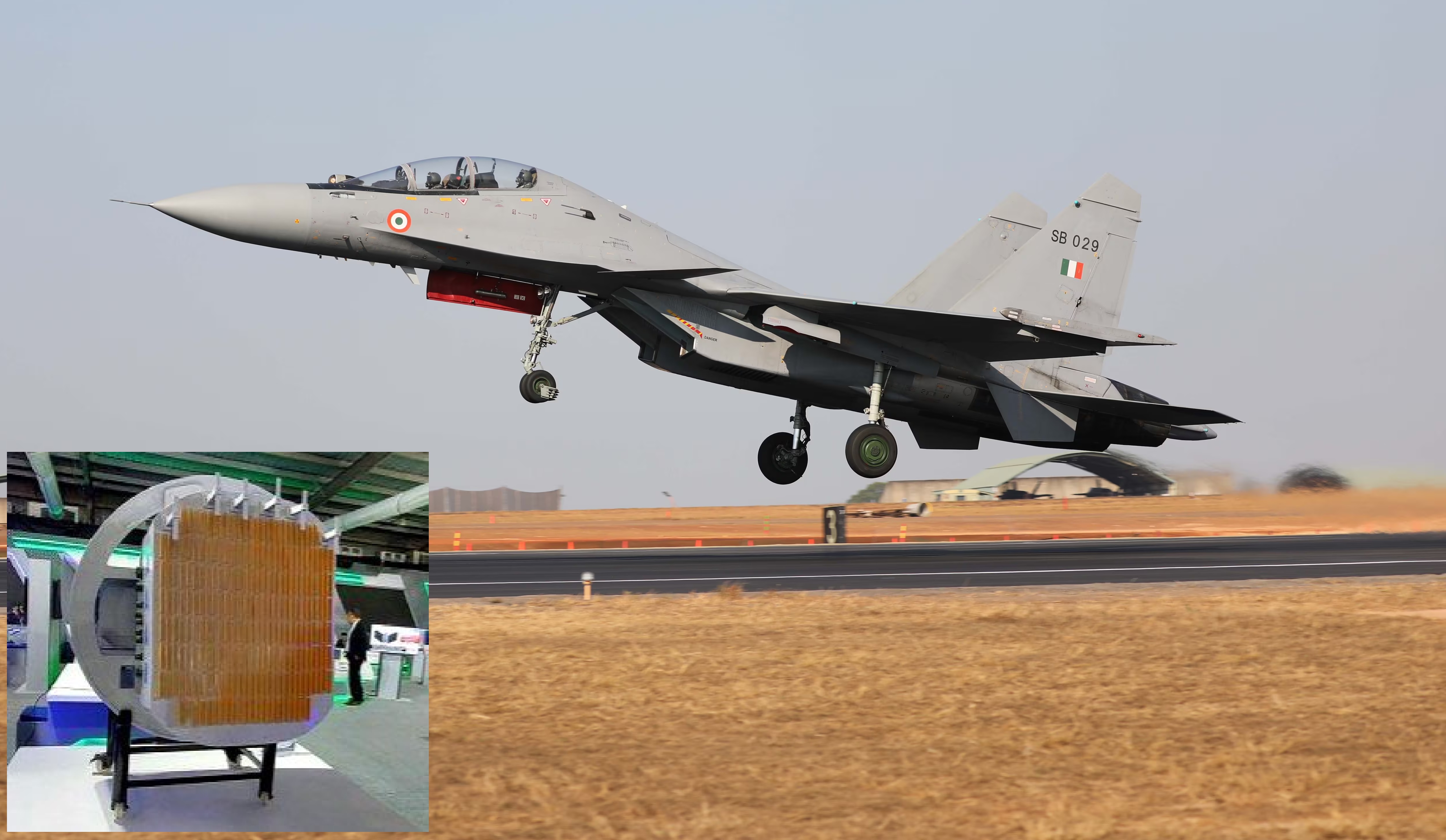
India’s Sukhoi Su-30MKI is set to undergo a significant upgrade with the integration of the Virupaksha radar system, marking a transformative leap in the country’s air defense capabilities. Spearheaded by DRDO’s Electronics and Radar Development Establishment (LRDE), this new radar system will bring cutting-edge technology to the Indian Air Force’s frontline fighter jets, making them far more formidable and capable of handling modern threats. But what makes the Virupaksha radar so revolutionary, and how will it give India an unmatched edge in aerial combat?
The Power Behind the Virupaksha Radar
The Virupaksha radar builds upon the success of India’s earlier Uttam AESA radar but takes things to an entirely new level. Unlike the Uttam radar’s quad Transmit-Receive Modules (TRMs) configuration, the Virupaksha introduces a more densely packed structure, allowing for an astounding 2,400 radiating elements. This dense configuration offers superior precision, range, and adaptability, making the radar highly efficient at detecting and tracking enemy targets, even in complex environments.
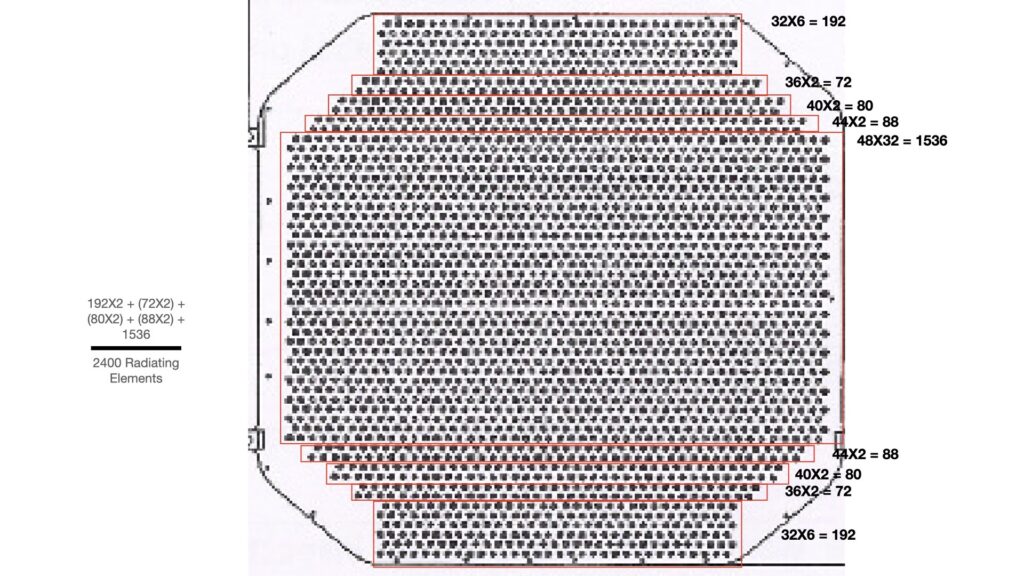
The Gallium Nitride (GaN) technology incorporated into the Virupaksha radar is key to its enhanced performance. GaN has long been recognized as a game-changer in radar technology due to its high power density, superior thermal performance, and ability to operate at higher frequencies. Compared to its predecessor, Gallium Arsenide (GaAs), GaN allows for longer range, better power efficiency, and the ability to operate under high stress, ensuring that the radar can perform optimally during extended missions and under harsh conditions.
Why GaN Matters for Radar Performance
One of the most critical improvements in the Virupaksha radar is its use of GaN-on-silicon carbide (GaN-on-SiC) transistors, which significantly enhance the radar’s range and efficiency. GaN-based radars can operate at much higher power levels compared to GaAs-based systems, resulting in up to 50% more range. This means the radar can detect distant or smaller targets that would be invisible to older systems. The higher thermal conductivity of GaN also allows for longer operational periods without the risk of overheating, which improves the radar’s overall reliability and reduces the need for complex cooling systems.
In addition, GaN’s ability to handle wider bandwidths ensures better resolution and clarity when tracking multiple targets, making it highly effective against stealth aircraft and advanced electronic warfare systems. The anti-jamming capabilities of GaN-based AESA radars provide an additional layer of protection, ensuring that India’s upgraded Su-30MKI jets can operate effectively even in environments where adversaries deploy sophisticated radar jammers.
Tactical Advantages in Modern Combat
For the Indian Air Force, this radar upgrade isn’t just a technical improvement—it is a strategic advantage. The Su-30MKI has long been one of India’s most versatile and powerful aircraft, excelling in both air-to-air combat and ground-attack roles. However, modern threats demand more sophisticated sensors and better situational awareness, especially in scenarios involving stealth fighters, unmanned aerial vehicles (UAVs), and electronic warfare systems.
The Virupaksha radar’s high tracking accuracy will greatly improve the Su-30MKI’s air-to-air engagement capabilities, allowing it to better detect and lock onto enemy aircraft, even those flying at supersonic speeds or using stealth technology. With enhanced multi-target tracking and long-range detection, Indian pilots will have more time to react to incoming threats and coordinate complex missions, such as suppression of enemy air defenses or precision strikes on ground targets.
In air-to-ground combat, the radar’s ability to provide high-resolution mapping and target designation will be crucial for precision strikes. The Su-30MKI, already capable of carrying a wide array of air-to-ground munitions, will benefit from this upgrade by being able to engage enemy positions with greater accuracy, reducing the likelihood of collateral damage and increasing mission success rates.
Strengthening India’s Defense Modernization
The quick timeline for development and testing—16 weeks from assembly to final acceptance—shows India’s commitment to modernizing its defense forces. The Virupaksha radar is a central part of India’s broader effort to upgrade its fleet and bring its technology on par with global standards. As regional threats continue to evolve, having a sophisticated, agile, and powerful air defense system is crucial.
The integration of the Virupaksha radar into the Su-30MKI fleet will play a vital role in bolstering India’s air superiority. With its enhanced range, multi-role capability, and superior tracking performance, the radar system ensures that the Su-30MKI can dominate the skies in any future conflict, providing unmatched capabilities against both regional adversaries and potential global threats.
India’s Su-30MKI fighters, already a key part of the nation’s air defense strategy, are about to get a major upgrade with the introduction of the Virupaksha radar. This cutting-edge system, with its GaN-based architecture, promises better range, superior tracking, anti-jamming capabilities, and overall enhanced performance. As a result, the Indian Air Force will be better equipped to maintain air superiority, tackle new-age threats, and secure the nation’s airspace in an increasingly complex and contested environment.
——— End of Article ———