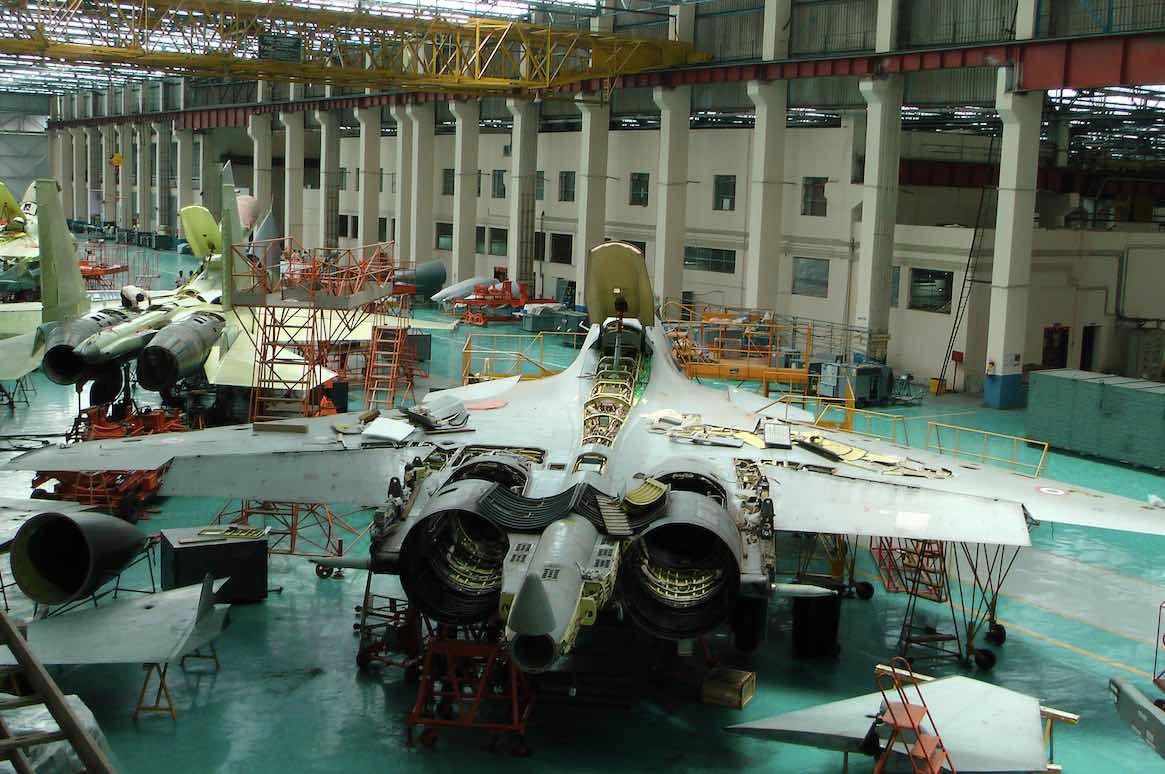
Hindustan Aeronautics Limited (HAL) is taking a bold step forward by reactivating its Nashik manufacturing unit to resume production of the Sukhoi Su-30MKI fighter jets. This development, sparked by a $1.3 billion deal approved in late 2023, calls for the assembly of 12 new aircraft to fortify the Indian Air Force's (IAF) capabilities. The revival of the Nashik plant is a strategic decision aligned with India’s ‘Make in India’ initiative, aiming to boost domestic defence production and minimize reliance on foreign suppliers.
The Nashik facility, historically responsible for assembling the Su-30MKI jets since the early 2000s, had seen a slowdown. Now, HAL's commitment includes delivering the first batch of these newly ordered aircraft within a tight three-year schedule. More ambitiously, HAL has proposed expanding this production to add up to 72 additional Su-30MKIs, potentially pushing the IAF fleet to over 340 aircraft by the end of the decade. The comprehensive upgrade plan for these jets, often referred to as the "Super Sukhoi" or "Super-30" project, features cutting-edge enhancements that will make the aircraft more formidable.
### A Closer Look at the Upgrades
The "Super Sukhoi" upgrade is extensive, aiming to match global standards for modern fighter jets. One of the most significant additions is the indigenously developed Active Electronically Scanned Array (AESA) radar, which vastly improves targeting and situational awareness. The upgrade will also include a revamped electronic warfare (EW) suite, enhancing the aircraft's ability to detect and counter threats from enemy radars and missiles. In addition, the enhanced avionics system will feature advanced mission computers, digital heads-up displays (HUDs), and a comprehensive voice-activated cockpit control system to optimize pilot efficiency.
HAL is also integrating indigenous weapon systems to expand the Su-30MKI's combat capabilities. This integration will make the aircraft compatible with the latest generation of Indian-developed munitions, including BrahMos-A supersonic cruise missiles and Astra beyond-visual-range air-to-air missiles. Moreover, the new software-defined radios and helmet-mounted display systems (HMDS) are designed to provide superior communication and tactical awareness, crucial in modern air combat.
### Strategic and Economic Implications
For the IAF, this revival is not just about replacing losses from recent conflicts but also about fortifying its strike capabilities to counter regional adversaries effectively. The initiative also holds considerable strategic importance for India's long-term self-reliance in defence production, echoing the broader goals of the Indian government's policies to boost indigenous defence research and manufacturing.
Economically, reopening the Nashik plant is expected to be a significant job creator, providing a boost to local employment and associated industries. The project will also promote advancements in India’s defence research sector, contributing positively to technological growth and national security.
Overall, HAL’s revival of the Nashik plant and the associated Super Sukhoi upgrade represent a vital step forward for India’s aerospace and defence ambitions. The combination of new aircraft production and sophisticated upgrades ensures that the IAF will remain well-equipped to handle evolving threats while bolstering the country's broader strategic and economic objectives.
——— End of Article ———