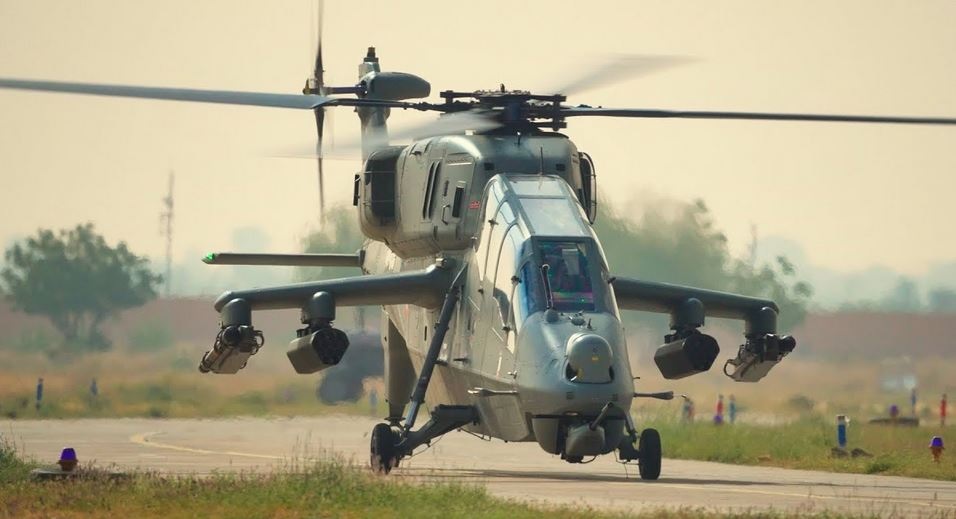
Hindustan Aeronautics Limited (HAL) is working on an ambitious project to integrate a miniaturized Active Electronically Scanned Array (AESA) radar into India's Light Combat Helicopter (LCH), Prachand. This breakthrough development is set to redefine the capabilities of the LCH, making it a formidable platform for counter-drone operations, reconnaissance, and precision strikes in challenging environments.
The LCH Prachand, already renowned for its agility, advanced avionics, and combat versatility, is poised to become an even more powerful tool in India’s defense arsenal. With the introduction of the Mini-AESA radar, the helicopter will gain cutting-edge situational awareness, allowing it to operate with precision and confidence, even in the most complex battlefield scenarios.
What Makes the Mini-AESA Radar Special?
The Mini-AESA radar under development by HAL is a compact yet advanced system that provides unparalleled aerial mapping and target tracking capabilities. Unlike conventional radars, AESA technology uses multiple transmit-receive modules, enabling it to scan, detect, and track targets in real time across a wide field of view.
Key features of the Mini-AESA radar include:
- Long-Range Detection: Enables tracking of enemy drones, loitering munitions, and other aerial threats over extended distances.
- High Resolution Imaging: Allows for precision targeting, which is critical in environments where accuracy can be the difference between mission success and failure.
- All-Weather Capability: Operates effectively in adverse weather conditions and low-visibility scenarios, ensuring uninterrupted operational performance.
- Low Size, Weight, and Power (SWaP): Compact design makes it ideal for lightweight platforms like the LCH and even autonomous systems.
Counter-Drone and Anti-Loitering Munitions Role
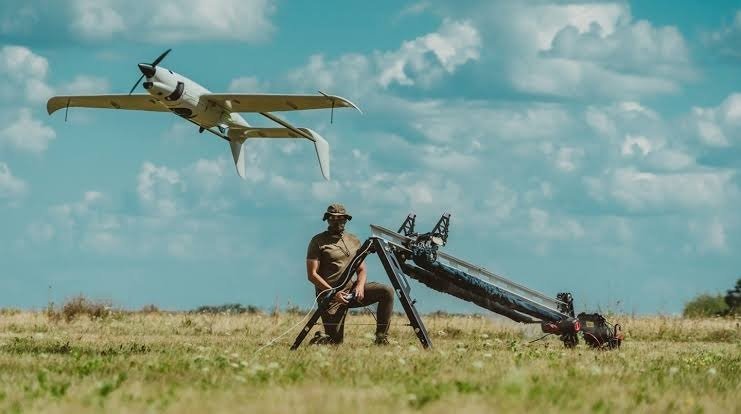
Drones and loitering munitions are emerging as major threats in modern warfare, capable of causing significant damage with minimal costs. The Mini-AESA radar is being specifically designed to address these challenges. By equipping the LCH with this radar, HAL aims to provide the Indian Army and Air Force with a highly effective countermeasure.
The radar will allow the Prachand to detect enemy drones early, track their movement, and engage them using onboard weaponry. Similarly, loitering munitions, often designed to evade detection until their final moments, can be neutralized before they strike, thanks to the radar's high-precision capabilities.
Broader Applications Across Platforms
While the Mini-AESA radar is being tailored for the LCH, HAL envisions its utility far beyond helicopters. The compact radar system is being considered for integration with Loyal Wingman drones, autonomous combat UAVs, and other next-generation unmanned systems. These platforms, when equipped with AESA radar, will gain enhanced situational awareness, enabling more accurate and coordinated missions alongside manned aircraft.
Future Steps and Trials
Before the radar can be deployed, it will undergo rigorous Proof of Concept (PoC) testing to ensure it meets the operational demands of the LCH and other platforms. HAL is working closely with the Indian Army and Air Force to align the radar's development with their requirements. If approved, this innovation could significantly enhance India's defense capabilities, particularly in asymmetrical and hybrid warfare scenarios.
The Strategic Impact
The integration of the Mini-AESA radar will not only elevate the LCH Prachand's role in the Indian military but also demonstrate HAL's growing technological expertise. This step aligns with India's push for indigenization under the Make in India initiative, reducing dependency on foreign defense systems.
Moreover, the radar's ability to support reconnaissance, surveillance, and precision strike missions underscores its importance in achieving future-ready combat platforms. By adopting such cutting-edge technologies, India positions itself as a formidable player in modern warfare.
HAL’s Mini-AESA radar project exemplifies how innovation can drive operational excellence, ensuring that the LCH Prachand—and India’s defense forces—remain one step ahead in the ever-evolving dynamics of the battlefield.
——— End of Article ———