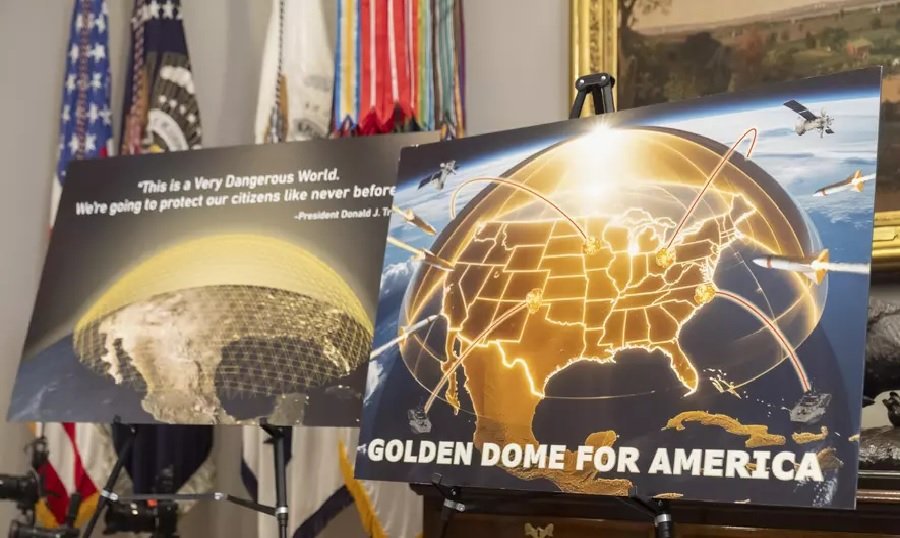
HUNTSVILLE, Ala. — Gen. Michael Guetlein, director of the U.S. military’s Golden Dome missile defense initiative, said the program remains on track to deliver its initial operational capabilities in mid-2028 at a projected cost of $185 billion, while warning that a funding gap in fiscal year 2027 could put the program at serious risk.
Guetlein made the remarks during the annual Space & Missile Defense Symposium in Huntsville, Alabama.
Guetlein Maintains $185 Billion Cost Estimate
Guetlein said the current Golden Dome cost estimate remains $185 billion. The figure was initially set at $175 billion and later increased by $10 billion to accelerate space capabilities that were not part of the original architecture.
“I’m on record, and I’m still up here saying the exact same number: $185 billion,” Guetlein said, emphasizing the need to keep the large missile defense effort affordable.
The estimate is significantly below a separate Congressional Budget Office assessment released in May 2026. The CBO estimated that a notional national missile defense architecture broadly consistent with the capabilities described for Golden Dome could cost about $1.2 trillion over 20 years. However, the CBO noted that its calculation was based on a notional architecture because the Defense Department had not publicly released enough details about the final system.
Guetlein has argued that the CBO estimate does not represent the architecture currently being developed by the Pentagon. He said the assumptions used for the higher estimate involve different technologies and requirements.
Contracts and Testing Underway
Guetlein said several major elements of Golden Dome are already under contract. These include radars, launchers, space-based interceptors, a hypersonic ballistic tracking system and a space data network.
The program has also moved into construction, with the first operational site established and groundwork underway at locations including Joint Expeditionary Base Fort Story in Virginia.
According to Guetlein, two tests have already been completed successfully, demonstrating elements involving command and control, sensor networks and effectors against current threats. Details of the tests remain classified.
One of the major tests conducted in summer 2026 at White Sands Missile Range, New Mexico, was described as the most complex integrated missile defense test conducted there. The exercise involved the Missile Defense Agency, Space and Missile Defense Command and other organizations. Guetlein said the test met all of its objectives after six months of preparation.
A more complex test is planned for 2027.
Space-Based Interceptors Remain a Major Element
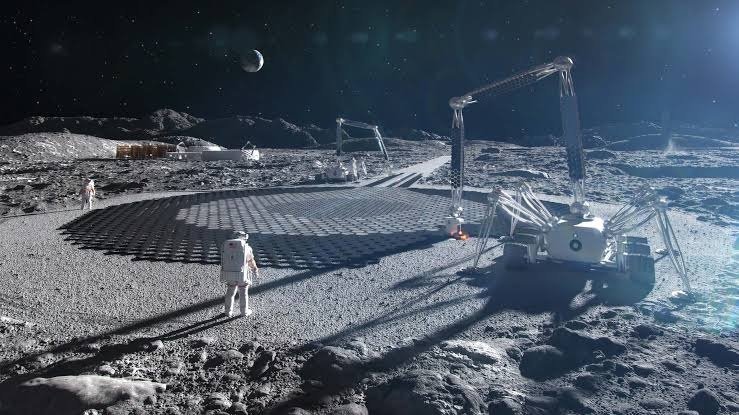
Space-based interceptors are a major part of the publicly described Golden Dome architecture. The Space Force has advanced a competition involving 12 companies for related technology development, with the first of four planned development gates completed.
The space component has also been an important factor in the debate over the program’s potential long-term cost. The CBO's May assessment included a large space-based interceptor constellation in its notional architecture, contributing substantially to its $1.2 trillion estimate.
FY2027 Funding Creates Risk
The immediate concern for Golden Dome is its funding structure.
About $22.5 billion has been appropriated for the program so far, with approximately 95 percent committed to specific work and about 90 percent obligated. Much of the funding has been provided through congressional reconciliation rather than the regular defense budget.
For fiscal year 2027, the administration has requested approximately $17.5 billion for Golden Dome. Only about $400 million is included in the base budget, with the remaining funding dependent on a proposed reconciliation package. A Congressional Research Service summary similarly reports a $17.5 billion FY2027 Golden Dome request, with the overwhelming majority sought as mandatory funding through reconciliation.
Guetlein warned that the program does not have a reliable funding path if the FY2027 reconciliation funding is not approved.
“We’ve got to figure out, as a nation, a different way of funding Golden Dome, at least for 2027. Right now, that’s under reconciliation,” he said. “If they don’t figure it out, there is no Golden Dome because there is no funding.”
He also said a continuing resolution would not provide the baseline needed to sustain the effort at its planned level.
Pentagon Examining Contingency Options
Pentagon officials are examining possible contingency measures if Golden Dome funding is delayed or interrupted. One option under consideration involves the Space Force continuing investment in certain shared space capabilities that also support the broader Golden Dome architecture.
No final decision has been made on those options.
The broader FY2027 defense budget request is approximately $1.5 trillion, including base funding and proposed reconciliation resources. Other major defense modernization programs, including efforts to modernize the U.S. nuclear triad, are also being funded alongside Golden Dome.
For now, Guetlein said the program remains focused on its mid-2028 initial operational capability target. The next phase will depend not only on continued testing, contracting and construction, but also on whether Congress provides the funding required for fiscal year 2027.
Source : TWZ
——— End of Article ———