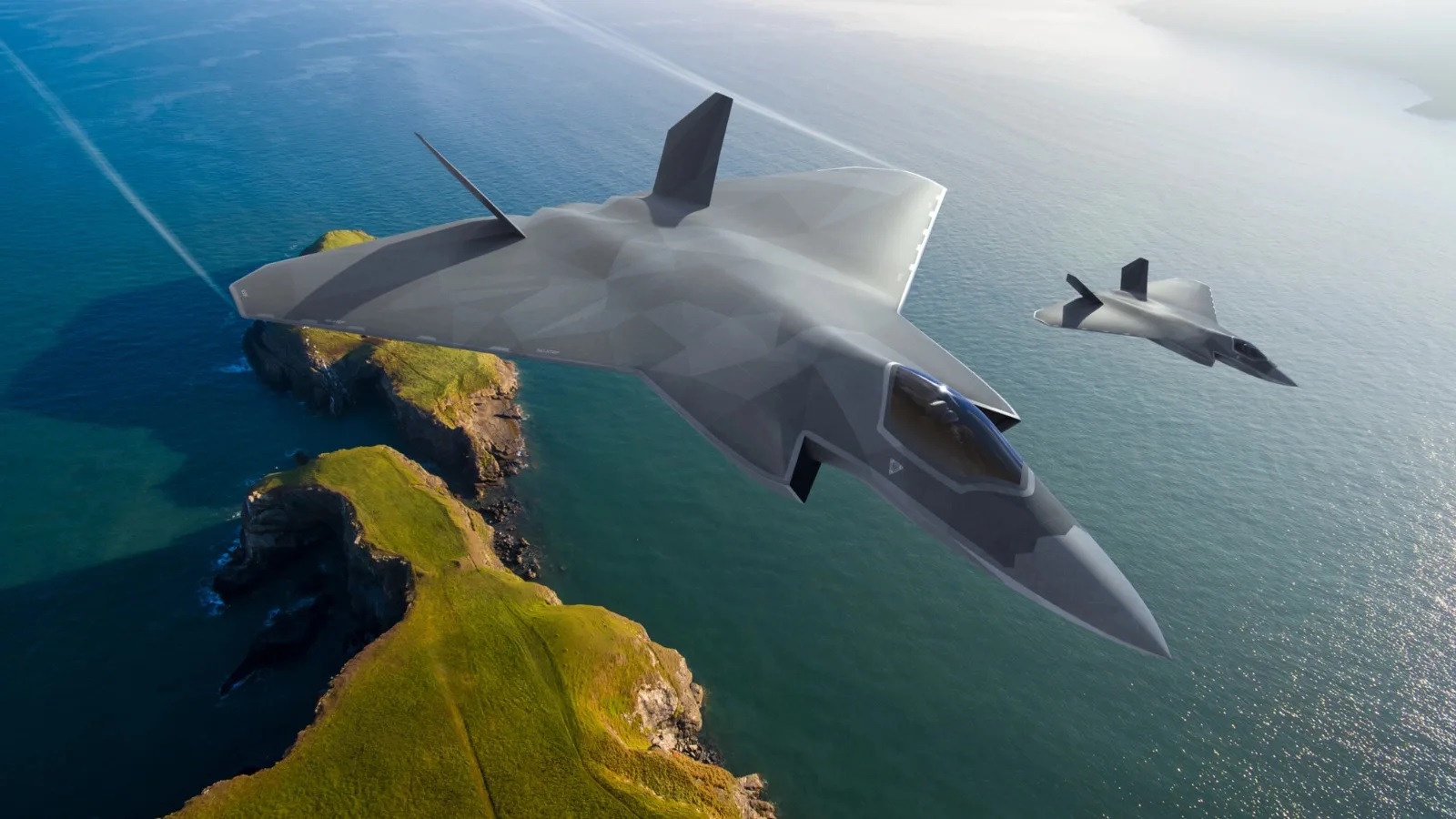
BERLIN, — June 11, 2026 : Germany’s aerospace and defense industry has launched a new industrial alliance called “Team Gen 6” following the formal termination of the fighter aircraft component of the Future Combat Air System (FCAS) program. The consortium was unveiled during the ILA Berlin Air Show and is led by Airbus Defence and Space.
The new initiative aims to preserve Germany’s expertise in advanced military aviation and maintain national capabilities for the development of a future sixth-generation combat aircraft. The move comes just days after German Chancellor Friedrich Merz confirmed the end of the joint Franco-German fighter project on June 8.
FCAS Fighter Project Officially Ends
The FCAS program, launched in 2017 with participation from France, Germany, and later Spain, was designed to develop a next-generation combat aviation system centered around the New Generation Fighter (NGF). The aircraft was intended to replace France’s Rafale and the Eurofighter Typhoon operated by Germany and Spain by around 2040.
In addition to the fighter aircraft, FCAS included plans for remote carrier drones, advanced sensors, and a digital Combat Cloud network that would connect aircraft, drones, and battlefield systems in real time.
However, the fighter component of the program ultimately collapsed after years of disagreements between Dassault Aviation and Airbus over industrial leadership, workshare arrangements, intellectual property rights, and aircraft design requirements. France’s requirement for a fighter capable of carrying nuclear weapons and operating from aircraft carriers also differed from German operational priorities.
Following failed mediation efforts, France and Germany agreed to discontinue the joint fighter aircraft project. Despite the decision, officials from both countries confirmed that cooperation on the Combat Cloud network and certain unmanned systems technologies will continue under a revised framework.
Eight Major Companies Join Team Gen 6
To prevent the loss of engineering expertise and safeguard Germany’s defense-industrial capabilities, eight leading German defense companies have joined the new alliance.
The members of Team Gen 6 include:
- Airbus Defence and Space (lead contractor and systems integrator)
- MBDA Deutschland
- Hensoldt
- MTU Aero Engines
- Diehl Defence
- Liebherr
- Autoflug
- Rohde & Schwarz
Together, the companies provide expertise across all major areas required for a future combat aircraft, including airframes, propulsion systems, sensors, communications, avionics, and missile technologies.
The alliance has submitted a formal position paper to the German government outlining its vision for future combat aviation development. According to reports, the consortium is seeking new development contracts from the government during the second half of 2026 to maintain momentum and preserve critical industrial capabilities.
European Cooperation Remains a Priority
Although Team Gen 6 demonstrates Germany’s ability to pursue advanced fighter aircraft development through its domestic industry, alliance leaders have emphasized that the project is not intended to become an exclusively national program.
Speaking at the ILA Berlin Air Show, Airbus Defence and Space CEO Michael Schoellhorn said the industry is prepared to assume responsibility for future combat aviation programs while continuing to work within a broader European framework.
Schoellhorn stated that Germany possesses the expertise and industrial capacity required for such a project, but stressed that the objective is to ensure German industry plays a leading role in a future European effort rather than pursuing complete independence.
The alliance has left the door open for international cooperation. Potential partners could include Spain, which remains interested in sixth-generation fighter technologies, as well as other European countries such as Sweden.
Berlin Evaluating Future Options
The German government has not yet selected a definitive path for its next-generation combat aircraft strategy.
Defense Minister Boris Pistorius described an Airbus-led European project as a “conceivable” option but confirmed that Berlin is also examining alternative solutions. These include potential participation in the Global Combat Air Programme (GCAP) being developed jointly by the United Kingdom, Italy, and Japan, as well as the possibility of acquiring additional Lockheed Martin F-35 fighter aircraft.
With any sixth-generation aircraft unlikely to enter operational service before 2040, the Eurofighter Typhoon is expected to remain the backbone of the German Air Force (Luftwaffe) well into the 2050s. Germany is also scheduled to receive F-35A aircraft in the coming years to support NATO nuclear-sharing commitments and strengthen its future combat capabilities.
Future of European Combat Aviation
The creation of Team Gen 6 marks a significant restructuring of Germany’s approach to future combat aviation following the collapse of FCAS. While no formal government contracts or aircraft specifications have yet been announced, the alliance seeks to ensure that Germany retains the technological expertise, manufacturing capacity, and industrial workforce required for future military aviation programs.
As European nations continue to increase defense investments and modernize their armed forces, decisions taken by Berlin in the coming months regarding funding, industrial partnerships, and international cooperation are expected to play an important role in shaping the future of European combat aircraft development and defense integration.
——— End of Article ———