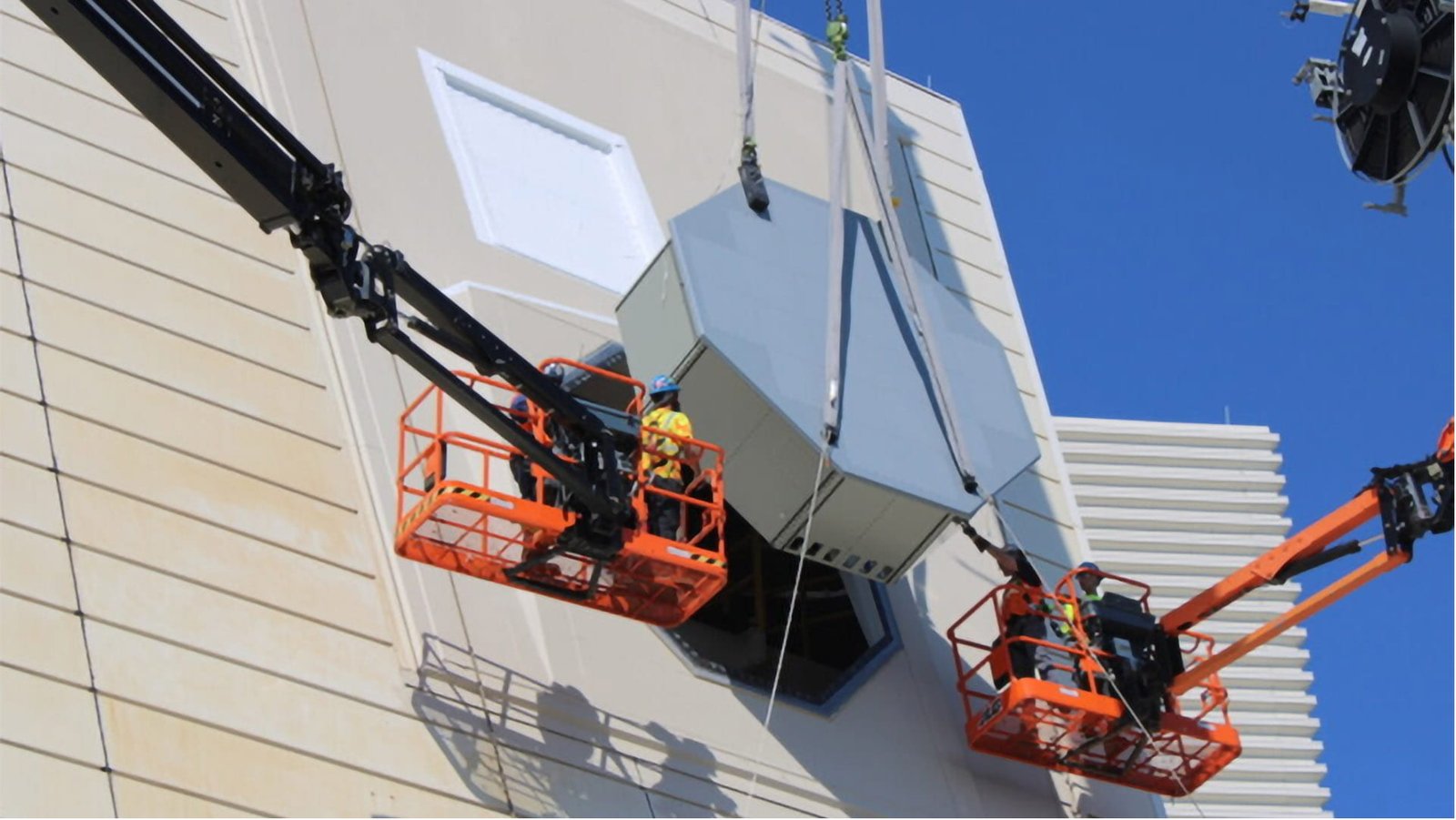
WALLOPS ISLAND, Va. — Raytheon, an RTX business, has delivered and installed the first SPY-6(V)4 radar array at the U.S. Navy's Surface Combat Systems Center on Wallops Island, Virginia, marking a significant milestone in the Navy's Flight IIA Arleigh Burke-class destroyer modernization program and the broader SPY-6 backfit program.
The installation is the first step toward validating the radar system before it is deployed aboard an operational destroyer. Shore-based testing at Wallops Island is expected to reduce the amount of testing required after installation on a ship, helping shorten shipyard time and support a more efficient upgrade process.
Land-Based Testing Before Ship Installation
The Surface Combat Systems Center at Wallops Island provides an open-water environment along the Atlantic Ocean, allowing engineers to evaluate the radar in conditions similar to those at sea.
Before being installed aboard a warship, the SPY-6(V)4 will undergo a comprehensive series of tests to verify integration with its dedicated power system and ensure compatibility with the Navy's combat systems.
According to Raytheon, conducting these evaluations ashore will reduce the amount of shipboard testing required during installation.
"By leveraging the Wallops test site, we'll be able to integrate SPY-6(V)4 with its dedicated power system before it reaches the ship, reducing the amount of testing needed on DDG 91," said Barbara Borgonovi, president of Naval Power at Raytheon. "That means less time in the shipyard, more time dedicated to the mission, and a smoother path for future backfit ships."
Initial testing is scheduled to begin later this year and continue through mid-2028.
USS Pinckney to Become the First Ship Equipped with SPY-6(V)4
The first destroyer selected to receive the new radar is USS Pinckney (DDG 91).
The ship is scheduled to undergo its radar modernization from late 2026 through 2028. By completing extensive testing at Wallops Island before ship installation, the U.S. Navy and Raytheon aim to keep the program on schedule while simplifying the transition from shore-based evaluation to operational deployment.
Designed Specifically for Flight IIA Destroyers
The SPY-6(V)4 is one of four variants in Raytheon's SPY-6 radar family and is the only version specifically developed for installation on existing Flight IIA Arleigh Burke-class destroyers.
As part of the Navy's DDG MOD 2.0 modernization program, the radar is intended to replace the legacy AN/SPY-1D(V) radar currently installed on these ships.
The radar features four fixed phased-array faces, with 24 Radar Modular Assemblies (RMAs) on each face. The modular architecture provides continuous 360-degree coverage while supporting scalability, improved reliability and lower maintenance requirements.
Improved Detection and Tracking Capability
Compared with the legacy AN/SPY-1D(V), the SPY-6(V)4 offers higher sensitivity, greater power density through gallium nitride (GaN) technology, improved detection of smaller and faster threats at longer ranges, and the ability to track substantially more targets simultaneously.
The radar is designed to detect and defend against a wide range of threats, including:
- Ballistic missiles
- Hypersonic missiles
- Cruise missiles
- Hostile aircraft
- Anti-air threats
- Anti-surface threats
It also supports electronic warfare operations while maintaining performance in complex clutter environments.
Wallops Testing Supports Fleet Modernization
The Wallops Island testing effort brings together the U.S. Navy, NASA's Wallops team, and industry partners.
The objective is to validate the radar's performance and system integration before shipboard installation, reducing testing requirements for individual vessels and supporting a more efficient modernization process across the fleet.
SPY-6 Family Continues to Expand
The SPY-6 family shares common hardware and software across all variants, allowing the U.S. Navy to use a modular radar architecture across multiple classes of ships.
The family includes:
- SPY-6(V)1 – Four fixed array faces with 37 RMAs each for Flight III Arleigh Burke-class destroyers.
- SPY-6(V)2 (Enterprise Air Surveillance Radar – Rotator Variant) – One rotating array with nine RMAs for amphibious ships and Nimitz-class aircraft carriers.
- SPY-6(V)3 (Fixed Variant) – Three fixed array faces with nine RMAs each for Ford-class aircraft carriers and guided-missile frigates.
- SPY-6(V)4 – Four fixed array faces with 24 RMAs each for existing Flight IIA Arleigh Burke-class destroyers.
The common design is intended to improve reliability while reducing maintenance requirements across the fleet.
Production Expansion to Meet Future Demand
According to Raytheon, two commissioned U.S. Navy ships are already operating SPY-6 radar variants, while 11 additional vessels have received the radar and are currently undergoing testing before entering service.
The U.S. Navy plans to deploy SPY-6 radars on more than 50 ships over the next decade as part of its surface fleet modernization effort.
To support future demand, Raytheon has invested $800 million to modernize its radar manufacturing facilities and expects to double SPY-6 production output by 2028.
The installation of the first SPY-6(V)4 radar array at Wallops Island marks an important step in preparing the radar for operational deployment on Flight IIA destroyers while supporting the U.S. Navy's long-term effort to modernize its existing surface fleet with advanced radar capabilities.
——— End of Article ———