The Indian Air Force (IAF) is on the verge of a transformative upgrade to its premier Su-30MKI fighter jets with the integration of the Dual Colour Missile Approach Warning System (DC-MAWS). Developed by the Defence Research and Development Organisation (DRDO), this advanced system is designed to provide a critical edge in missile threat detection and evasion, fortifying the aircraft’s defenses in increasingly contested airspaces.
Addressing a Crucial Gap in the Su-30MKI's Suite
The Su-30MKI, despite being a formidable multi-role fighter, has long been in need of a cutting-edge missile approach warning system to keep up with evolving missile technologies. DC-MAWS bridges this gap by leveraging state-of-the-art infrared detection capabilities, ensuring the aircraft remains resilient in the face of both current and emerging threats.
How DC-MAWS Works: A Blend of Technology and Precision
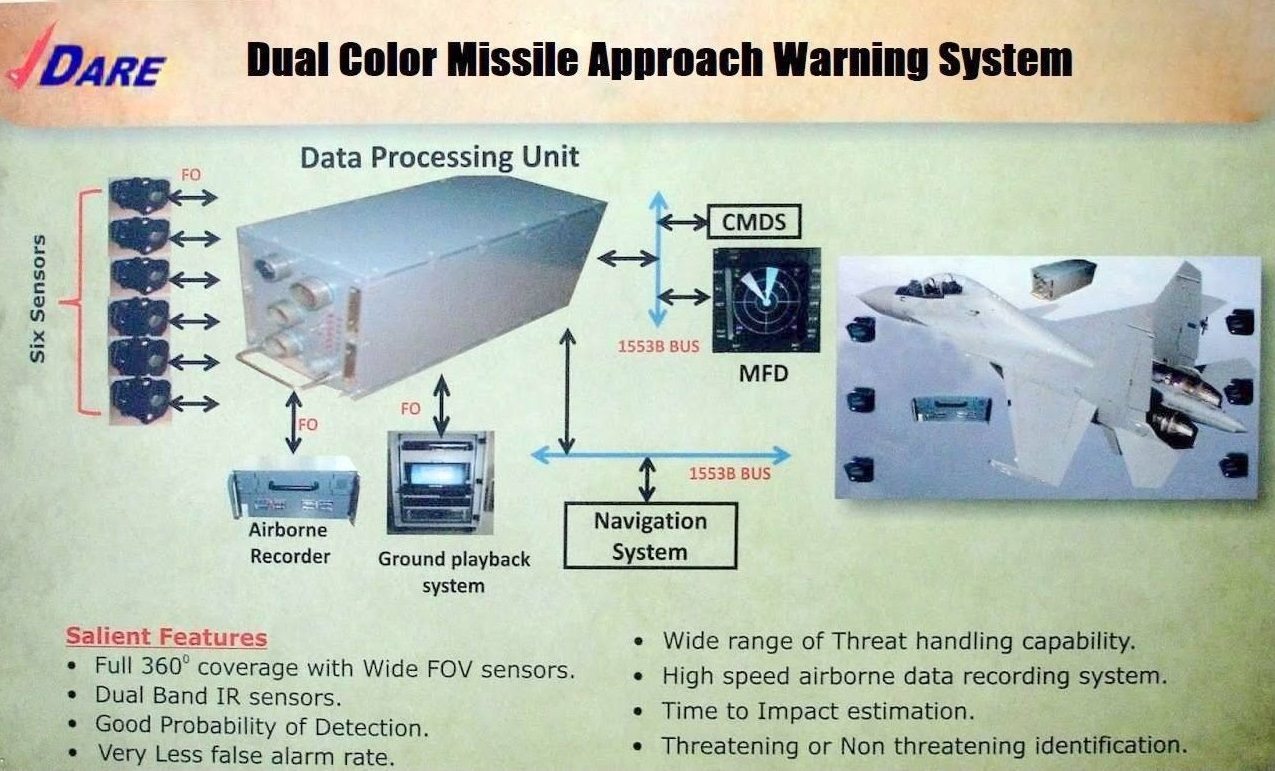
At the core of DC-MAWS is its ability to operate across two infrared (IR) bands, a feature that revolutionizes how threats are identified and prioritized. Traditional systems often struggle with high rates of false alarms due to background IR interference, such as sunlight reflections or heat emissions from non-threatening sources. By analyzing spectral data across dual IR bands, DC-MAWS sharply enhances threat discrimination, isolating genuine missile threats from benign sources.
The system employs six strategically positioned dual-band IR sensors to provide complete 360-degree coverage. These sensors continuously monitor the surrounding airspace, detecting missile launches in real-time and tracking their trajectory. The onboard processor, equipped with advanced algorithms, evaluates the data to calculate the missile's speed, trajectory, and time-to-impact. This information is relayed to the pilot, enabling swift decision-making and evasive actions.
Specifications and Advanced Features
DC-MAWS boasts a suite of high-performance features, making it a critical addition to the Su-30MKI fleet:
- Full Spatial Awareness: The system’s sensors provide seamless 360-degree monitoring, eliminating any blind spots around the aircraft.
- Dual-Color IR Detection: Utilizes two infrared bands for superior accuracy in identifying missile threats while minimizing false positives.
- Wide Spectrum Threat Handling: Capable of detecting missiles from a broad range of generations, including modern radar-guided and heat-seeking variants.
- Clutter Rejection Algorithms: Sophisticated onboard processing systems ensure accurate threat analysis, even in cluttered environments.
- Time-to-Impact Computation: Real-time calculations of incoming missile trajectories give pilots critical seconds to deploy countermeasures or perform evasive maneuvers.
Enhancing Survivability in Modern Combat
The integration of DC-MAWS is expected to significantly elevate the survivability of Su-30MKIs in high-threat environments. This system ensures the IAF’s frontline fighters are equipped to operate effectively in the face of advanced air defense systems, including long-range missiles and evolving electronic warfare threats.
Additionally, the indigenously developed system underscores India’s commitment to self-reliance in defense technology under the Make in India initiative. The DRDO’s success with DC-MAWS demonstrates its growing capability to deliver cutting-edge solutions tailored to the unique needs of the IAF.
Beyond the Su-30MKI: Potential for Wider Application
While DC-MAWS is currently being integrated into the Su-30MKI, its modular design and scalability open up possibilities for use in other aircraft within the IAF’s fleet, such as the Tejas and the upcoming AMCA (Advanced Medium Combat Aircraft). Furthermore, its ability to handle a wide variety of missile threats ensures its relevance in diverse operational scenarios, from dogfights to strategic strikes.
Strengthening India’s Air Defense Arsenal
With the DC-MAWS integration, the IAF takes a significant step forward in modernizing its defensive capabilities. This system not only enhances the operational effectiveness of the Su-30MKI but also symbolizes India’s strides in indigenous defense technology development. As regional and global security dynamics evolve, such advancements ensure that India’s air force remains prepared for the challenges of 21st-century warfare.
——— End of Article ———