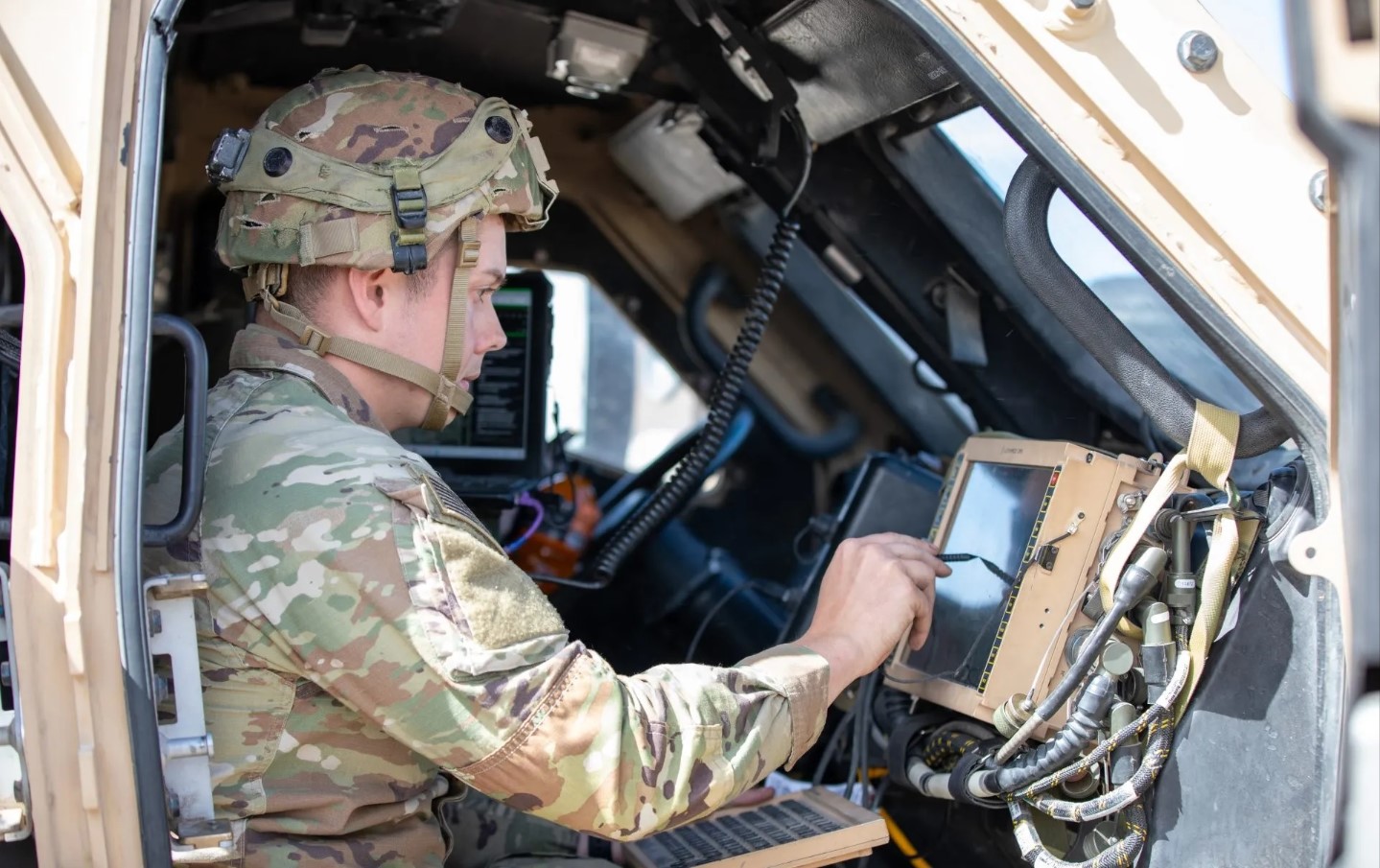
Washington, D.C., — June 19, 2026 : The U.S. Defense Advanced Research Projects Agency (DARPA) has launched a new initiative to develop computing systems capable of operating with extremely limited power, memory, and hardware resources in military environments.
On June 18, 2026, DARPA's Multi X Office (MXO) released a Request for Information (RFI), DARPA-SN-26-97, seeking concepts for Low Resource Computing (LRC). The effort aims to enable software to run effectively on hardware that is normally considered too small, power-constrained, or unreliable for practical use.
The initiative addresses a growing gap between commercial computing and military requirements. While commercial technology increasingly relies on large artificial intelligence (AI) models supported by data centers and cloud infrastructure, military systems often operate in remote or contested environments without reliable power, communications, or cloud access.
Focus on Computing Under Resource Constraints
DARPA's RFI highlights the evolution of computing efficiency by comparing the 1945 ENIAC computer, which weighed nearly 30 tons and consumed about 150 kilowatts of power, with modern low-power microchips that operate on fractions of a milliwatt while delivering significantly greater performance.
The agency said it is not seeking incremental improvements in size, weight, and power (SWaP) requirements. Instead, it is looking for new approaches to computing under severe resource constraints.
Physical Resource Challenges
DARPA identified four key areas of interest:
- Ultra-low-power systems operating on nanowatts of power through environmental energy harvesting and without dependence on external power grids.
- Minimal-memory computing capable of performing complex tasks using only kilobytes or bytes of memory.
- Hardware resilience that enables reliable operation on noisy, degrading, or damaged hardware in combat conditions.
- Unconventional fabrication methods, including low-precision manufacturing, legacy techniques, mechanical systems, biological components, and computational origami-based circuit designs.
Logical Resource Challenges
The agency is also seeking solutions in four software-related areas:
- Zero-trust environments that continue functioning despite corrupted or manipulated data.
- Minimal system access approaches that perform complex tasks without requiring administrative control of hardware.
- Self-hosting architectures that allow systems to modify and reprogram themselves in the field.
- Simplified user interfaces designed for personnel operating under stress with minimal training requirements.
Managed by DARPA's Multi X Office
The program is managed by DARPA's Multi X Office (MXO), formerly the Microsystems Technology Office (MTO), which was renamed on May 20, 2026. The office now focuses on integrated capabilities spanning computer architecture, materials science, algorithms, human factors, and supply chain resilience.
Daniel Ridge serves as the technical point of contact for the initiative.
DARPA is inviting responses from universities, research organizations, companies, startups, and individual inventors. The RFI does not require participants to hold security clearances, allowing broader participation from non-traditional defense contractors and academic researchers.
Responses are due by July 17, 2026. DARPA plans to hold an invitation-only workshop in Hanover, New Hampshire, in August 2026 to review promising concepts and help shape future research programs.
The Low Resource Computing initiative is intended to support future military operations by developing computing systems that can function effectively in environments where power, communications, and infrastructure are limited or unavailable.
——— End of Article ———