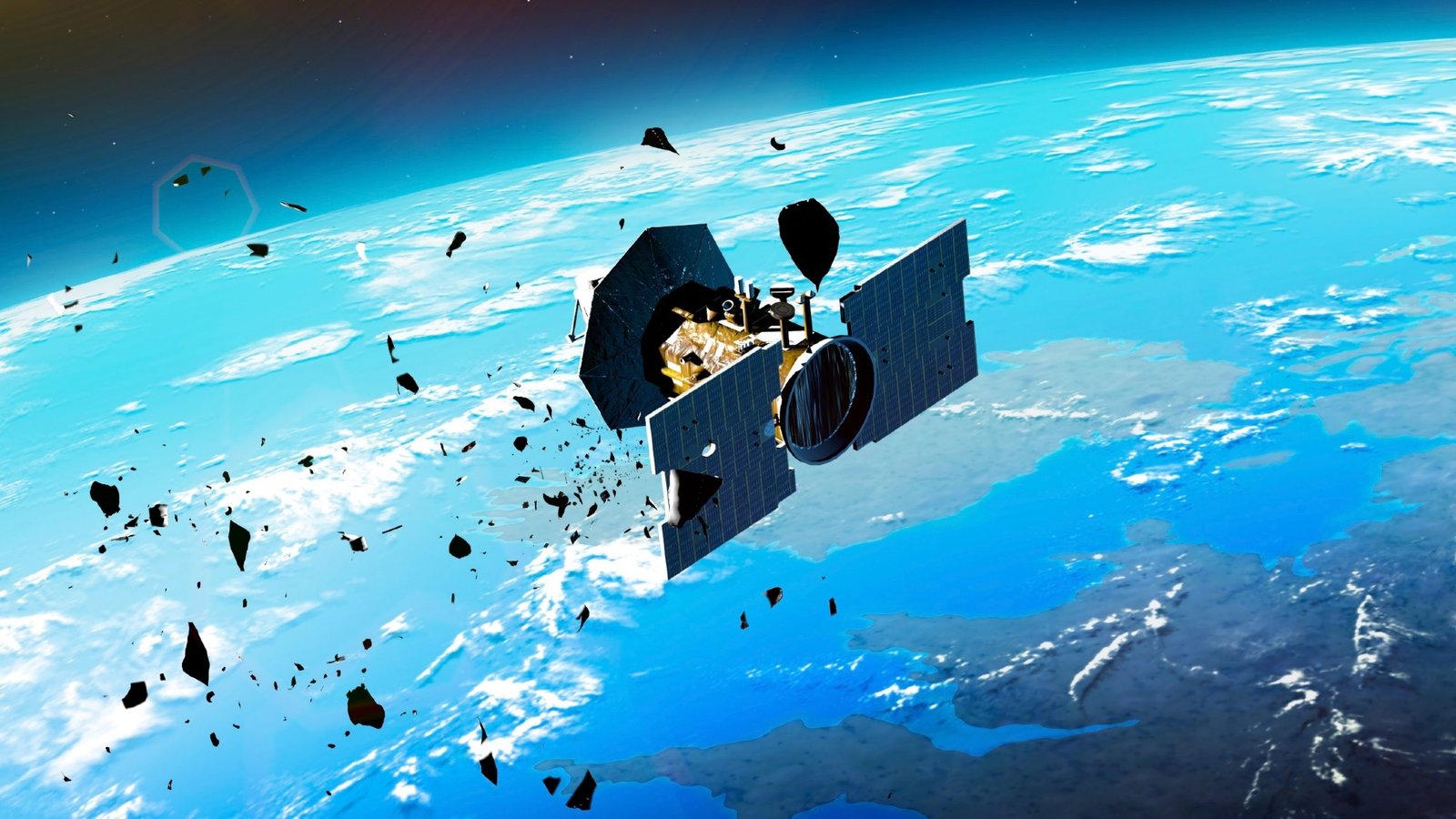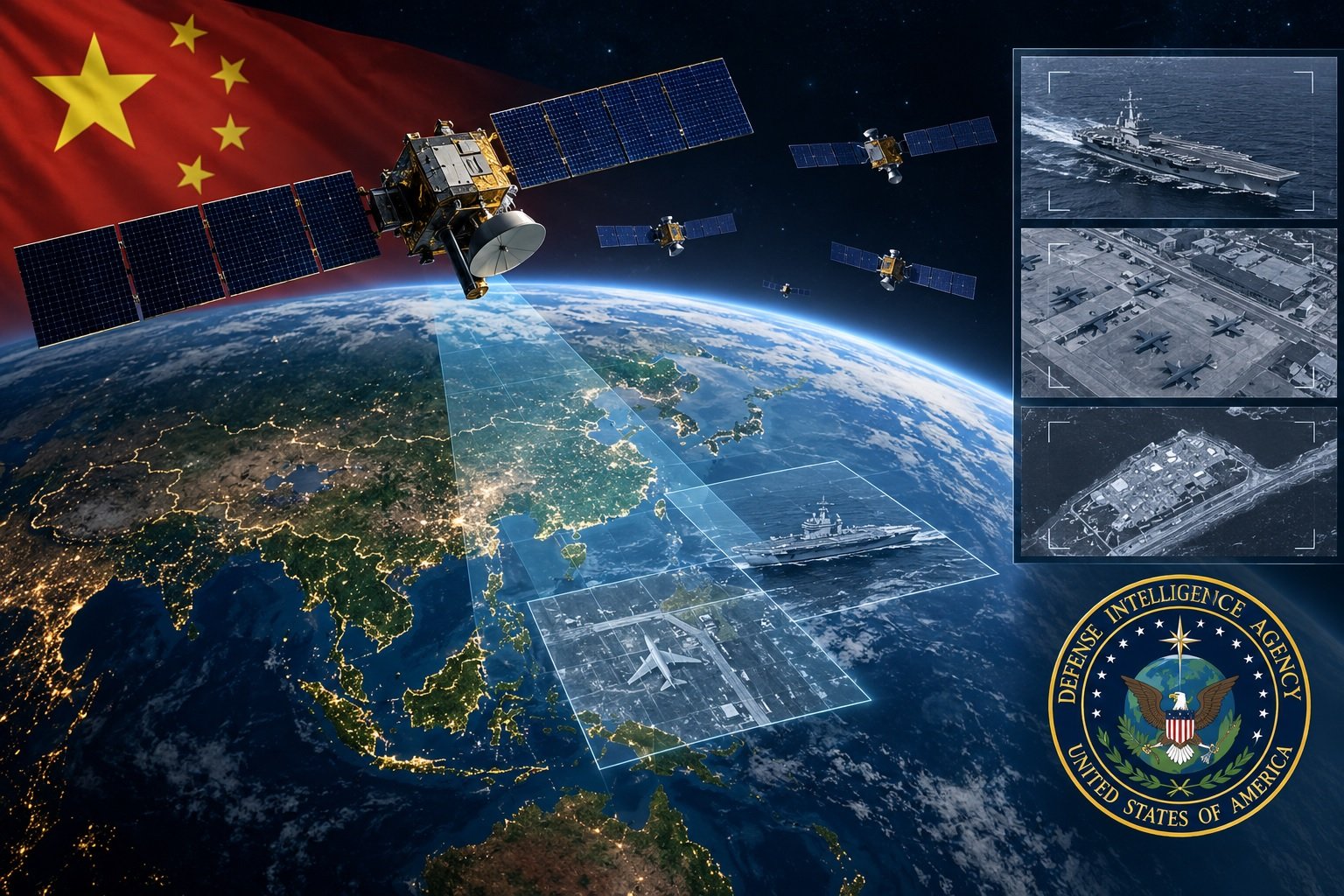
Washington, — China's military intelligence, surveillance and reconnaissance (ISR) satellite fleet has expanded to more than 510 spacecraft, marking a more than threefold increase since 2018, according to a new assessment by the U.S. Defense Intelligence Agency (DIA).
The DIA released its 2026 report, Challenges to Security in Space, on October 26. The assessment states that China's ISR satellite constellation included more than 510 spacecraft as of July 2026, reflecting the country's expanding space-based military capabilities.
China's Expanding Satellite Surveillance Network
According to the report, China's satellite network combines electro-optical imaging sensors, synthetic aperture radar (SAR), and electronic and signals intelligence systems. These technologies allow satellites to collect imagery and intelligence under different environmental conditions, including cloud cover and darkness.
The DIA assessment states that China's satellite network can obtain imagery of virtually any location on Earth within 30 minutes or less. This capability improves Beijing's ability to monitor and track U.S. and allied military forces, particularly across the Indo-Pacific region.
The report identifies the Korean Peninsula, Taiwan, the Philippines, the Indian Ocean, and the South China Sea as important areas of monitoring.
The expanding constellation supports China's ability to track aircraft carriers, military aircraft, and other strategic assets, while providing intelligence for long-range military operations.
Military and Commercial Satellites
The satellite count includes spacecraft operated by both Chinese government agencies and commercial companies.
The DIA notes that many Chinese satellites are presented as civilian or commercial systems. However, their dual-use capabilities and China's military-civil fusion policies allow data collected by these satellites to support the People's Liberation Army (PLA).
The report describes China's space-based ISR capabilities as robust and continuing to expand, particularly through the development of low-Earth-orbit satellite constellations.
China and U.S. Satellite Fleet Comparison
Todd Harrison of the American Enterprise Institute provided additional figures on the growth of China's satellite fleet.
According to his analysis, China's operational surveillance and weather satellite fleet increased from 141 spacecraft in 2018 to 541 in 2026. The surveillance-only fleet grew from 124 to 453 satellites during the same period.
Harrison also noted that the rate of China's satellite expansion has slowed in recent years.
For comparison, the United States operates 643 operational surveillance and weather satellites, up from 298 in 2018.
The DIA assessment highlights China's continued efforts to integrate space-based intelligence capabilities into joint military operations, improving its ability to detect, track, and target forces on land and at sea.
The report also describes China's broader objective of strengthening its position as a leading space power through the integration of civilian, commercial, and military space activities.
The full Challenges to Security in Space 2026 report is available through the Defense Intelligence Agency's official website. The assessment's information is current as of July 2026.
——— End of Article ———