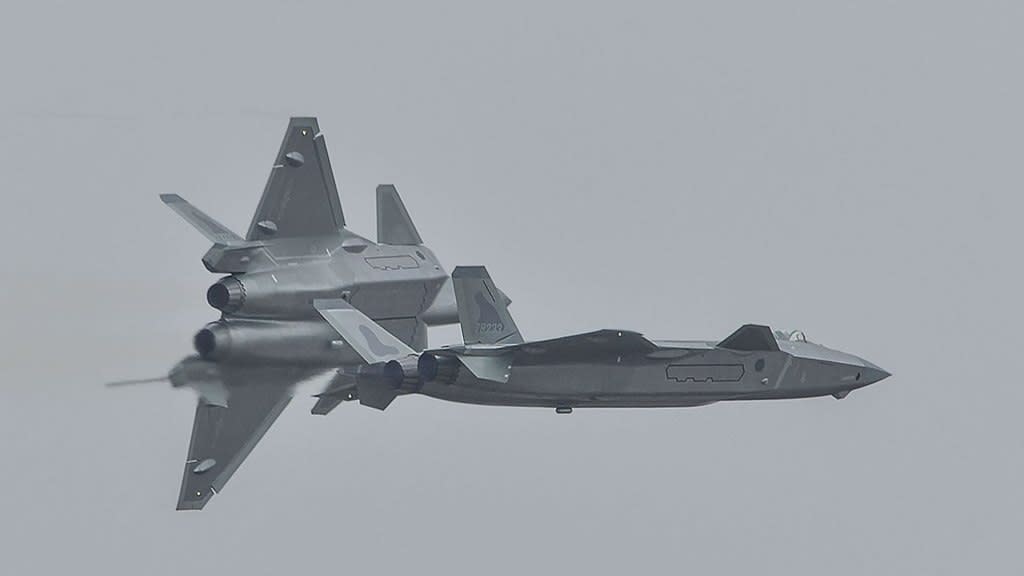
Chinese military researchers claim to have developed a revolutionary stealth coating capable of neutralizing advanced radar systems designed to detect stealth aircraft. This technological breakthrough, attributed to scientists at the National University of Defence Technology (NUDT), marks a significant step in radar evasion capabilities and could redefine the stealth dynamics of modern aerial warfare.
The newly developed material is exceptionally thin, likened to the thickness of two sheets of standard printing paper. Despite its minimal profile, the coating demonstrates remarkable properties in absorbing low-frequency electromagnetic (EM) waves, a crucial domain for modern anti-stealth radars. These radars often operate in the P-band and L-band frequencies, which have been particularly effective in tracking stealth aircraft like the American F-22 Raptor and F-35 Lightning II.
How It Works: The Science Behind the Coating
The stealth coating employs an intricate network of specialized metal circuits capable of interacting with incoming EM waves. When radar signals in wavelengths ranging from 70 cm (2.3 feet) to 20 cm strike the surface, these circuits generate surface currents that convert the radar signals into heat. This heat dissipates harmlessly into the air, effectively nullifying the radar signature of the object coated with this material.
This design solves a long-standing challenge in stealth technology: countering the longer wavelengths of anti-stealth radars. Traditional stealth materials, often bulkier and less effective at absorbing low-frequency signals, have struggled in this area. By addressing this vulnerability, China’s new coating promises a more comprehensive stealth capability.
Versatility and Manufacturing Advantages
In addition to its performance, the coating is lightweight, flexible, and cost-efficient to produce in bulk. This makes it suitable for a wide array of military applications, including aircraft, naval vessels, and potentially ground vehicles. Its ease of application further enhances its utility, ensuring seamless integration into existing and future military platforms.
Strategic Implications
China’s advancements in stealth technology align with its broader efforts to modernize its military and counter adversarial systems in an increasingly contested regional and global security environment. The development of this stealth coating comes amid escalating tensions in the Indo-Pacific, where radar detection systems are critical to monitoring airspace and enforcing defense strategies.
Should these claims hold true under operational conditions, the technology could offer China a distinct advantage in aerial combat, where radar evasion is pivotal. Enhanced stealth capabilities may complicate adversaries’ radar operations, disrupt their early warning systems, and alter the strategic calculus in potential conflicts.
Challenges and Future Prospects
While the breakthrough is promising, independent verification and operational testing remain key to assessing its effectiveness. Modern anti-stealth radars often rely on multiple frequency bands and layered detection methods, making it uncertain whether a single technological advancement can entirely outmatch such systems. However, the development underscores the rapid pace of innovation in China’s defense sector and signals its intent to achieve parity—or dominance—in key military technologies.
As the competition for stealth supremacy intensifies, this new stealth coating could herald a transformative era in military technology, raising the stakes in aerial defense and offense strategies worldwide.
——— End of Article ———