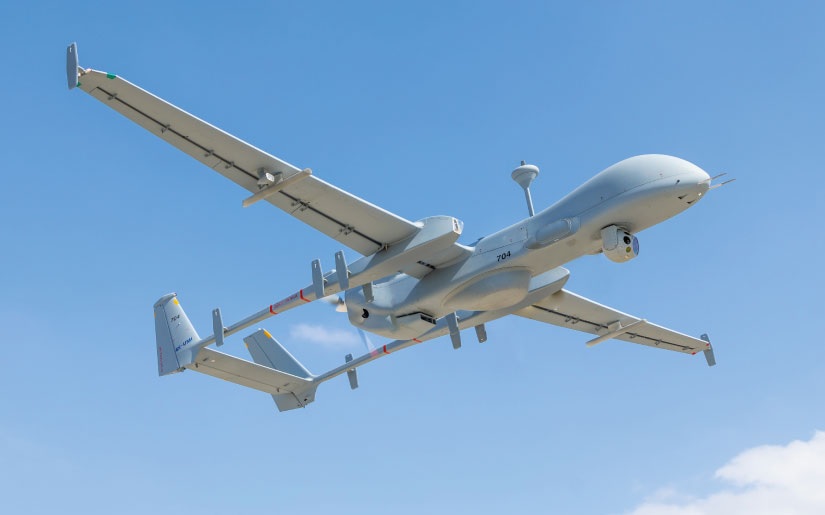
India’s quest for indigenous drone technology is set to take a major leap forward with the imminent maiden flight of the Archer-NG (Next Generation), an advanced Medium Altitude Long Endurance (MALE) Unmanned Aerial Vehicle (UAV). Developed by the Aeronautical Development Establishment (ADE), a division of the Defence Research and Development Organisation (DRDO), Archer-NG represents a significant milestone in the country’s military modernization efforts.
High-Speed Taxi Trials Completed
Archer-NG recently cleared a critical development phase with the successful completion of high-speed taxi trials (HSTT), a key precursor to its first flight. Military sources indicate that every effort is being made to ensure the UAV takes flight before the much-awaited Bengaluru Air Show, set to commence on February 10, 2025. Should there be any delays, the UAV is expected to be airborne no later than March 2025.
Specifications of Archer-NG
Archer-NG boasts cutting-edge features that make it a formidable addition to India’s aerial arsenal.
- Configuration: Single Engine Twin Boom (SETB)
- All-Up Weight (AUW): 1,700 kg
- Payload Capacity: 300 kg
- Altitude Capability: Operates at heights up to 27,500 feet
- Endurance: 18 hours
- Range: 250 km for Line-of-Sight (LOS) and up to 1,000 km for Beyond Line-of-Sight (BLOS) operations
- Navigation: Integrated with the indigenous GAGAN satellite navigation system
- Technologies: Autonomous Take-Off and Landing (ATOL) capability
Armament and Capabilities
Designed to carry a variety of weapon systems, Archer-NG is capable of deploying:
- Smart Anti-Airfield Weapons (SAAWs)
- Anti-Tank Guided Missiles (ATGMs)
The UAV also features state-of-the-art systems for real-time imagery and signal intelligence, enabling Intelligence, Surveillance, Target Acquisition, and Reconnaissance (ISTAR) missions. Its ability to deliver precision-guided munitions makes it a versatile platform for both defensive and offensive operations.
Development and Compatibility
Archer-NG shares significant technological commonalities with the now-downgraded TAPAS program (formerly Rustom-II), including avionics, software, Ground Control Station (GCS), and Ground Data Terminal (GDT). This shared development reduces costs and enhances operational compatibility. The UAV has also garnered interest from the Tri-Services Command (CINCAN) in the Andaman and Nicobar Islands, emphasizing its strategic utility for maritime surveillance and reconnaissance in sensitive regions.
Industrial Collaboration and Future Production
Bharat Electronics Limited (BEL) has been entrusted with manufacturing both versions of the Archer UAV, underscoring India’s commitment to the Make in India initiative. This move not only strengthens the domestic defense manufacturing sector but also positions Archer-NG as a potential export product for international markets.
Strategic Implications
The Archer-NG UAV aligns with India’s vision of enhancing indigenous technological capabilities while addressing critical gaps in military hardware. Its long-endurance and multi-role features are particularly suited for the evolving demands of modern warfare, including border surveillance, counter-insurgency operations, and precision strikes.
As India prepares to showcase its capabilities at the Bengaluru Air Show, Archer-NG stands as a testament to the nation’s growing prowess in defense technology. Its maiden flight will mark not just an engineering achievement but a significant step toward self-reliance in defense production.
——— End of Article ———