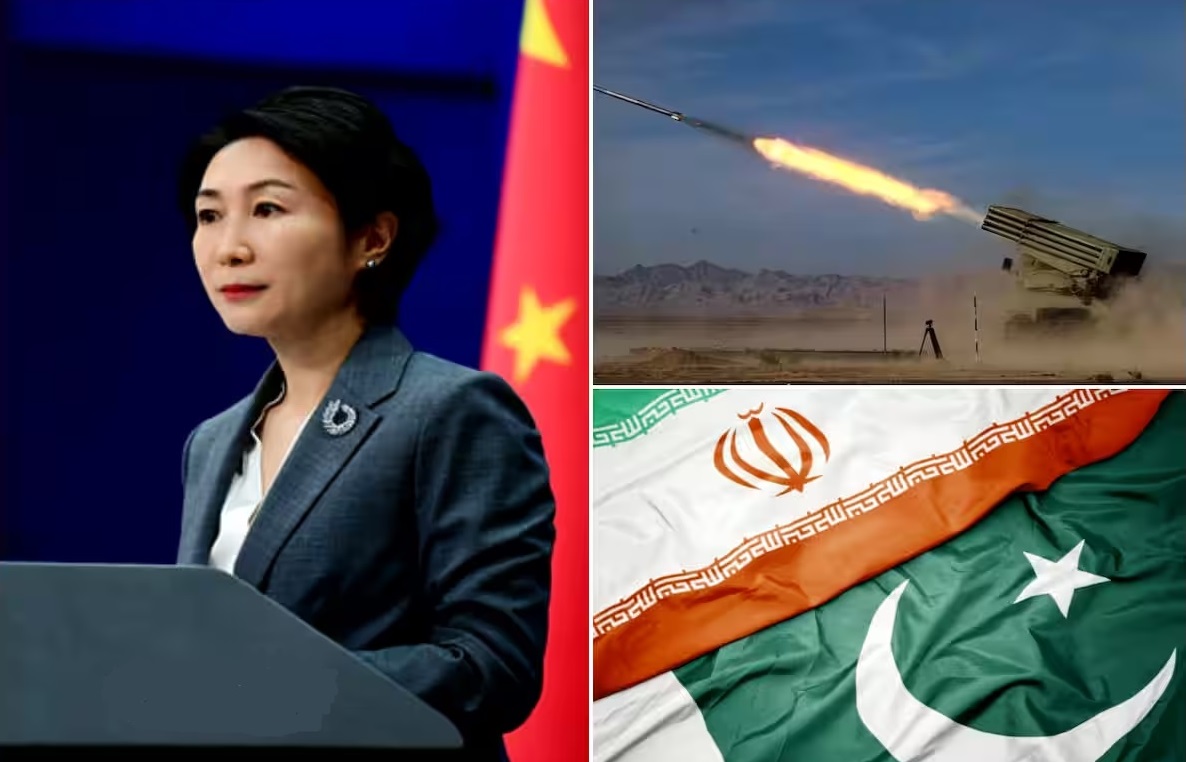
Defense News ,China :- China has stepped in to ease tensions between Pakistan and Iran after recent missile strikes. The two nations were involved in strikes against each other, prompting China to offer a "constructive role" and encourage both sides to exercise restraint and avoid escalation.
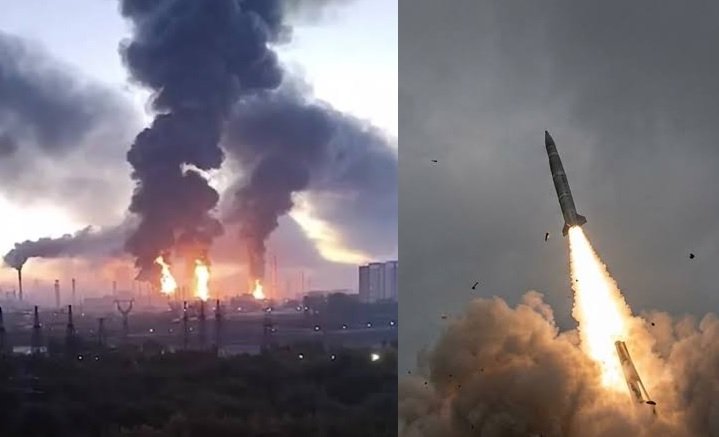
Pakistan carried out precision military strikes in Iran's Siestan-Balochistan province, targeting what it termed as "terrorist hideouts." This move was seen as a response to Iranian missile and drone attacks on Tuesday, which had targeted bases of the Sunni Baloch militant group 'Jaish al-Adl' in Pakistan's Balochistan province.
China, being an ally of Pakistan and having warming relations with Iran, found itself in a delicate position. While Pakistan is a longstanding ally, Iran's growing ties with China in recent years allow Beijing to expand its influence in the region. Additionally, China relies significantly on oil imports from Iran.
When questioned about Pakistan's airstrikes inside Iran, the Chinese Foreign Ministry spokesperson, Mao Ning, stated that China was paying close attention to the situation. She emphasized that relations between countries should adhere to the principles of the UN Charter and international law. Mao stressed the importance of respecting the sovereignty, independence, and territorial integrity of all nations.
Mao expressed hope that both Iran and Pakistan, as close neighbors with influence, would exercise restraint and avoid escalation. China offered to play a constructive role in easing the situation, highlighting its willingness to mediate.
Addressing concerns about Iran's airstrikes, Mao reiterated China's stance on handling international relations based on UN Charter principles. She emphasized the need for all parties to respect the independence, sovereignty, and territorial integrity of other countries. China encouraged both Pakistan and Iran to resolve their disputes through consultation and dialogue.
China's offer to mediate poses a challenge, considering the delicate relationship between Pakistan, a Sunni-majority country, and Iran, predominantly Shia. However, China had previously claimed success in bringing together Iran and Saudi Arabia, arch-rivals, to restore diplomatic ties.
China's ambitious China-Pakistan Economic Corridor (CPEC), a $60 billion project connecting Pakistan's Balochistan to China's Xinjiang province, faces challenges from Baloch nationalists and Sunni extremist groups. The corridor, vital for China's economic interests, has witnessed repeated attacks on Chinese workers involved in various projects in Pakistan.
——— End of Article ———