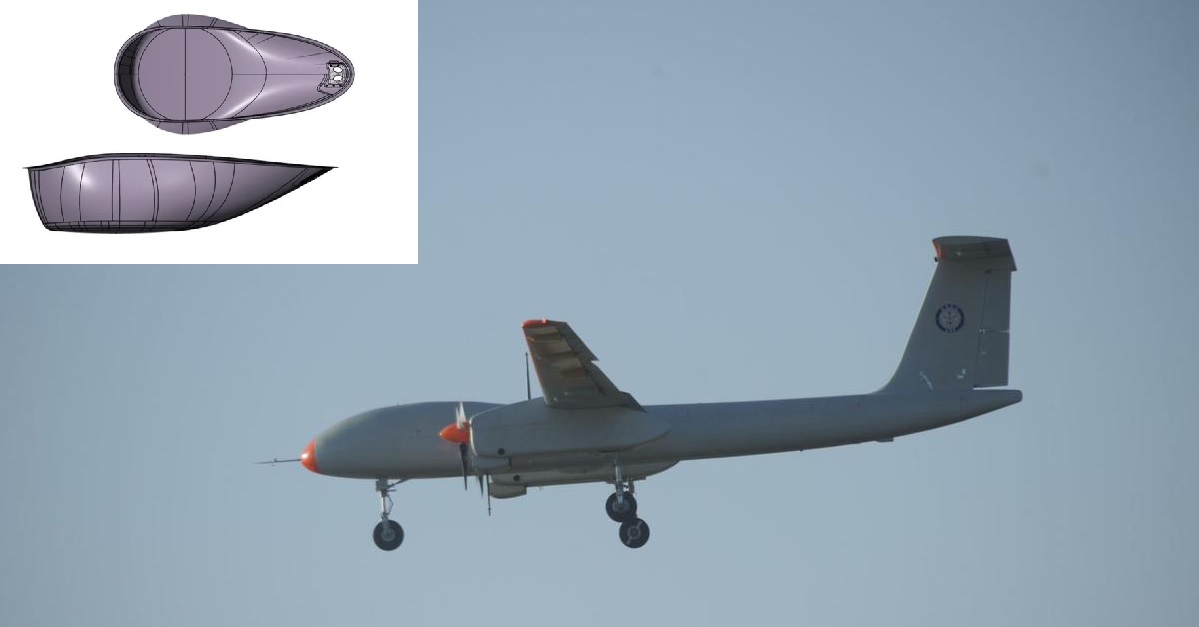
The Aeronautical Development Establishment (ADE), a prominent laboratory under India’s Defence Research and Development Organisation (DRDO), is pushing the boundaries of unmanned aerial technology with its latest project—the integration of advanced radar systems into the TAPAS UAV. The TAPAS (Tactical Airborne Platform for Aerial Surveillance) is already a formidable unmanned aerial vehicle, but the addition of a Multi-Parameter Phased Array Radar (MPAR) and a Synthetic Aperture Radar (SAR) is set to enhance its surveillance capabilities, particularly for naval requirements.
This development is being driven by the Indian Navy’s growing need for robust maritime surveillance tools in regions like the Andaman and Nicobar Islands. The islands are strategically vital, offering India a vantage point over some of the busiest and most sensitive sea lanes in the Indian Ocean Region (IOR). In recent years, Chinese naval activities, including submarines and warships operating in these waters, have increased significantly. This has heightened India's need for persistent intelligence, surveillance, and reconnaissance (ISR) capabilities to safeguard its maritime borders.
TAPAS UAV: The Indian Navy’s New Maritime Sentinel
The Indian Navy has shown a keen interest in the TAPAS UAV, with plans to acquire 10 units for bolstering maritime surveillance. The UAV’s long endurance and capability to operate at extended ranges make it an ideal asset for continuous monitoring of the IOR. However, what makes TAPAS truly stand out is the advanced radar systems it will carry—the MPAR and SAR.
These radars bring cutting-edge technology that will allow the TAPAS UAV to perform a variety of missions that require both real-time and all-weather monitoring. Whether it is tracking enemy ships or submarines, detecting incursions into Indian waters, or maintaining an overall awareness of maritime activities, TAPAS is poised to become a critical player in India’s naval defense strategy.
MPAR: Versatile and Efficient
The Multi-Parameter Phased Array Radar (MPAR) is a next-generation radar system that offers several advantages over traditional radar technologies. The most significant feature of MPAR is its ability to electronically steer its radar beam. Unlike conventional radars that require mechanical movement of the antenna, MPAR can quickly switch between different scanning modes, allowing for faster and more efficient detection.
- Simultaneous Target Tracking: MPAR excels in tracking multiple targets simultaneously, be it surface ships, submarines, or airborne threats. This makes it invaluable in busy maritime zones, where numerous vessels are constantly moving.
- All-Weather Monitoring: MPAR’s design ensures it functions effectively even in harsh weather conditions. Whether it’s the heavy rains of the monsoon season or rough sea states, MPAR guarantees uninterrupted surveillance.
- Rapid Scanning of Large Areas: MPAR’s phased array technology enables it to cover vast oceanic expanses quickly. This rapid scanning is particularly useful in the IOR, where early detection of foreign vessels is critical for naval security.
SAR: High-Resolution Imaging for Persistent Surveillance
Synthetic Aperture Radar (SAR) is another advanced technology that makes TAPAS a powerful tool for maritime surveillance. SAR operates by using the motion of the UAV to simulate a much larger radar antenna, producing high-resolution images of the Earth’s surface. This allows for detailed imagery, regardless of environmental conditions, making it ideal for detecting stealthy platforms like submarines or smaller vessels that may otherwise evade detection.
- Long-Range Detection: TAPAS equipped with SAR can monitor vast stretches of ocean, providing long-range detection of surface and subsurface threats. In the context of the Indian Navy’s operations, this capability is crucial for maintaining an early-warning system against Chinese naval activity in the region.
- Surface and Subsurface Detection: SAR has the ability to penetrate surface layers, which is key to detecting submarines at shallow depths. Chinese submarines, which have been increasingly active in the IOR, often attempt to evade detection by staying submerged. SAR can pick up on subtle disturbances on the water’s surface or even slight temperature changes, making it an effective countermeasure against these stealthy incursions.
- High-Resolution Imagery in All Conditions: SAR can capture detailed images in adverse conditions like rain, fog, or darkness. This gives the Indian Navy a consistent and reliable tool to monitor maritime activities, especially in the IOR where weather conditions can frequently hamper traditional surveillance systems.
A Strategic Boost for India’s Maritime Security
The integration of MPAR and SAR radars into the TAPAS UAV will significantly enhance India’s Maritime Domain Awareness (MDA). By deploying these UAVs from the Andaman and Nicobar Islands, the Indian Navy can maintain round-the-clock surveillance over a critical part of the Indian Ocean. This region is becoming increasingly important, not just for India’s maritime security but for the broader strategic dynamics involving China’s growing naval presence.
Moreover, TAPAS will also contribute to India’s anti-submarine warfare (ASW) efforts. The UAV’s endurance and real-time radar capabilities will allow it to work in tandem with Indian Navy ships and aircraft to detect, track, and counter potential threats from Chinese submarines and warships operating in the region. This layered defense strategy is crucial for India to maintain its dominance in the Indian Ocean and protect its maritime interests.
With the integration of MPAR and SAR radars, ADE is positioning the TAPAS UAV as a game-changer for India’s maritime defense. The system will offer the Indian Navy a comprehensive surveillance solution, capable of detecting, tracking, and monitoring a wide range of maritime threats in real-time. As India continues to modernize its defense capabilities, TAPAS, equipped with these advanced radar systems, will play a key role in safeguarding the nation’s maritime interests in an increasingly contested region.
——— End of Article ———