World
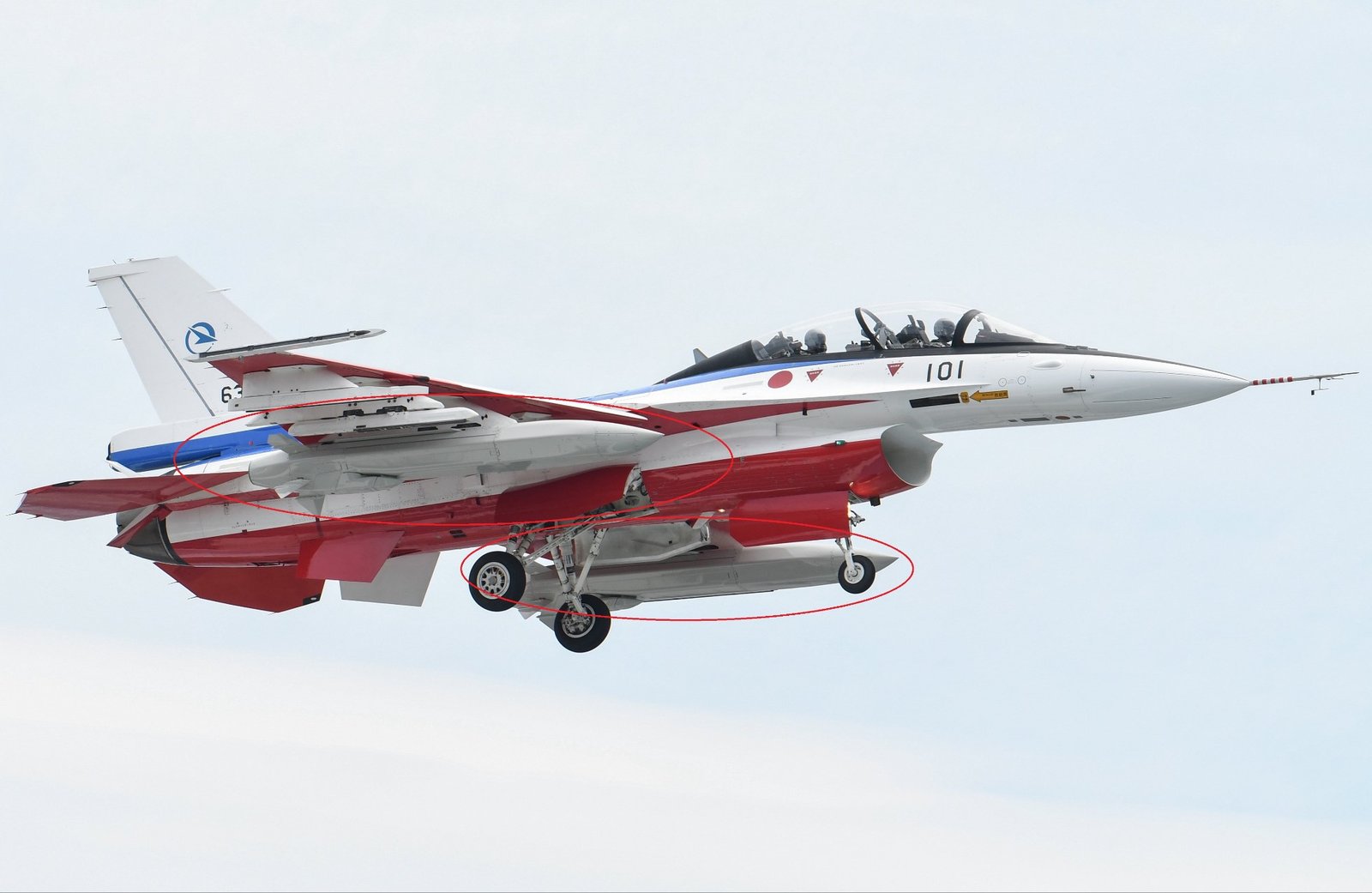
TOKYO — The Japan Air Self-Defense Force (JASDF) has begun captive-carry flight tests of its new air-launched Type 25 cruise missile on the Mitsubishi F-2 fighter, marking an important milestone in the development of Japan's next-generation stand-off strike capability. The first flight tests took place on July 30, 2026, from Gifu Air Base, where an F-2B test aircraft (tail number 63-8101) assigned to the Air Development and Test Wing (ADTW) was photographed carrying two missiles beneath its inboard wing pylons. Images of the flight were shared on the social media platform X by the account @AKEBOVO. An accompanying F-2A prototype (tail number 63-8501) flew alongside the test aircraft during the evaluation. 7/30 岐阜基地 RJNG 2nd岐阜基地「夏の夕べ」で飲んで帰るだけのつもりでしたが、ラッキーでした🍻 pic.twitter.com/0N5IfXBXXH — ih168 (@ih1681) July 30, 2026 Captive-Carry Flight Testing The aircraft carried what appear to be inert test versions of the air-launched Type 25 missile. During captive-carry testing, missiles remain attached to the aircraft throughout the flight while engineers evaluate their effects on the aircraft's aerodynamic performance, structural loads, handling characteristics, and overall flight stability. These tests are a standard part of missile integration before progressing to separation trials, in which the missile is safely released from the aircraft, followed by live-fire testing. Air-Launched Version of the Type 25 Missile The new air-launched weapon is based on Japan's Type 25 Surface-to-Ship Guided Missile (25SSM), previously known as the upgraded Type 12 (12SSM-ER) coastal defense missile. Japan officially redesignated the ground-launched system as the Type 25 Surface-to-Ship Guided Missile in March 2026 and has already started deploying it to Japan Ground Self-Defense Force units, including Camp Kengun in Kumamoto Prefecture. The missile is designed to engage both surface ships and land targets, providing a common long-range strike capability across multiple branches of Japan's Self-Defense Forces. Multi-Platform Missile Family The Type 25 missile family has been developed by Mitsubishi Heavy Industries as a standardized long-range weapon that can be launched from land-based systems, aircraft, surface ships, and submarines. In September 2025, Mitsubishi Heavy Industries signed a contract with Japan's Ministry of Defense to produce ship- and submarine-launched cruise missiles. The contract was officially announced in October 2025. According to current plans, submarine-launched variants will be fired through the torpedo tubes of Japan's Sōryū-class and Taigei-class submarines. A future submarine being developed by Kawasaki is also planned to feature dedicated vertical launch cells for these long-range weapons. Missile Specifications Public information on the air-launched Type 25 remains limited. However, the ground-launched version is reported to have a range of about 1,000 kilometers, while earlier estimates for the improved Type 12 missile family placed its range between 1,000 and 1,500 kilometers against surface ships with a displacement of up to 15,000 metric tons. Because the air-launched variant begins its flight at altitude and does not require a launch booster, it is expected to achieve a similar or greater range. The missile is approximately 9 meters long and carries a warhead weighing about 300 kilograms. Its guidance system combines inertial navigation with GPS correction during the cruise phase before switching to an active radar seeker for terminal guidance. The seeker uses an active phased-array antenna, enabling improved target detection in complex environments while increasing resistance to electronic countermeasures. Deployment Timeline Japan has accelerated development of stand-off strike weapons in recent years as part of its broader defense modernization program. The ground-launched Type 25 entered service in 2026, while the ship-launched and air-launched variants are scheduled for designation and deployment around fiscal year 2027. The first operational F-2 fighters equipped with the air-launched Type 25 are planned to be based at Hyakuri Air Base. Next Phase of Testing The start of captive-carry flight testing represents the latest stage in integrating the Type 25 cruise missile with the F-2 fighter. Following completion of aerodynamic and structural evaluations, the program is expected to move to missile separation tests and later live-fire trials before the weapon enters operational service. The Type 25 is intended to provide Japan with a common long-range strike weapon capable of engaging both maritime and land targets from multiple launch platforms, including aircraft, ground launchers, surface ships, and submarines.
Read More → Posted on 2026-07-30 15:42:32
U.S
WASHINGTON — The U.S. Department of Defense has awarded California-based Impulse Space a $27.77 million contract modification to supply two additional Mira maneuverable spacecraft for the U.S. Space Force, strengthening the service's space domain awareness capabilities in low Earth orbit (LEO). The award, announced on July 29, 2026, was issued as Modification P00010 to the company's existing Small Business Innovation Research (SBIR) Phase III contract (FA8809-25-C-B001). The modification increases the total contract value from approximately $35.04 million to $62.81 million. At the time of the award, $19.75 million in fiscal year 2025 procurement funds had been obligated. The contract is managed by Space Systems Command at Kirtland Air Force Base, New Mexico. Engineering and production work will be carried out at Impulse Space's facility in Redondo Beach, California, with completion scheduled by March 31, 2030. Supporting Space Domain Awareness Missions The two additional Mira spacecraft will host U.S. government-furnished surveillance payloads designed to support space domain awareness (SDA) missions in low Earth orbit. These payloads will detect, track, identify and assess satellites, orbital debris and other objects operating in space. Space domain awareness is a key mission for the U.S. Space Force, providing information needed to monitor activity in orbit, protect national security space assets and assess potential threats. The spacecraft will enable government sensors to operate from maneuverable platforms that can reposition after launch as mission requirements change. Maneuverable Platform for Changing Orbital Requirements Unlike conventional satellites that generally remain in fixed orbital paths, the Mira spacecraft is designed as a maneuverable orbital transfer vehicle capable of changing orbits during a mission. This allows operators to reposition payloads and sensors to improve observation and coverage when needed. The spacecraft uses an onboard propulsion system together with autonomous guidance software to carry out repeated orbital maneuvers throughout its mission. This flexibility enables government and commercial payloads to be moved between operational orbits after deployment. Transition from Prototype to Operational Capability The latest award was made under the SBIR Phase III program, which is intended for technologies that have already demonstrated military value and are transitioning into operational use rather than research and development. The purchase of two additional Mira spacecraft indicates that the Space Force considers the platform suitable for continued operational missions. The repeat procurement also reflects Impulse Space's growing role as a supplier for national security space programs. Founded in 2021 by propulsion engineer Tom Mueller, Impulse Space focuses on in-space transportation systems. The company has also been selected for the Space Force's National Security Space Launch (NSSL) Phase 3 Lane 1 program, expanding opportunities to support future government space missions. Previous Missions and Space Force Programs Impulse Space has previously flown the Mira platform on multiple missions, including LEO Express flights that demonstrated high-thrust orbital maneuvers and payload operations. An earlier SBIR Phase III contract worth $34.5 million, awarded in 2024, covered two Mira spacecraft for the Space Force's VICTUS SURGO and VICTUS SALO tactically responsive space demonstration missions planned for 2026. The new contract covers only the two spacecraft. Launch services and the government-furnished payloads will be provided separately. Mira Spacecraft Specifications According to Impulse Space, the Mira spacecraft offers capabilities designed for missions requiring orbital mobility and precision. Key specifications include: Propulsion: Proprietary Saiph bipropellant thrusters using nitrous oxide and ethane. Payload Capacity: Up to 300 kilograms (660 pounds). Delta-v Performance: 500–550 meters per second for a 300 kg payload, and up to 900 meters per second for a 100 kg payload. Guidance and Control: Autonomous guidance software, reaction wheels and thrusters. Pointing Accuracy: Better than 10 arcseconds, supporting stable operation of sensitive optical payloads. Expanding Flexible Space Architecture The procurement is part of the Space Force's broader effort to build a more distributed and flexible space architecture by incorporating commercial spacecraft alongside traditional national security satellites. U.S. defense officials have highlighted increased activity by China and Russia involving spacecraft capable of complex maneuvers, close-proximity operations and orbital inspection missions. In response, the Space Force is expanding its ability to monitor the orbital environment using maneuverable platforms that can reposition sensors as operational requirements evolve. With the addition of two more Mira spacecraft, the Space Force continues to expand its use of commercially developed maneuverable vehicles to support persistent space domain awareness operations in low Earth orbit.
Read More → Posted on 2026-07-30 15:25:15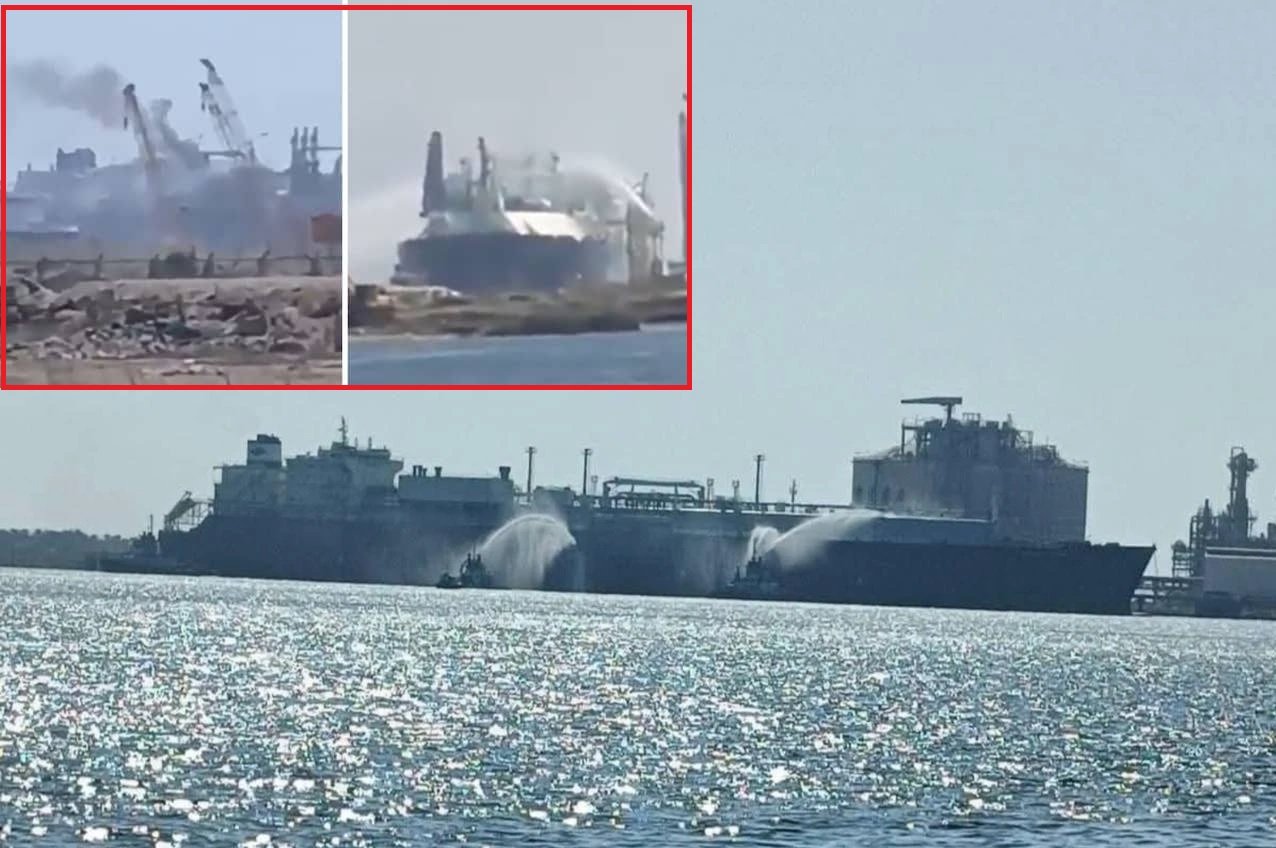
World
Damietta, Egypt — A drone strike on a U.S.-owned floating gas storage vessel at Egypt's Damietta Port has raised new security concerns over energy infrastructure in the eastern Mediterranean, highlighting the growing risks facing maritime energy routes amid the ongoing Middle East conflict. The incident occurred on July 29, when an unmanned aerial vehicle struck the Energos Winter, a U.S.-owned floating storage and regasification unit (FSRU) operating under the Marshall Islands flag while it was docked at Damietta Port during cargo operations. According to the Egyptian cabinet, a preliminary investigation confirmed that a drone caused the fire aboard the vessel. The blaze later spread to the GasLog Salem, a Bermuda-flagged liquefied natural gas (LNG) carrier. The Egyptian Ministry of Petroleum and Mineral Resources said there were no injuries or fatalities. Firefighting and security teams quickly brought the fire under control, and both vessels were moved away from the terminal to prevent further damage. Authorities also confirmed there was no damage to the port's infrastructure, and operations at other berths were expected to resume soon. Maritime security firm Ambrey and trading sources identified the targeted vessel as the Energos Winter, which is owned by U.S.-based Energos Infrastructure and has a storage capacity of about 138,250 cubic metres. The vessel's operations are managed by a subsidiary of Norway's Wilhelmsen Group, while it is leased by Egypt's state-owned Egyptian Natural Gas Holding Company. The second vessel affected by the fire, GasLog Salem, is operated by a Greek shipping company. Verified video footage released by news agencies showed emergency crews and tugboats working to extinguish the flames as smoke rose from the vessels. Investigation Continues No country or armed group has claimed responsibility for the attack, and Egyptian authorities said investigations remain ongoing. The strike took place against the backdrop of the wider Middle East conflict that began in late February 2026 involving the United States, Israel and Iran. Since then, commercial shipping through the Strait of Hormuz, the Red Sea, and the Bab el-Mandeb Strait has faced repeated disruptions due to attacks and security threats, affecting regional energy exports and maritime traffic. Saudi Arabia has adjusted some of its oil export routes in response to security risks in the Persian Gulf, while Yemen's Iran-backed Houthi movement has announced measures targeting Saudi shipping. Two Iranian officials, speaking anonymously to The New York Times, described the Damietta explosion as a drone attack intended to demonstrate that global shipping and energy supplies could face greater disruption if the regional conflict expands further. However, they did not confirm whether Iran or any regional ally was responsible for carrying out the attack. Iranian state media had previously listed Damietta among potential locations linked to separate tensions involving Ukraine, but no official Iranian statement has claimed responsibility for the strike. U.S. President Donald Trump said he had been briefed on the incident and stated that Iran or its proxies were responsible, adding that the United States would respond strongly. Strategic Importance of Damietta Damietta Port is located on Egypt's Mediterranean coast near the northern entrance of the Suez Canal and serves as an important hub for the country's liquefied natural gas (LNG) operations. Egypt has increasingly relied on floating storage and regasification units (FSRUs) such as the Energos Winter to support natural gas imports for electricity generation and industrial demand, alongside remaining LNG export activities at the terminal. The attack has also drawn attention to the security of maritime routes that connect major global energy chokepoints. The Strait of Hormuz remains one of the world's most important energy corridors, traditionally handling about 20% to 25% of global seaborne oil trade. Ongoing disruptions in Hormuz and the Bab el-Mandeb Strait have already affected commercial shipping, prompting some producers to redirect exports through alternative routes linked to the Red Sea and the Suez Canal. Security analysts cited in reports said the Damietta incident appears intended to demonstrate that energy infrastructure along alternative export routes could also be vulnerable during the conflict. However, no official investigation has confirmed the motive behind the attack. Shipping Security Concerns Maritime security companies said the strike increases concerns that the conflict could spread beyond previously affected areas. Many commercial shipping companies have already reduced or rerouted traffic through parts of the Red Sea and the Persian Gulf because of security risks. A drone strike at a Mediterranean port near the Suez Canal introduces an additional security concern for vessels operating through Egyptian facilities. Egyptian authorities said they are continuing to investigate the incident while taking measures to safeguard national security and critical infrastructure. Although analysts noted that the direct impact on global LNG supplies from this single incident is limited because Egypt is not a major global gas exporter, the attack adds to broader concerns over the security of regional energy transportation routes as tensions in the Middle East continue.
Read More → Posted on 2026-07-30 14:32:30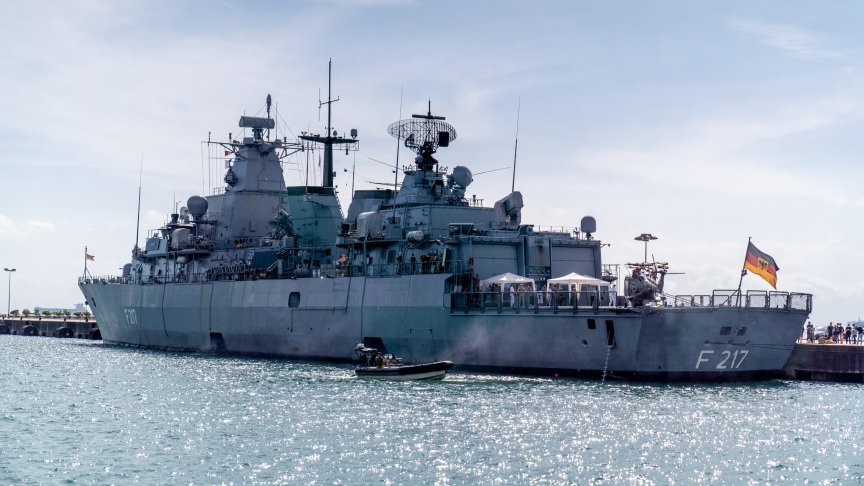
Europe
WILHELMSHAVEN, Germany — Rheinmetall has secured a mid-three-digit million euro contract to modernize the German Navy's F123-class frigate Bayern, extending the vessel's operational service life until at least 2035 while upgrading its systems to meet current operational requirements. The agreement was finalized at the end of the second quarter of 2026. The modernization work will be carried out at Rheinmetall's Neue Jadewerft shipyard in Wilhelmshaven and is scheduled to continue through 2029. Comprehensive Service-Life Extension Commissioned in 1996, Bayern is a 143-meter frigate belonging to the Brandenburg-class (F123), a class of four ships primarily designed for anti-submarine warfare (ASW). The modernization program is intended to keep the frigate operationally ready while updating its systems to current technological standards. The vessel is currently berthed at the Neue Jadewerft facility, where crews are removing major components in preparation for the next phase of the project. After this stage is completed, the ship will be transferred to the shipyard's dry dock for the main modernization work. Key Systems to Be Upgraded The overhaul will include upgrades across several major areas of the frigate. The ship's Combat Management System (CMS) will be completely replaced, while the radar sensor suite will be modernized to support current operational requirements. Essential shipboard engineering systems will also undergo refurbishment, including the vessel's propulsion and drive systems, to improve long-term reliability and support continued service. In addition, Rheinmetall will upgrade selected anti-submarine warfare (ASW) capabilities, enhancing the frigate's effectiveness in future deployments. Rheinmetall Highlights Naval Modernization Expertise Tim Wagner, CEO of Rheinmetall's Naval Systems division, said the company is focused on delivering the modernization project on schedule. "We are now fully focused on delivering the project on schedule. The Neue Jadewerft shipyard has many years of experience in the modernization and maintenance of naval vessels—particularly frigates—and possesses extensive expertise in integrating complex maritime systems. Combined with our close cooperation with all project partners and our customer, these capabilities provide the foundation for delivering the ship to the German Navy on time and to the required quality standards." Strengthening Rheinmetall's Naval Services Business Rheinmetall said the contract demonstrates the importance of its service business within the Naval Systems division. The company noted that long-term maintenance, modernization and lifecycle support remain core activities that help maintain the operational readiness of naval platforms over many years. The contract also provides a significant addition to Rheinmetall's order book. It follows the German government's cancellation of the delayed F126 frigate program, a project Rheinmetall had expected to manage. Supporting Future German Navy Operations The F123-class frigates continue to serve as part of the German Navy's surface fleet. The service-life extension program for Bayern is designed to ensure the vessel remains operational through at least 2035, with upgraded combat, engineering, sensor and anti-submarine warfare systems that meet current operational requirements.
Read More → Posted on 2026-07-30 14:17:53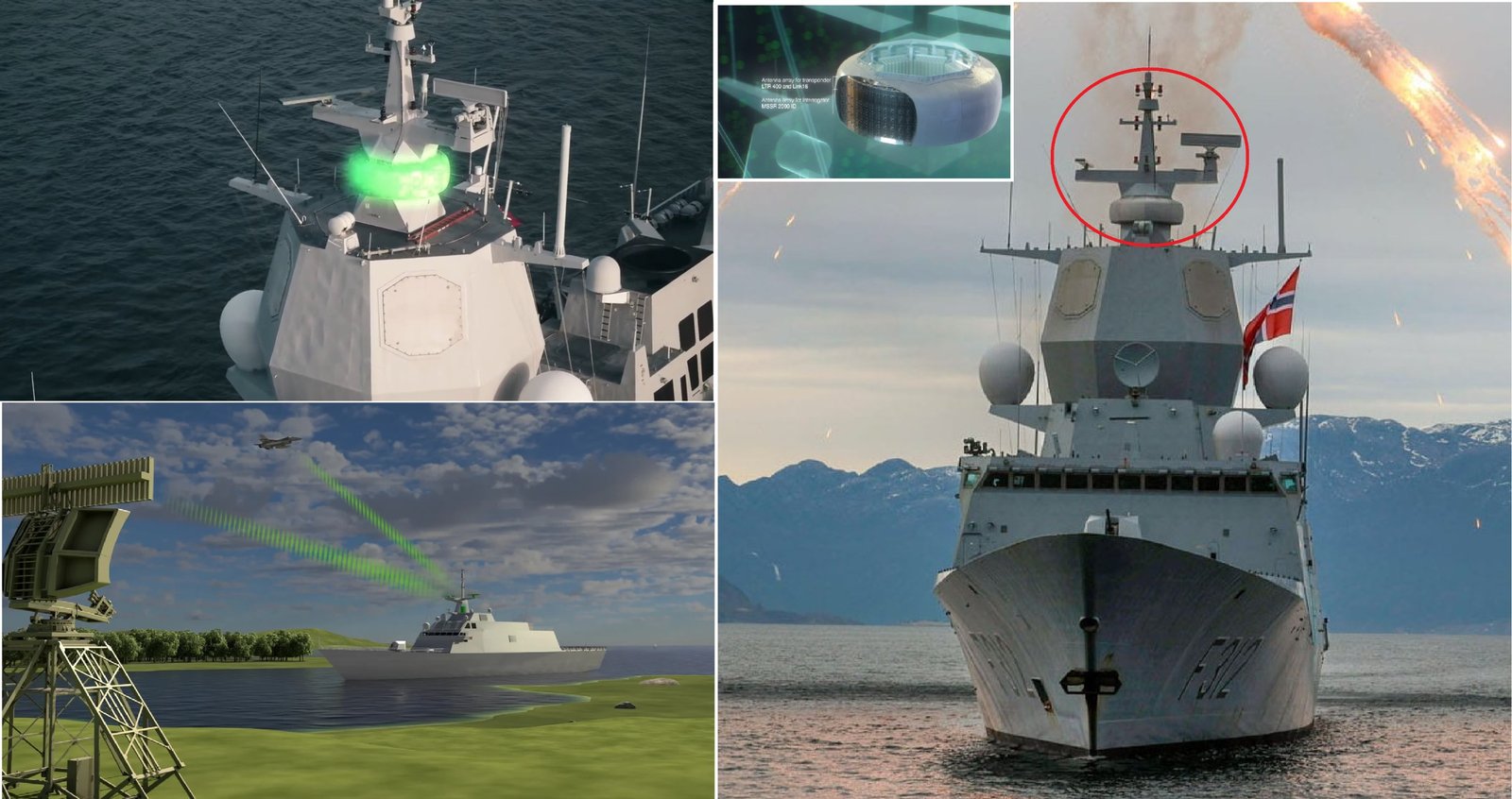
Europe
OSLO, July 30, 2026 — According to Naval Analyses (@D__Mitch), which cited visual evidence, industry sources and defense procurement information, the Royal Norwegian Navy's Fridtjof Nansen-class frigates have been equipped with HENSOLDT's NESIS 4000 electronically steered, non-rotating Identification Friend or Foe (IFF) antenna system as part of an upgrade that has received little public attention. The analysis indicates that the modernization has been underway since 2019. The upgrade replaces the traditional mechanically rotating IFF antenna with HENSOLDT's fixed, electronically scanned NESIS 4000 system. Comparisons between older and more recent photographs of the frigates show a clear change in the design of the ships' main masts. Earlier images display rotating antennas mounted at the masthead, while newer photographs show the circular, fixed mast structure associated with the NESIS 4000. HENSOLDT, the German sensor specialist, introduced the NESIS 4000 in April 2019. The system is based on Active Electronically Scanned Array (AESA) technology and electronically steers interrogation beams instead of relying on a rotating mechanical antenna. The fixed, ring-shaped antenna can also be integrated lower within a ship's mast structure. According to HENSOLDT, the electronically steered design enables faster identification of friendly and unknown contacts compared with conventional rotating systems. The NESIS 4000 provides continuous 360-degree coverage with an operational range of up to 200 nautical miles. The company also states that the system can track up to 2,000 targets simultaneously across its full coverage area. The fixed design removes moving mechanical parts, reducing mechanical wear and maintenance requirements during service. Positioning the antenna lower within the mast also reduces the ship's radar cross-section (RCS) and infrared signature compared with a rotating antenna installed at the top of the mast. The system supports real-time "lock-on track" operation and includes a fully passive operating mode. By using data links such as ADS-B and Mode 5 Level 2 reception, the frigate can monitor surrounding air and maritime activity without actively transmitting signals that could reveal its position. Evidence that the system has entered operational service on Norwegian frigates has also emerged from industry sources. A LinkedIn post by a HENSOLDT-linked individual showed HNoMS Roald Amundsen fitted with the NESIS 4000 integrated into its mast. A company comment on the post described it as the first operational use of the new product on a frigate. The post dates to approximately 2022. The Fridtjof Nansen class was built by Spain's Navantia and delivered to Norway between 2006 and 2011. Five frigates were originally constructed, with four remaining in service following the loss of HNoMS Helge Ingstad in 2018. The frigates serve as the Royal Norwegian Navy's primary surface combatants and are equipped with the Aegis combat system and the Lockheed Martin AN/SPY-1F radar as their primary sensor. Additional onboard systems include a Reutech air and surface surveillance radar. HENSOLDT had previously supplied its MSSR 2000 I secondary radar for military IFF applications to the Norwegian Navy and several other operators. Although Norway has announced various modernization programs for the Nansen-class fleet over the years, public references to the installation of the NESIS 4000 have remained limited. Official Norwegian defence statements and standard open-source descriptions of the frigates have not highlighted the modification in detail. The installation of the NESIS 4000 represents a transition from conventional rotating IFF antennas to electronically steered fixed-array technology aboard the Royal Norwegian Navy's surface combatants. The upgrade provides continuous 360-degree identification capability at extended range while reducing the ships' overall radar and infrared signatures and lowering long-term maintenance requirements.
Read More → Posted on 2026-07-30 14:08:27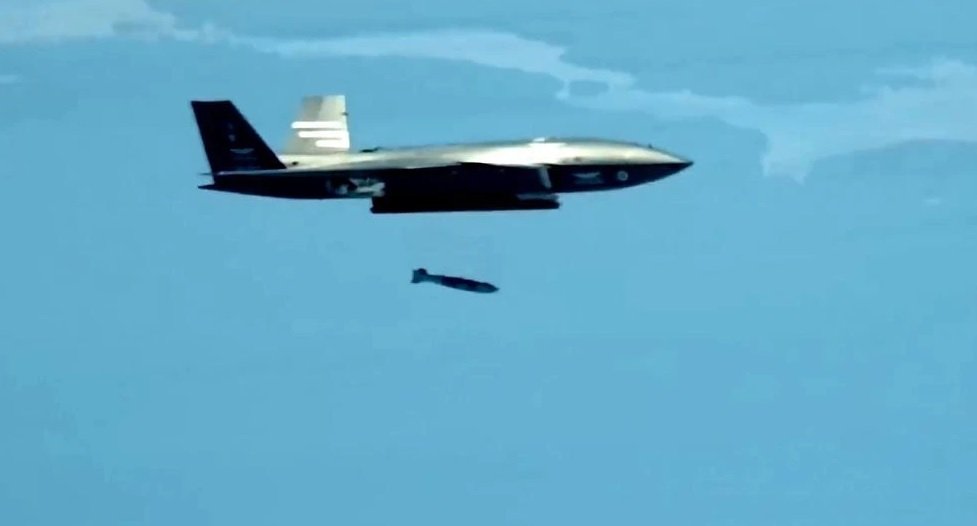
World
ÇORLU, Türkiye — Türkiye's Bayraktar KIZILELMA unmanned combat aircraft has successfully completed its first live-fire tests using its internal weapons bay, marking an important step in the platform's low-observable strike capability. During the tests, the aircraft accurately released two domestically developed smart munitions—ROKETSAN's TEBER-82 and ASELSAN's TOLUN-P—from its internal weapons compartment and achieved direct hits on their designated targets. Baykar, the developer of KIZILELMA, announced the results on July 30, 2026. The tests were conducted at the Çorlu Flight Training and Test Center in Tekirdağ using the serial production aircraft with tail number S2. According to the company, KIZILELMA first conducted a successful internal-bay firing of the ROKETSAN-produced TEBER-82 on July 25. A second test followed on July 28, when the aircraft successfully released ASELSAN's TOLUN-P munition from its internal weapons bay. In both flights, the aircraft took off from Çorlu, flew to the target area, released the weapons from the internal compartment, and accurately struck the designated targets. The successful releases represent the first time both munitions have been fired from KIZILELMA's internal weapons bay. They had previously been tested from the aircraft's external under-wing hardpoints. 🇹🇷 Türkiye's Bayraktar KIZILELMA successfully completed its first live-fire tests from its internal weapons bay, releasing the TEBER-82 and TOLUN-P smart munitions and hitting designated targets. The milestone strengthens the UCAV's low-observable precision strike capability. pic.twitter.com/VDvmkPfjL7 — The Defense News (@TheDefenseNews) July 30, 2026 Internal Weapons Bay Supports Low-Observable Operations The successful use of the internal weapons bay is an important capability for low-observable combat aircraft. Carrying weapons inside the fuselage helps reduce the aircraft's radar cross-section compared with external stores, while also preserving aerodynamic performance by minimizing drag. Baykar said the successful tests confirm KIZILELMA's ability to conduct precision strikes while maintaining a lower radar signature. Internal carriage is intended to improve the aircraft's effectiveness during operations in heavily defended environments and support deeper penetration missions using domestically developed weapons. Munitions Used During the Tests The two precision-guided munitions used during the trials were developed by Turkish defense companies. The TEBER-82, developed by ROKETSAN, is a guidance kit that converts standard MK-82 general-purpose bombs into precision-guided weapons. It uses inertial navigation, GPS, and a semi-active laser seeker for guidance. According to the available specifications, it has a range of 2 to 28 kilometers, weighs approximately 270 kilograms, offers a circular error probable of less than three meters, and can engage both fixed and moving targets. It also includes an optional proximity sensor. Following the successful firing, ROKETSAN CEO Murat İkinci said the internal weapons station test had been completed successfully and highlighted the continued cooperation between the companies. The TOLUN-P, developed by ASELSAN, is an INS/GNSS-guided gliding munition in the 250-pound class designed for precision strikes. According to ASELSAN CEO Ahmet Akyol, its integration involved the SADAK-4T smart pneumatic rack, enabling the weapon to be carried inside KIZILELMA's internal weapons bay. Builds on Previous Weapons Integration The internal weapons bay tests expand KIZILELMA's ongoing weapons integration program. The aircraft has previously completed firing tests with the Gökdoğan air-to-air missile, the JET-230 air-to-surface supersonic missile, LGK-82 guidance kits, and external carriage and release of both TOLUN and TEBER-82 munitions. In mid-July 2026, KIZILELMA successfully test-fired the JET-230 missile at a range exceeding 120 kilometers. According to previous program milestones, the aircraft also became the first unmanned fighter to destroy a jet-powered aerial target using a beyond-visual-range air-to-air missile in November 2025. In December 2025, two KIZILELMA prototypes completed an autonomous close-formation flight. Platform Overview Bayraktar KIZILELMA is Türkiye's first jet-powered unmanned combat aircraft and is designed as a low-observable, single-engine multirole platform. The aircraft has an overall payload capacity of approximately 1.5 tons distributed between its internal weapons bays and external under-wing stations. Depending on configuration, its maximum takeoff weight ranges from approximately 6 to 8.5 tons. Broader Significance Defense analysts note that data collected during KIZILELMA's internal weapons bay testing could support the development of other Turkish low-observable aircraft programs that also use internal weapon bays, including TUSAŞ's ANKA-III unmanned combat aircraft and the KAAN fifth-generation fighter. The successful completion of the internal-bay live-fire tests marks another step in validating KIZILELMA's ability to integrate domestically produced precision-guided weapons while supporting low-observable strike operations.
Read More → Posted on 2026-07-30 13:47:25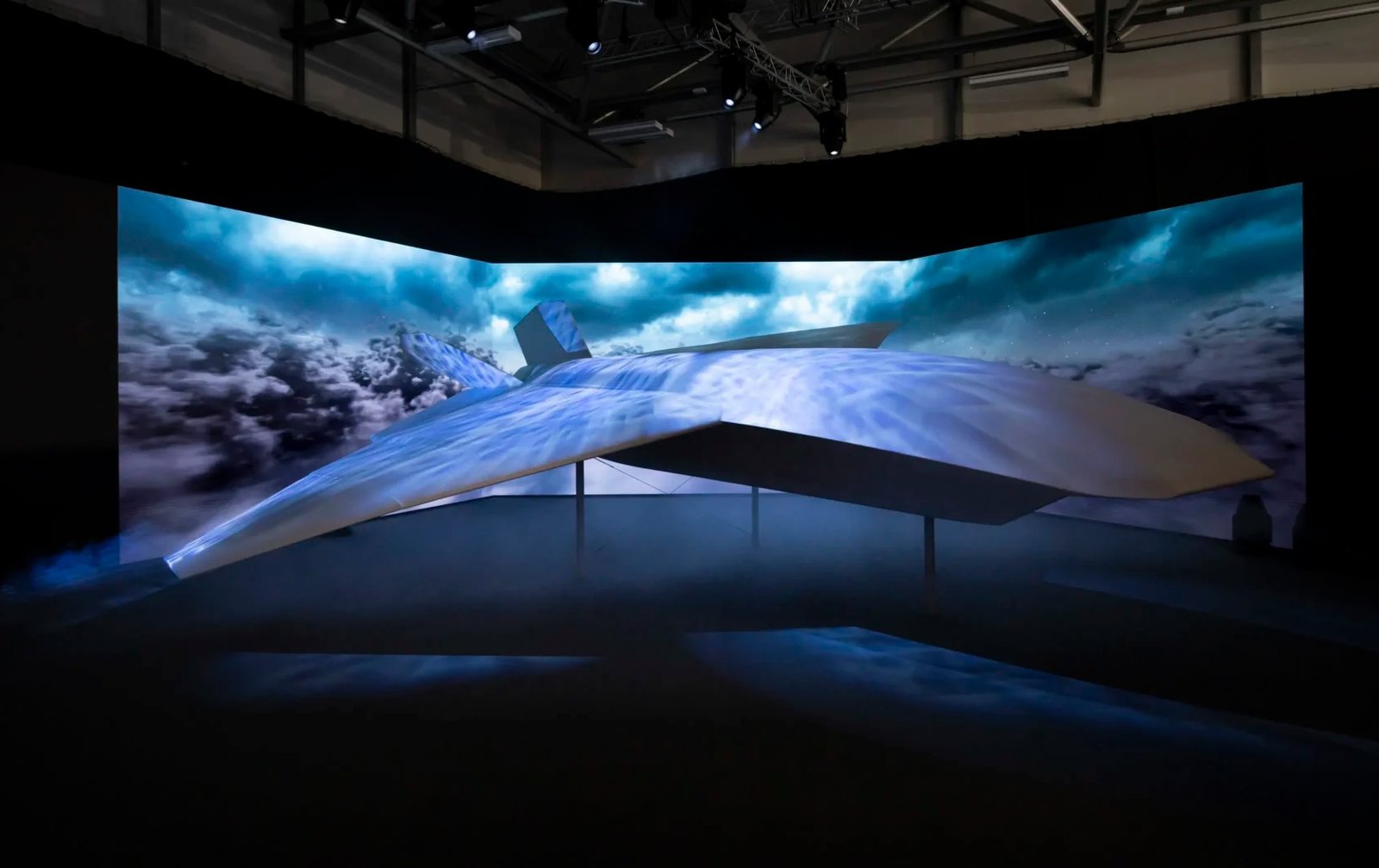
Europe
COWES, Isle of Wight — GKN Aerospace has completed the engineering, manufacture, and integration of flight-ready wings, fins, and control surfaces for Brontanax, the United Kingdom's first Collaborative Combat Aircraft (CCA) prototype developed by BAE Systems. The delivery marks a key milestone for the Brontanax programme and demonstrates the rapid pace at which the aircraft has progressed from a clean-sheet design to a flight-ready prototype. According to GKN Aerospace, the programme also highlights an accelerated approach to military product development and supply chain management. Composite Structures Built for Flight-Ready Prototype BAE Systems selected GKN Aerospace's advanced composite manufacturing and assembly capabilities to produce the aircraft's primary aerodynamic structures. The components were engineered to meet the technical requirements of the Brontanax prototype while supporting the programme's compressed development schedule. To deliver the project, GKN Aerospace combined expertise from its global network of facilities, drawing on specialist capabilities in composite manufacturing, novel tooling design, and complex product assembly. The flight-ready wings, fins, and control surfaces were manufactured at the company's composite design and assembly facility in Cowes on the Isle of Wight. The delivery also coincides with a significant local milestone, marking 125 years of aerospace innovation on the Isle of Wight. According to GKN Aerospace, the project demonstrates its ability to manufacture airworthy prototype structures while continuing to support established high-volume commercial aerospace programmes. Brontanax Collaborative Combat Aircraft Brontanax is an uncrewed autonomous aircraft designed to operate alongside crewed combat aircraft, including the Typhoon. The platform is intended to provide electronic warfare and precision strike capabilities against both airborne and ground targets. The aircraft is similar in size to a Hawk trainer and has a maximum take-off weight of more than five tonnes. BAE Systems unveiled a full-size model of Brontanax at the Farnborough International Airshow on 22 July 2026 and confirmed that a flightworthy prototype has been built at its Warton facility in Lancashire. Rapid Development Programme Development of Brontanax began in 2022 under BAE Systems' FalconWorks rapid development unit. The programme has involved more than 500 BAE Systems employees and approximately 75 UK suppliers. BAE Systems has invested more than £400 million of its own funding in the project to date. According to the company, the programme will move into its next development phases with power-on planned before the end of the third quarter of 2026, followed by ground trials during the first half of 2027. The first flight is planned for later in 2027 from an undisclosed Royal Air Force site. Company Statements Rupert Dix, Senior Vice President Defence at GKN Aerospace, said the programme demonstrates the company's ability to rapidly transform advanced aircraft concepts into flight-ready structures. "This is the latest example of GKN Aerospace's ability to turn complex, clean-sheet designs into flight-ready reality at an unprecedented pace. By combining our advanced engineering with cutting-edge manufacturing, we are actively shaping the future of next-generation combat air power for the UK and our global allies." Mark Wilson, Head of Autonomous Collaborative Platforms at BAE Systems, said GKN Aerospace played an important role in meeting the programme's demanding schedule. "The rapid progression from concept to prototype integration is a remarkable achievement. GKN Aerospace's industrial expertise, agility and commitment to collaboration have been pivotal in delivering high-quality, flight-ready structures within an extraordinarily compressed timeline." Strengthening UK Defence Manufacturing GKN Aerospace said the Brontanax programme expands its role in supporting the UK's next-generation combat air capabilities while demonstrating the strength of its domestic engineering and manufacturing base. The company added that it intends to continue applying its UK industrial capabilities to current and future defence programmes and will use the experience gained from the rapid-development project to support customers across its wider international business network.
Read More → Posted on 2026-07-30 13:39:43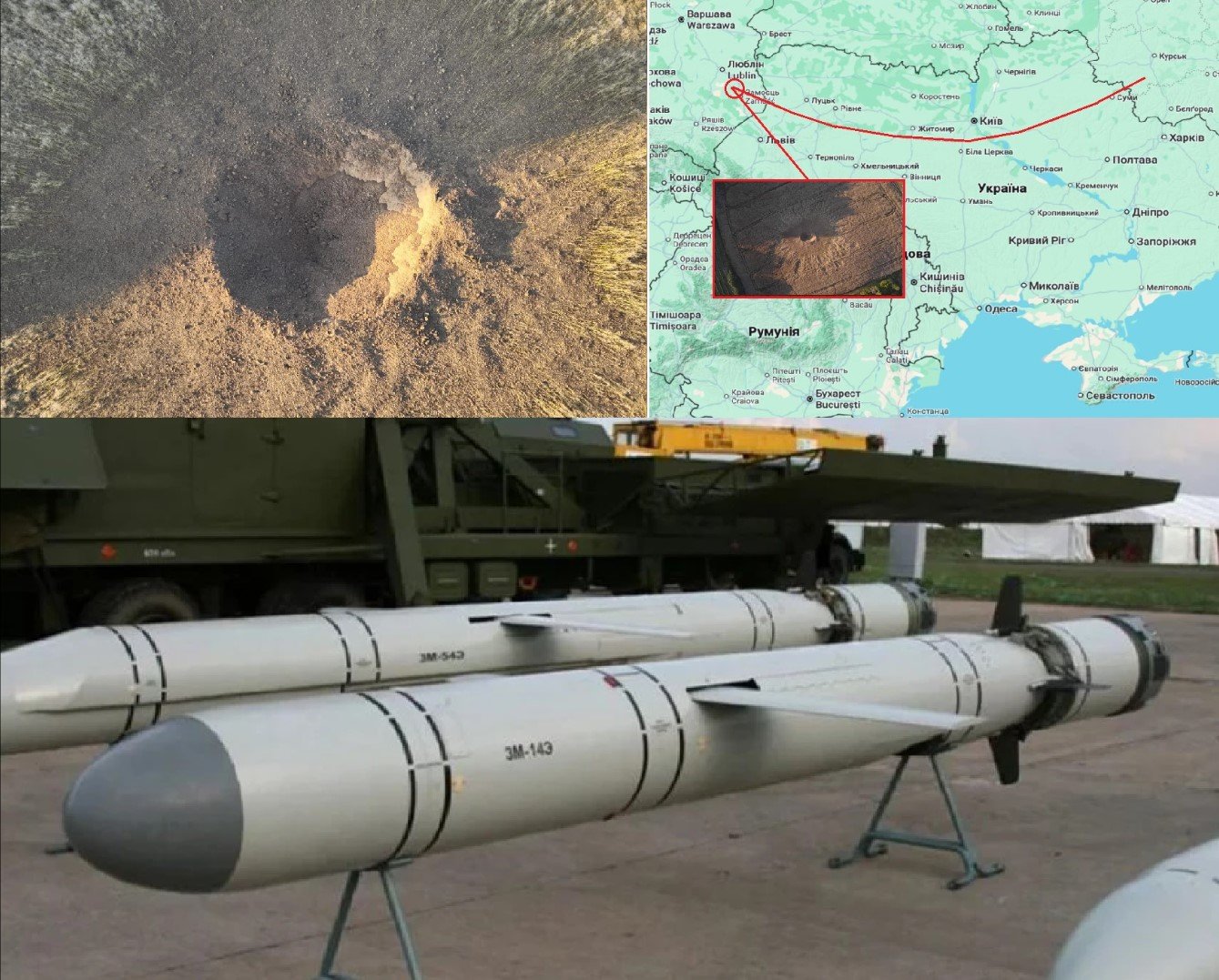
World
WARSAW — A Russian Kh-101 cruise missile entered Polish airspace and crashed in eastern Poland early Thursday during one of Russia's largest overnight missile and drone attacks on Ukraine, prompting a military response from Poland and an official investigation into the incident. The missile crashed in an undeveloped field near the village of Tarnawa-Kolonia in Biłgoraj County, Lublin Voivodeship, approximately 95 kilometers (59 miles) from the Ukrainian border. Polish authorities confirmed that the explosion caused a large crater but resulted in no casualties or structural damage. Missile Entered Polish Airspace According to the Operational Command of the Polish Armed Forces, the missile followed a complex flight path before entering Poland. Tracking data showed it first entered Ukrainian airspace over the Sumy region, flew across western Ukraine toward the Volyn region, and then crossed into Polish territory. The Polish military released the following timeline of the incident: 3:16 a.m. (Polish time): Poland scrambled military aircraft in response to the large-scale Russian attack on Ukraine. 3:29 a.m.: An aerial target approached within 5 kilometers (3.1 miles) of the Polish border. 3:40 a.m.: The object was detected flying westward over Polish territory, and an F-16 fighter jet was dispatched to identify and intercept it. 3:46 a.m.: The missile disappeared from Polish military radar. Around 4:00 a.m.: Residents reported a powerful explosion that shook windows in nearby homes. To verify radar data, the military later dispatched a Mi-24 helicopter to the area. The helicopter crew located the impact site in a rural field near Tarnawa-Kolonia. Crash Site Under Investigation Local Polish media began reporting the explosion and the emergency response by 5:58 a.m. Kyiv time. Police, firefighters and other security services secured the area while investigators examined the impact site. According to local reports, the impact created a crater measuring approximately 10 meters wide and 5 meters deep, with missile fragments scattered across an area of about 200 meters. The site is located roughly 2 kilometers from the nearest residential buildings. Ukraine has also offered assistance with the investigation. Polish Government Responds Polish Prime Minister Donald Tusk, who visited the crash site, said all available evidence indicates the projectile was a Russian Kh-101 cruise missile, although authorities are continuing to verify its exact type and origin. "All the indications are that it was a Russian Kh-101 cruise missile, but we want to be 100% certain about the type of missile and who launched it," Tusk said during an emergency coordination meeting. Tusk said the Polish military had tracked the missile throughout the incident and was prepared to shoot it down if it had continued deeper into Polish airspace or posed a threat to populated areas. He added that investigators are also determining whether the crater was caused by the missile's warhead detonating or by the impact itself. According to Tusk, there is no indication that Poland was the intended target. He also confirmed discussing the incident with President Karol Nawrocki. Polish Air Defences Activated Polish Defence Minister Władysław Kosiniak-Kamysz described the night as highly demanding for Poland's air defence and surveillance systems. He said Polish F-16 fighter aircraft had been operating near the border from around 2:00 a.m., while reconnaissance aircraft and allied aerial refuelling aircraft were also activated. Air raid alerts were issued in Lublin and other parts of the province as a precaution. Monitoring channels, including eRadar and Strategic Aviation, also reported a cruise missile crossing into Polish airspace over Lublin Voivodeship during the attack. Part of a Large-Scale Russian Strike on Ukraine The airspace violation occurred during a major overnight Russian missile and drone attack across Ukraine. According to the Ukrainian Air Force Command, Russia launched 74 missiles and 284 drones during the attack. The missiles included: 61 Kh-101 and Kalibr cruise missiles Four Zircon and Oniks missiles Nine Iskander-M, S-400 and KN-23 ballistic missiles Ukraine said its air defence forces intercepted or suppressed 55 missiles and 265 drones. The primary targets included the Kyiv and Lviv regions, while strikes were also reported in Dnipropetrovsk, Sumy, Vinnytsia, Poltava, Mykolaiv, and Ivano-Frankivsk. According to Ukrainian authorities, the overnight attack killed at least eight people and injured dozens more, while causing damage across multiple regions. Ukraine Calls for Stronger Air Defences Ukrainian Foreign Minister Andrii Sybiha said the missile's entry into Poland demonstrated that strengthening Ukraine's air defence capabilities is important for the security of the wider Euro-Atlantic region. He also described the missile's flight into Poland as a violation of NATO airspace. Investigation Continues The Polish government has launched an investigation to determine the exact circumstances surrounding the missile's entry into Polish airspace, confirm the projectile's identity, and establish whether the crater resulted from the missile's impact or the detonation of its warhead. Authorities have reiterated that no injuries or damage to buildings were reported, while security services continue to examine the crash site.
Read More → Posted on 2026-07-30 13:20:46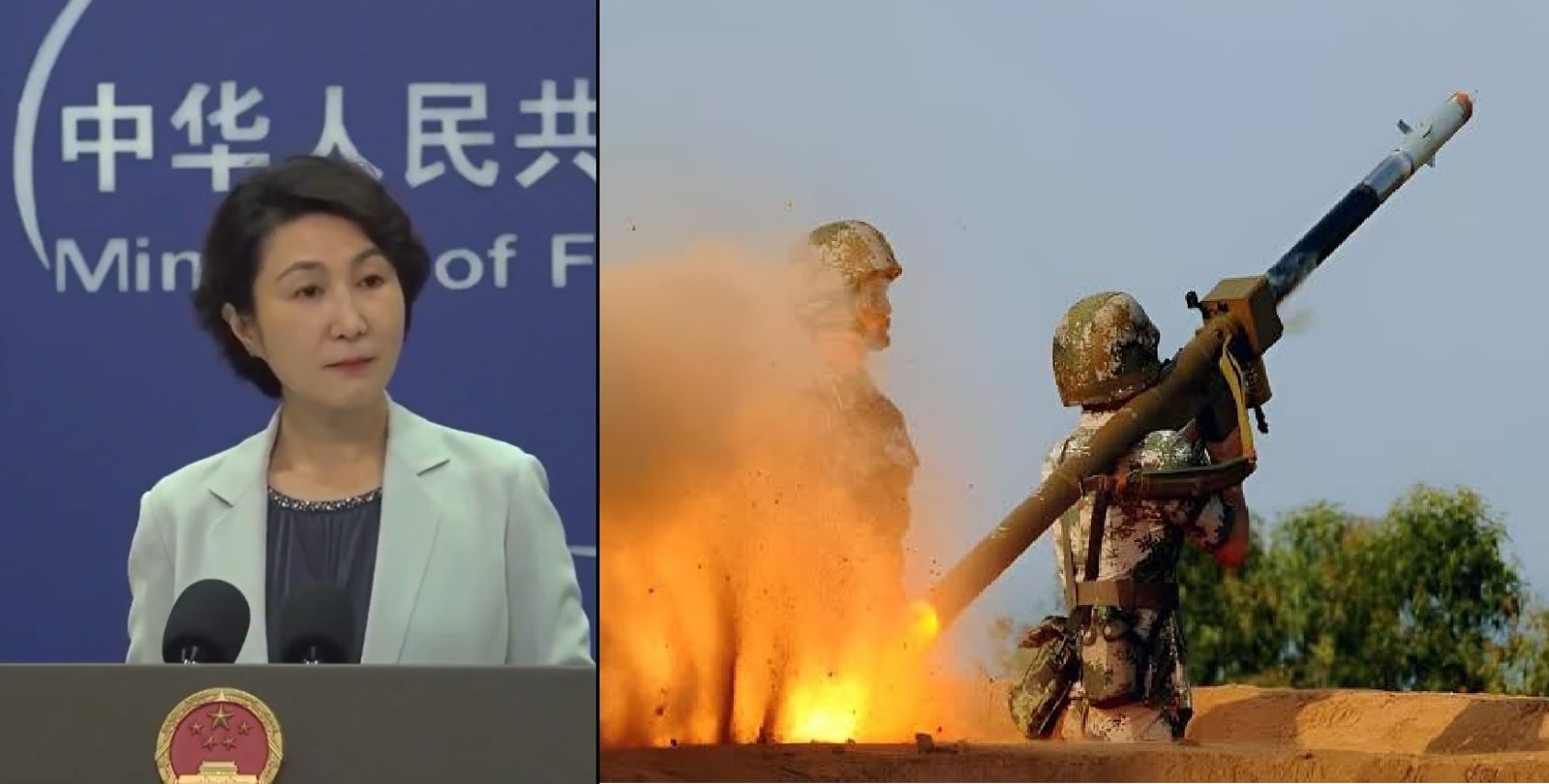
World
BEIJING — China has rejected media reports claiming it plans to supply Iran with hundreds of Chinese-made shoulder-fired air-defense missile systems, calling the reports "not true" and without any factual basis. Speaking at a regular press briefing in Beijing on Thursday, Chinese Foreign Ministry spokesperson Mao Ning said the reports were "groundless" and stressed that China has consistently worked to promote peace and de-escalation. She said Beijing has made its position on such issues clear on multiple occasions. China has denied reports that Iran will receive up to 400 Chinese-made shoulder-fired air-defense missile launchers. Foreign Ministry spokeswoman Mao Ning called the claim "not true" and said it has "no factual basis," adding that China supports peace and an end to the conflict. pic.twitter.com/LYnHql6OkK — The Defense News (@TheDefenseNews) July 30, 2026 The denial follows a Reuters report published on July 29, which cited three unnamed sources claiming that Iran was expected to receive an initial shipment of up to 400 Chinese-made man-portable air-defense systems (MANPADS), including the QW-12 and FN-16 models. The report said the alleged contract covered 300 to 400 systems and was valued at $60 million to $70 million. According to the report, the alleged deal involved Zhongqing Baoshang International Investment, a Hong Kong-based intermediary, with shipments reportedly planned from Urumqi in western China through Pakistan before reaching Iran. Reuters noted that delivery schedules, quantities, and other details could still change. Pakistan also denied the claims. The country's military media wing, Inter-Services Public Relations (ISPR), described reports that Pakistani territory would be used as a transit route as "absolutely concocted and false" and "devoid of truth." The reported purchase emerged amid Iran's efforts to strengthen its short-range air-defense capabilities following months of conflict involving the United States and Israel. However, both China and Pakistan have publicly stated that no such arms transfer is taking place. China has also previously said it strictly controls military exports in accordance with its laws and international obligations, while reiterating its support for regional stability and efforts to reduce tensions.
Read More → Posted on 2026-07-30 12:04:08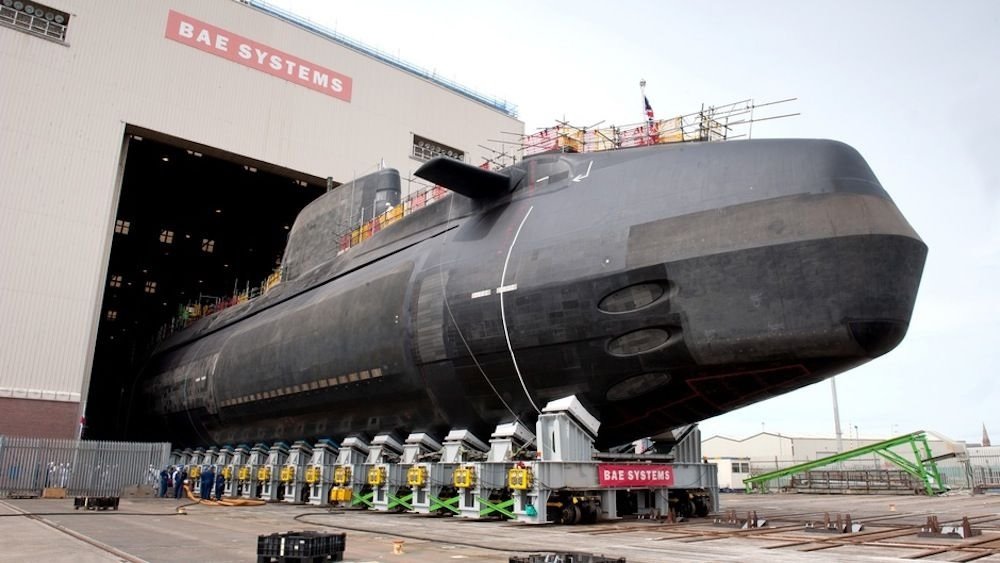
Europe
BARROW-IN-FURNESS — The UK government has awarded BAE Systems a £5.9 billion contract to continue construction of the Royal Navy's Dreadnought-class nuclear deterrent submarines, marking the next phase of the UK's programme to replace its aging Vanguard-class fleet. The contract forms the central part of a wider £8.4 billion funding package approved by Parliament to support the organisations responsible for maintaining and renewing the UK's nuclear deterrent. Of the total package, £5.9 billion has been allocated to BAE Systems, while the remaining £2.5 billion will support companies across the wider UK defence supply chain. The investment will advance construction of all four submarines in the Dreadnought class, which are being built to maintain the UK's Continuous at Sea Deterrent (CASD) capability. Contract Supports Construction of All Four Submarines The agreement, known as Delivery Phase 4, funds the next stage of work across the entire Dreadnought fleet. Construction of the lead submarine, HMS Dreadnought, is continuing at BAE Systems' shipyard in Barrow-in-Furness, with delivery to the Royal Navy planned for the early 2030s. The contract also provides funding to continue construction of the second submarine, HMS Valiant, progressing it toward its sea trials phase. In addition, it covers fabrication and outfitting work on the third and fourth submarines, HMS Warspite and HMS King George VI, which remain in the early stages of construction. Once completed, the four submarines will replace the Royal Navy's existing Vanguard-class fleet and ensure the continuation of the UK's Continuous at Sea Deterrent (CASD). Dreadnought-Class Features According to BAE Systems, the Dreadnought class will be the largest and most technologically advanced submarines ever built for the Royal Navy. Each submarine measures 153.6 metres in length and will be powered by a Rolls-Royce nuclear propulsion system manufactured in Derby, providing virtually unlimited operational range without the need for refuelling during service. The submarines will be equipped to carry and launch Trident II D5 ballistic missiles. They will also become the first Royal Navy submarines designed specifically for mixed-gender crews, featuring separate accommodation areas and customised day-and-night lighting systems. The programme is being delivered in partnership with the Ministry of Defence's Defence Nuclear Enterprise, which oversees the operation, maintenance and renewal of the UK's nuclear deterrent. Major Investment Across the UK Supply Chain The Dreadnought programme continues to support a large national industrial network. During the last financial year, BAE Systems spent £1.3 billion across the Dreadnought supply chain. Total programme expenditure has now reached £8.9 billion, supporting work across more than 1,500 UK suppliers. The wider Defence Nuclear Enterprise currently supports around 47,000 jobs across approximately 6,000 companies throughout the UK. The Dreadnought programme itself supports around 30,000 jobs, including more than 7,000 BAE Systems employees working directly on the project. The government has also said the wider investment package aims to create 22,000 apprenticeships by 2035, helping develop the future defence manufacturing workforce. Barrow Remains the Centre of UK Submarine Construction Barrow-in-Furness continues to play a central role in the UK's submarine-building industry. BAE Systems has invested £1 billion in its Barrow shipyard over the past four years to expand production capacity for the Dreadnought programme. During the same period, the workforce at the site has increased from 11,000 to approximately 16,000 employees, reflecting the scale of the programme. The company is also investing in local training and community facilities through the Team Barrow partnership and the £200 million Barrow Transformation Fund. In September 2025, King Charles III granted Barrow-in-Furness official Royal Port status in recognition of the town's longstanding contribution to UK defence and submarine construction. Government and Industry Highlight Strategic Importance BAE Systems Chief Executive Charles Woodburn said the Dreadnought programme is essential to the UK's long-term security and depends on the country's industrial base. "The Dreadnought programme is of vital strategic importance to the UK, underpinning the security of our nation and our allies for decades to come. Its delivery depends on the strength of our national industrial base, with thousands of skilled workers right across the country playing their part in the mission to deliver this critical capability to the Royal Navy." Defence Secretary Wes Streeting said the UK's nuclear-armed submarines remain a key part of national security and described the investment as supporting both defence capability and British industry. He said the funding secures delivery of the Dreadnought-class fleet while supporting thousands of skilled jobs and strengthening Barrow's long-standing role in submarine construction. Prime Minister Andy Burnham said protecting the country remains the government's primary responsibility and added that the programme also supports domestic manufacturing by creating opportunities for future generations of skilled workers. Programme Remains on Schedule The UK government said the Dreadnought programme remains on track, with HMS Dreadnought expected to enter Royal Navy service in the early 2030s. The latest investment ensures continued progress across all four submarines while supporting the industrial base, supply chain and workforce required to deliver one of the UK's largest long-term defence programmes.
Read More → Posted on 2026-07-30 11:52:51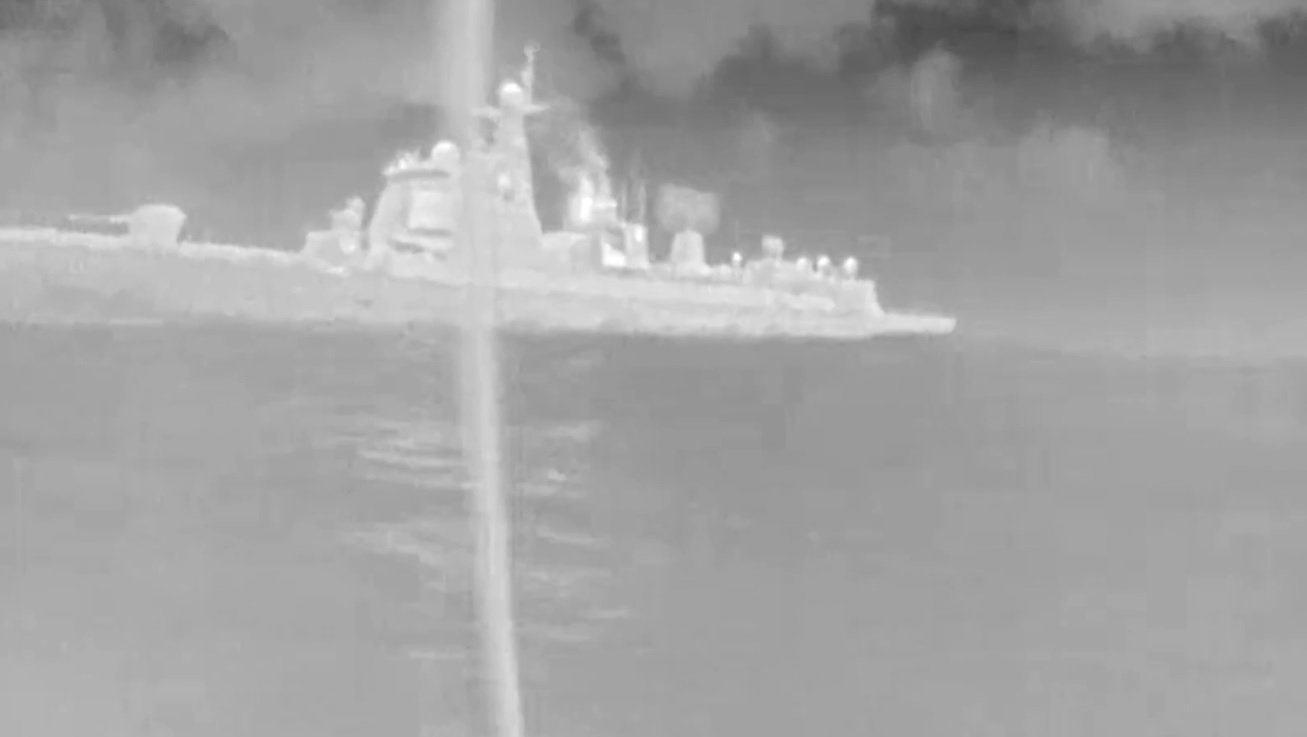
U.S
SAN DIEGO, California — A small autonomous sea drone developed by California-based startup Seasats captured close-range video and collected data on a Chinese People's Liberation Army (PLA) Navy Type 052D guided-missile destroyer in Philippine waters earlier this summer, highlighting the growing role of low-cost unmanned surface vessels in maritime surveillance. According to Seasats, its Lightfish autonomous surface vessel approached the Chinese warship on June 16, approximately 105 kilometers (65 miles) northwest of Luzon Island, within the Philippines' Exclusive Economic Zone (EEZ). The company shared the footage with Reuters, which independently verified its authenticity. Reuters confirmed the vessel as a PLA Navy Type 052D guided-missile destroyer by matching its deck layout, mast, crane, and superstructure with archived imagery. The news agency also verified the location using Seasats' navigation data and confirmed the date through the original file metadata. The incident is believed to be the first publicly reported case of a private U.S. company releasing verified close-range footage of a Chinese warship recorded by one of its autonomous sea drones. Low-Cost Drone Tracks Billion-Dollar Warship The encounter highlights how relatively inexpensive autonomous vessels are increasingly being used for maritime surveillance. The Lightfish drone costs about $240,000, while the Chinese Type 052D guided-missile destroyer is valued at roughly $1 billion. Seasats CEO Mike Flanigan said the company successfully navigated the drone close to the destroyer and recorded extensive video and other data during the mission. The Lightfish is the smallest vessel in Seasats' current lineup. It can be transported in the back of a standard pickup truck, deployed from a small boat or boat ramp, and launched or recovered within minutes by one or two operators. The hybrid-powered vessel is designed for long-duration missions of up to six months and can operate in Sea State 6 conditions with waves reaching 20 feet (6 meters). Equipped for Maritime Surveillance Lightfish drones can carry a range of surveillance and sensing systems, including: Electro-optical cameras Infrared cameras Signals intelligence equipment Electronic warfare payloads Active sonar Passive sonar These systems enable the vessel to collect visual, electronic, and underwater information during extended autonomous missions. By comparison, the Type 052D destroyer is a major surface combatant measuring approximately 156 meters in length, with a full-load displacement of around 7,000 tons and a crew of about 280 personnel. Previous Encounters With Chinese Naval Ships Seasats said this was not its first encounter with Chinese naval vessels. The company stated that its autonomous surface drones have previously operated near Type 052 destroyers, Type 055 destroyers, and Type 056 corvettes during missions over the years. According to the company, the drones' small size and low profile often allow them to operate without being visually detected. However, Seasats noted that both the drones and the naval vessels emit electronic signatures through their radar and other scanning systems. Regional Tensions Continue The encounter occurred against the backdrop of continuing territorial disputes in the South China Sea, where China maintains an extensive maritime presence despite the 2016 Permanent Court of Arbitration ruling that rejected its broad claims over much of the sea. The Armed Forces of the Philippines recently reported monitoring 26 Chinese navy and coast guard vessels operating in key areas of the disputed waters. The Philippine Coast Guard has also reported an increased presence of Chinese maritime forces, including warships, in the area compared with 2024. China and Philippines Respond Asked about the June 16 footage, the Chinese Embassy in Washington said it had no information to provide and was unfamiliar with the incident. Separately, China's Foreign Ministry defended the country's military activities, stating they are conducted in accordance with international law and international practices. Foreign Ministry spokesperson Mao Ning said relevant parties should avoid approaching Chinese naval vessels at close range, warning that such actions could increase the risk of accidental incidents at sea or in the air. The Philippine Embassy said it would continue reminding all parties to avoid actions that could escalate tensions, particularly if found trespassing within the Philippines' Exclusive Economic Zone (EEZ). Company Expands Production Founded six years ago and based in San Diego, California, Seasats has raised more than $40 million in funding. The company has also received more than $100 million in U.S. government contracts, including an $89.2 million U.S. Navy production award and a $24 million award under the Accelerate the Procurement and Fielding of Innovative Technologies program. In addition to the Lightfish, Seasats is preparing to begin production of its larger Quickfish autonomous surface vessel, while a third platform, Heavyfish, remains in the design phase.
Read More → Posted on 2026-07-30 11:33:00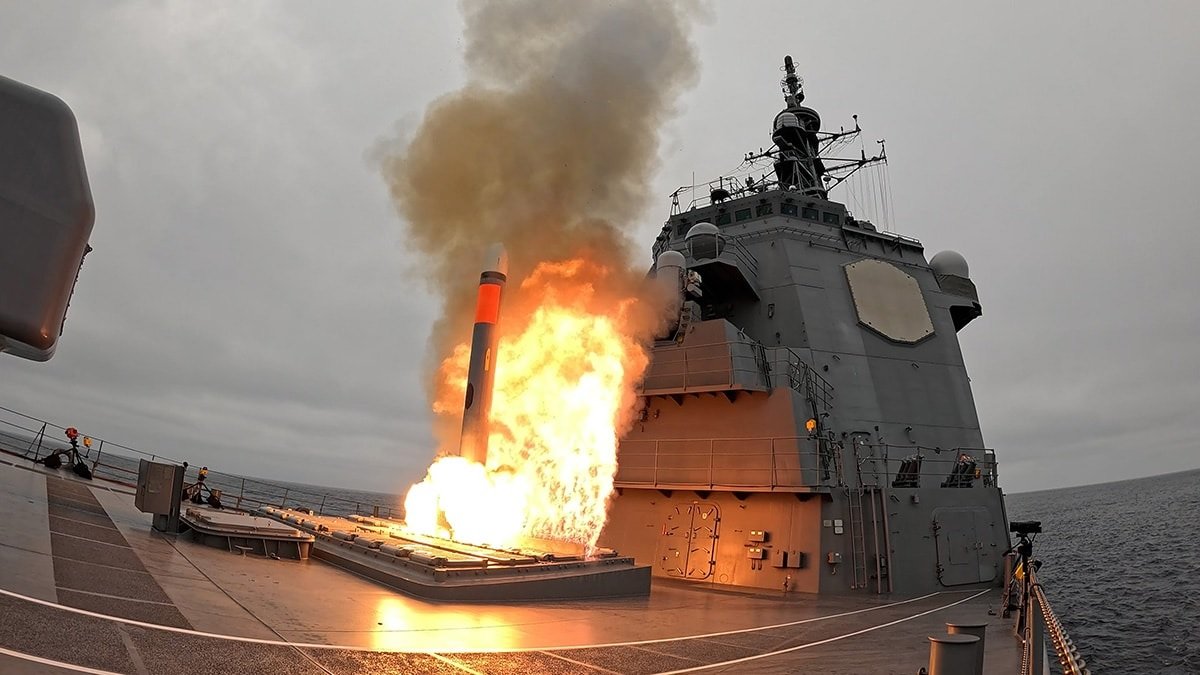
World
TOKYO — Japan's Ministry of Defense announced on July 30 that the Japan Maritime Self-Defense Force (JMSDF) has successfully conducted its first live-fire test of a U.S.-made Tomahawk cruise missile from the Aegis guided-missile destroyer JS Chokai (DDG-176), marking a major step in the country's efforts to strengthen its stand-off strike capability. The live-fire test was carried out on July 29 (Japan time) in the Pacific Ocean while JS Chokai was deployed to the United States as part of Japan's Tomahawk acquisition and training program. The U.S. Navy supported the event by providing the test range, monitoring the surrounding airspace and waters, and assisting with test planning. Japanese officials emphasized that the missile launch was conducted by the JMSDF crew. The successful launch makes Japan the third country outside the United States, after Australia and the Netherlands, to fire a Tomahawk missile from a surface combatant. It is also the fourth country outside the United States to launch the missile overall, following the United Kingdom, which operates Tomahawks from submarines. Test Verified Launch Procedures and Missile Flight Officials from Japan's Acquisition, Technology & Logistics Agency (ATLA) said the test confirmed that JS Chokai and its crew successfully completed the full launch sequence, including all required operational procedures. The test also verified the missile's flight to its designated target. ATLA did not disclose several operational details, citing coordination with the U.S. Navy and the need to protect Japan's defense capabilities. The agency withheld information including the precise test location beyond the Pacific Ocean, the type of target used, the missile's flight range, guidance procedures, the number of missiles launched, and whether the missile was a Block IV or Block V Tomahawk. Months of Preparation Before the Launch Japan's Ministry of Defense announced in March 2026 that JS Chokai had been modified to operate Tomahawk cruise missiles. Officials said the months leading up to the live-fire test were used to verify the newly installed equipment and train the ship's crew in launch procedures. At the time of the announcement, Defense Minister Shinjiro Koizumi said Japan's stand-off defense capability is intended to ensure that any potential adversary understands that attacks against Japan by naval vessels, amphibious forces, or other means can be effectively countered. Following the completion of its deployment in the United States, JS Chokai is expected to return to its homeport in Sasebo around September 2026. Officials declined to say when the Tomahawk capability will officially enter operational service, stating that releasing such information could reveal details about Japan's defense readiness. No Additional Live-Fire Tests Planned ATLA officials said Japan currently has no plans to conduct similar live-fire tests on the other JMSDF Aegis destroyers that are being upgraded to operate Tomahawk missiles. According to the agency, additional shipboard firing tests are not considered necessary because the Mk 41 Vertical Launching System and Tomahawk launch equipment already have a long operational record with the U.S. Navy. Officials said the successful test aboard JS Chokai confirmed the integration of the Tomahawk weapon system with Japan's combat system. Upgrades Planned for Five Aegis Destroyers Japan has allocated approximately 113.6 billion yen (about $694 million) through fiscal year 2026 to equip five of its eight JMSDF Aegis destroyers with Tomahawk launch capability. The ships are: JS Chokai JS Kirishima JS Haguro JS Myoko JS Atago Modification work on Haguro and Kirishima began during fiscal year 2025. Contracts for the required equipment for Atago and Myoko have already been awarded, with modification work scheduled to begin during fiscal year 2026. Funding for upgrades to the remaining three Aegis destroyers will be considered from fiscal year 2027 onward, although officials said it is too early to estimate the cost. Japan is also building two Aegis System Equipped Vessels (ASEVs) scheduled to enter service in fiscal years 2027 and 2028. While the vessels are intended to operate Tomahawk missiles in the future, ministry officials said they are not expected to have Tomahawk launch capability when they first enter service. Tomahawk Procurement Program Remains on Schedule Japan plans to acquire up to 400 Tomahawk cruise missiles through the U.S. Foreign Military Sales (FMS) program at a total cost of approximately 169.4 billion yen (about $1.03 billion). The procurement schedule remains unchanged: Up to 200 Block IV missiles are scheduled for delivery between fiscal years 2025 and 2027. Up to 200 Block V missiles are scheduled for delivery between fiscal years 2026 and 2027. ATLA confirmed that deliveries began during fiscal year 2025, but officials declined to disclose how many missiles have been delivered or provide a detailed delivery timeline, citing operational security. They stated that the acquisition program remains on schedule. Officials also confirmed that Japan does not plan to purchase more than the approved 400 Tomahawk missiles. Future expansion of Japan's stand-off strike capability is expected to rely primarily on domestically developed long-range missiles currently under development. The Ministry of Defense said it announced the successful test as part of its policy of informing taxpayers about the progress of major defense programs funded with public money. Once the current modification program is completed, five of the JMSDF's eight Aegis destroyers will be equipped with Tomahawk launch capability, while upgrades for the remaining three ships are expected to be considered under future budgets. The Tomahawk is a long-range, subsonic cruise missile with a range of more than 1,600 kilometers. Australia conducted its first surface-ship Tomahawk launch from HMAS Brisbane in December 2024, while the Netherlands carried out its first launch from HNLMS De Ruyter in March 2025.
Read More → Posted on 2026-07-30 11:18:24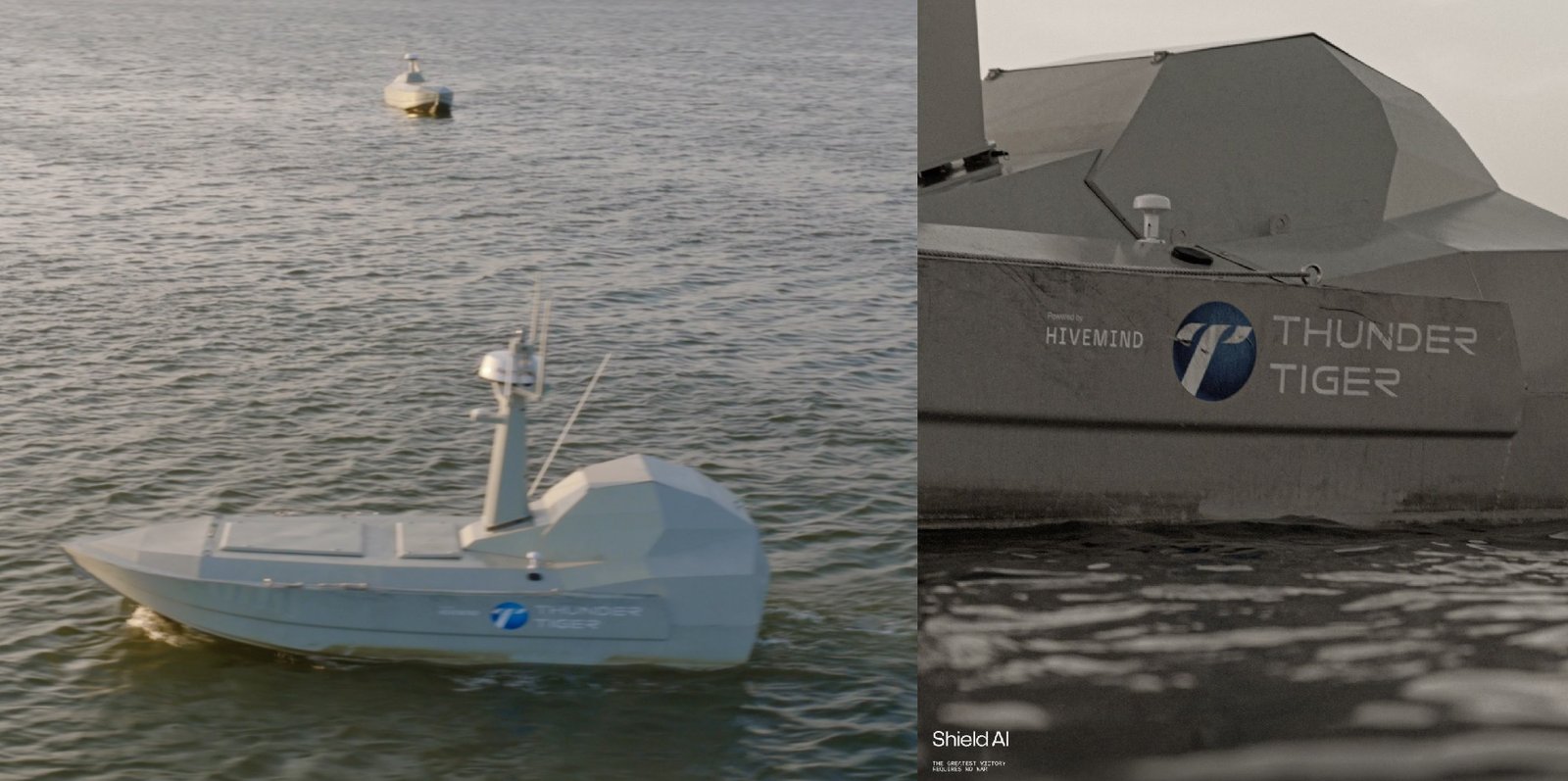
World
TAIPEI — U.S. defense technology company Shield AI and Taiwan-based Thunder Tiger Corp. have successfully completed Hivemind's first multi-asset autonomous teaming demonstration on water, validating Shield AI's Hivemind artificial intelligence (AI) pilot aboard Thunder Tiger's SeaShark unmanned surface vessels (USVs) during a coordinated maritime mission in Taiwan. The demonstration, held at Dapeng Bay in Pingtung County, marked the first time Hivemind has coordinated multiple autonomous maritime platforms in a live mission and the first integration of the software with maritime radar and Automatic Identification System (AIS) data. Two Autonomous Drone Boats Complete ISR Mission The demonstration involved Thunder Tiger's SeaShark 600 and SeaShark 800 unmanned surface vessels (USVs) conducting a coordinated intelligence, surveillance, and reconnaissance (ISR) mission. Equipped with Shield AI's Hivemind autonomy software, the vessels used maritime radar, onboard imagery, and AIS data to autonomously plan mission waypoints, search a designated maritime area, identify a target vessel of interest, and coordinate to escort the vessel out of the designated search zone—all without human intervention in mission execution. According to reports from the demonstration, Hivemind divided the search area into separate sectors and assigned one USV to each vessel. After one SeaShark detected the target boat, it immediately shared the information with the second USV. The second vessel then calculated an optimized interception route, allowing both autonomous boats to complete the escort mission in coordination. Personnel from Taiwan's National Chung-Shan Institute for Science and Technology (NCSIST) and the Coast Guard Administration attended the demonstration. Shield AI: Mission Autonomy Can Scale Across Domains Nathan Michael, Chief Technology Officer at Shield AI, said the demonstration highlighted the ability of Hivemind to operate across multiple domains and platforms. "Hivemind continues to prove that true mission autonomy can scale across domains, platforms, and functional assets, unlocking new capabilities for distributed intelligence and maritime security missions," Michael said. "As we continue working with Thunder Tiger to expand the scale and sophistication of autonomous maritime teams, these systems will fundamentally reshape maritime surveillance operations and strengthen deterrence through resilient, intelligent operations." Partnership Began Earlier This Year Shield AI and Thunder Tiger announced a strategic partnership and memorandum of understanding (MoU) in May 2026 to integrate the Hivemind AI pilot across Thunder Tiger's unmanned systems portfolio for dual-use maritime missions. Thunder Tiger manufactures a range of unmanned aerial and surface systems, including Blue UAS-approved first-person view (FPV) platforms that meet cybersecurity and supply-chain standards for U.S. and allied defense applications. Building on the demonstration, both companies said they will continue collaborating on additional sensor integrations, more advanced autonomous behaviors, larger autonomous teams, and open-ocean operations. During the event, Maximilian Chen, Shield AI's Director of Government Relations for Asia, said a fleet of five Hivemind-equipped USVs using autonomous route planning could cover up to 8.3 times their combined search area, highlighting the efficiency gains possible through coordinated autonomous operations. Thunder Tiger Highlights Maritime Security Gene Su, Board Director and General Manager of Thunder Tiger Corp., said autonomous maritime systems will play an increasingly important role in Taiwan's security. "As an island nation, the maritime domain is increasingly critical to Taiwan's security. By integrating AI pilots into our portfolio, we can enable distributed, networked teams that coordinate dynamically to build a more complete understanding of the maritime environment—improving the ability to detect, classify, and identify contacts while helping operators respond with greater speed, scale, and effectiveness," Su said. He added that the demonstration represents an important step toward advancing resilient autonomous maritime capabilities and that the partnership with Shield AI is expected to continue delivering increasingly sophisticated autonomous systems. Thunder Tiger Chairman William Chen also highlighted the growing importance of unmanned aerial vehicles (UAVs) and unmanned surface vessels (USVs), referencing lessons from the Russia-Ukraine war. He called for legislative action on a drone procurement bill as Taiwan continues expanding its unmanned defense capabilities. Strengthening Taiwan's Maritime Defense The demonstration comes as Taiwan continues to invest in asymmetric defense capabilities to strengthen maritime surveillance and coastal defense. Taiwan's Ministry of National Defense has sought funding for coastal reconnaissance drones, attack drones, and unmanned surface vessels as part of broader efforts to build distributed maritime capabilities. The integration of autonomous AI software such as Hivemind could provide several operational advantages as China continues expanding both its naval fleet and unmanned maritime systems. Unlike conventionally operated drones that rely on continuous communications with operators, Hivemind processes sensor information and makes navigation and mission decisions onboard the vessel. This allows autonomous USVs to continue operating even when communications are degraded or disrupted by electronic warfare. Autonomous teams of drone boats can also patrol multiple sectors simultaneously, share information in real time, coordinate target tracking, and maintain persistent surveillance over larger maritime areas. These capabilities can improve maritime awareness while complementing manned naval assets with lower-cost unmanned platforms. China has also accelerated the development and testing of unmanned surface vessels for the People's Liberation Army Navy (PLAN), increasing the emphasis on resilient and distributed autonomous maritime systems on both sides of the Taiwan Strait. Lessons from the Ukraine-Russia War Interest in autonomous drone boats has grown significantly following their operational use during the Ukraine-Russia war. Since 2022, Ukraine has employed unmanned surface vessels such as the MAGURA and Sea Baby in operations against Russian naval assets and military infrastructure in the Black Sea. These systems have been used to strike warships and other maritime targets, demonstrating how relatively low-cost unmanned platforms can challenge larger conventional naval forces and influence naval operations. Military planners have drawn lessons from these operations, particularly the value of distributed unmanned systems for surveillance, reconnaissance, maritime security, and coordinated operations while reducing risks to personnel. Taiwan's continued investment in autonomous maritime platforms reflects a broader effort to strengthen coastal defense and maritime situational awareness using unmanned technologies. Hivemind Across Multiple Military Platforms Shield AI said Hivemind enables military platforms to sense, decide, and act independently without human intervention in those functions. Before the Taiwan maritime demonstration, Hivemind had already been integrated with more than 30 different platforms, including F-16 fighter aircraft, jet-powered unmanned aerial vehicles, helicopters, drone boats, and ground vehicles. Founded in 2015, Shield AI develops autonomy software and aircraft, including the V-BAT and X-BAT systems. Thunder Tiger Corp., listed on the Taiwan Stock Exchange, manufactures unmanned aerial and surface systems for defense, inspection, and other applications, with its FPV platforms holding Blue UAS approval.
Read More → Posted on 2026-07-29 16:24:18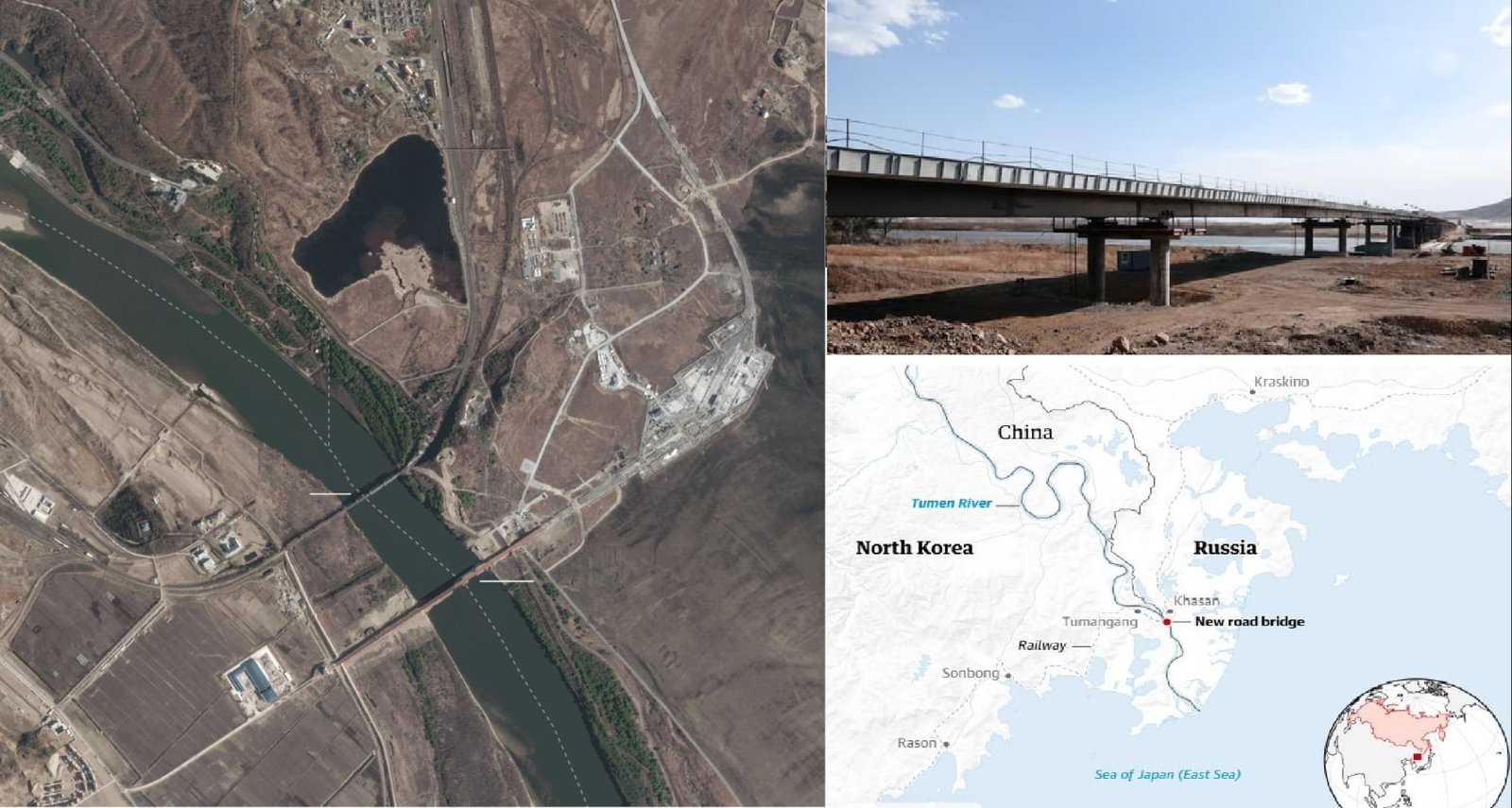
World
KHASAN/TUMANGANG — Russia and North Korea are nearing completion of their first direct road bridge across the Tumen River, a project both governments say is intended to improve trade, tourism and cross-border transport. However, analysts and open-source researchers have raised questions over whether the crossing could also support military logistics as cooperation between the two countries continues to expand. The new bridge links Khasan in Russia's Far East with Tumangang in North Korea. It is approximately one kilometer long and seven meters wide, with two traffic lanes. Including the approach roads, the entire transport crossing extends about 4.7 kilometers. The bridge is located next to the existing Friendship Bridge, a rail-only crossing completed in 1959. Recent commercial satellite imagery analyzed by researchers, including reports by The Guardian and the U.S.-based 38 North project, indicates that the bridge's main structure is largely complete. North Korea has finished its section of the project, including customs, border control and quarantine facilities. Construction on the Russian side is still ongoing. Satellite images show work continuing on a large border checkpoint, supporting infrastructure and other facilities. Reports also indicate that Russia is building a 10-lane border checkpoint and a helicopter landing pad as part of the project. Construction began in early 2025 following an agreement signed during Russian President Vladimir Putin's visit to Pyongyang in June 2024, where Putin and North Korean leader Kim Jong Un concluded a comprehensive strategic partnership agreement. Russian officials had previously targeted June 19, 2026, for the bridge's opening after an April ceremony marking the joining of the two sections. That deadline passed without the crossing becoming operational. As of late July 2026, no revised opening date has been announced. Putin has previously stated that the bridge is expected to open before the end of 2026. Governments Present Economic Purpose Moscow and Pyongyang have consistently described the bridge as an infrastructure project aimed at expanding trade, improving logistics, promoting tourism and supporting economic development in border regions. Russian Transport Minister Andrey Nikitin has said the crossing will increase bilateral trade, improve transport links, strengthen cultural ties and help develop nearby border areas into economic centers. North Korean state media has also presented the bridge as a project that will facilitate travel and the movement of goods. The bridge is estimated to cost around $100 million. Official bilateral trade between Russia and North Korea totaled approximately $34 million in 2024. Tourism between the two countries also remains limited. Around 10,000 Russian tourists visited North Korea in 2025, mostly through organized tours to Pyongyang, which is located nearly 500 kilometers from the new border crossing. Analysts Question Economic Justification Despite the official explanation, several analysts argue that the project's scale exceeds current economic demand. A recent investigation by the Ukrainian human rights organization Truth Hounds, reported by The Guardian, concluded that the bridge's economic justification appears limited when compared with current trade and tourism figures. The organization suggested the crossing could provide a more flexible transport route for personnel, equipment and other cargo as military cooperation between Russia and North Korea has increased since 2024. Road Transport Offers Different Logistics Advantages According to Truth Hounds lead investigator Nazar Myhun, road transport offers practical advantages over rail and sea transport from a logistics perspective. He said trucks are generally more difficult to monitor using satellite imagery because road networks provide many possible routes, making continuous tracking more challenging than monitoring fixed railway lines. Myhun also noted that trucks can be loaded and unloaded more quickly than railway cars, reducing the amount of time cargo remains stationary. He added that railway cars often reveal the type of cargo they are carrying, especially when open railcars are used, while standard transport trucks generally appear similar in satellite images regardless of their contents. Unlike trains, which operate through fixed railway terminals, trucks can be dispatched from many different locations, providing greater operational flexibility. Direct Route Independent of Chinese Infrastructure The new road bridge will also provide Russia and North Korea with a direct land connection that does not rely on Chinese infrastructure. Once operational, the crossing will complement the existing Friendship Bridge and create the first direct road link between the two countries. Infrastructure work on the Russian side, including customs buildings, access roads and related facilities, remains the primary requirement before the bridge can begin operations. Commercial satellite imagery has continued to track steady progress throughout 2025 and 2026, confirming that while the bridge structure is largely complete, work on Russian border infrastructure remains unfinished. As of late July 2026, both governments have not announced a new opening date.
Read More → Posted on 2026-07-29 15:39:57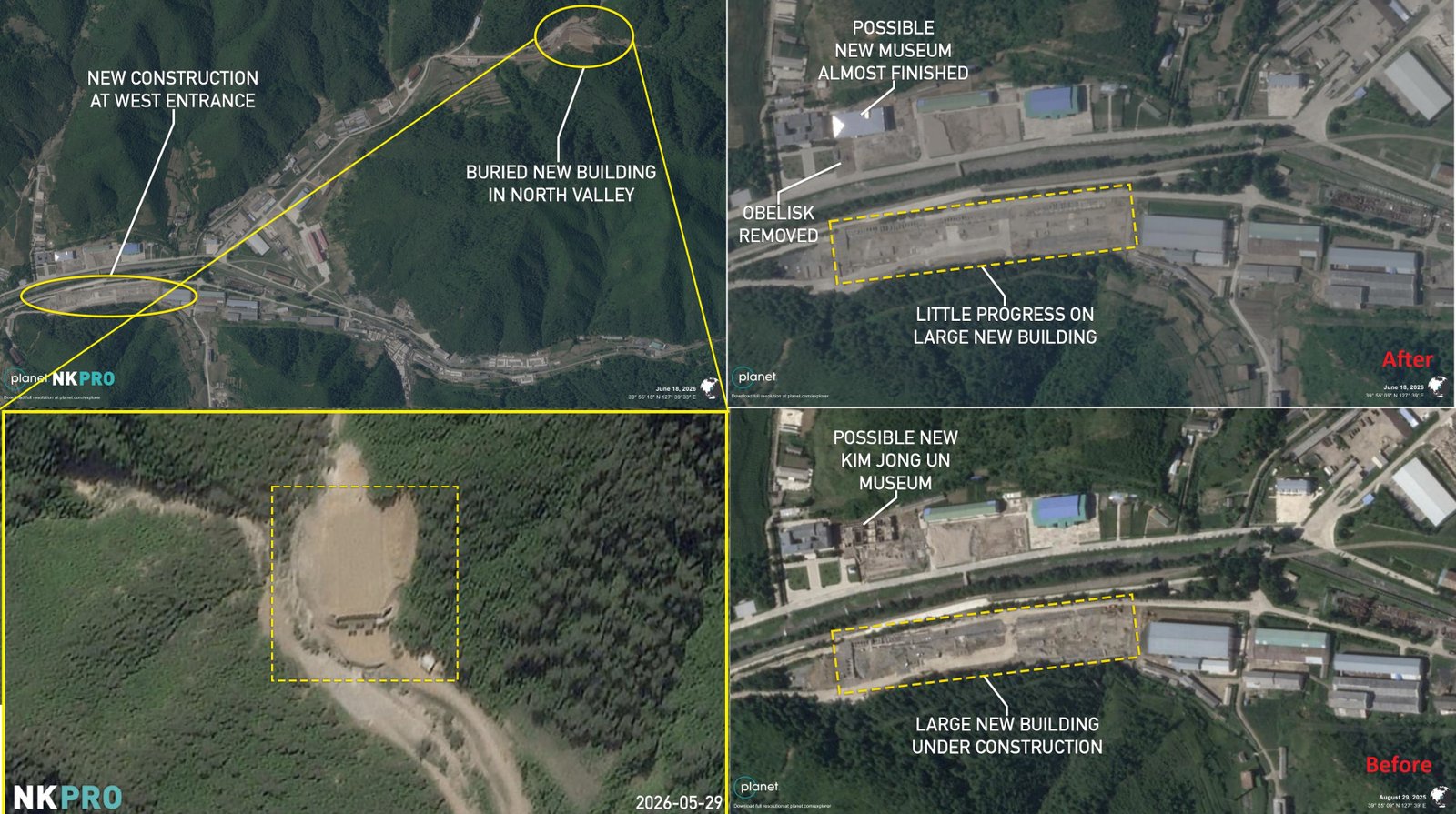
World
HAMHUNG, North Korea — North Korea has constructed a new production building at its primary short-range ballistic missile factory and later buried the structure beneath earth, according to an analysis of Planet Labs satellite imagery published by NK Pro on July 29. Analysts say the move appears intended to improve protection for one of the country's most important missile production sites as Pyongyang continues expanding its manufacturing capacity. The facility, known as the February 11 Factory, or Plant No. 11, is part of the Ryongsong Machine Complex in Hamhung. It is the only publicly known manufacturer of the Hwasong-11 series of short-range ballistic missiles (SRBMs), designated KN-23 by Western countries. The missiles have been used by Russian forces in strikes against Ukraine since late 2023, while Ukrainian officials have also said North Korea has supplied Russia with launchers and other military equipment. New Building Buried Beneath Earth According to NK Pro's analysis, a new building measuring approximately 65 meters by 35 meters and standing two to three stories high was constructed in a secluded valley at the northern end of the complex between late 2024 and February 2026. Satellite imagery shows the structure was fully completed before being covered with earth between March and May 2026, effectively integrating it into the adjacent mountainside. The building's internal layout, featuring a large open central hall surrounded by smaller rooms, closely resembles assembly and inspection facilities seen at other North Korean weapons production sites. Designed to Improve Protection and Safety Analysts assess that the buried structure follows North Korea's cut-and-cover construction method, which provides greater protection than conventional above-ground buildings. The design is believed to serve two purposes. Covering the facility with earth can reduce its vulnerability to aerial attack while also helping contain the effects of accidental explosions during missile manufacturing. However, analysts note that such structures provide less protection than production facilities excavated deep inside mountains. Satellite imagery and state media footage from Kim Jong Un's visits indicate that the factory's most sensitive machining equipment is already located inside underground tunnels, while above-ground buildings are primarily used for final missile assembly and inspection. Several existing buildings at the complex are also protected by packed-earth berms designed to limit blast damage from industrial accidents. Key Missile Production Site The February 11 Factory remains one of North Korea's most significant missile manufacturing facilities. Images released during Kim Jong Un's inspections, including photographs published following a visit in June 2026, showed rows of Hwasong-11 missiles inside assembly halls. Previous state media images have also suggested the factory may manufacture airframes for longer-range missiles and satellite launch vehicles (SLVs). Open-source monitoring has consistently identified the site as North Korea's principal production center for the Hwasong-11 missile family. Larger Expansion Project Appears Stalled The newly buried facility is part of a broader effort to expand production capacity at the factory. In August 2025, North Korean construction crews demolished three existing buildings near the western entrances to the underground production tunnels to make room for a much larger structure measuring at least 330 meters long and 50 meters wide. Satellite imagery shows foundations were completed around the perimeter, while partial walls for edge rooms were erected on the northern and western sides. The design also suggests a large open central area suitable for missile assembly or inspection. However, imagery indicates construction has shown little or no progress since November 2025, suggesting the project has been suspended or significantly delayed. If completed, the facility would substantially increase missile assembly capacity and could support higher production for North Korea's own military requirements as well as future exports. Part of Wider Military Construction The construction at Hamhung reflects North Korea's continued investment in protected military infrastructure. The country has previously used similar earth-covered construction methods at the Hagap site, which open-source assessments have linked to North Korea's nuclear program. Satellite imagery also continues to show tunneling activity at sensitive military locations in Songgan and Kusong. Growing Military Cooperation with Russia The developments at the February 11 Factory coincide with expanding military cooperation between North Korea and Russia. On July 25, 2026, Ukrainian President Volodymyr Zelenskyy, citing Ukrainian intelligence, said Russia is seeking an additional 30,000 North Korean troops and is preparing to receive new North Korean ballistic missile launchers. He also stated that facilities in Russia's Voronezh region have been prepared since June to accommodate the additional personnel. Ukraine has previously stated that North Korea has supplied Russia with Hwasong-11 ballistic missiles, artillery systems, and other military equipment used during the war. Other Changes at the Factory Satellite imagery also shows continued redevelopment at the February 11 Factory beyond missile production facilities. A new building under construction near the western gate, begun in May 2025, appears close to completion and is believed to be a history museum dedicated to Kim Jong Un. It is located next to an existing museum honoring former leaders Kim Il Sung and Kim Jong Il. In mid-June 2026, the factory's main "Tower of Immortality" monument, a common feature at North Korean industrial sites, was dismantled. The reason for its removal has not been disclosed. Ongoing Modernization Effort The February 11 Factory has been inspected by Kim Jong Un several times in recent years, with state media regularly highlighting missile production activities at the site. The latest satellite imagery indicates that North Korea continues to modernize and reorganize one of its most important missile manufacturing complexes. Although one major expansion project appears to have stalled, the completion and burial of the new production building demonstrate continued efforts to strengthen the protection and operational resilience of the facility.
Read More → Posted on 2026-07-29 15:29:01
World
SHANGHAI, China — A Chinese company has started manufacturing domestic immersion deep ultraviolet (DUV) lithography machines, marking an important step in the country's efforts to strengthen its semiconductor manufacturing capabilities following export restrictions on advanced chipmaking equipment. According to a report by The Information, the immersion DUV lithography systems are expected to be delivered later this year to major Chinese semiconductor manufacturers, including Semiconductor Manufacturing International Corp. (SMIC), Hua Hong Semiconductor, and ChangXin Memory Technologies (CXMT). The development comes after export controls imposed by the United States and the Netherlands restricted China's access to advanced lithography equipment, including certain systems produced by Dutch chip equipment manufacturer ASML. Immersion DUV lithography machines are essential tools used to print microscopic circuit patterns onto silicon wafers during semiconductor manufacturing. These systems are widely used to produce mature semiconductor technologies and can also support more advanced chip production through multi-patterning techniques. Reports identify Shanghai Aishengna Electronic Technology Group, a state-backed Chinese company, as the manufacturer behind the new immersion DUV systems. The company has reportedly brought together engineering teams from several domestic startups to develop the equipment as part of China's broader effort to expand domestic semiconductor manufacturing capabilities. Initial Production Remains Limited Current production plans remain relatively modest. Reports indicate that China aims to manufacture about five immersion DUV machines in 2026, with production expected to increase to around 20 units in 2027. By comparison, ASML plans production capacity for approximately 130 immersion DUV lithography systems in 2026, with additional expansion planned afterward. Industry analysts note that manufacturing lithography machines is only one part of the challenge. Long-term performance, production reliability, wafer throughput, alignment accuracy, maintenance, and manufacturing yields remain key factors for large-scale commercial semiconductor production. Reports also indicate that the new Chinese systems still rely on some imported Japanese components, while delays from domestic suppliers have affected production schedules this year. DUV Systems Can Produce Advanced Chips Through Multi-Patterning Immersion DUV lithography systems are primarily used to manufacture 28-nanometer semiconductor chips directly. They can also support production of smaller technology nodes, including 7nm chips, by using a process known as multi-patterning. However, producing advanced chips without access to extreme ultraviolet (EUV) lithography requires significantly more processing steps. Reports indicate that manufacturing a 7nm chip using DUV typically requires approximately 34 exposure steps, compared with about nine exposures using EUV technology. Each additional exposure increases the possibility of alignment errors, raises manufacturing complexity, and increases production costs. Estimates cited in industry reports suggest that wafer costs can rise by 40 to 50 percent compared with leading EUV-based manufacturing processes, while production yields are often lower than half, increasing the cost of each functioning chip. China's Domestic Equipment Industry Continues to Expand China has continued increasing the use of domestically produced semiconductor manufacturing equipment despite export restrictions. According to industry data cited in recent reports, the domestic share of China's chipmaking equipment increased from approximately 25 percent in 2024 to around 35 percent in 2025. Domestic suppliers account for more than 40 percent of etching equipment, while locally produced lithography equipment remains below 10 percent of the market. A lithography scanner contains thousands of highly precise components supplied through a specialized global manufacturing network that has developed over decades. Analysts note that replicating this supply chain remains one of the most difficult aspects of developing competitive lithography systems. Market Reaction and Analyst Views The reports initially affected semiconductor equipment stocks. ASML shares fell following the publication of the news and were trading about 1.8 percent lower on Tuesday during a broader decline across semiconductor stocks. Despite the decline, the company's shares remain up more than 123 percent for the year. Analysts said the reports demonstrate China's continued progress toward semiconductor self-reliance but are unlikely to significantly affect ASML's competitive position in the near future. Stephane Houri, Head of Equity Research at ODDO BHF, told CNBC that the development should be viewed cautiously, noting that China's production could remain limited to lower-end applications. Analysts also point out that the domestic systems primarily replace equipment that ASML is already restricted from exporting to China under existing export controls, limiting the immediate commercial impact on the Dutch company. ASML Continues to Benefit From Global AI Demand Although export controls have reduced ASML's sales into China—from roughly one-third of company revenue in 2024 to around one-fifth more recently—the company continues to benefit from strong demand outside China. ASML has raised its 2026 sales guidance to between €43 billion and €45 billion, supported by continued investment in artificial intelligence infrastructure by semiconductor manufacturers worldwide. Industry analysts note that progress in immersion DUV technology does not automatically translate into success with EUV lithography, which required decades of development and extensive investment by ASML and its technology partners. Broader Supply Chain Challenges Remain The latest development highlights how export controls have encouraged countries to strengthen domestic semiconductor supply chains rather than eliminate demand for advanced manufacturing equipment. A similar trend occurred in 2019, when Japan restricted exports of three key semiconductor chemicals to South Korea. Korean companies subsequently reduced dependence on Japanese materials from 34 percent of imports to 25 percent by sourcing supplies from Belgium and Taiwan. India's semiconductor manufacturing program is also expected to rely initially on imported equipment. The planned semiconductor fabrication facility at Dholera is expected to begin operations using imported tools while gradually developing a domestic supply chain for advanced semiconductor manufacturing equipment. China's production of domestic immersion DUV lithography machines represents a notable milestone in its semiconductor development efforts under export restrictions. However, industry analysts continue to highlight that expanding production, improving reliability, increasing yields, and developing a complete domestic supply chain remain key challenges before the new systems can compete at scale with established global manufacturers.
Read More → Posted on 2026-07-29 15:03:01
World
WASHINGTON — U.S. and partner forces intercepted multiple ballistic missiles launched by Iran's Islamic Revolutionary Guard Corps (IRGC) toward U.S. military positions in the Middle East on the evening of July 28, according to U.S. Central Command (CENTCOM). CENTCOM said the missiles were launched from Iran at approximately 5:45 p.m. Eastern Time (ET) in what it described as an "attempted surprise attack." The command confirmed that all incoming missiles were successfully intercepted and that no casualties or damage were reported. "U.S. forces remain vigilant and at a high state of readiness," CENTCOM said in a statement following the interceptions. The command did not identify the specific military installation that was targeted. At 5:45 p.m. ET today, Islamic Revolutionary Guard Corps forces launched multiple ballistic missiles from Iran in an attempted surprise attack on U.S. forces based in the Middle East. All Iranian missiles were successfully intercepted. U.S. forces remain vigilant and at a high… — U.S. Central Command (@CENTCOM) July 28, 2026 Jordan Reports Missile Interceptions Jordanian military officials said the country's air defense systems intercepted and destroyed five missiles launched from Iran. Local reports said the interceptions took place over Jordan during the early hours of July 29 local time. Iranian state media, citing the IRGC, reported that the missiles were aimed at Muwaffaq Salti Air Base in Jordan and a U.S. Central Command facility located there. CENTCOM has not confirmed the intended target. The reported target matches the location of an earlier Iranian attack. On July 17, 2026, Iranian ballistic missiles and drones struck the same base. During that attack, two U.S. service members were killed while responding to the strike, one additional service member was listed as missing in action, and four others were evacuated to hospitals in Jordan, according to CENTCOM. End of a Brief Pause in Fighting The July 28 missile launch followed a short period without publicly announced large-scale exchanges between the United States and Iran. Earlier, President Donald Trump had paused a U.S. bombing campaign against Iranian-linked targets after nearly two weeks of military operations. The latest missile attack marks a renewed exchange of hostilities after that temporary lull. CENTCOM said U.S. military personnel worked alongside partner forces to provide air defense during the latest attack but did not disclose the number of missiles fired or additional operational details. Air Defense Response The United States continues to maintain air defense systems across the region to protect military bases and partner facilities. These include systems such as the MIM-104 Patriot and SM-3, although CENTCOM did not identify which interceptor systems were used during the July 28 engagement. The command also did not release information on the missiles' flight paths or other operational details beyond confirming that all incoming ballistic missiles were intercepted successfully. Operation Epic Fury Casualty Figures The latest interception occurred during the wider conflict between the United States and Iran, which began in late February 2026 under Operation Epic Fury. According to the U.S. military's casualty accounting released as of July 16, 2026, 14 U.S. service members had died during Operation Epic Fury. Of those, seven were killed during combat operations, while seven died from non-combat causes or remained under review at the time of that report. The U.S. Army accounted for eight of the deaths, while the U.S. Air Force accounted for six. No casualties were reported for the Navy, Marine Corps, or Space Force in that official accounting. CENTCOM has not announced any additional casualties following the July 28 missile interceptions and said U.S. and partner forces remain prepared to respond to further threats in the region.
Read More → Posted on 2026-07-29 14:41:09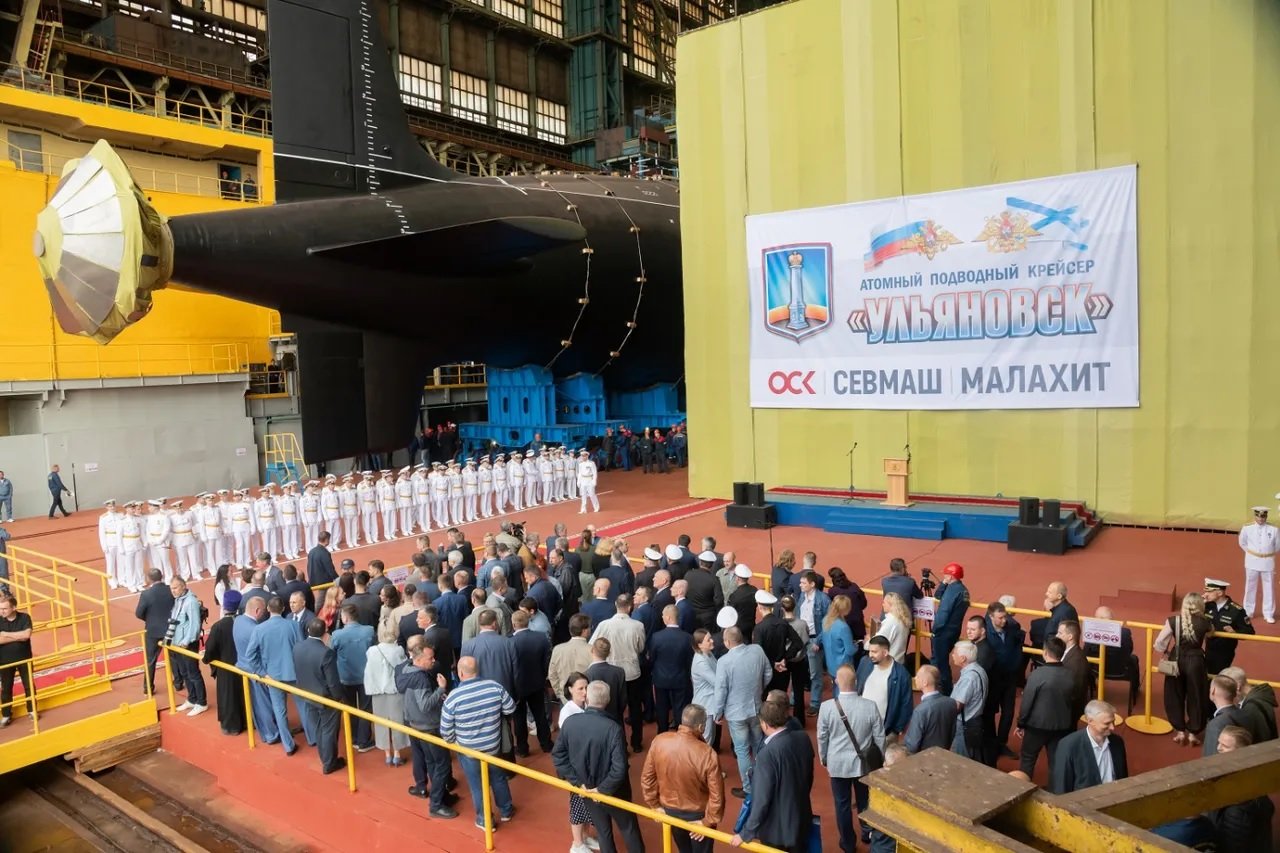
World
SEVERODVINSK, Russia — Russia has completed another milestone in its naval modernization program after the United Shipbuilding Corporation (USC)'s Sevmash shipyard rolled out the Ulyanovsk, the latest Project 885M (Yasen-M) class nuclear-powered attack submarine. The rollout ceremony, held on July 28 at Sevmash in Severodvinsk, marked the completion of the submarine's slipway construction phase. The event was attended by Russian Navy Commander-in-Chief Admiral Alexander Moiseyev and Deputy Prime Minister Yury Trutnev. Although the submarine has now left the covered construction hall, it is not yet ready for operational service. According to the Russian Defense Ministry, Ulyanovsk is scheduled for delivery to the Russian Navy by December 2027 after completing its remaining construction work, testing, and acceptance trials. Rollout Marks Transition to Testing Phase Moving the submarine out of the construction hall confirms that its hull and major internal systems have been assembled. The vessel will now enter the fitting-out stage before beginning a comprehensive testing program. The next phase includes mooring trials, followed by sea trials and state trials. During these tests, engineers and the crew will evaluate the submarine's propulsion system, navigation equipment, weapons integration, deep-diving performance, and overall operational readiness. The full testing period is expected to last roughly a year or more before the submarine is formally handed over to the Russian Navy. Once commissioned, Ulyanovsk will become part of Russia's Northern Fleet, which is responsible for operations across the Arctic, the Barents Sea, and the North Atlantic. Sixth Submarine of the Modernized Yasen-M Series Ulyanovsk was laid down on 27 July 2017 and is the sixth submarine of the modernized Project 885M (Yasen-M) series. Five submarines from the broader Yasen and Yasen-M family are already in service: Severodvinsk (original Yasen class) Kazan Novosibirsk Krasnoyarsk Arkhangelsk The previous Yasen-M submarine, Perm, launched in 2025 and is currently undergoing trials. Sevmash remains the only Russian shipyard responsible for constructing the Yasen and Yasen-M class submarines and has built Russia's nuclear submarines for decades. Multi-Role Nuclear Attack Submarine The Project 885M Yasen-M is an upgraded version of the original Yasen-class submarine and is designed to perform multiple missions, including: Anti-submarine warfare Anti-surface warfare Long-range land-attack missions The submarine measures approximately 130 meters in length and has a displacement of around 8,600 tonnes surfaced and 13,800 tonnes submerged. It is powered by an advanced pressurized water nuclear reactor driving a single-shaft propulsion system, with diesel engines and batteries available as backup power sources. The submarine is designed to operate at depths of approximately 600 meters. Missile and Torpedo Armament The Yasen-M class is equipped with an eight-silo vertical launch system (VLS) capable of carrying 32 to 40 missiles. Its missile load can include: Kalibr land-attack and anti-ship cruise missiles P-800 Oniks anti-ship missiles 3M22 Zircon hypersonic missiles (expected) The submarine also carries 10 angled 533 mm torpedo tubes, positioned amidships rather than in the bow. This arrangement allows space for the large MGK-600 Irtysh-Amfora spherical sonar array in the forward section. The torpedo tubes are capable of launching heavyweight torpedoes, anti-submarine rockets, and naval mines. Design Focuses on Reduced Detectability The Yasen-M design incorporates several measures intended to reduce acoustic and magnetic signatures during underwater operations. These include the use of low-magnetic steel, natural coolant circulation within the nuclear reactor to reduce machinery noise, and a single-hull design intended to improve stealth. Part of Russia's Long-Term Fleet Modernization Russia continues to expand the Yasen-M program as it replaces older Soviet-era attack submarines. On 17 June 2026, Sevmash laid the keel for the ninth Yasen-M submarine, Murmansk, marking the first new keel laying for the class in six years. Russia has stated plans to build approximately 10 to 12 Yasen and Yasen-M submarines by 2035 to replace the aging Oscar II, Akula, and Sierra II attack submarine classes. Next Steps Before Commissioning While the rollout marks an important construction milestone, Ulyanovsk still has several stages to complete before entering operational service. Following fitting-out work, the submarine will undergo mooring, sea, and state trials before its planned delivery to the Russian Navy by December 2027. After commissioning, it is expected to strengthen the capabilities of Russia's Northern Fleet as part of the country's ongoing undersea fleet modernization program.
Read More → Posted on 2026-07-29 13:48:03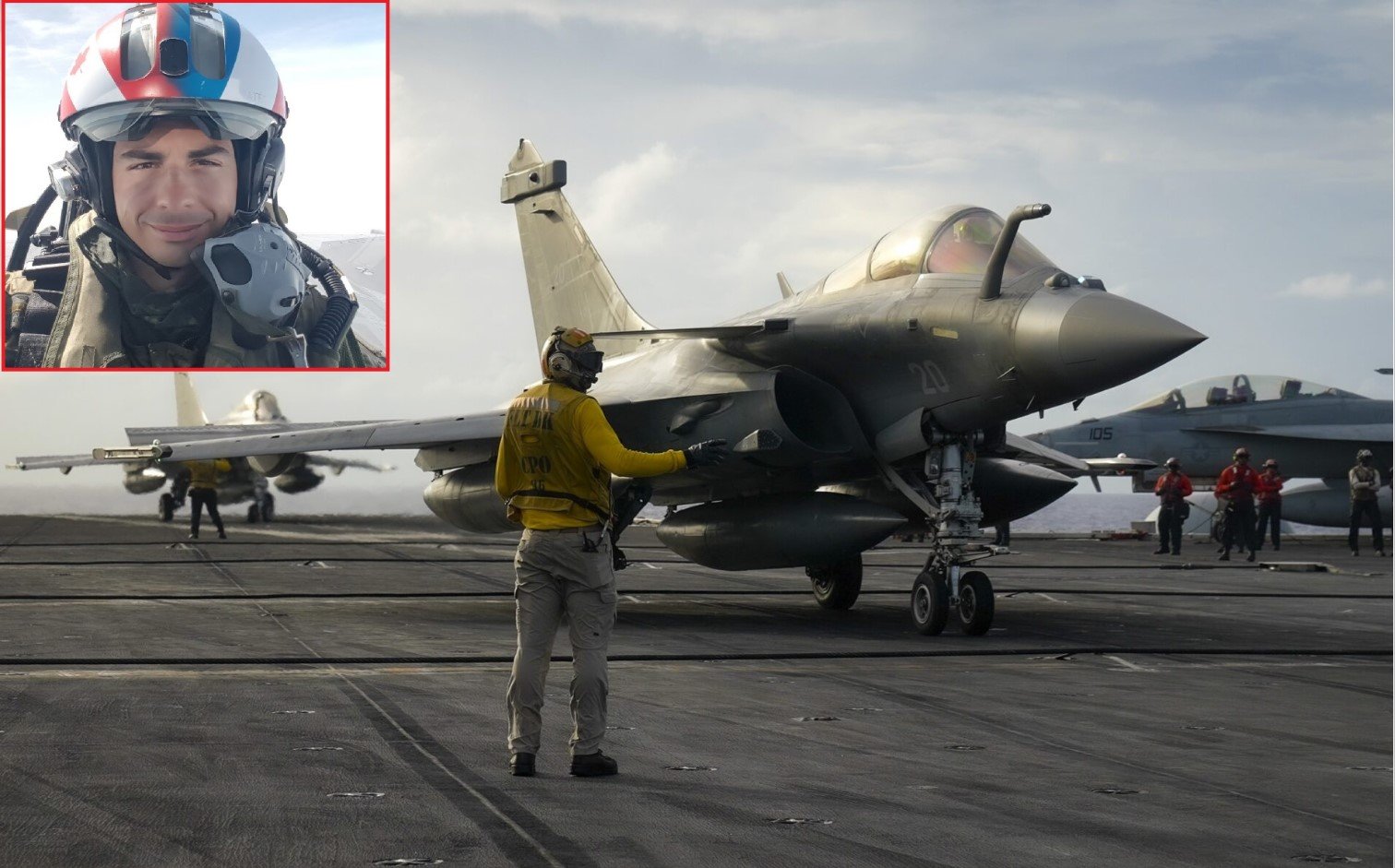
Europe
PARIS — Pierre-Henri Chuet, a former French Navy Rafale pilot and well-known aviation YouTuber, has been placed under formal investigation and judicial supervision in France over alleged intelligence activities linked to China. The investigation is being conducted by France's General Directorate for Internal Security (DGSI). Chuet was questioned by the agency, his home was searched, and he was later presented before an investigating magistrate during the week of July 20, 2026. Under French law, being placed under "mise en examen" (formal investigation) means an investigating judge has found sufficient evidence to justify a judicial inquiry. It is not a conviction or a finding of guilt. Chuet faces four charges: Disclosure of national defence secrets by a person entrusted with them. Intelligence activities with a foreign power. Collection of information concerning the fundamental interests of the nation. Delivery of sensitive information to a foreign state. The case focuses on two trips Chuet made to China in September 2018 and August 2019 while he was still serving in the French Navy. Investigators allege he did not inform his military chain of command, as required by French military regulations. The trips were reportedly arranged and financed by a South African aviation company. During the visits, Chuet allegedly conducted training seminars for Chinese military personnel, with payments reportedly made through his UK-based company, Mach 3 Management. A British pilot also accompanied him during the sessions. According to investigative reports, the seminars covered Catapult Assisted Take-Off But Arrested Recovery (CATOBAR) carrier operations and precision GPS landing procedures. France is one of the few countries outside the United States with extensive operational experience in CATOBAR carrier aviation, making such expertise strategically valuable. The South African intermediary involved has been linked to a broader pattern of recruitment of former Western military pilots. Companies including the Test Flying Academy of South Africa (TFASA) have previously been examined by authorities in the United Kingdom, Spain, and the United States over training provided to Chinese military personnel. The French Ministry of the Armed Forces referred the matter to the Paris prosecutor's office on February 19, 2025, leading to a preliminary investigation that was first reported by French media in April 2025. Chuet has denied any wrongdoing. He told Le Canard Enchaîné that he hosted only two three-day seminars, said the second trip in 2019 did not go well, and stated that he has not returned to China since. A dual French-Canadian national, Chuet flew Super Étendard and Rafale M fighters from the aircraft carrier Charles de Gaulle. He also trained with the U.S. Navy as an exchange officer, completed about 200 carrier landings, and participated in operations in Iraq following the November 2015 attacks in Paris. He left the French naval air arm around 2021 after a medical discharge following a stroke. Since leaving military service, Chuet has worked as an airline pilot, business consultant, author, corporate speaker, defence commentator, and aviation content creator under the name "Até Chuet," where he has built a YouTube audience of more than 560,000 subscribers. The investigation comes amid broader Western concerns over Chinese intelligence activities involving former military personnel. Following the India-Pakistan conflict in May 2025 (Operation Sindoor), French intelligence and the U.S.-China Economic and Security Review Commission concluded that China carried out a coordinated disinformation campaign using deepfakes, AI-generated images, and manipulated video game footage to falsely portray the performance of India's Rafale fighters. French officials assessed that the campaign aimed to undermine the Rafale's international reputation and promote China's J-35 fighter. French authorities have emphasized that Chuet's current legal case is related to the alleged unauthorized transfer of sensitive military knowledge during his naval service, not to his later activities as an aviation commentator or YouTube creator. The judicial investigation remains ongoing, and no verdict has been reached.
Read More → Posted on 2026-07-29 13:38:42
U.S
WASHINGTON — The U.S. Federal Communications Commission (FCC) has adopted new rules blocking the import, marketing, and sale of new foreign-made advanced robotic devices and connected power inverters that are considered national security risks. The decision primarily affects Chinese manufacturers and is part of a broader U.S. effort to strengthen the security of critical technology supply chains. The measures, announced on July 28 and effective immediately, apply only to new device models that have not yet received FCC equipment authorization. Existing models that were previously authorized can continue to be imported, sold, marketed, and used in the United States. Software and security updates for already authorized products will continue to be permitted through at least January 1, 2029. The restrictions do not apply to fixed stationary industrial robotic arms, which are exempt from the new rules. FCC Expands Covered List The FCC updated its Covered List, preventing newly designated products from obtaining the equipment authorization required for sale in the United States. According to the FCC, national security agencies concluded that certain foreign-produced advanced robotic devices and connected power inverters create unacceptable risks to U.S. economic and national security and could threaten critical infrastructure. In a statement, the FCC said these devices could create supply chain vulnerabilities capable of disrupting U.S. economic and national security while also introducing cybersecurity risks. FCC Chairman Brendan Carr said the agency is acting to secure America's critical supply chains and that the FCC will continue working alongside national security agencies to address emerging technology risks. Concerns Over Advanced Robots The new rules define advanced robotic devices as mobile robots, including humanoid robots and quadruped robotic systems, commonly known as robot dogs. According to the FCC, these network-connected robots collect large amounts of data through cameras, sensors, microphones, and other onboard systems. Officials warned that such information could potentially be exploited by malicious actors for surveillance, support foreign intelligence operations, or allow remote control of the robots through cyberattacks. The restrictions are intended to reduce risks associated with connected robotic systems that may become increasingly common in industrial, commercial, research, and consumer environments. Power Inverters Also Included The FCC also added connected power inverters to the Covered List. Power inverters convert direct current (DC) electricity into alternating current (AC) and are widely used in renewable energy systems, battery storage, power grids, and data centers. According to the FCC, the remote connectivity features built into many modern inverters could introduce cybersecurity vulnerabilities if exploited. Officials warned that compromised inverters could potentially be used to disable equipment, collect sensitive data, enable unauthorized remote access, or support cyberattacks targeting critical infrastructure. The agency noted that these risks become increasingly important as inverter-based energy resources continue expanding across the U.S. electricity grid. Conditional Approval Process The updated rules include a process allowing manufacturers to seek Conditional Approval for affected products. For advanced robotic devices, approvals can be granted by the Department of War. For power inverters, approvals may be issued by either the Department of War or the Department of Homeland Security if those agencies determine that specific products or classes of products do not present unacceptable national security risks. Devices receiving Conditional Approval would remain eligible for FCC equipment authorization. Sources familiar with the process indicated that the FCC is expected to exempt many non-Chinese suppliers, consistent with previous actions involving foreign drones and networking equipment. Impact on Chinese Manufacturers China currently dominates much of the global humanoid robotics industry. According to research firm Omdia, approximately 15,000 humanoid robots are expected to ship globally in 2025. Chinese companies Unitree and AGIBOT each shipped more than 5,000 units, while U.S. companies including Tesla and Figure AI shipped significantly fewer during the same period. Reports estimate that China controls around 85% of the global humanoid robot market, while Counterpoint Research estimates that Unitree holds just under one-fifth of the global market. Unitree was recently added to the Pentagon's list of companies alleged to have links to the Chinese military, a designation Beijing rejects. The company also partnered with Nvidia to integrate the company's Blackwell AI chips into future robotic systems. Nvidia has stated that data collected by these robots remains within the United States and that many of Unitree's customers are U.S. academic and research institutions. Tesla CEO Elon Musk has also acknowledged China's manufacturing strength, stating that Chinese companies are likely to become Tesla's largest long-term competitors in the humanoid robot market. Concerns Over the Inverter Market China is also the world's largest manufacturer of power inverters, led by companies including Sungrow Power Supply and Huawei. Chinese manufacturers have expanded their presence in Western markets by offering lower-priced products. The U.S. Department of Defense is already prohibited from purchasing solar photovoltaic cells, modules, or power inverters produced by foreign entities of concern. Officials have also pointed to lessons from the Volt Typhoon cyber campaign disclosed in 2023, in which attackers compromised privately owned routers to help conceal cyber operations targeting U.S. critical infrastructure. Industry and Political Response U.S. Representative John Moolenaar, chairman of the House Select Committee on China, welcomed the FCC's decision, saying it protects the United States and strengthens the country's robotics industry. Treasury Secretary Scott Bessent recently warned that Chinese artificial intelligence companies could face sanctions if they are found to have stolen U.S. intellectual property. Industry analysts, however, said the restrictions are unlikely to significantly slow China's overall robotics development because of its large domestic manufacturing base and access to other export markets. Morgan Stanley projects that the global humanoid robotics market could reach $15 billion by 2030. Morningstar analyst Kangyuxiao Li said the restrictions may shield U.S. developers from price competition but are unlikely to materially affect China's broader robotics industry. Lian Jye Su, chief analyst at Omdia, said the policy could disrupt existing research and development cooperation between U.S. and Chinese technology companies. China Criticizes the Decision The Chinese Embassy in Washington criticized the U.S. action, urging Washington to stop targeting Chinese companies and threatening them with sanctions. The embassy said China would take necessary measures to protect the interests of its businesses. Speaking in Beijing, Chinese Foreign Ministry spokesperson Mao Ning said the United States was overstretching the concept of national security to suppress Chinese companies. She said protectionism would not improve U.S. competitiveness and would instead harm the interests of American businesses and consumers. Mao added that China would take all necessary measures to protect the legitimate rights and interests of Chinese companies. Broader U.S.-China Technology Strategy The latest restrictions are part of broader U.S. efforts to reduce dependence on foreign technology supply chains and strengthen cybersecurity protections for critical infrastructure. The FCC has previously added certain foreign drones, drone components, and networking equipment to its Covered List over national security concerns. The new measures also come ahead of a planned September meeting between U.S. President Donald Trump and Chinese President Xi Jinping, where technology, trade, and national security issues are expected to remain key topics of discussion.
Read More → Posted on 2026-07-29 13:25:56Search
Top Trending in 24 Hours
-
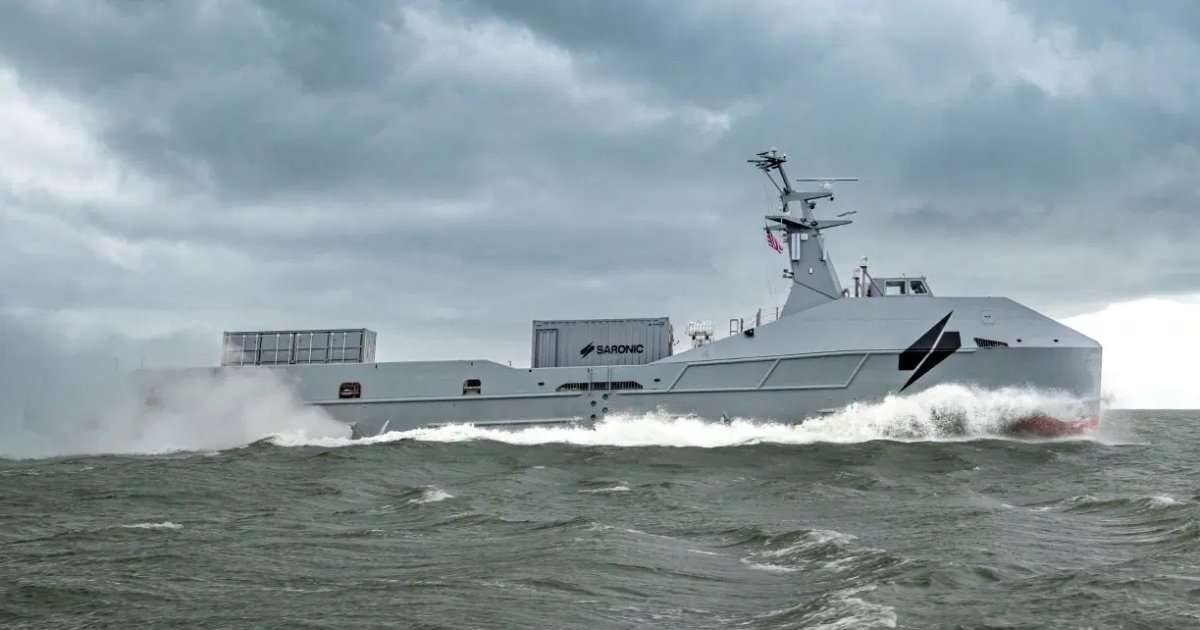 U.S. Navy Awards Production Agreements for 30 Medium Unmanned Surface Vessels, Including 10 Saronic Marauders
-
 Boeing Wins $20 Billion U.S. Navy Contract for F/A-XX Sixth-Generation Fighter
-
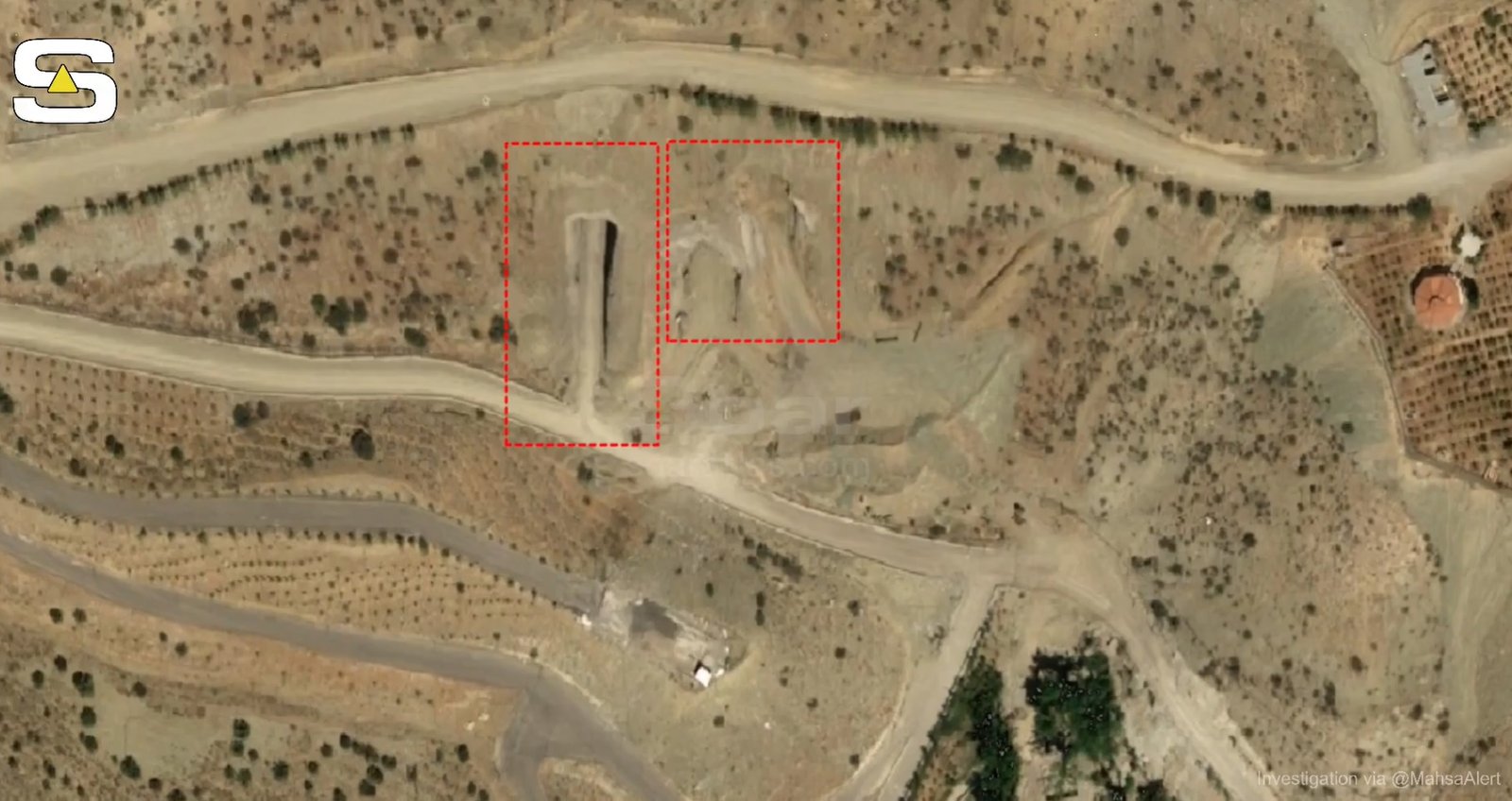 Satellite Imagery Shows Construction Changes at Hillside Site Linked to Iran’s Supreme National Security Council
-
 Flydubai Flight to Israel Diverted to Saudi Arabia After Possible Attempted Terror Attack in Cockpit
-
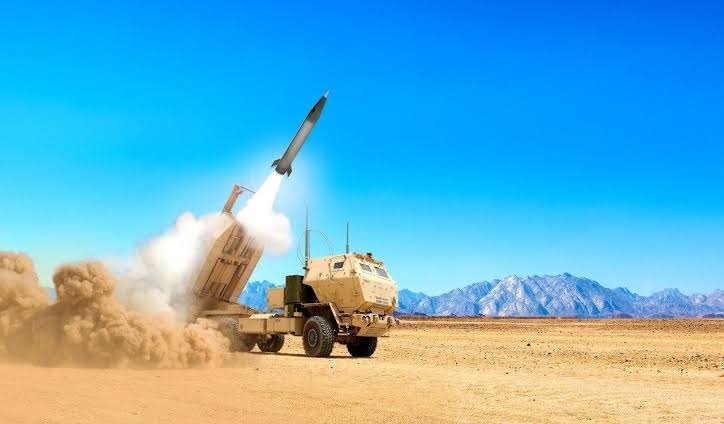 U.S. Army Selects Five Companies to Develop 1,000-Km Precision Strike Missile Prototypes
-
 NASA Adds Blue Origin’s Upgraded New Glenn 9×4 to Launch Services Contract
-
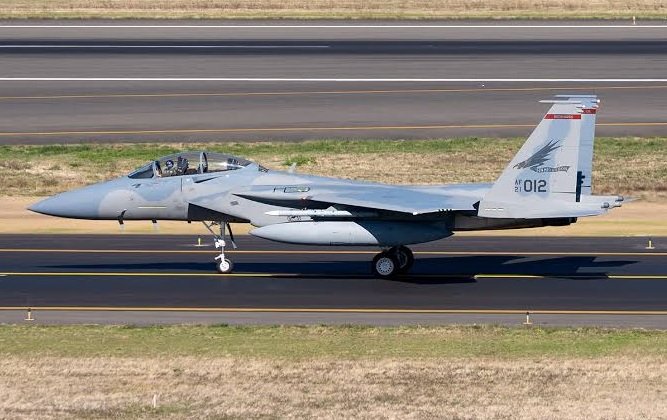 U.S. Air Force Awards Boeing $2.38 Billion Contract for 22 F-15EX Fighter Jets
-
 U.S. Army Awards Heaviside Industries $99 Million Contract for MOTH RF Spectrum Analyzers
Top Trending in 4 Days
-
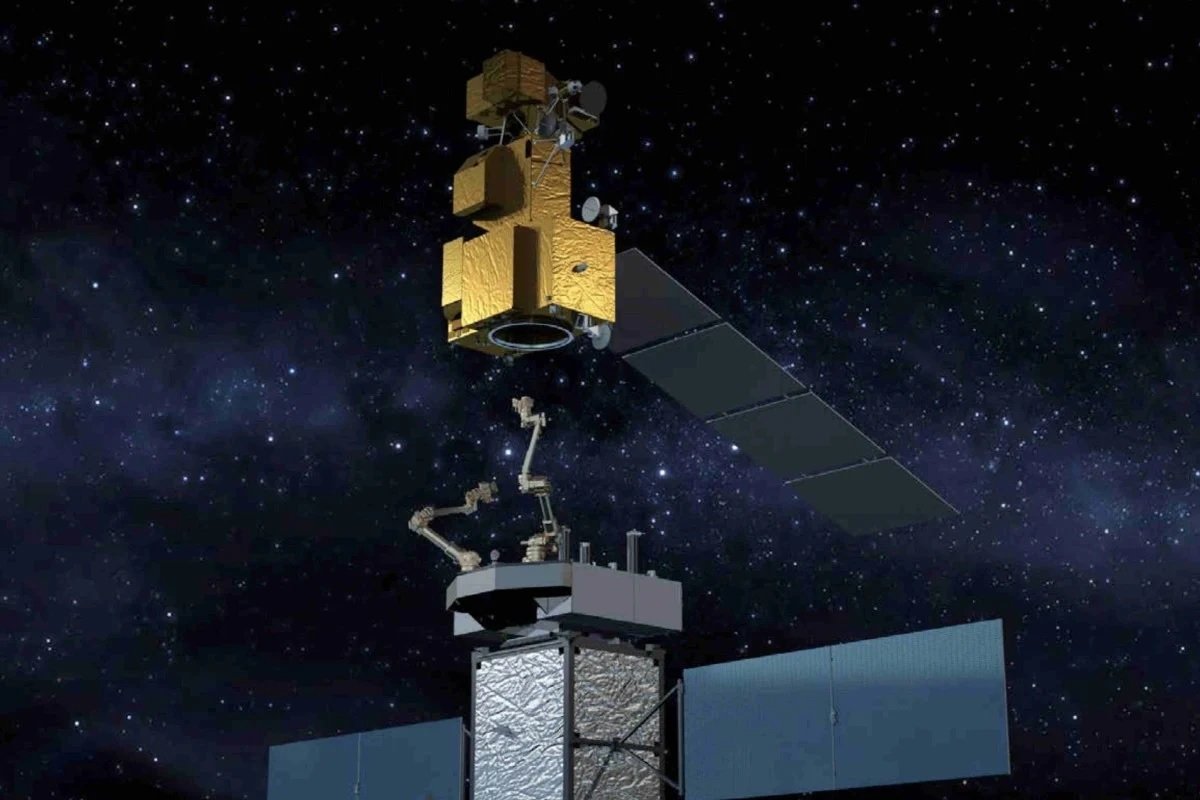 China Reports First High-Orbit Refueling of BeiDou Satellite, but Tracking Data Raise Questions
-
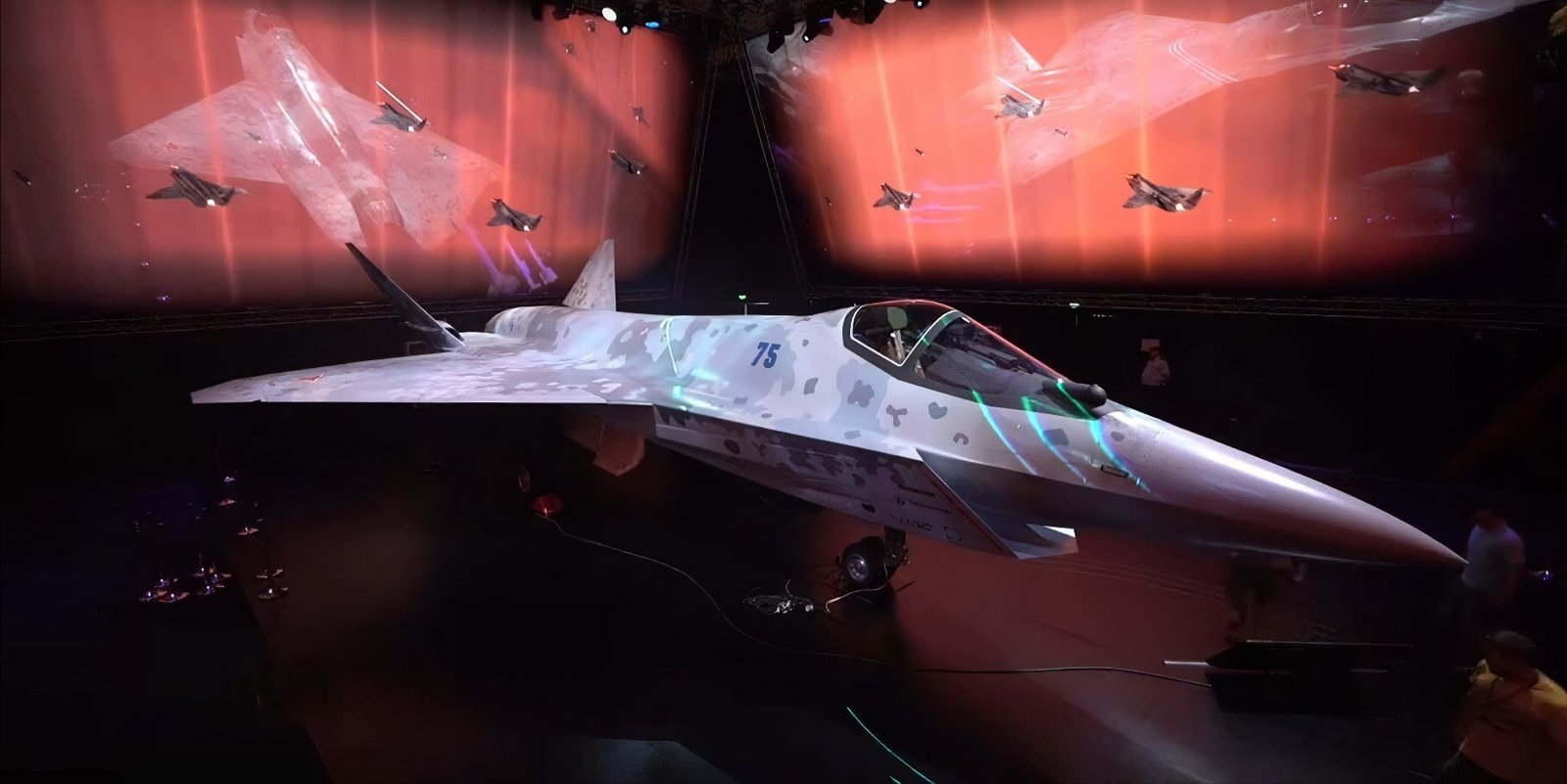 Russia Says Su-75 Checkmate Could Cost Just $25–30 Million, Flight-Hour Costs 6 Times Lower Than F-35
-
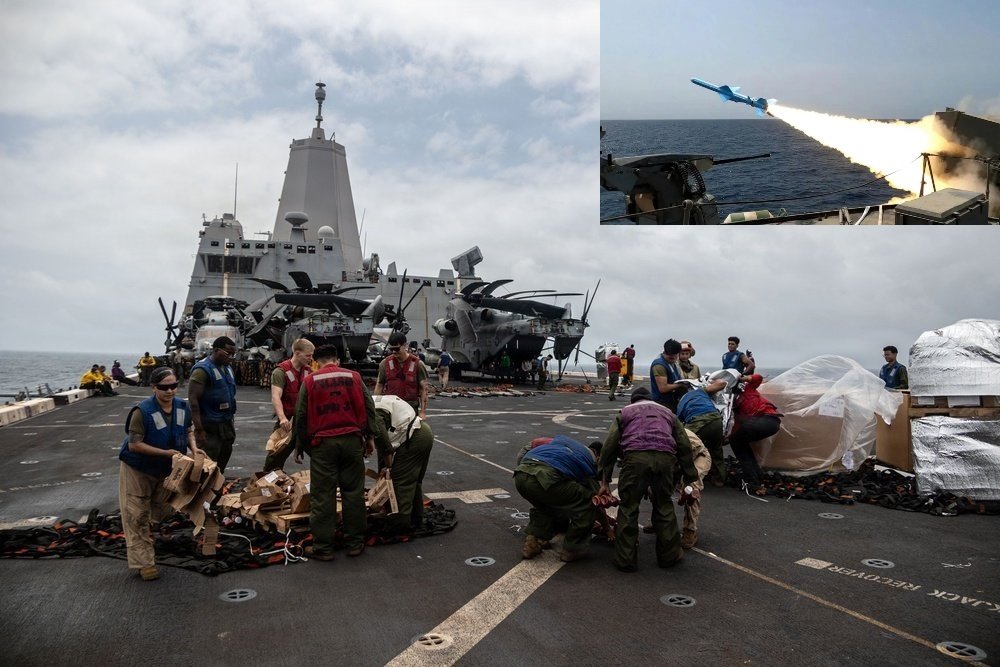 Eight U.S. Marines Injured in Iranian Missile Strike on U.S Vessel in Strait of Hormuz
-
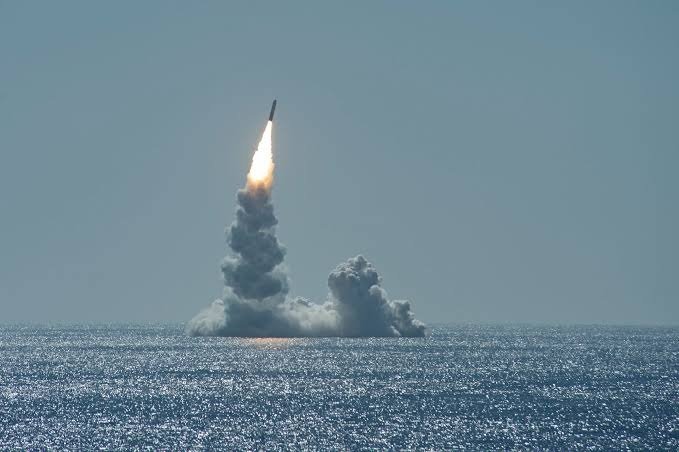 UK Offers Nuclear Deterrence for Its Northern European Defence Partners
-
 U.S. and Russia Remove Human-Review Rules From Draft UN AI Weapons Framework
-
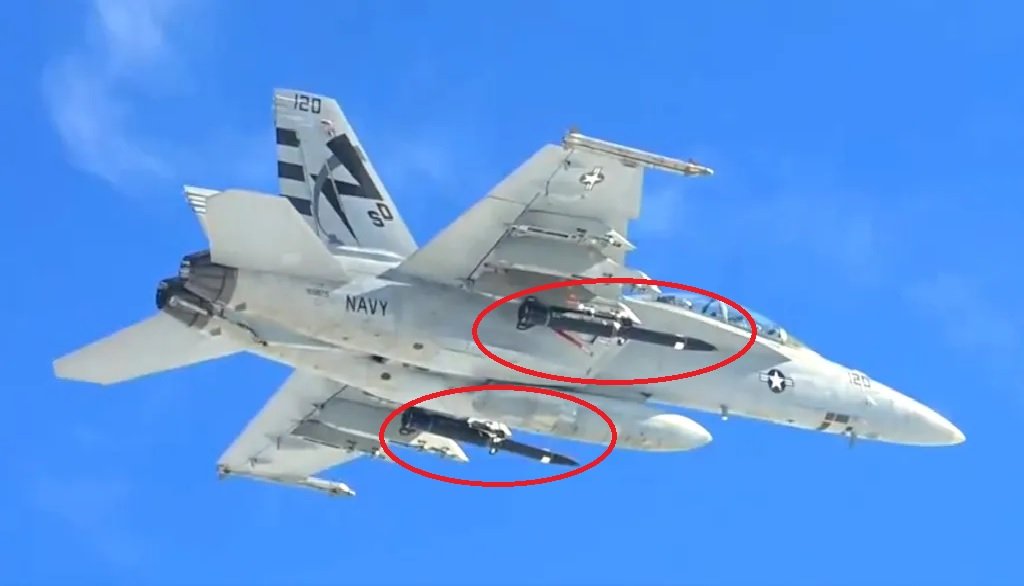 U.S. Navy Begins Flight Testing Blackbeard Hypersonic Missile on F/A-18 Super Hornet
-
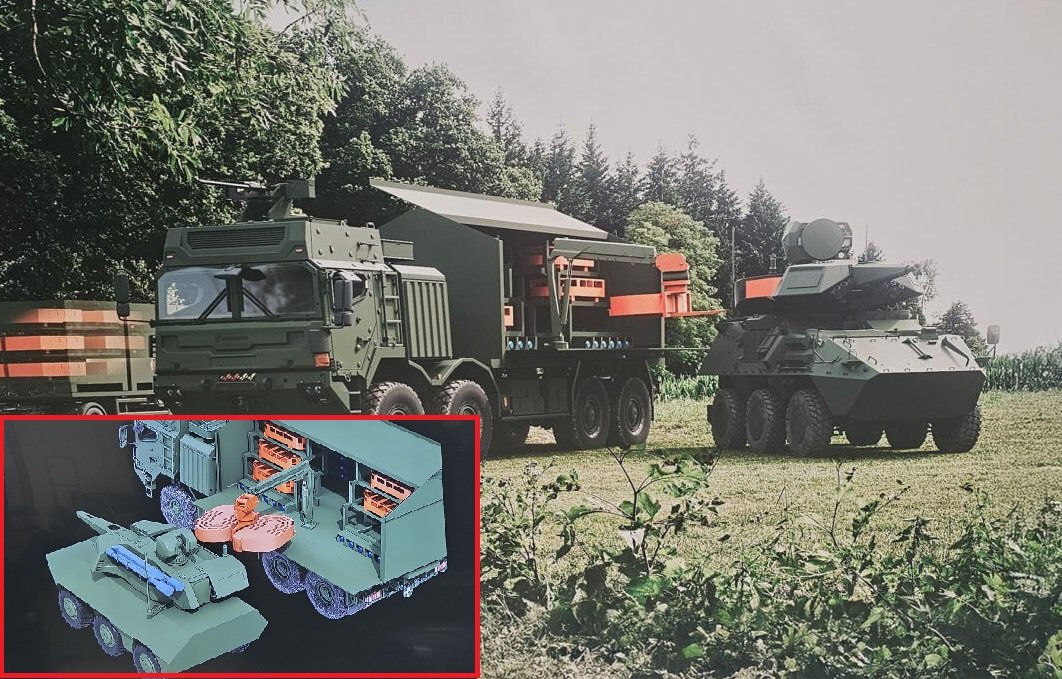 Rheinmetall Develops Automated Reloader for Austrian Skyranger Air Defense System
-
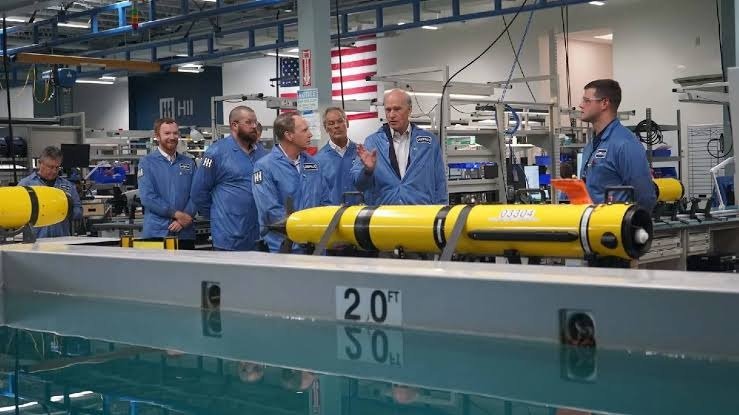 HII Expands Massachusetts Unmanned Systems Facility by 25 Percent to Support U.S. Navy Lionfish Production
