World
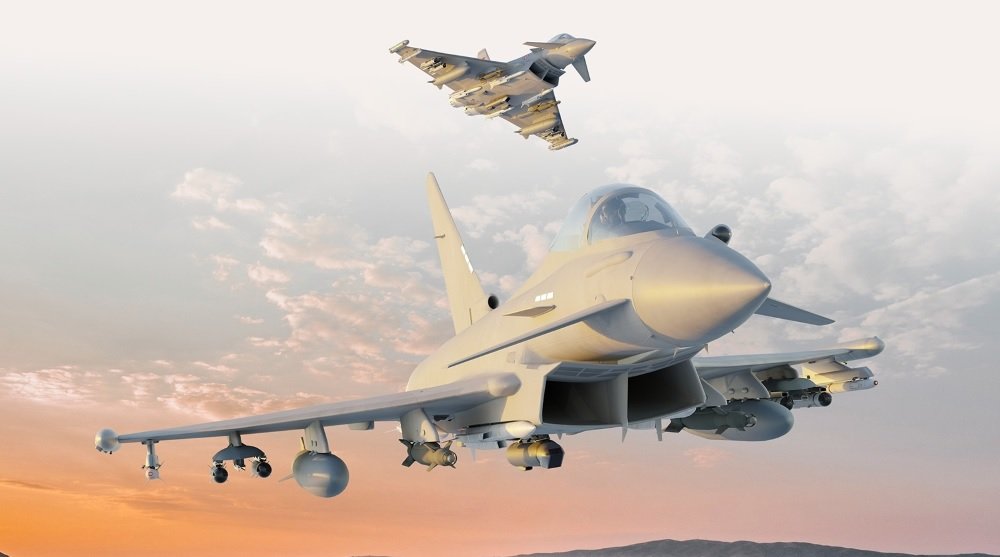
LONDON — Production of Türkiye's first fleet of 20 Eurofighter Typhoon fighter jets has officially begun in the United Kingdom, marking a major milestone in the defense agreement signed between Ankara and London in October 2025. BAE Systems confirmed in its first-half 2026 financial results that manufacturing of components is now underway at its facilities in the United Kingdom and across the Eurofighter partner nations. Final assembly of all 20 aircraft will take place at the company's Warton facility in Lancashire, England. The £5.4 billion (approximately $7.2 billion) agreement covers the production of 20 newly built Eurofighter Typhoon aircraft, along with weapons, training and long-term support. The order also helps sustain Typhoon production at Warton into the 2030s. Deliveries Planned in Three Phases The Turkish Air Force will receive the aircraft in three batches to support the gradual introduction of the new fleet. Six aircraft will be delivered in 2030 Eight aircraft will follow in 2031 The final six aircraft will arrive in 2032 Latest Production Standard Türkiye's aircraft will be built in the Tranche 4 production standard, the latest version currently in production. According to defense reports, the aircraft will be equipped with the Leonardo ECRS Mk 0 Active Electronically Scanned Array (AESA) radar. The Tranche 4 standard also includes updated sensors, avionics and structural improvements. The aircraft will be integrated with: MBDA Meteor beyond-visual-range air-to-air missiles Brimstone precision ground-attack missiles Advanced short-range air-to-air missiles Weapons integration is being carried out by BAE Systems in cooperation with MBDA. Training and Support Package In March 2026, the United Kingdom and Türkiye signed a separate agreement covering training, logistics and technical support for the Typhoon fleet. Reports have valued the package at around £2.5 billion, while other reports indicate it could be worth up to £2.6 billion. The agreement includes high-fidelity flight simulators, electronic warfare systems, spare parts, technical assistance and support services for an initial three-year period after the aircraft enter service. The Royal Air Force will train 10 Turkish instructor pilots and nearly 100 Turkish maintenance personnel to help Türkiye develop its own long-term training and maintenance capability. Turkish personnel are expected to begin travelling to the United Kingdom in August 2026, following the signing of a separate technical and logistics support agreement on March 25, 2026. BAE Systems Statement Simon Barnes, Group Managing Director of BAE Systems' Air sector, said: "We're proud to support the UK's partnership with Türkiye by delivering a trusted defence capability that deepens collaboration and reinforces shared security commitments. Türkiye's acquisition of Typhoon strengthens this partnership and enhances the country's advanced combat air capabilities." Strengthening Türkiye's Air Force With this order, Türkiye will become the tenth operator of the Eurofighter Typhoon, joining Germany, Italy, Spain, the United Kingdom, Austria, Kuwait, Oman, Qatar and Saudi Arabia. The Eurofighter Typhoon is a twin-engine multirole combat aircraft produced by the European consortium of BAE Systems, Airbus and Leonardo. It entered service in 2003 and is designed for air-to-air, air-to-ground and reconnaissance missions. Separately, Türkiye is also discussing the possible acquisition of second-hand Eurofighter Typhoon aircraft from Qatar and Oman to bridge the gap before deliveries of its newly built aircraft begin in 2030. No agreement has been announced.
Read More → Posted on 2026-08-01 12:19:06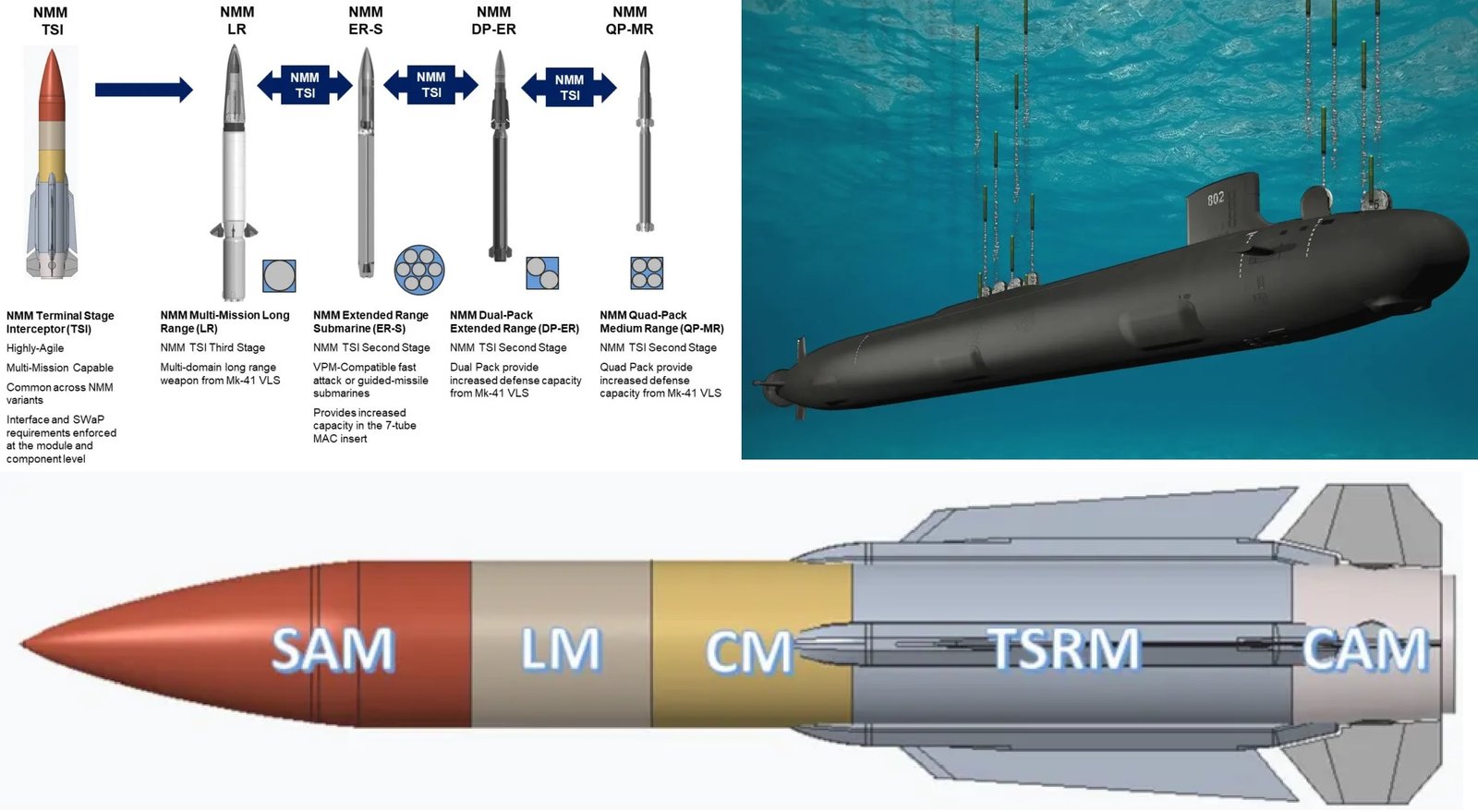
U.S
WASHINGTON — The U.S. Navy has outlined new details of its Naval Modular Missile (NMM) program, a next-generation family of modular surface-to-air interceptors designed to improve fleet air defense, increase missile capacity aboard warships, and introduce a submarine-launched air-defense capability for future attack submarines. The program is built around a common Terminal Stage Interceptor (TSI) that can be combined with different rocket boosters and launch canisters to create multiple missile variants for different missions and platforms. The Navy says the modular approach is intended to simplify production, improve logistics, and provide greater flexibility across the fleet. Information on the program comes from a draft Request for Solutions contracting notice issued by Naval Sea Systems Command (NAVSEA), which was first reported by Aviation Week. NAVSEA also held an industry day earlier this year to gather feedback from potential suppliers. While the effort has existed since at least 2021, only limited information had previously been made public. The U.S. Navy has requested $311 million in its Fiscal Year 2027 budget as a new-start effort to begin NMM development. Budget documents state that the long-term objective is to eventually replace the Navy's existing inventory of Standard missiles with the new modular missile family while providing advanced defensive and offensive capabilities for the U.S. Navy, the Joint Force, allies, and partners. Modular Terminal Stage Interceptor Forms the Core of the Program At the center of the NMM program is the 10-inch diameter Terminal Stage Interceptor (TSI), which serves as a common front-end section for all missile variants. According to NAVSEA contracting documents, the interceptor consists of five modules: Seeker Assembly Module (SAM) Lethality Module (LM) Command Module (CM) Terminal-Stage Rocket Motor (TSRM) Control Actuation Module (CAM) The Navy describes the TSI as a highly agile, multi-mission interceptor built using current technologies. While detailed performance requirements have not been publicly released, the contracting notice indicates the missile is intended to counter advanced aerial threats, including maneuvering supersonic and hypersonic weapons. The Navy has not finalized seeker requirements. However, potential seeker options mentioned in the documents include active radar, imaging infrared, and passive radiofrequency systems. A multi-mode seeker could improve performance against increasingly sophisticated electronic countermeasures. The focus on advanced missile defense reflects operational experience from recent conflicts in the Middle East and observations from the war in Ukraine, as well as the continued development of high-speed anti-ship missiles by countries including China and Russia. Four Missile Variants Planned Using the common TSI, the Navy plans to develop four primary All-Up-Round (AUR) variants for different operational requirements. Long-Range (LR) The Long-Range (LR) variant is intended for launch from the Mk 41 Vertical Launching System (VLS) installed on U.S. Navy surface combatants. The missile uses a 21-inch rocket motor, leveraging existing Navy investments in propulsion technology already associated with the Standard Missile-3 (SM-3) Block IIA and the developing SM-6 Block IB. According to Navy documents, the LR missile is designed to provide multi-mission hypersonic capability, allowing faster engagement of long-range aerial threats and supporting future long-range kill chains. One LR missile will occupy a single Mk 41 VLS cell. Dual-Pack Extended Range (DP-ER) and Quad-Pack Medium Range (QP-MR) To increase the number of interceptors carried aboard surface ships, the Navy also plans two slimmer missile variants: Dual-Pack Extended Range (DP-ER) Quad-Pack Medium Range (QP-MR) These missiles are designed to fit two or four missiles, respectively, into a single Mk 41 VLS cell. Currently, the Evolved Sea Sparrow Missile (ESSM) is the primary Navy surface-to-air interceptor that can be multi-packed into Mk 41 launch cells. Increasing magazine depth would allow warships to conduct more defensive engagements before needing to return to port for reloading. The Navy is also developing methods for reloading vertical launch systems at sea to further improve operational flexibility. Submarine-Launched ER-S Variant One of the most significant elements of the NMM program is the Extended-Range Submarine (ER-S) variant, which is planned for deployment aboard future Block V Virginia-class nuclear-powered attack submarines equipped with the Virginia Payload Module (VPM). The VPM adds four large vertical launch tubes to Block V submarines. Under current plans, the ER-S missiles would be loaded using a seven-cell Multiple All-Up-Round Canister (MAC) adapter previously used on Ohio-class guided-missile submarines. The U.S. Navy does not currently operate a dedicated submarine-launched surface-to-air missile capability. According to program documents, the ER-S missile is expected to provide submarines with localized defense against airborne threats such as anti-submarine warfare aircraft while also expanding their contribution to wider fleet air-defense operations. 【P1】 The submarine currently under construction appears to be USS Arizona (SSN-803), the second Block V Virginia-class attack submarine. 【P2】 is likely the Virginia Payload Module (VPM), a key feature of the Block V variant.USS Arizona will be the first Virginia-class… https://t.co/lNVxk5TZfe pic.twitter.com/oUJLZEMkGd — 笑脸男人 (@lfx160219) July 30, 2026 Submarine multiple all-up-round canister (MAC) evolution:1⃣Ohio-class SSGN: 7-round MAC backfit into each Trident missile tube2⃣Block III Virginia: two VPTs on the bow with 6-round MAC3⃣Block V Virginia (starting w/803): keep Block II VPT, add four 7-round MAC amidships pic.twitter.com/5oAVbKbZEK — 🇺🇸𝗢𝗹𝗱 𝗦𝘂𝗯𝗺𝗮𝗿𝗶𝗻𝗲𝗿⚓️ (@USN_Submariner) August 6, 2024 Potential Role in Networked Air Defense Navy planning documents describe how submarines equipped with ER-S missiles could operate as part of a wider networked air-defense architecture. Using targeting information provided by offboard sensors—including Aegis-equipped surface ships, space-based tracking systems, or aircraft—a submarine could contribute to engagements against airborne threats while remaining integrated into broader fleet operations. The Navy also notes that the LR and ER-S variants are planned to achieve hypersonic speeds, allowing faster engagement of distant threats and potentially improving response against time-sensitive targets. Military planners also recognize operational considerations associated with the submarine-launched concept. Launching a large interceptor generates infrared, radar, and acoustic signatures that could reveal a submarine's position, requiring commanders to balance defensive benefits with stealth requirements. Production Strategy Focuses on Modular Manufacturing A major objective of the NMM program is to improve production capacity and strengthen the defense industrial base. Rather than relying on a single supplier, the Navy's modular open-architecture approach is intended to allow multiple contractors to manufacture TSI components and rocket motors, increasing competition and reducing supply chain constraints. According to contracting documents, the Navy is targeting production of 1,000 TSI interceptors per year within five years of contract award. Budget documents also indicate the Navy plans to use multiple acquisition approaches, including Other Transaction Authorities (OTA), marketplace platforms, and alternatives to traditional Federal Acquisition Regulation (FAR) procurement methods to expand the supplier base. Program Supports Future Fleet Air Defense The Fiscal Year 2027 budget request states that the Naval Modular Missile (NMM) program is intended to address increasingly capable anti-access and area-denial (A2/AD) threats while providing greater magazine capacity and more adaptable missile options across the fleet. If developed as planned, the NMM family would introduce a standardized interceptor architecture for surface ships while adding a new submarine-launched air-defense capability for future Virginia-class submarines equipped with the Virginia Payload Module (VPM), expanding the Navy's options for defending against advanced aerial threats. Source : TWZ
Read More → Posted on 2026-08-01 12:08:45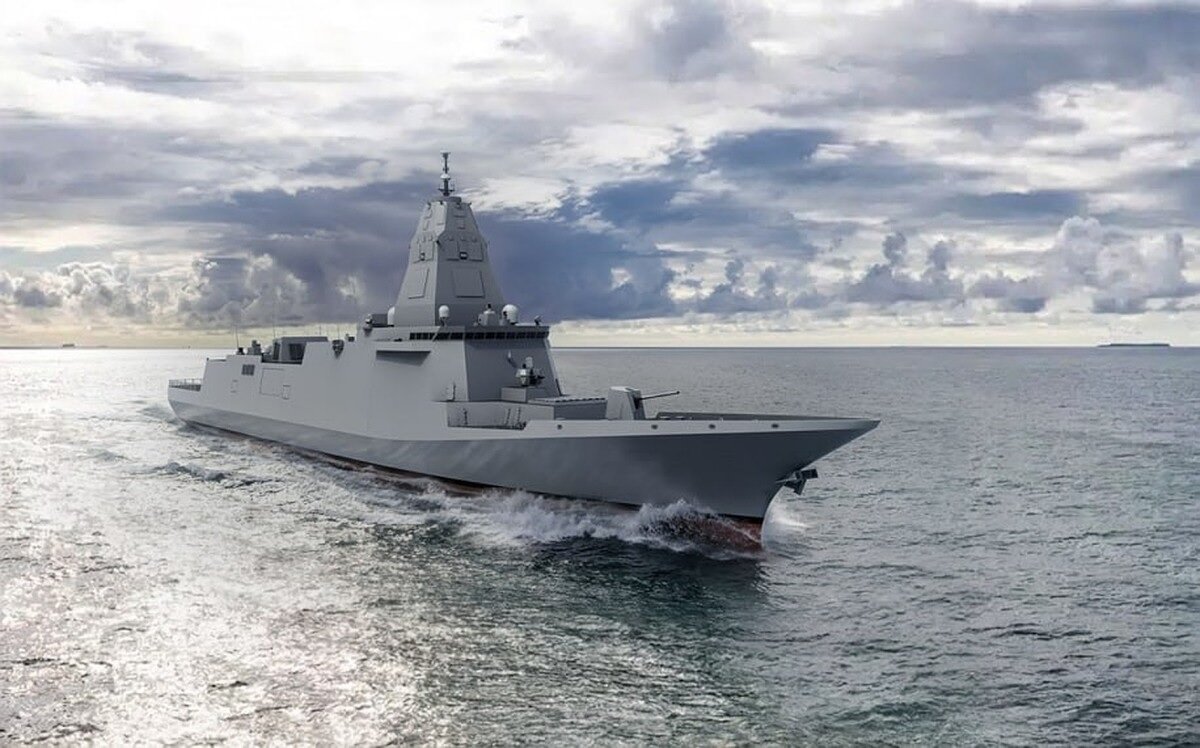
World
SEOUL — South Korea's Defense Acquisition Program Administration (DAPA) has signed a contract with Hanwha Ocean for the detailed design and construction of the lead ship of the Republic of Korea (ROK) Navy's Next-Generation Destroyer (KDDX) program, officially moving the project into its development and construction phase. The KDDX program is valued at KRW 7.8 trillion (approximately US$5.4 billion) and will deliver six next-generation guided-missile destroyers in the 6,000–7,000-ton class for the ROK Navy. The agreement signed on July 31, 2026, covers the detailed design and construction of the first ship and is worth approximately KRW 838 billion (about US$580–585 million). Under the current schedule, the lead destroyer is expected to be delivered by June 30, 2032, while the remaining five ships are planned for sequential delivery through 2036. DAPA also expects procurement of the follow-on ships to begin around late 2028. Hanwha Ocean Selected After Competitive Evaluation The contract follows Hanwha Ocean's selection as the preferred bidder in early July 2026 after a closely contested evaluation against HD Hyundai Heavy Industries (HD HHI). According to DAPA, Hanwha Ocean outscored HD Hyundai Heavy Industries by 0.5867 points in the final evaluation. Although HD HHI completed the KDDX basic design phase in December 2023, a 1.2-point security deduction related to past procurement irregularities, including issues involving military secrets, affected its final score. After review and objection procedures were completed, DAPA proceeded with the signing of the main contract. The award marks a notable shift in South Korea's naval shipbuilding industry. While HD Hyundai Heavy Industries has traditionally led the detailed design and construction of the country's major surface combatants, Hanwha Ocean will now take the primary role in building the ROK Navy's next-generation destroyer. The company has previously built Ulsan-class frigates and has extensive experience in naval shipbuilding, particularly submarines. Designed as South Korea's First Indigenous Aegis-Equivalent Destroyer The KDDX class is intended to replace the aging Gwanggaeto the Great-class (KDX-I) destroyers and become a core asset of the ROK Navy's Task Fleet Command. Unlike the Sejong the Great-class (KDX-III) destroyers, which rely substantially on the U.S.-made Aegis combat system, the KDDX is being developed as South Korea's first fully indigenous Aegis-equivalent surface combatant, often referred to as the country's "Korean Aegis" destroyer. The ships will incorporate several domestically developed systems, including: Integrated Mast (I-MAST) housing an indigenous dual-band S/X phased-array multi-function radar and communication systems. A domestic Combat Management System (CMS) for command and control. An Integrated Electric Propulsion System (IEPS) designed to reduce the ship's acoustic signature while supporting future high-energy weapon integration. Korean Vertical Launch System (KVLS-I and KVLS-II) cells capable of deploying domestically developed surface-to-air and strike missiles. Advanced indigenous sonar systems. New Technologies Planned for the KDDX During the detailed design and construction phase, Hanwha Ocean plans to incorporate several technologies intended to improve the destroyer's operational capability and long-term support. Among the planned features is a digital twin framework that will support ship design, construction, maintenance, and lifecycle management. The destroyer will also include a multi-layered counter-unmanned aerial system (anti-drone) suite to address emerging unmanned aerial threats. To strengthen network-centric operations, the design includes a high-bandwidth 5G-based wired and wireless communications network. Additional technologies under consideration include manned-unmanned teaming (MUM-T) combat systems, enhanced cybersecurity measures to protect operational networks, and automation technologies aimed at reducing crew requirements in response to long-term naval manpower constraints. DAPA Highlights Strategic Importance Jung Jae-jun, Head of DAPA's Advanced Capabilities Program Bureau, described the KDDX project as a national program that brings together South Korea's warship construction and defense industry capabilities. He said DAPA will continue examining execution strategies for follow-on vessels to support timely deployment that meets future operational requirements. He added that successful completion of the KDDX program is expected to strengthen the international competitiveness of South Korean naval shipbuilding and support future warship export opportunities. Following the contract signing, Hanwha Ocean said detailed design work will begin immediately under the agreement, which runs through June 30, 2032 for the lead ship. The KDDX program represents an important step in South Korea's ongoing naval modernization effort and expands the country's role in developing advanced indigenous surface combatants.
Read More → Posted on 2026-08-01 11:52:14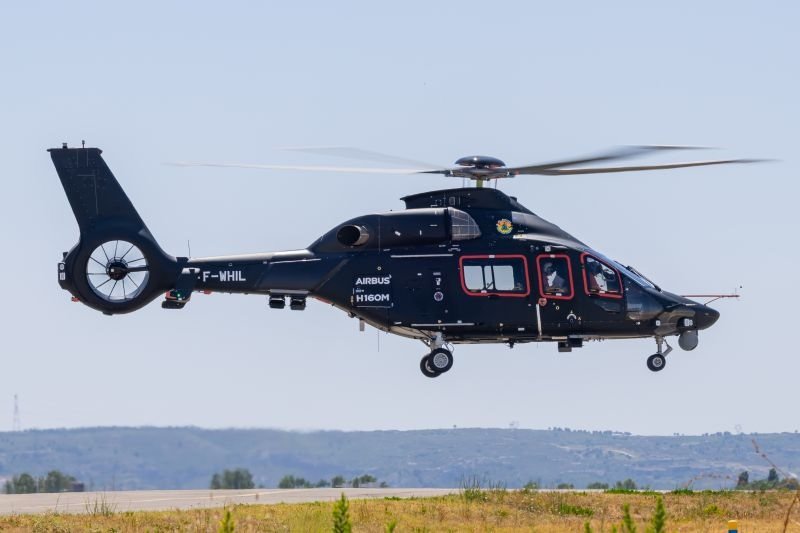
Europe
MARIGNANE, France — Airbus Helicopters has completed the maiden flight of the second prototype of its H160M Guépard military helicopter, marking the next phase of the aircraft's flight test campaign under France's Joint Light Helicopter (Hélicoptère Interarmées Léger – HIL) programme. The second prototype made its first flight in a distinctive all-black paint scheme, setting it apart from the civilian-style H160 helicopters already in service and from the first military prototype. The H160M, known as Guépard (French for "cheetah"), is the military version of the Airbus H160 medium helicopter. It is being developed to provide a common helicopter platform for the French Army, Navy, and Air and Space Force, replacing several legacy helicopter types currently in service or recently retired. France to Acquire 169 H160M Helicopters France plans to procure 169 H160M Guépard helicopters under the HIL programme. The new fleet will replace five existing helicopter types: Gazelle Alouette III Dauphin Panther Fennec The fleet consolidation is intended to simplify maintenance, logistics, spare parts management, and crew training across the three military services. France has so far ordered an initial batch of 30 aircraft. The overall planned fleet includes 80 helicopters for the French Army, 49 for the French Navy, and 40 for the French Air and Space Force. Initial deliveries to the French Army are scheduled to begin in late 2028. Three Prototypes Supporting Development Airbus is using three flying prototypes to support different phases of the H160M development programme. The first prototype completed its maiden flight on 18 July 2025. It has accumulated more than 72 flight hours, focusing on validating the helicopter's flight characteristics and overall performance. During 2026, the aircraft conducted weapons firing trials at Cazaux, validating the integration of 12.7 mm machine gun pods, door-mounted machine guns, and the self-protection system's flare dispensers. Further testing will include guided rockets as well as risk-reduction studies for the MBDA Akeron LP missile. The second prototype, which has now completed its first flight, will focus on environmental testing. The aircraft will undergo hot and cold weather trials to evaluate system performance in extreme operating conditions, including desert and arctic environments. The third prototype is scheduled to join the flight test campaign in 2027. It will be configured for naval operations and will validate maritime-specific equipment and shipboard compatibility required by the French Navy. Military Systems and Mission Equipment The H160M is a six-tonne-class helicopter powered by two Safran Arrano turboshaft engines. According to Airbus, the helicopter incorporates 68 patented technologies designed to improve efficiency, safety, environmental performance, acoustic performance, and maintenance compared with earlier helicopter designs. For military operations, the Guépard is equipped with a dedicated mission system that includes: Thales FlytX avionics suite Airbus-developed mission system Safran Euroflir 410 electro-optical sensor Thales AirMaster C radar The helicopter also features an automated self-protection suite that operates across the electromagnetic and optical spectrum to deploy countermeasures against threats. Using Airbus' HForce modular weapon system, the H160M can be equipped with: 12.7 mm machine gun pods Guided rockets 7.62 mm pintle-mounted machine guns for door gunners Native Drone Cooperation Capability The H160M is the first helicopter in Airbus' product range designed from the outset with a native drone cooperation system. The capability enables helicopter crews to work directly with unmanned aircraft, allowing real-time information sharing and extending reconnaissance and situational awareness beyond the helicopter's onboard sensors. Production Continues Alongside Flight Testing Airframe production is already underway at Airbus' facility in Donauwörth, Germany, while final assembly is carried out in Marignane, France. Manufacturing is progressing in parallel with the ongoing flight test programme. Airbus has also highlighted the operational experience gained from the French Navy's interim use of six civilian H160 helicopters for maritime search-and-rescue missions. Those aircraft have accumulated more than 5,000 flight hours over more than two years of operations, providing operational experience that supports the H160M programme. The successful first flight of the second prototype expands the H160M test campaign into environmental qualification while development continues toward the planned introduction of the helicopter into French military service beginning in late 2028.
Read More → Posted on 2026-07-31 17:08:15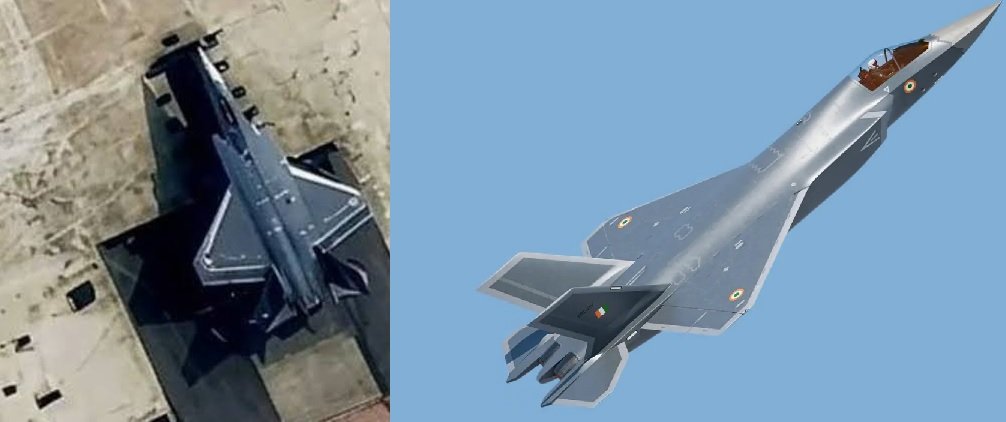
India
NEW DELHI — The Aeronautical Development Agency (ADA) has re-issued the Request for Proposal (RFP) for the prototype development phase of India's Advanced Medium Combat Aircraft (AMCA) programme, introducing revised project terms and extending the bid timeline for shortlisted industry participants. The updated tender sets the opening of bids for August 28, 2026, at 2:00 PM, after competing aerospace consortiums sought additional time to prepare their proposals. The revised documents include changes to flight testing, financial rules, maintenance costs, testing infrastructure and material handling requirements while keeping the programme focused on selecting an industry partner for prototype development. The AMCA is India's indigenous fifth-generation stealth multirole fighter being designed by ADA under the Defence Research and Development Organisation (DRDO). The aircraft is planned as a single-seat, twin-engine platform for the Indian Air Force, featuring a low-observable design, internal weapons bays, advanced avionics, sensor fusion and multirole capability. The Cabinet Committee on Security (CCS) had earlier approved the prototype development phase of the programme with an estimated budget of around ₹15,000–15,800 crore. Three Private-Sector Teams Competing The prototype development tender has been issued to three shortlisted private-sector bidders: Tata Advanced Systems Limited (TASL) (bidding independently) Larsen & Toubro–Bharat Electronics Limited consortium with Dynamatic Technologies Bharat Forge–BEML consortium with Data Patterns Hindustan Aeronautics Limited (HAL) is not participating in this stage of prototype development. Under the tender conditions, the winning bidder will be required to establish a new dedicated company within three months of contract award to execute the project. The company will operate from ADA's Core Integration and Flight Testing Centre at Puttaparthi, Andhra Pradesh, whose foundation stone was laid in May 2026. Revised Flight Testing Plan The re-issued tender expands the flight testing programme for the AMCA prototypes. The selected industry partner will be required to manufacture and test five different flying prototypes. According to the revised project schedule, the complete flight test programme will include 1,800 test flights, to be completed by the 84th month of the project. Earlier project timelines outlined in the RFP also targeted the first prototype flight approximately 30 months after contract signing, with completion of the full flight test campaign before the programme moves toward series production. Financial Rules Updated The revised tender replaces the use of the London Interbank Offered Rate (LIBOR) for interest calculations related to specific payments and refunds. Instead, all such calculations will now be based on the State Bank of India's Marginal Cost of Funds Based Lending Rate (SBI MCLR). Maintenance Cost Formula Revised ADA has also updated the maintenance cost framework for the prototype fleet. The estimated annual maintenance cost for the five prototypes has been fixed at 5% of the total prototype cost. Future revisions to these costs will now be linked to the Consumer Price Index (CPI) and Wholesale Price Index (WPI) instead of the previously used Consumer Price Index for Industrial Workers (CPI-IW). Additional Testing Equipment Required The revised tender introduces an additional testing requirement for the selected partner. Along with the previously required Mobile Electromagnetic Interference (EMI) and Electromagnetic Compatibility (EMC) testing setup, the project now mandates the installation of a dedicated Lightning Test Rig to support aircraft testing under severe weather conditions. Government Clarifies Material Handling Responsibility The updated RFP also clarifies responsibility for government-supplied materials. According to the revised conditions, government insurance coverage will apply only while the materials are in transit. After delivery, the selected industry partner will be responsible for the storage, handling and protection of these materials in accordance with prescribed safety and security requirements. Next Steps The technical and commercial evaluation process will begin after bids are opened on August 28, 2026. The revised tender remains focused on selecting an industry partner to work with ADA on building and flight-testing the AMCA prototypes under the programme's defined technical and development schedule. Based on the current programme timeline, the first prototype rollout is planned for the late 2020s, followed by flight testing before the aircraft's planned induction in the 2030s.
Read More → Posted on 2026-07-31 16:39:25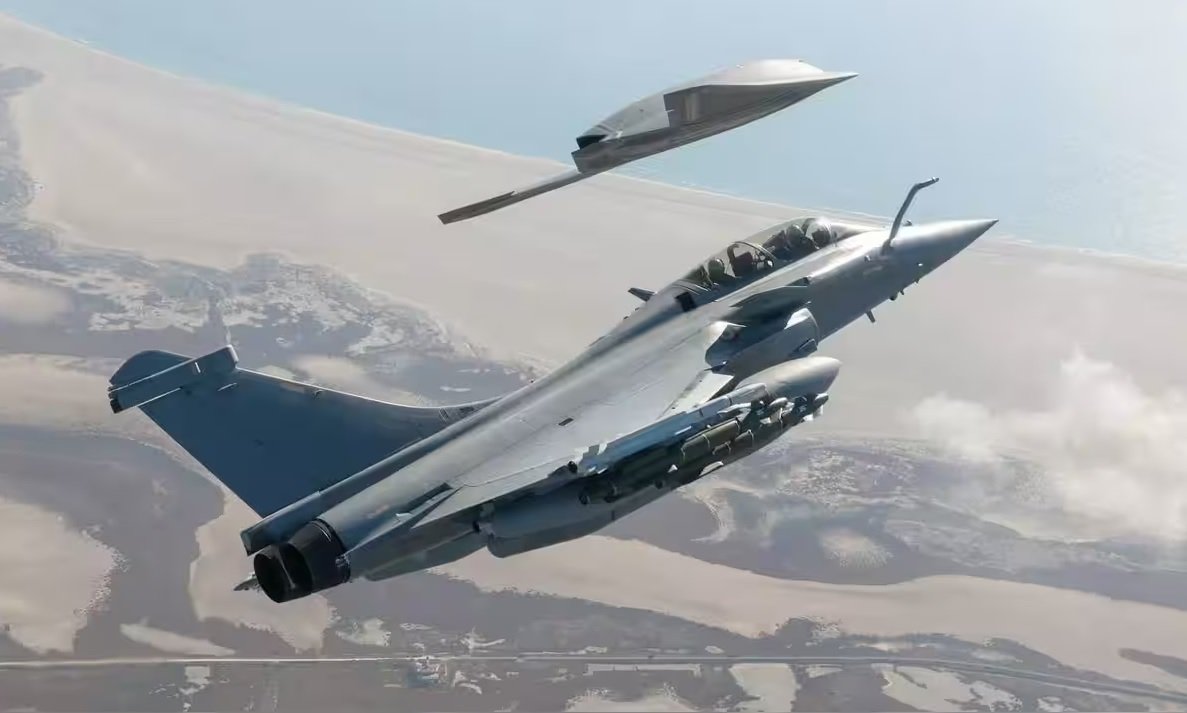
Europe
PARIS — The French Ministry of the Armed Forces has awarded the first preparatory engineering contracts for the €1.5 billion reconstruction of Air Base 116 (BA 116) at Luxeuil-Saint-Sauveur, officially launching a long-term modernization project that will transform the site into France's fourth nuclear-capable air base. The initial contracts, awarded on July 25, 2026, begin the engineering and site-preparation phase of the project, which follows the strategic force restructuring announced by French President Emmanuel Macron during his visit to Luxeuil on March 18, 2025. Under the plan, the base will host two Strategic Air Forces squadrons operating approximately 50 two-seat Rafale F5 fighter aircraft equipped to carry the future ASN4G hypersonic nuclear missile. The transformation will restore Luxeuil's nuclear deterrence mission, a role the base lost in 2011. The Defence Infrastructure Service will oversee the reconstruction in coordination with the French Air and Space Force, while the Directorate General of Armaments will synchronize infrastructure work with the delivery of aircraft, weapons, communications systems, simulators, and other operational equipment. Engineering Work Begins Before Major Construction The first contracts cover engineering studies, site surveys, design preparation, utility assessments, and planning work required before large-scale construction begins in 2027. The reconstruction will take place within the base's existing 477-hectare footprint and will modernize nearly every major facility surrounding its 2,433-meter NATO-standard concrete runway. Planned upgrades include reconstruction of the runway surface, taxiways, aircraft parking aprons, roads, vehicle areas, hangars, maintenance buildings, utilities, water supply, drainage networks, accommodation, dining facilities, and operational headquarters. The project also includes construction of specialized facilities such as a dedicated information technology building, a separate simulator complex, nuclear-certified storage facilities, secure mission planning areas, classified information systems, protected communications networks, aircraft servicing areas, weapons preparation facilities, and restricted-access operational zones. Much of the existing infrastructure dates back to the 1950–1953 modernization of the base, making replacement of aging buildings and support networks a key part of the project. Personnel to Increase Significantly The conversion to a nuclear mission will require a major increase in manpower over the coming decade. Permanent military and civilian personnel at the base are expected to increase from about 1,200 in 2025 to nearly 2,000 by 2035. Maintenance staff will expand from around 300 to approximately 800 personnel, while the pilot population is expected to quadruple. The future force structure will require more personnel because the nuclear mission will be carried out by two-seat Rafale aircraft, with each mission involving both a pilot and a weapon systems officer. The weapon systems officer is responsible for navigation, communications, electronic warfare, threat monitoring, mission timing, tanker coordination, and nuclear weapon procedures, allowing the pilot to focus on flying and tactical mission execution. This operating model also increases the need for simulator training, mission rehearsals, instructors, and classified planning staff. Flying Operations to Pause During Reconstruction To allow unrestricted access across the airfield during construction, all flying operations at Luxeuil are expected to stop from 2029 to 2032. The temporary suspension follows the planned end of Mirage 2000-5F operations in 2029 and will continue until the arrival of the first Rafale F5 aircraft in 2032. During this period, the air base will temporarily be absent from France's fighter-base network while extensive work is carried out across the runway, taxiways, parking aprons, and central operational facilities. Peak construction activity is expected to involve between 1,500 and 2,000 workers, creating a temporary workforce comparable to or larger than the base's current permanent population. Managing the project will require dedicated entry points for civilian contractors, separation of classified and non-classified areas, management of heavy construction traffic, and coordination with nearby municipalities regarding accommodation, transportation, roads, and public services. Rafale F5 and ASN4G to Form Future Nuclear Force Luxeuil will become the first French air base specifically designed around the Rafale F5 and ASN4G weapon system. The first Rafale F5 aircraft are expected to arrive in 2032. The first squadron is planned to become operational in 2033, followed by a second squadron in 2036, with full dual-squadron readiness targeted the same year. During infrastructure planning, the two future squadrons are provisionally designated RAF7, scheduled for 2033, and RAF8, planned for 2036. The planned inventory of approximately 50 aircraft suggests a nominal strength of about 25 fighters per squadron, although operational availability will vary due to maintenance, training, upgrades, and aircraft servicing requirements. The Rafale F5 standard is being developed with enhanced computing capability, sensor fusion, electronic warfare architecture, communications capacity, and weapon interfaces required for integration with the ASN4G missile and future uncrewed combat aircraft. The ASN4G, currently under development by MBDA, is intended to replace the ASMPA-R after 2035. The missile is designed to achieve hypersonic speed, maneuver during flight, and reduce the probability of interception by future air-defense and missile-defense systems. It is planned to equip both the French Strategic Air Forces and French Naval Aviation, maintaining France's airborne nuclear deterrent from both land-based and carrier-based aircraft. France's Fourth Nuclear Air Base France currently operates three nuclear-capable air bases: Saint-Dizier, Istres, and Avord. Once completed, Luxeuil will become the country's fourth nuclear air base. The July 2026 contract awards mark the beginning of the engineering and planning phase that will determine how the entire installation is rebuilt within its existing footprint over the coming decade, preparing the base to support the future Rafale F5 fleet and ASN4G nuclear missile system.
Read More → Posted on 2026-07-31 16:31:09
World
KYIV — Ukrainian investigators are examining the accuracy of North Korea's KN-23 short-range ballistic missile after discovering a second impact site linked to Russia's overnight missile attack on Ukraine on July 30, 2026. According to Ukrainian officials, Russian forces launched two North Korean KN-23 ballistic missiles during the attack. One missile struck a private home in the village of Radushne near Kryvyi Rih in Ukraine's Dnipropetrovsk region, while the second landed in an open field approximately 3.5 kilometers (2.2 miles) away. The distance between the two impact sites has become a key focus of the investigation, with Ukrainian authorities assessing the missile's operational accuracy. Second KN-23 Impact Site Located Vladyslav Vlasiuk, Ukraine's presidential commissioner for sanctions policy, confirmed that investigators had located the second impact crater. "A fragment of a second North Korean ballistic missile KN-23, which Russia used during the shelling of Ukraine on July 30, has been found," Vlasiuk said. He stated that the second missile exploded in an empty field rather than a populated area. According to Vlasiuk, there were no potential military or infrastructure targets within a 5-kilometer radius of the impact site. "The first missile of this type hit a private home in Radushne near Kryvyi Rih. The second KN-23 exploded in a field. Between these 'hits' is 3.5 km. There are no potential targets within a 5 km radius," he said. Civilian Casualties in Radushne The first missile struck the home of the Voronov family in Radushne, completely destroying the house. Initial assessments from Vlasiuk reported six fatalities, including three children, while several minors were initially unaccounted for following the strike. Local reports identified the victims as parents Artem Voronov, 47, and Olena Voronov, 41, along with children including Mark, 17; Azarii Ilai, 11; and Emilia, 6. Other family members present included additional siblings and a 1.5-year-old grandson. Later, Ukrainian President Volodymyr Zelensky confirmed that the final death toll had risen to 10 members of the family. In his evening address on July 30, Zelensky condemned the attack and said North Korean-made weapons were being used against Ukrainian civilians far from the front lines. Questions Over Missile Accuracy The KN-23 is a solid-fueled, road-mobile short-range ballistic missile developed by North Korea. Military analysts have frequently noted its similarities in appearance and performance to Russia's Iskander-M ballistic missile system. Vlasiuk described the KN-23 as "practically a full analog of the Russian Iskander." Recent intelligence assessments have indicated that Russian engineers have been working with North Korea to improve the KN-23's accuracy using combat experience gained during the war in Ukraine. Some assessments have suggested that the missile's reported margin of error had been reduced from more than one kilometer to between 1 and 5 meters. However, Ukrainian officials say the latest strike near Kryvyi Rih raises new questions about the missile's real-world performance. Ukrainian defense sources have previously reported that a significant number of North Korean missiles used by Russia have failed to follow their programmed flight paths or have exploded before reaching their intended targets. Shared Components Under Investigation Investigators are also examining debris recovered from the missile strike. According to Vlasiuk, investigators have identified structural similarities between the KN-23 and Russia's Iskander-M missile, including identical Western-manufactured components found inside both systems. He said the findings suggest that the supply networks enabling Russia to obtain foreign electronics, sensors and guidance components despite international sanctions may also be supporting North Korea's missile program. Ukrainian officials are continuing to examine the recovered missile remnants as part of the investigation. Expanding Russia-North Korea Military Cooperation The use of KN-23 missiles reflects the growing military cooperation between Russia and North Korea, which has expanded since 2022. According to Ukrainian and Western assessments, North Korea has supplied Russia with ballistic missiles, large quantities of artillery shells and military personnel to support Russian operations. Commenting on the partnership, Vlasiuk said: "One of the examples of Russia's dependence on North Korea's military assistance. North Korean missiles kill Ukrainian civilians just like Russian ones do. And everyone who ensures the military partnership between Moscow and Pyongyang and the supply of critical components for the defense industry must bear responsibility for this." Part of a Larger Missile and Drone Attack The July 30 strike formed part of a broader Russian overnight attack involving more than 70 missiles and hundreds of drones, according to Ukrainian officials. The barrage caused casualties and damage in multiple regions, including Lviv. Ukrainian Air Force communications head Yurii Ihnat said radar data and operational reports suggested that KN-23 ballistic missiles may have been used alongside Iskander-M ballistic missiles and S-400 missile systems during the attack. Ukrainian air defenses intercepted a significant portion of the incoming missiles and drones, while investigators continue to examine the impact sites and missile debris to determine additional details about the weapons used. Russia and North Korea have not publicly commented on the reported use of KN-23 missiles in the July 30 strike.
Read More → Posted on 2026-07-31 15:03:52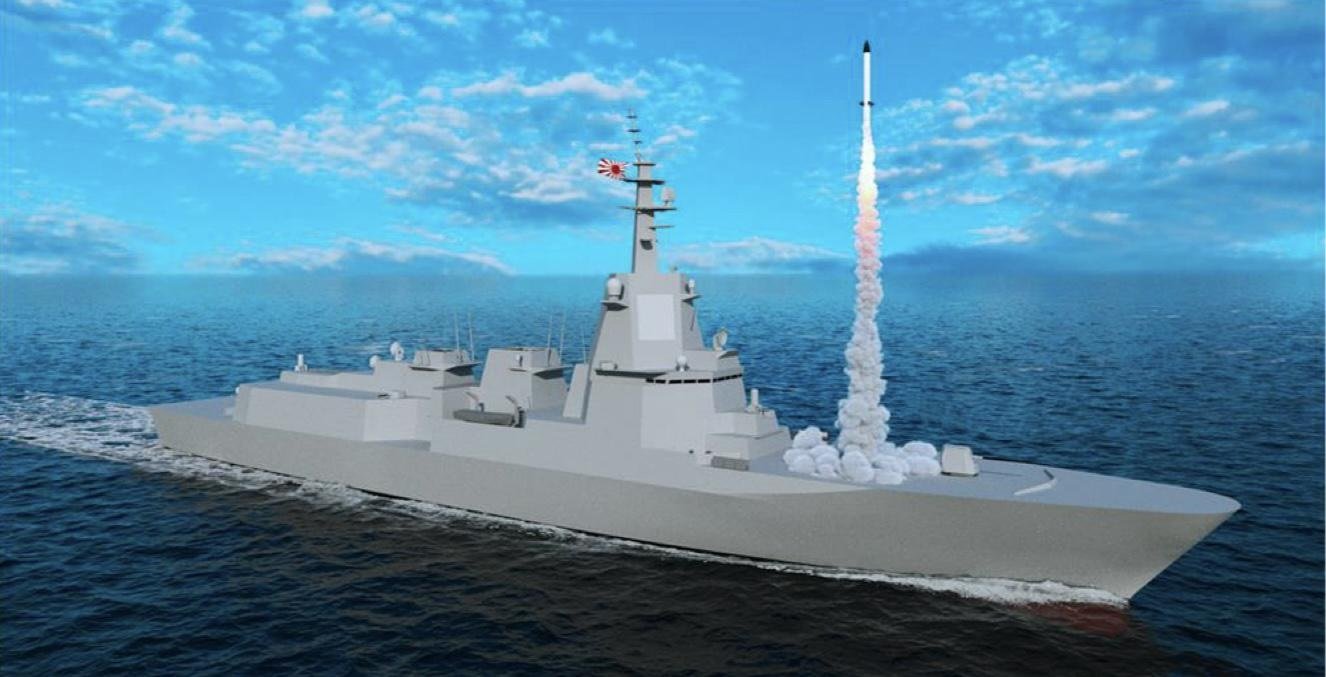
World
TOKYO — Japan is advancing the construction of two Aegis System Equipped Vessels (ASEV), large surface combatants designed primarily for ballistic missile defense that are expected to become the largest active destroyer-sized warships in the world when they enter service. The ASEV program was launched as a sea-based alternative to Japan's cancelled Aegis Ashore missile defense system and has become a key part of the country's efforts to strengthen missile defense and maritime security amid the evolving security environment in East Asia. The first ASEV was laid down on July 18, 2025, at Mitsubishi Heavy Industries' Nagasaki shipyard, while the second began construction on February 5, 2026, at Japan Marine United's Isogo shipyard in Yokohama. According to Japan's Ministry of Defense, the first vessel is scheduled to launch in fiscal year 2026 and enter service in March 2028, with the second expected to launch in fiscal year 2027 and be commissioned in March 2029. The Ministry of Defense has approved the construction of two vessels under the program. Procurement costs are estimated at approximately 392 billion yen per ship, while the overall two-ship program is estimated at around 1 trillion yen (approximately $7.1 billion). Largest Surface Combatants in Japan's Fleet Each ASEV measures approximately 190 meters in length with a 25-meter beam, making the ships significantly larger than Japan's existing Aegis destroyers, including the Maya class. According to the Ministry of Defense, the vessels have a standard displacement of about 12,000 tons, while full-load displacement estimates range between 14,000 and 16,000 tons. At full load, the ships are expected to be larger than most active destroyers worldwide, including China's Type 055 class. For comparison, China's Type 055 destroyer has a displacement of about 13,000 tons, is approximately 180 meters long, and carries 112 vertical launch system (VLS) cells. 128 Vertical Launch Cells The ASEV's primary combat capability is centered on a 128-cell Mk 41 Vertical Launch System, arranged with 64 cells forward and 64 aft. This gives the vessel a larger missile capacity than Japan's Maya-class destroyers, which carry 96 VLS cells, and 16 more cells than the Type 055. The planned missile inventory includes: SM-3 Block IIA interceptors for ballistic missile defense. SM-6 missiles for air and missile defense. Evolved SeaSparrow Missiles (ESSM). Tomahawk cruise missiles for long-range land-attack missions. Extended-range Type 12 surface-to-ship missiles, capable of engaging both maritime and land targets. The future Glide Phase Interceptor (GPI), being jointly developed by Japan and the United States to intercept hypersonic glide vehicles. The integration of Tomahawk cruise missiles and the extended-range Type 12 missile will also support Japan's developing counterstrike capability. Advanced Radar and Combat Systems The ships will be equipped with Lockheed Martin's AN/SPY-7(V)1 Active Electronically Scanned Array (AESA) radar, derived from technology used in the U.S. Long Range Discrimination Radar. Japanese defense officials state that the SPY-7 provides approximately five times the tracking capability of the older SPY-1 radar installed on the Japan Maritime Self-Defense Force's current Aegis destroyers. The radar arrays are mounted above the bridge to improve detection of low-altitude threats, including sea-skimming missiles. Additional sensors and systems include: AN/SPQ-9B horizon-search radar. Three AN/SPG-62 fire-control illumination radars. AN/SLQ-32(V)6 electronic warfare system. Additional Armament and Propulsion Besides its missile systems, the ASEV will be fitted with a Mk 45 Mod 4 5-inch naval gun, Phalanx Close-In Weapon Systems (CIWS), and facilities to operate two SH-60 helicopters. The ships are planned to use Rolls-Royce MT30 gas turbines for propulsion and are expected to achieve speeds of approximately 30 knots. Crew size is estimated at around 240 personnel. Strengthening Japan's Missile Defense The ASEV program originated after Japan cancelled the land-based Aegis Ashore missile defense system in 2020. The new vessels are designed to provide persistent ballistic missile surveillance, tracking, and interception, allowing the Japan Maritime Self-Defense Force's existing Kongō, Atago, and Maya-class Aegis destroyers to focus more on fleet air defense, anti-submarine warfare, and other multi-mission operations. Due to their size and capabilities, the vessels are expected to be designated as guided-missile cruisers rather than destroyers. Once commissioned, they will become a central component of Japan's sea-based ballistic missile defense architecture while supporting the country's expanding long-range strike capability.
Read More → Posted on 2026-07-31 14:24:44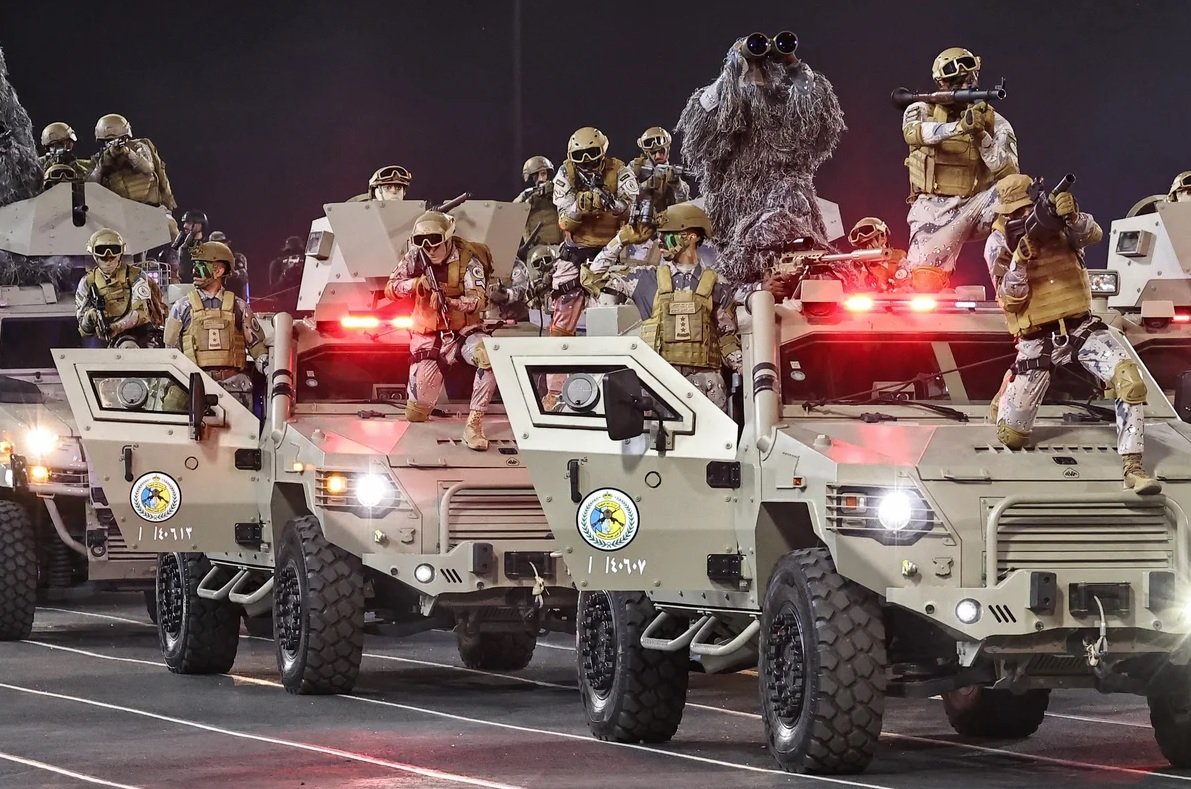
World
RIYADH — Saudi Arabia is preparing a major military operation against Yemen's Houthi movement that could include a maritime campaign and a possible ground offensive in central Yemen, according to Yemeni sources. The reported preparations come as Riyadh seeks to protect its oil export routes through the southern Red Sea and the Bab al-Mandab Strait, both of which have become increasingly important for the kingdom's energy exports. Troop Repositioning and Maritime Preparations According to Yemeni sources, Saudi forces have been withdrawing from eastern Yemen and concentrating troops for a possible advance into al-Bayda governorate. The Houthis took control of the central governorate during 2020 and 2021. Alongside the reported troop movements, Saudi Arabia is organizing a maritime effort to improve the protection of commercial shipping from Houthi attacks in the Red Sea and the Bab al-Mandab Strait. The dual approach reflects Riyadh's focus on securing both land and maritime areas as threats to regional shipping continue. Saudi Arabia Expands International Maritime Support Saudi Arabia is also working to build broader international support for maritime security operations. The Saudi Ministry of Defence said on Thursday that 14 countries, including Turkey, Pakistan, Egypt, Sudan and Djibouti, issued a joint statement supporting a multinational maritime defence coalition. Riyadh has also invited the United States and several European countries, including Germany, France, the United Kingdom and Italy, to participate in the initiative. The European Union already operates the Aspides naval mission in the Red Sea, which is focused on protecting commercial shipping in the region. Houthi Blockade and Recent Military Exchanges The latest developments follow the Houthis' announcement on July 20 that they were imposing a blockade on Saudi ships. The Iran-aligned group, which controls Yemen's capital Sana'a and much of the country's Red Sea coastline, said the blockade would remain in place until Saudi Arabia ends what it describes as its blockade of Yemen. The Houthis have denied reports that they plan to impose tolls on all commercial vessels and have said the dispute is linked to Yemen's future rather than being a direct extension of the wider regional conflict involving Iran. Military exchanges have continued in recent weeks. On July 25, Houthi forces said they had struck oil transport infrastructure inside Saudi Arabia linking oilfields in the Eastern Province to a Red Sea export hub. Saudi Arabia later carried out airstrikes on sites in the Houthi-controlled port of Hodeidah that the kingdom said were being used to threaten commercial shipping. Around the same period, a third Saudi commercial vessel was also attacked in the Red Sea. Strategic Importance of the Red Sea The security of Red Sea shipping has become increasingly important for Saudi Arabia's energy exports. Before the current wider regional conflict, up to 80 percent of Saudi crude exports moved through the Strait of Hormuz. With that route affected, the kingdom has increasingly relied on the Red Sea. More than half of Saudi oil is now transported overland to export terminals at the port of Yanbu. Any disruption to shipping through the Red Sea would place additional pressure on Saudi Arabia's export capacity. Diplomatic Efforts Continue Saudi Defence Minister Prince Khalid bin Salman held an urgent meeting with U.S. President Donald Trump and Vice President JD Vance on Wednesday to discuss possible next steps. Saudi officials have said the kingdom intends to defend its territory and energy infrastructure while continuing to pursue diplomatic efforts to address broader disagreements between the United States and Iran. Meanwhile, talks between Oman and Iran over the Strait of Hormuz are continuing. Iran has called for commercial shipping to use a northen route closer to its coastline. Any agreement that reopens the waterway could reduce pressure on maritime traffic through both the Strait of Hormuz and the Red Sea. Situation Remains Unfolding Saudi Arabia continues to reposition forces inside Yemen while expanding international support for maritime protection measures. At the same time, exchanges of strikes between Saudi Arabia and the Houthis continue, leaving the security situation in Yemen and key regional shipping routes under close watch.
Read More → Posted on 2026-07-31 14:08:02
U.S
ARLINGTON, Va. — RTX subsidiary Pratt & Whitney has received a nearly $1.3 billion undefinitized contract to supply spare parts for the F135 engine, the propulsion system that powers all three variants of the F-35 Lightning II fighter aircraft. The Indefinite Delivery, Indefinite Quantity (IDIQ) contract is intended to fund the initial spare parts requirements for fiscal year 2026. Managed primarily by the U.S. Department of Defense's Naval Air Systems Command, the contract action modification is valued at $1,295,745,898. Under the agreement, Pratt & Whitney will provide deployable spare packages, depot lay-ins, and associated support equipment to support F-35 operations. Supporting Global F-35 Operations The contract will provide both common and depot spare parts for the F-35 global spares pool, along with country-specific spare parts for international operators. According to the company, the contract supports the operational requirements of the U.S. Air Force, U.S. Marine Corps, and U.S. Navy, as well as non-U.S. Department of Defense participants and international F-35 customers. Pratt & Whitney said it has delivered more than 1,500 production F135 engines to operators across 20 allied nations. The company's global F-35 sustainment network currently provides maintenance, logistics, and technical support services for aircraft operating from 42 military bases and 13 ships worldwide. "Ensuring the F135 remains mission-ready is critical to the success of the F-35 enterprise," said Chris Johnson, Vice President of Pratt & Whitney's F135 Program. "This contract will help strengthen our global sustainment network to ensure operators around the world can continue to rely on the F135's unmatched performance," he added. Work to Continue Through 2030 Work under the contract will be carried out at multiple Pratt & Whitney facilities through 2030. The majority of the work will take place in Connecticut, including East Hartford, which will account for 59.6% of the work, and Middletown, which will account for 16.7%. Additional manufacturing and support activities will be conducted in Maine, Texas, Washington, Rhode Island, and California. Pratt & Whitney stated that no funds will be obligated at the time of contract award. Instead, funding will be provided through individual orders issued during the life of the contract. F135 Engine Core Upgrade In addition to supporting current F-35 operations, Pratt & Whitney is continuing work on the F135 Engine Core Upgrade, which has been selected as the official propulsion modernization solution for the F-35 program. The company said the upgrade will use the existing F135 sustainment network and is intended to improve fleet readiness while supporting the long-term operational requirements of F-35 operators around the world.
Read More → Posted on 2026-07-31 13:35:47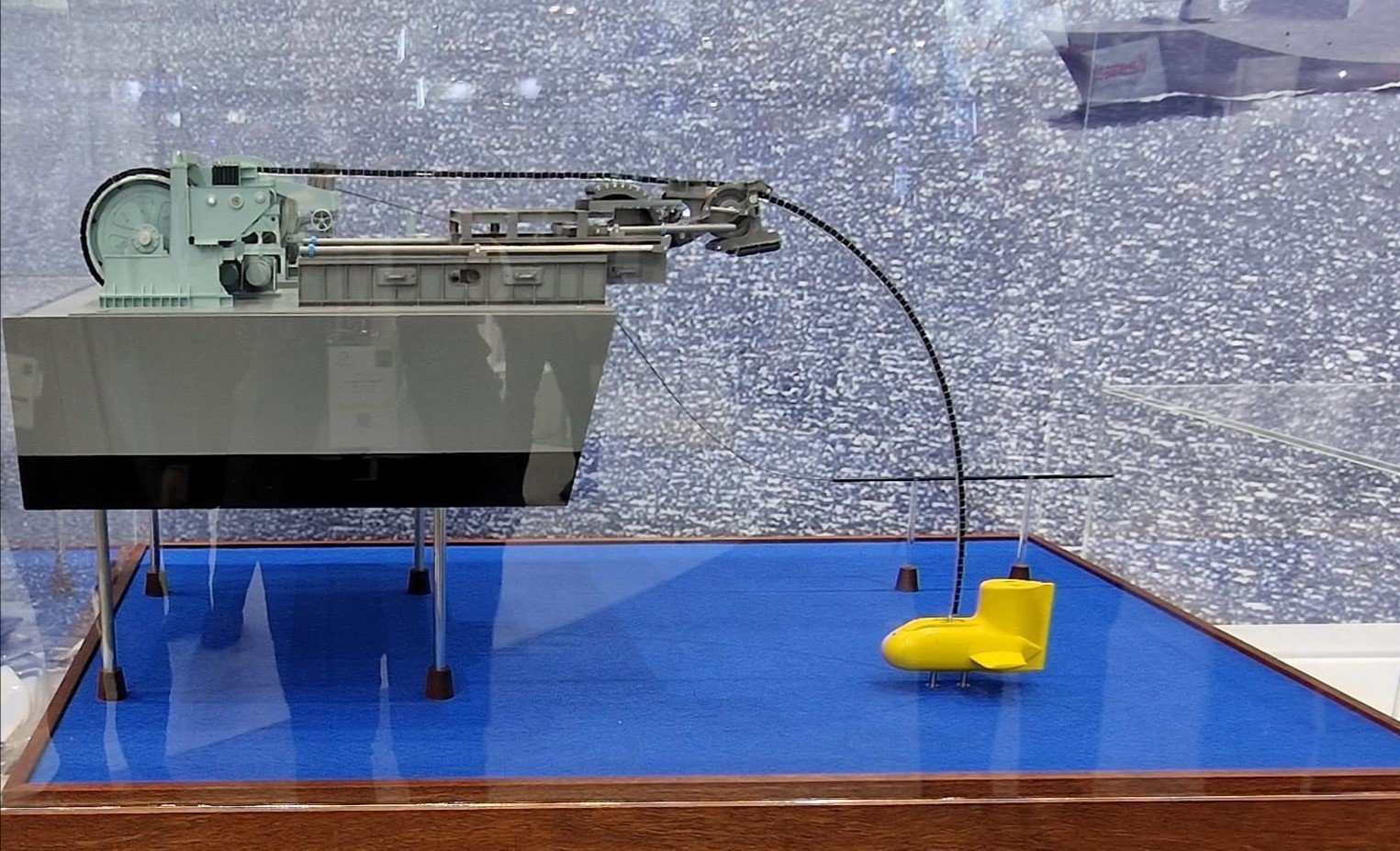
World
TOKYO — Oki Electric Industry (OKI) has signed an agreement with Mitsubishi Heavy Industries (MHI) to supply OQQ-25 towed passive sonar systems and related equipment for the Royal Australian Navy (RAN)’s next-generation general-purpose frigates under Australia’s SEA 3000 program. The agreement marks OKI’s first overseas defense equipment transfer project and covers the first three of Australia’s planned fleet of 11 Upgraded Mogami-class (06FFM) frigates. First Three Frigates to Be Built in Japan Australia selected Japan’s Upgraded Mogami-class frigate in August 2025 after evaluating the design and the performance of systems already integrated into Japan’s existing Mogami-class ships. In April 2026, Australia finalized a multi-billion-dollar agreement with the Japanese government and Mitsubishi Heavy Industries for the construction of the first three frigates. The initial three vessels will be built at MHI’s Nagasaki Shipyard & Machinery Works in Japan, with the first ship scheduled for delivery in December 2029. The remaining eight frigates are planned to be constructed at the Henderson Defence Precinct in Western Australia. OQQ-25 Sonar Selected for Proven Performance The OQQ-25 is a towed passive sonar system designed to detect submarines and other underwater targets by receiving acoustic signals through sensors towed behind the ship. Australia selected the sonar because it is already integrated into Japan’s Mogami-class frigates and has an established operational record. Using an existing, ship-integrated system helps reduce technical risks during construction and integration. Integration with Australia's ASW Network While the OQQ-25 is already part of the Upgraded Mogami design, it will need to operate alongside the Royal Australian Navy’s existing anti-submarine warfare (ASW) assets. Australia’s Hunter-class frigates will use the Thales CAPTAS-4 sonar system. Defence analysts note that the OQQ-25 will need to integrate with the RAN’s wider ASW network, including P-8A Poseidon maritime patrol aircraft and CAPTAS-4-equipped ships, particularly during multi-static anti-submarine warfare operations that involve different sonar systems working together. Upgraded Mogami-Class Frigate Capabilities Australia’s SEA 3000 program is intended to expand and modernize the Royal Australian Navy’s surface combatant fleet. The Upgraded Mogami-class frigates are approximately 142 meters long and displace up to 6,200 tonnes. The ships are designed to operate with a highly automated crew of 92 sailors and officers, reach a top speed of 30 knots, and have a range of up to 10,000 nautical miles. Each frigate will be equipped with a 32-cell vertical launch system (VLS) capable of launching surface-to-air and anti-ship missiles. The ships will also feature a flight deck designed to operate the Royal Australian Navy’s MH-60R Seahawk helicopter. Other Key Systems for the Frigates Alongside the sonar contract, several other major suppliers have been selected for the program. Rolls-Royce will provide MT30 gas turbines, NEC will supply integrated mast technologies, and Raytheon’s SeaRAM close-in weapon system has also been contracted for the Australian frigates. OKI Expands Its International Defense Business OKI has developed underwater acoustic technologies for more than 90 years and has supplied and supported sonar systems for the Japan Maritime Self-Defense Force throughout their operational lifecycle. The Australian contract supports the company's Management Plan 2031, which identifies defense and maritime businesses as key growth areas. OKI said it is expanding its production and overhaul capacity to meet increasing defense demand and plans to use its experience from Japan to support maritime safety and security in international markets. The value of the contract has not been disclosed.
Read More → Posted on 2026-07-31 13:18:27
World
RIYADH — Saudi Arabia and 13 other countries have officially established the Multinational Maritime Defense Coalition, a new regional security initiative aimed at protecting international shipping lanes across the Red Sea, Bab al-Mandab Strait, and Gulf of Aden. The coalition was announced following a high-level meeting hosted by the Saudi Ministry of Defense in Riyadh, where chiefs of staff and military representatives from 43 countries and a European Union delegation discussed maritime security challenges. According to Saudi officials, 51 countries and organizations were invited to the meeting, with participants attending both in person and via video conference. Fourteen Countries Join as Founding Members A joint declaration was signed by 14 countries, marking the formal launch of the coalition and the start of its founding procedures. The founding members are: Middle East & Gulf: Saudi Arabia, Bahrain, Kuwait, Qatar, Jordan, Yemen (internationally recognized government) Africa: Egypt, Sudan, Djibouti, Somalia, Nigeria Asia: Turkey, Pakistan, Bangladesh Saudi Arabia will serve as the coalition's founding and leading state. The Kingdom will host the alliance's permanent headquarters, General Secretariat, Joint Operations Coordination Center, and Joint Maritime Operations Center. Coalition Focuses on Maritime Security According to the joint declaration, the coalition is a framework for maritime defense cooperation designed to strengthen security in some of the world's busiest shipping corridors. Its objectives include: Enhancing maritime security. Protecting freedom of navigation. Securing international trade and energy supply routes. Safeguarding shared maritime interests in the Red Sea, Bab al-Mandab Strait, and Gulf of Aden. Officials emphasized that the coalition is purely defensive and does not target any state, alliance, or international organization. All activities will be conducted in accordance with international law, United Nations conventions, and established international norms while respecting the sovereignty of participating countries. Cooperation Through Joint Operations Member countries will complete their domestic procedures before formally joining the coalition's charter. The alliance plans to strengthen cooperation through: Intelligence and information sharing. Operational planning. Joint military exercises. Training and capacity building. Joint maritime operations. Military planners from participating and interested countries will continue work on finalizing the coalition's charter, organizational structure, command-and-control arrangements, and operating mechanisms. Saudi officials said the initiative will remain open to additional countries that share its objectives and complete the required national procedures. Response to Growing Maritime Threats The Saudi Ministry of Defense said the coalition was established in response to increasing threats against commercial vessels, oil tankers, and maritime infrastructure in the region. According to the ministry, these security risks have affected navigation safety, disrupted global supply chains, and impacted the international economy, highlighting the need for stronger multilateral defense cooperation. The coalition's formation comes amid renewed tensions in the Red Sea. In late July, Yemen's Houthi group announced a maritime blockade targeting Saudi-linked vessels and later claimed responsibility for attacks on several commercial ships. Saudi Arabia has also carried out airstrikes against Houthi military facilities in Yemen's Hodeidah province, targeting sites that it said were being used to threaten international maritime traffic. Strategic Importance of the Waterways The coalition's operational area includes the Bab al-Mandab Strait, a key maritime chokepoint connecting the Red Sea with the Gulf of Aden and the Arabian Sea. Together with the Suez Canal, the route forms one of the shortest maritime links between Europe and Asia and carries a significant share of global seaborne trade, including crude oil, liquefied natural gas (LNG), and container cargo. Recent disruptions in the region have prompted some commercial vessels to use longer alternative routes, increasing transit times and shipping costs. Some Regional States Yet to Join Although the coalition received broad international support during the Riyadh meeting, not all regional partners joined as founding members. The United Arab Emirates and Oman, both members of the Gulf Cooperation Council (GCC), did not sign the joint declaration. The United States participated in the discussions in Riyadh but did not formally join the coalition. Saudi officials said the alliance remains open to additional countries, with further steps to finalize its charter and begin joint maritime activities expected in the coming period.
Read More → Posted on 2026-07-31 13:06:49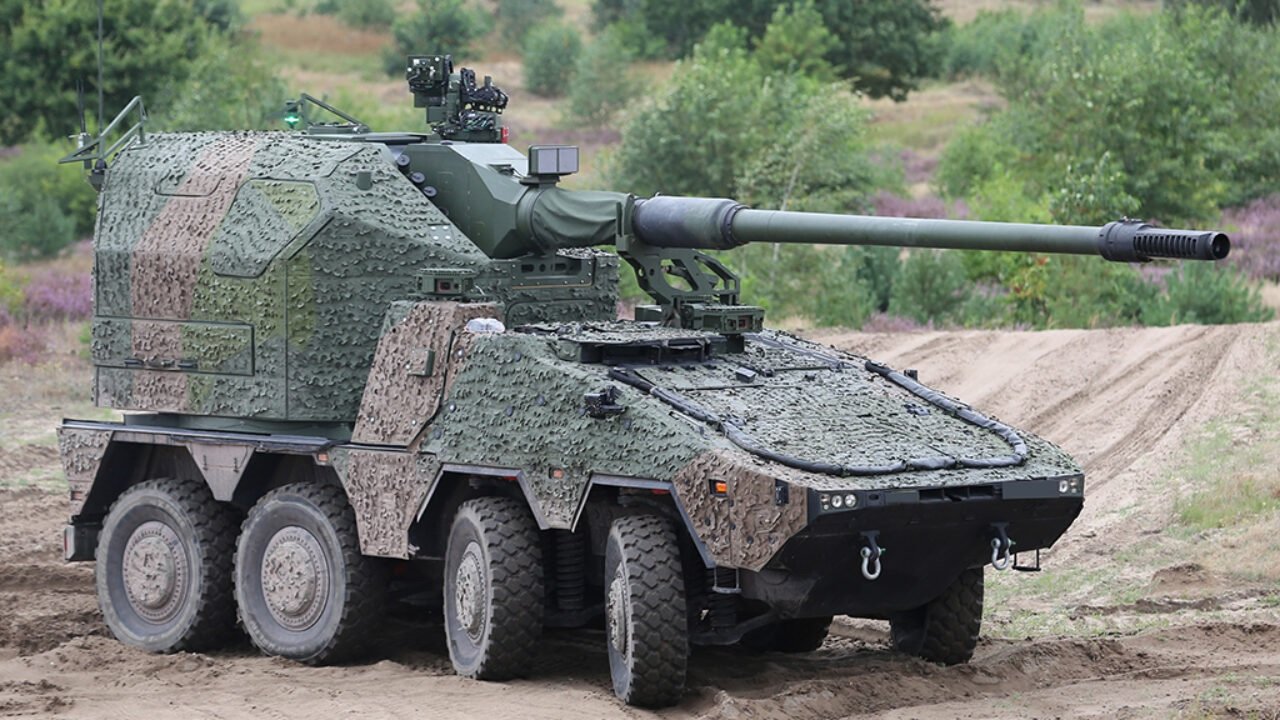
Europe
DÜSSELDORF, Germany — Rheinmetall has secured a contract to supply the core weapon systems for 72 RCH 155 wheeled howitzers ordered by the British Army under the United Kingdom's joint artillery modernization programme with Germany. The supply contract, awarded in the second quarter of 2026, is valued in the low three-digit million-euro range. It follows the UK's order for 72 RCH 155 systems announced in May 2026, with the overall acquisition valued at nearly £1 billion, including initial training and in-service support. OCCAR Managing Joint UK-Germany Programme The procurement is being carried out through the Organisation for Joint Armament Cooperation (OCCAR), which awarded the main contract to ARTEC GmbH, a joint venture between Rheinmetall and KNDS Deutschland. Both companies are participating in the programme as subcontractors. The programme is part of the broader UK-Germany defence cooperation established under the Trinity House Agreement, signed in 2024, which aims to strengthen defence collaboration and improve interoperability between the two countries and within NATO. Rheinmetall to Manufacture Key Weapon Systems in the UK Germany and the United Kingdom are currently qualifying the 155 mm L/52 remote-controlled weapon system for service with both armies. Once the qualification process is complete, Rheinmetall will supply 72 elevating masses together with associated onboard tools. The company will also produce training materials and technical documentation to support the introduction of the new artillery systems. Manufacturing of the weapon systems—including the barrel, breech, recoil system, and trunnions—will take place at Rheinmetall's new gun production facility in Telford, United Kingdom, which is being brought into service in phases. Deliveries of the weapon systems are scheduled from May 2028 through June 2031. In support of the UK's domestic defence industry, Rheinmetall plans to manufacture the gun barrels using British steel supplied by Sheffield Forgemasters. UK Production to Support Hundreds of Jobs The programme also includes significant manufacturing work within the United Kingdom. KNDS UK will produce the BOXER drive modules, including the chassis, engine, and drivetrain, at its facility in Stockport. According to Rheinmetall, the programme is expected to support at least 500 jobs across the UK, including 100 new skilled positions in Telford, 100 jobs in Stockport, and approximately 300 roles across the wider British supply chain. RCH 155 to Replace AS90 Artillery The RCH 155 combines the GTK Boxer wheeled armoured vehicle with an automated artillery module derived from the Panzerhaubitze 2000. The system is equipped with an unmanned, fully automated turret housing a 155 mm gun, allowing it to be operated by a crew of two soldiers from within the protected drive module. The wheeled howitzer is capable of travelling at speeds of up to 100 km/h and can fire while moving, providing greater mobility during operations. It can fire up to eight rounds per minute with a maximum range of up to 70 km, depending on the ammunition used. The British Army is acquiring the RCH 155 to replace the AS90 self-propelled howitzers transferred to Ukraine in 2023. The system is also expected to eventually replace the Army's interim Archer capability. Deliveries Begin in 2028 Deliveries of the complete RCH 155 systems to the British Army are scheduled to begin in 2028. Alongside the UK programme, Rheinmetall is continuing to expand its production capacity for 155 mm weapons and ammunition as part of its broader manufacturing activities across Europe.
Read More → Posted on 2026-07-31 12:47:39
U.S
WASHINGTON — The U.S. military has received its first batch of 2,000 F10 first-person view (FPV) strike drones manufactured by Ukrainian company F-Drones, marking the first official export of fully assembled Ukrainian-made combat drones to the United States. F-Drones confirmed the delivery to the Ukrainian defense publication Militarnyi, stating that the shipment represents a significant step for Ukraine's defense industry. According to the company, this is the first time the Ukrainian government has authorized the export of complete, combat-ready domestically produced military drones. Previous approvals issued during the current period of martial law were limited to the export of specific components and technologies rather than finished weapons systems. Ukraine's State Service of Export Control granted the export permit on July 1, 2026, with support from the state-owned enterprise Spetstechnoexport. The drones were manufactured in Ukraine before being delivered to the United States. Acceptance Process and Training The newly delivered F10 drones are currently undergoing the U.S. military's standard acceptance process. Once the hardware successfully completes quality checks, U.S. military personnel will begin training on operating the drones. F-Drones said it has already submitted a separate application to Ukraine's State Service for Export Control seeking approval to provide training services for U.S. personnel. "These units are currently undergoing the acceptance process. Once it is completed, training for U.S. military personnel will begin, covering how to operate our UAVs," the company stated. The company added that the current agreement includes an option for the delivery of up to 1,000 additional F10 drones after the acceptance process is completed. Part of the Pentagon's Drone Dominance Program The delivery is part of the Gauntlet I phase of the Pentagon's Drone Dominance Program, a U.S. Department of Defense initiative aimed at rapidly acquiring more than 200,000 tactical drones by 2027. The program is backed by approximately $1 billion to $1.1 billion in funding and focuses on procuring drones capable of delivering lethal effects in demanding battlefield conditions. F-Drones secured its place in the program together with its U.S. partner, UDD Tech Corp. (Ukrainian Defense Drones Tech Corp.). During the Gauntlet I evaluations held at Fort Benning, Georgia, in February 2026, the F10 drone was tested by U.S. soldiers in field operations and long-range strike scenarios. The system finished sixth among 25 competing platforms and was selected among the top-performing companies to receive prototype procurement contracts. Manufacturing Partnership in the United States To expand cooperation with the U.S. defense sector, UDD Tech Corp. is establishing a manufacturing facility in Holland, Ohio. According to the company, the goal is to gradually shift from importing completed Ukrainian-made drones to manufacturing the systems within the United States. F-Drones Chief Executive Officer Stas Khutor said exports help strengthen Ukraine's defense industry rather than reduce supplies available to its armed forces. "Exports are a tool for scaling up production, attracting investment, advancing technology, raising quality standards, and strengthening international cooperation. It does not mean 'less for the front line'. On the contrary, a stronger industry means stronger Armed Forces," Khutor said. Gauntlet II Evaluations Underway The Drone Dominance Program consists of four competitive Gauntlet phases, with Gauntlet II now underway. F-Drones and UDD Tech Corp. have qualified for the second phase, which will focus on night operations, urban environments, and close-quarters combat. As part of the upcoming evaluations, the company plans to deliver 120 additional F10 drones for use by U.S. military personnel during testing. According to company information, the trials are scheduled for late August 2026 at Camp Grayling, Michigan, where U.S. military operators will independently evaluate the drones across multiple combat mission scenarios. The results of the Gauntlet II evaluations will help determine future procurement decisions. Depending on performance, F-Drones could become eligible for a follow-on agreement covering up to 9,000 additional drones. Expanding International Cooperation Alongside its U.S. partnership, F-Drones is also expanding its presence in Europe. The company recently became a founding member of the Ukraine–EU Drone Alliance, an initiative established to strengthen cooperation between Ukrainian and European drone manufacturers and increase production capacity for unmanned systems. The first shipment of 2,000 F10 FPV drones marks both the beginning of operational deliveries to the U.S. military and the first officially approved export of fully assembled Ukrainian combat drones, reflecting growing defense-industrial cooperation between Ukraine and the United States.
Read More → Posted on 2026-07-31 12:40:38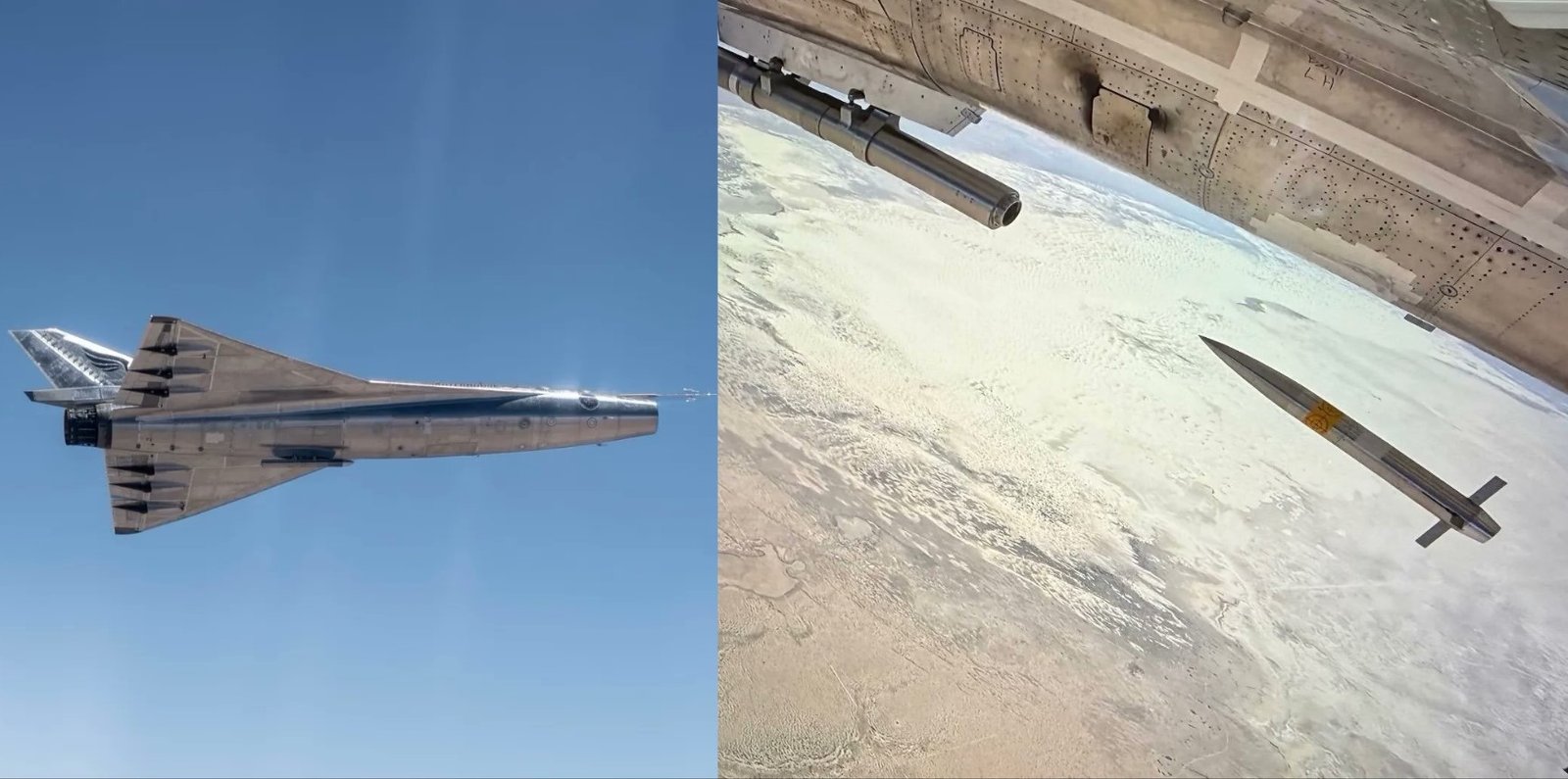
U.S
El Segundo, California — The U.S. Defense Innovation Unit (DIU) and Atlanta-based hypersonic aircraft company Hermeus have successfully completed an unmanned stores separation flight test with the Quarterhorse uncrewed aerial vehicle (UAV), marking another milestone in the Hypersonic and High-Cadence Airborne Testing Capabilities (HyCAT) program. The successful flight demonstrated that the Quarterhorse aircraft can safely release an external payload during flight, an important requirement for military aircraft designed to carry and deploy equipment such as munitions, sensor pods, or electronic warfare systems. Until this capability is validated, an aircraft remains primarily a research and testing platform rather than one capable of operational payload deployment. DIU described the achievement as another important milestone for the HyCAT program, noting that the stores separation test was completed during the program's fifth flight since spring 2026. "Another huge HyCAT milestone, a successful unmanned stores separation flight test with Hermeus. This was only the program's 5th flight since the Spring. Tests like this usually take years. We're moving 4x as fast," DIU stated. Stores Separation Test Validates Safe Payload Release A stores separation test verifies that an external payload can be released safely without striking the aircraft or disrupting its flight. The process is considered a critical certification step for any military aircraft expected to carry external stores. The challenge becomes greater at high subsonic and transonic speeds, where airflow around the aircraft and released object becomes increasingly complex. If a payload does not separate correctly, it could collide with the aircraft or create flight instability. The successful demonstration provides engineers with flight data that can be used to model payload releases at progressively higher speeds as the Quarterhorse flight test program expands. HyCAT Program Aims to Accelerate Hypersonic Testing The HyCAT program was launched by the Defense Innovation Unit in early 2023 to accelerate hypersonic flight testing by working with commercial aerospace companies instead of relying solely on traditional defense acquisition processes. Hypersonic flight testing has historically faced challenges including limited wind tunnel capacity, restricted access to specialized test ranges, and the technical complexity of sustained flight above Mach 5. Through partnerships with private industry and the use of commercial investment alongside government funding, DIU aims to shorten development timelines and generate flight data more rapidly than conventional programs. Quarterhorse Supports Future High-Speed Aircraft Development The aircraft used during the test was Hermeus' Quarterhorse, an uncrewed experimental aircraft developed to mature technologies for future high-speed military aircraft. According to Hermeus, Quarterhorse is powered by its Chimera turbine-based combined-cycle (TBCC) propulsion system, built around a modified General Electric J85 turbojet core. The engine is designed to operate as a conventional turbojet at lower speeds before transitioning to another propulsion mode as the aircraft approaches higher-speed flight, allowing one propulsion system to support multiple flight regimes. Earlier in 2026, Hermeus reported that Quarterhorse reached Mach 1.21, approximately 930 miles per hour (1,497 km/h), during a previous flight. The company plans to expand the aircraft's flight envelope toward Mach 3 by 2027. Expanded DIU-Hermeus Partnership DIU first selected Hermeus for the HyCAT program in November 2023 with a contract valued at $23 million to demonstrate propulsion, thermal management, power generation, and mission-system technologies. In May 2026, the partnership expanded through a $159 million contract modification, increasing the total contract ceiling to $219 million. Under the updated agreement, Hermeus will continue Quarterhorse flight testing throughout 2026 and 2027 while providing flight data to DIU, the U.S. Air Force, and the U.S. Navy. The expanded work includes high-Mach flight demonstrations and high-speed payload release testing to support future military aircraft concepts. Hermeus has stated that Quarterhorse is intended as a technology development platform rather than an operational aircraft. The company plans to apply the knowledge gained from Quarterhorse to its future uncrewed aircraft, Darkhorse. Hermeus describes Darkhorse as a reusable, multi-mission hypersonic uncrewed aircraft intended for strike and reconnaissance missions. The company has said the platform will incorporate propulsion, structural, and thermal management technologies validated through the Quarterhorse flight test program. Defense analysts have also noted that future high-speed uncrewed aircraft could complement programs such as the U.S. Air Force's Collaborative Combat Aircraft initiative or operate independently in strike and electronic attack roles. HyCAT Continues to Expand The HyCAT program has recorded additional progress during 2026. In February, Rocket Lab's HASTE suborbital launch vehicle carried the DART AE hypersonic testbed, developed by Australian company Hypersonix, during the Cassowary Vex mission. The flight exceeded Mach 5 and collected propulsion, trajectory, and vehicle performance data under hypersonic flight conditions. DIU is also advancing the next phase of the program, HyCAT 2, which includes work with California-based NXTRAC to develop guidance, navigation, and control technologies for future hypersonic test vehicles. The latest stores separation demonstration adds another validated capability to the Quarterhorse flight test program and provides additional flight data to support the continued development of future high-speed military aircraft under the HyCAT initiative.
Read More → Posted on 2026-07-31 11:25:39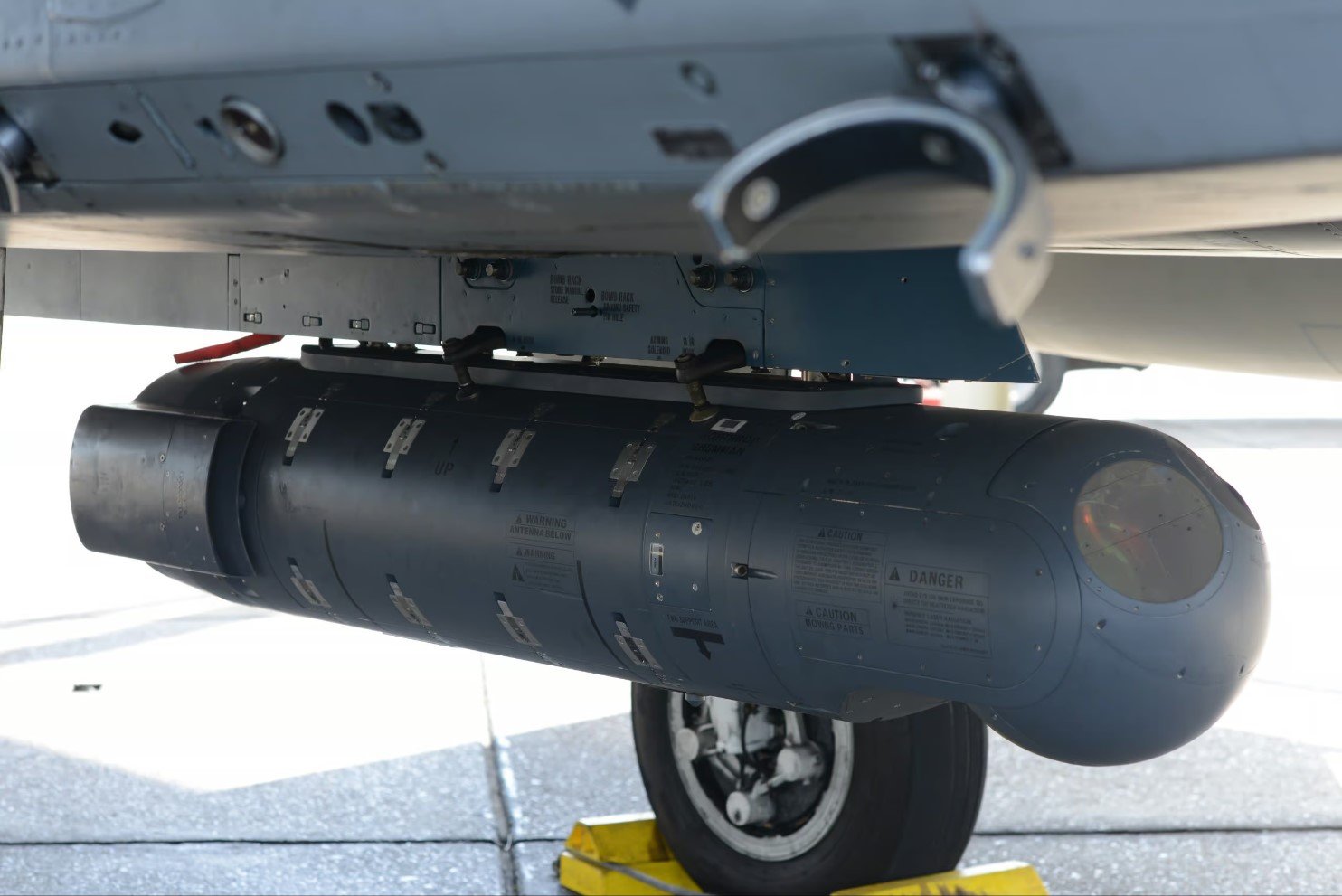
U.S
ROLLING MEADOWS, Ill. — The U.S. military has awarded Northrop Grumman Systems Corp. a multiyear indefinite-delivery/indefinite-quantity (IDIQ) contract with a maximum value of $1.84 billion to continue the production, sustainment, and modernization of the AN/AAQ-28 LITENING Comprehensive Advanced Targeting Pod (CATP). The contract, announced in the U.S. Department of War's contracts list for July 30, 2026, allows the government to place orders under the agreement through Dec. 31, 2035. It covers the production and delivery of new LITENING targeting pods, along with operational support, sustainment, and modifications for systems already in service. An initial obligation of approximately $42.9 million in fiscal 2026 operations and maintenance funds was made at the time of the award. The contract begins immediately, with details of the initial execution phase remaining limited. The firm-fixed-price agreement was awarded through a sole-source acquisition managed by the Precision Attack Contracting Branch at Robins Air Force Base, Georgia, under contract number FA8540-26-D-B001. All manufacturing and engineering work will be carried out at Northrop Grumman's facility in Rolling Meadows, Illinois. Advanced Targeting System The AN/AAQ-28 LITENING is an electro-optical and infrared (EO/IR) targeting pod designed to detect, acquire, identify, and track targets at extended ranges. It provides targeting and surveillance capabilities for a wide range of military missions. The system incorporates a high-resolution forward-looking infrared (FLIR) sensor, a charge-coupled device (CCD) television camera for daytime operations, and a laser designator for guiding precision-guided munitions. The pod weighs 459 pounds (208 kilograms) and measures just over seven feet in length. It is mounted externally on aircraft and features a modular architecture that allows capability upgrades over time without requiring a complete replacement of the system. Operational Service According to Northrop Grumman, more than 900 LITENING targeting pods have been delivered to U.S. forces and international customers. The company states that the systems have achieved operational availability of up to 95 percent. The global LITENING fleet has accumulated more than 3 million flight hours, with a significant share recorded during combat operations. In addition to precision strike missions, the targeting pod supports: Precision targeting Close air support Air superiority missions Intelligence, surveillance, and reconnaissance (ISR) Humanitarian assistance and disaster relief monitoring Compatible Aircraft The LITENING targeting pod is integrated across a range of crewed and uncrewed aircraft, including: A-10 Thunderbolt II AV-8B Harrier II F-15E Strike Eagle F-16 Fighting Falcon F/A-18 Hornet B-52 Stratofortress C-130 Hercules MQ-9 Reaper Its compatibility with multiple aircraft types has contributed to its widespread use across different mission sets involving both manned and unmanned platforms. Industry Partnership Northrop Grumman produces the LITENING targeting pod in partnership with Rafael Advanced Defense Systems of Israel. The company's Rolling Meadows, Illinois, facility serves as a primary production location for the program. The new contract ensures continued production, sustainment, and modernization of the LITENING targeting pod fleet through the end of 2035, supporting the operational readiness of aircraft already equipped with the system while allowing future orders for additional pods under the IDIQ framework.
Read More → Posted on 2026-07-31 10:42:31
India
HYDERABAD — Astra Microwave Products Limited has secured a confirmed domestic work order worth ₹2,205.23 crore from Hindustan Aeronautics Limited (HAL) for the production and supply of key components of the indigenous Uttam Active Electronically Scanned Array (AESA) radar, marking a significant step in the large-scale production of India's indigenous fighter radar programme. According to the company's disclosure under SEBI regulations, the order has been awarded by a domestic government enterprise under the Ministry of Defence. The contract value is inclusive of all applicable taxes and GST. Astra Microwave also stated that neither its promoters nor promoter group companies have any interest in the awarding entity, and the transaction is not classified as a related-party transaction. Under the contract, Astra Microwave will manufacture and supply 122 Active Antenna Array Units (AAAU) and 121 Interface Frames for the Uttam radar. The company said the order will be executed over a period of five years. The Uttam AESA radar is an indigenous fire-control radar developed by the Electronics and Radar Development Establishment (LRDE) under the Defence Research and Development Organisation (DRDO). It is intended for integration on the Tejas Mk1A and Tejas Mk2 fighter aircraft. The radar uses a large number of Transmit/Receive (T/R) modules to improve detection, tracking and targeting performance. According to the information provided by the company, the radar configuration includes more than 980 T/R modules. The Uttam radar is expected to gradually replace the Israeli-made ELM-2052 AESA radar on later batches of Tejas fighter aircraft. Astra Microwave has been the production partner for the Active Antenna Array Unit of the Uttam radar. The company had earlier indicated that discussions with HAL were at an advanced stage, with a formal order expected during the July–September 2026 period. The contract has now been finalized within that timeframe. The new order significantly strengthens Astra Microwave's order pipeline. As of 31 March 2026, the company's standalone order book stood at approximately ₹2,141 crore. The HAL contract substantially increases that order book and provides multi-year revenue visibility through a strategic indigenous defence programme. The contract also supports HAL's production ramp-up of the Uttam AESA radar for integration into Indian Air Force Tejas fighter aircraft and aligns with India's ongoing efforts to increase indigenous content in military aviation systems. For Astra Microwave, the order represents an expansion of its role in the country's defence manufacturing ecosystem. By supplying core radar hardware for the Tejas programme under a long-term execution schedule, the company will support the production of one of India's key indigenous airborne sensor systems over the next five years.
Read More → Posted on 2026-07-30 16:47:30
Space & Technology
HEFEI, China — Chinese scientists have completed the construction and testing of the world's largest superconducting magnet designed for a nuclear fusion reactor, marking a key milestone for the country's next-generation fusion energy program. The announcement was made by the Institute of Plasma Physics (ASIPP) under the Chinese Academy of Sciences in Hefei, Anhui Province. The newly completed component will support the Burning Plasma Experimental Superconducting Tokamak (BEST), China's next-generation "artificial sun" fusion reactor. The main component is a toroidal field (TF) superconducting magnet, which is designed to confine the ultra-hot plasma required for nuclear fusion. The D-shaped magnet measures 21 metres in length, 12 metres in width and 3.3 metres in height, and weighs 582 metric tonnes. According to ASIPP, it is the largest superconducting fusion magnet ever built. Researchers said the magnet has 1.3 times the volume of the equivalent toroidal-field magnet being built for the International Thermonuclear Experimental Reactor (ITER) in France and can store three times more magnetic energy, enabling it to generate stronger magnetic fields. A total of 16 toroidal-field magnets will eventually be installed around the BEST reactor to form a magnetic ring. Together, they are designed to produce a 6.5-tesla magnetic field at the centre of the plasma chamber. Magnetic confinement for fusion Tokamak fusion reactors are designed to reproduce the same nuclear fusion process that powers the Sun by combining light hydrogen isotopes to release energy. To sustain fusion, hydrogen plasma must be heated to temperatures exceeding 100 million degrees Celsius, approximately six times hotter than the Sun's core. At such temperatures, no physical material can directly contain the plasma. Instead, the toroidal-field magnet creates a powerful magnetic field that suspends the superheated plasma inside a doughnut-shaped vacuum chamber, preventing it from coming into contact with the reactor walls. Central solenoid coil completes testing Alongside the toroidal-field magnet, ASIPP also completed full-parameter and full-load testing of a high-temperature superconducting central solenoid coil, another key component of the BEST reactor. Researchers compare the central solenoid to a spark plug in a car engine because it initiates and drives the plasma current required to maintain a stable fusion reaction. During testing, the coil operated with a stable current of 60 kiloamperes and stored 6.03 megajoules of energy. According to the research team, its key performance indicators reached internationally leading levels. Developed using a fully domestic supply chain ASIPP said both superconducting magnet systems were developed entirely using a 100% domestic supply chain over a six-year development program. Chinese researchers produced all core materials locally, including superconducting tapes, high-strength cryogenic stainless steel and insulation materials, eliminating reliance on foreign suppliers. According to ASIPP Director Song Yuntao, the project achieved full localisation of core materials and manufacturing processes. The development program also resulted in 47 authorised patents and the establishment of several technical standards. Engineers said the magnet is designed to operate for approximately 60 years at temperatures close to minus 269 degrees Celsius while carrying very high electrical currents under strong mechanical stress and radiation conditions. Supporting China's next-generation fusion program The newly completed magnets are intended for the Burning Plasma Experimental Superconducting Tokamak (BEST), which is designed to move beyond current laboratory research by demonstrating sustained burning plasma. China's existing Experimental Advanced Superconducting Tokamak (EAST), often referred to as an "artificial sun," has previously achieved a world record by maintaining plasma at 100 million degrees Celsius for 1,066 seconds in steady-state high-confinement mode. Construction of the BEST experimental reactor is scheduled to be completed by the end of 2027. If the project proceeds as planned, China aims to demonstrate experimental electricity generation from controlled nuclear fusion around 2030. The BEST program also forms part of a broader roadmap that includes the future China Fusion Engineering Demonstration Reactor. Unlike conventional nuclear fission power plants, nuclear fusion does not produce greenhouse gas emissions during operation and generates significantly less long-lived radioactive waste. Researchers noted that while successful testing of the superconducting magnets represents a major engineering milestone, full reactor assembly and sustained operation under extreme conditions remain important steps before practical fusion power can be demonstrated.
Read More → Posted on 2026-07-30 16:39:41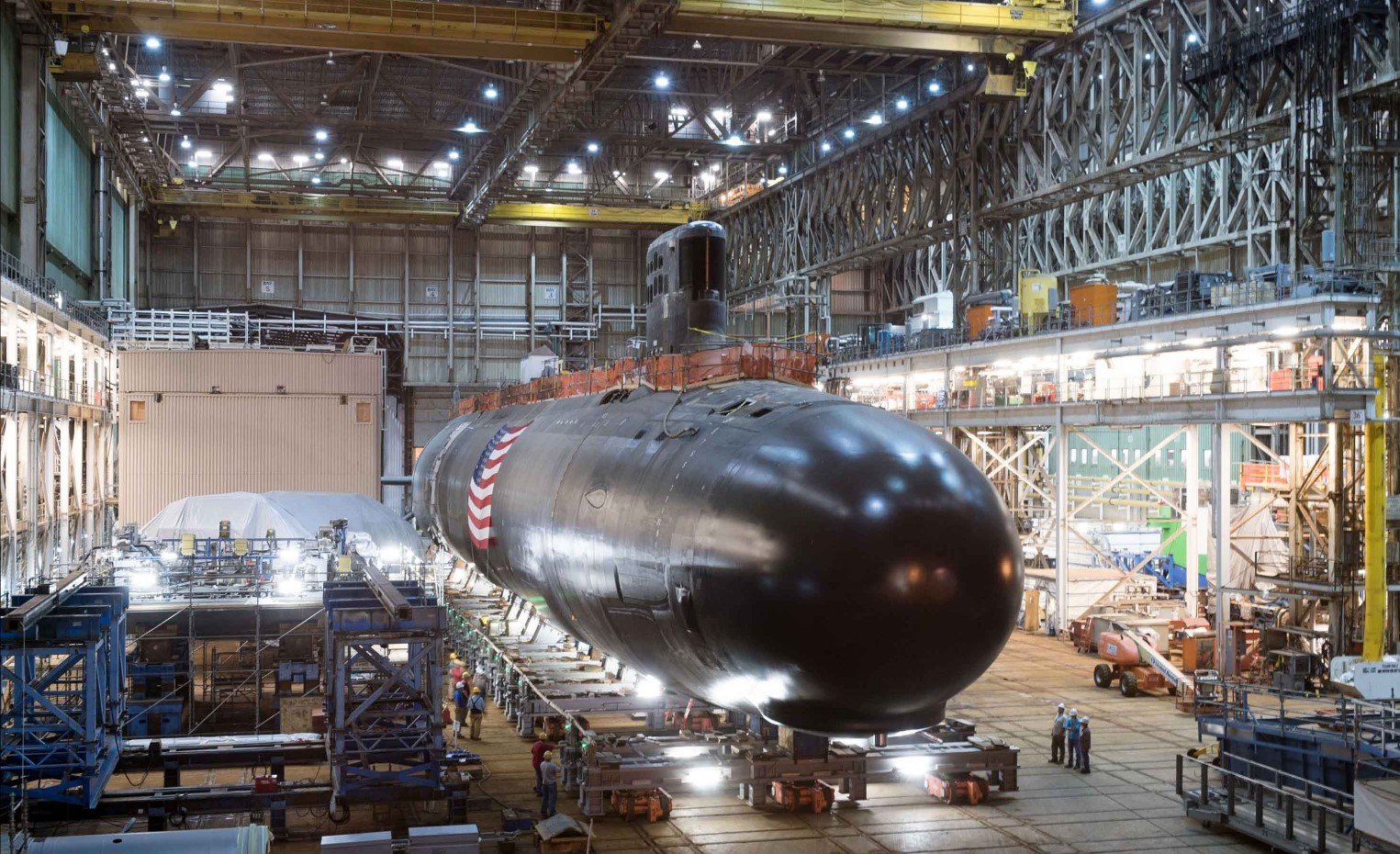
World
CANBERRA, Australia — Australian steel manufacturer Bisalloy Steel has secured a purchase order valued at approximately US$2 million to supply HY80 submarine-grade steel plate for the construction of U.S. Navy Virginia-class fast attack submarines. The order was placed by General Dynamics Electric Boat (GDEB), the lead contractor for the Virginia-class submarine program. The contract marks the first time that Australian-produced steel has entered the supply chain for the U.S. Navy's nuclear-powered Virginia-class submarines. The Australian Government announced the milestone on July 29, 2026, describing it as a significant step in expanding Australia's contribution to the trilateral submarine industrial base established under the AUKUS security partnership between Australia, the United Kingdom, and the United States. The order is also expected to support broader efforts by the United States to strengthen its submarine industrial base by expanding production capacity and improving long-term supply chain resilience for key materials used in submarine construction. Australian Production of HY80 Steel The production of the submarine-grade steel is being carried out through a domestic Australian supply chain. BlueScope Steel manufactures the raw steel plate at its Port Kembla facility in New South Wales. The material is then processed by Bisalloy Steel, based in Unanderra in the Illawarra region, where it undergoes specialized processing and heat treatment to produce the finished HY80 steel. Bisalloy is Australia's only manufacturer of quenched and tempered high-strength steel plate. HY80, short for High Yield 80, is a high-strength steel developed for demanding naval applications. It is designed to provide the strength, toughness and weldability required for critical submarine structural components operating in challenging maritime environments. Qualification Through the DIVQ Program Before receiving the order, Bisalloy successfully qualified to meet the U.S. Navy's structural steel standards through the Australian Government's Defence Industry Vendor Qualification (DIVQ) Program. The DIVQ Program helps Australian companies satisfy the strict technical and manufacturing requirements needed to participate in U.S. submarine construction and sustainment programs. The qualification process involved extensive testing and close collaboration between Bisalloy, BlueScope, the Australian Submarine Agency (ASA), General Dynamics Electric Boat, the U.S. Naval Sea Systems Command (NAVSEA), and the U.S. Navy Direct Reporting Portfolio Manager for Submarines. Submarine steel production requires strict control over every stage of manufacturing. Each batch must consistently meet specific chemical, mechanical and fracture property requirements. The qualification process confirmed that the Australian supply chain could reliably manage alloy composition, heat treatment, mechanical testing and detailed production records in accordance with U.S. Navy standards. Support for AUKUS Industrial Cooperation Australian Minister for Defence Industry Pat Conroy said Australian-made submarine-grade steel will be used in the construction of U.S. Navy Virginia-class submarines for the first time, demonstrating the growing contribution of Australian industry to the AUKUS submarine industrial base. Conroy said the order provides valuable production experience for Australian industry, supports skilled jobs and helps build the industrial capability needed for Australia's future nuclear-powered submarine program under AUKUS. He added that the achievement creates opportunities for Australian companies to compete for future work while raising domestic technical standards. Kylie Wright, Head of Workforce and Supply Chain at the Australian Submarine Agency, described the order as a significant achievement for Australian industry. She said it demonstrates that Australian companies can meet the rigorous standards required by one of the world's most advanced submarine programs and reflects the close collaboration across the AUKUS partnership. Strategic Importance The United States is expanding capacity across its submarine industrial base and has identified steel supply as a key priority. The inclusion of Australian suppliers is intended to strengthen resilience within the trilateral supply chain while supporting increased submarine production and maintenance requirements. Rowan Melrose, Managing Director and CEO of Bisalloy Steel Group, said the company's first order for the Virginia-class program represents an important milestone for both Bisalloy and Australian manufacturing. He said the achievement reflects years of work to meet U.S. Navy qualification standards and positions the company to pursue additional opportunities within allied defence supply chains. The Defence Industry Vendor Qualification (DIVQ) Program forms part of Australia's AUKUS Submarine Industry Strategy, which aims to prepare Australian businesses to meet the standards required for U.S. and UK submarine programs while developing the industrial capability, workforce and skills needed to support Australia's future nuclear-powered submarine enterprise.
Read More → Posted on 2026-07-30 16:34:36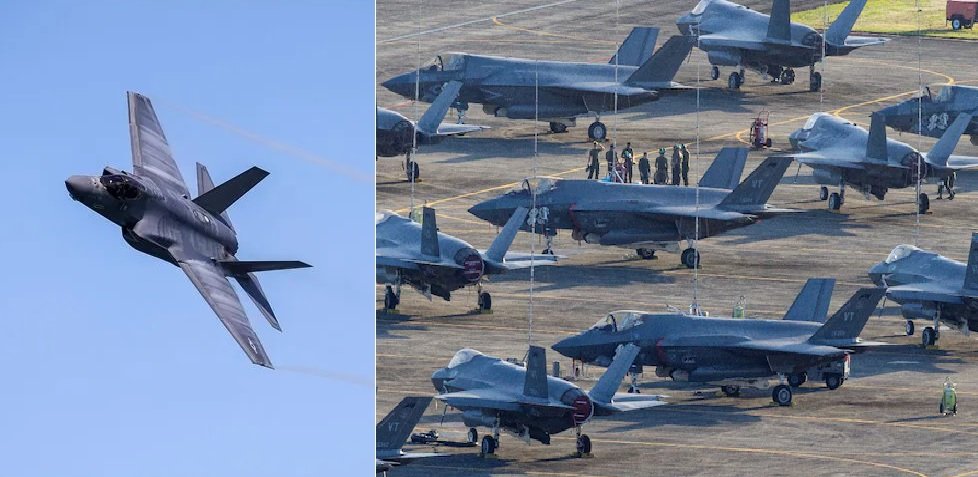
World
WASHINGTON — U.S. Central Command (CENTCOM) has stated that no American military aircraft were destroyed or damaged during recent Iranian attacks, directly rejecting claims made by Iran's Islamic Revolutionary Guard Corps (IRGC). The IRGC had announced that its forces destroyed three U.S. F-35 fighter jets and damaged three others during retaliatory strikes. It also claimed that U.S. personnel were killed in the attack. CENTCOM denied those claims, stating that all missiles and drones launched during the attacks were either intercepted or failed to reach their intended targets. Over the past few hours, Iranian state media have continued to report false claims by the Islamic Revolutionary Guard Corps (IRGC) – three in particular.🚫 FIRST CLAIM: The IRGC (again) claims free and open routes through the Strait of Hormuz are dangerous for commercial… pic.twitter.com/J34ILmDvyk — U.S. Central Command (@CENTCOM) July 30, 2026 According to Iranian statements, the operation was carried out in response to U.S. strikes on targets on Iran's Qeshm Island. The IRGC said it launched ballistic missiles at deployment areas and aircraft maintenance facilities at Al-Azraq Air Base, also known as Muwaffaq Salti Air Base, in Jordan. Jordan's armed forces confirmed that five missiles launched from Iran entered Jordanian airspace but said all were intercepted by the country's air defense systems. Jordan described the incident as the latest in a series of similar missile interceptions in recent days. CENTCOM also responded to Iranian claims regarding the security situation in the Strait of Hormuz. The command rejected Iranian assertions that commercial shipping through the strategic waterway has become unsafe because of U.S. military operations. Instead, CENTCOM said the immediate threat to civilian vessels comes from the IRGC's verbal threats and attempted attacks. The U.S. command reiterated that the Strait of Hormuz remains an international waterway open to commercial transit and said U.S. forces continue to support the safe movement of merchant vessels through the area. Iran has maintained that it controls aspects of the Strait of Hormuz and has issued warnings related to maritime traffic. The IRGC has stated that the strait is under the control of its naval forces. CENTCOM rejected those claims, saying the waterway is governed by international maritime regulations and is not under IRGC jurisdiction. CENTCOM also denied Iranian reports that the commercial oil tanker M/T Nora had broken through a U.S. naval blockade. The command said the vessel did not breach the blockade and added that enforcement operations remain in place. According to CENTCOM, more than 20 U.S. warships, hundreds of aircraft, and thousands of service members are involved in enforcing the maritime measures. The operations target ships entering or leaving Iranian ports while allowing unrestricted passage for vessels that are only transiting the Strait of Hormuz. The command said U.S. forces have redirected multiple commercial vessels as part of those enforcement activities. The latest statements come as military exchanges between the United States and Iran continue. CENTCOM said U.S. forces recently conducted strikes against IRGC targets in Iran, including command centers, missile and drone facilities, coastal sites, and maritime capabilities. The strikes followed what the command described as attempted Iranian ballistic missile attacks against U.S. personnel in the region. CENTCOM said those missiles were intercepted before reaching their targets. The command also said that more than 50,000 U.S. service members remain deployed across the Middle East. The latest developments highlight the continuing exchange of military operations and conflicting official accounts from Washington and Tehran. While Iran has reported successful attacks on U.S. military assets and control over maritime activity in the Strait of Hormuz, CENTCOM has rejected those claims, maintaining that no U.S. aircraft were lost, missile attacks were intercepted, and commercial shipping continues through the international waterway under U.S. support.
Read More → Posted on 2026-07-30 15:56:51Search
Top Trending in 24 Hours
-
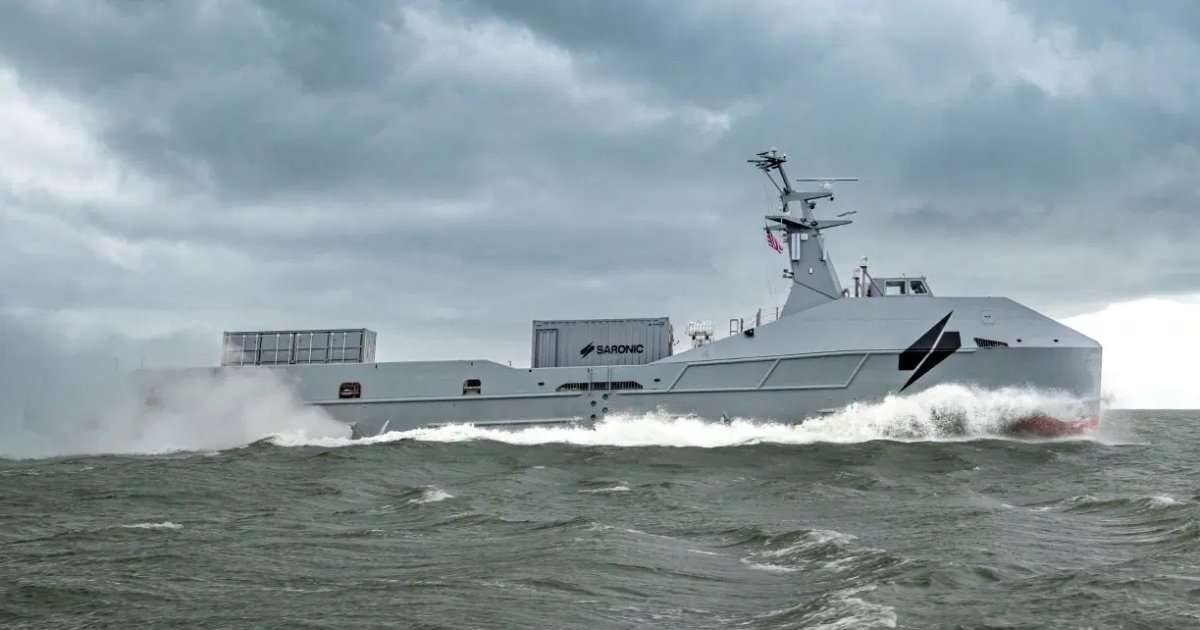 U.S. Navy Awards Production Agreements for 30 Medium Unmanned Surface Vessels, Including 10 Saronic Marauders
-
 Boeing Wins $20 Billion U.S. Navy Contract for F/A-XX Sixth-Generation Fighter
-
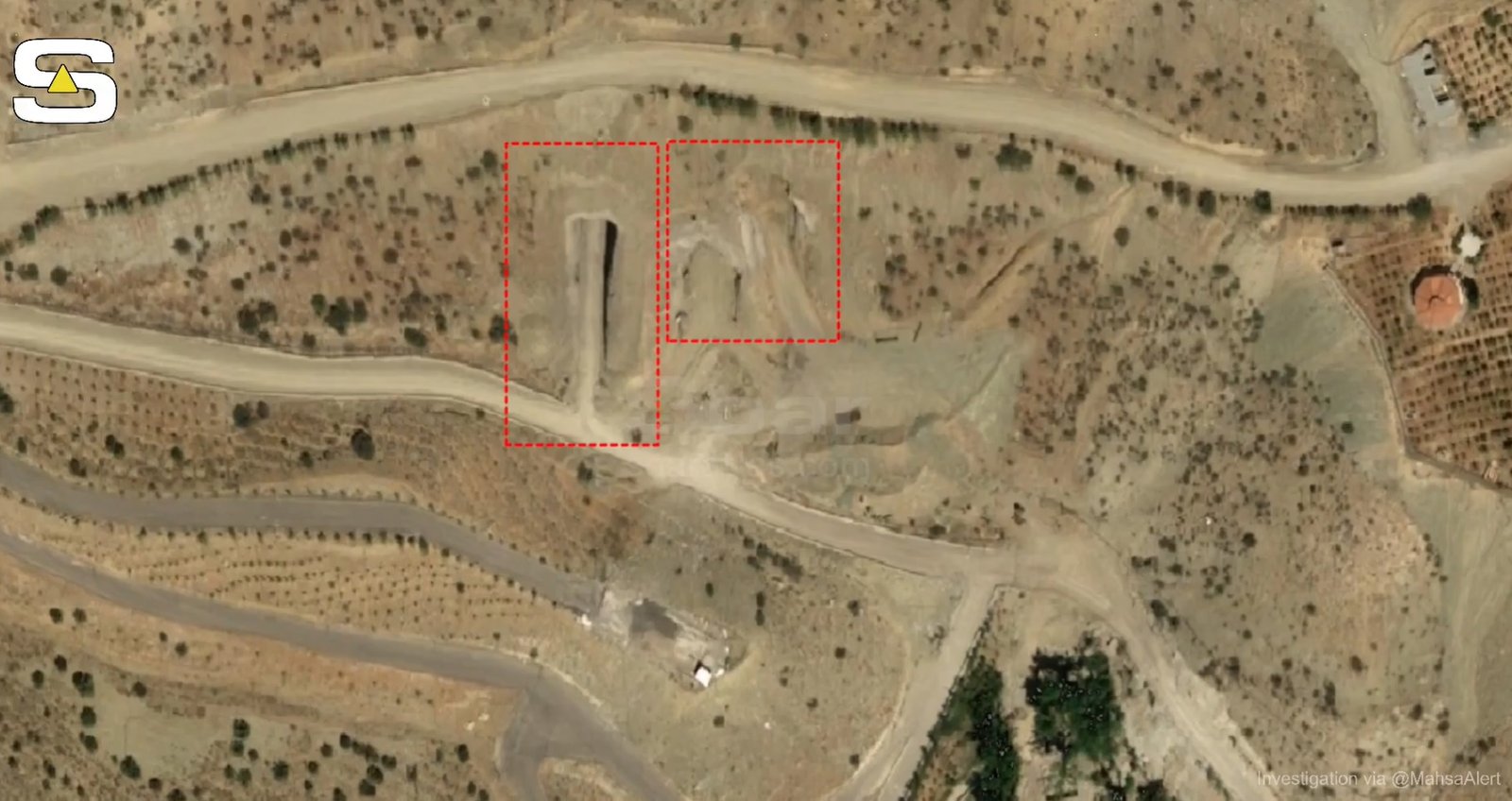 Satellite Imagery Shows Construction Changes at Hillside Site Linked to Iran’s Supreme National Security Council
-
 Flydubai Flight to Israel Diverted to Saudi Arabia After Possible Attempted Terror Attack in Cockpit
-
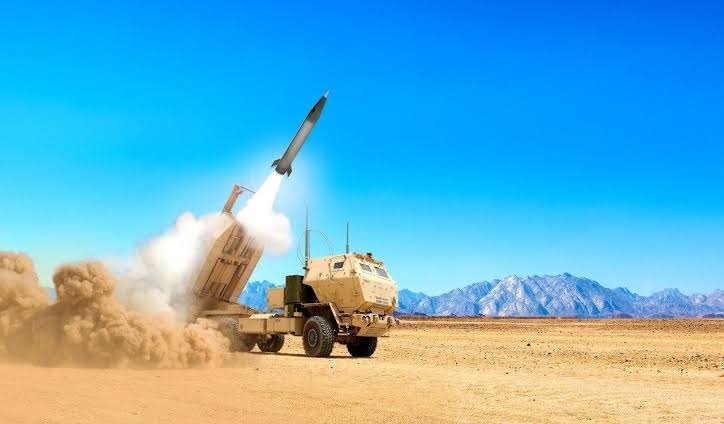 U.S. Army Selects Five Companies to Develop 1,000-Km Precision Strike Missile Prototypes
-
 NASA Adds Blue Origin’s Upgraded New Glenn 9×4 to Launch Services Contract
-
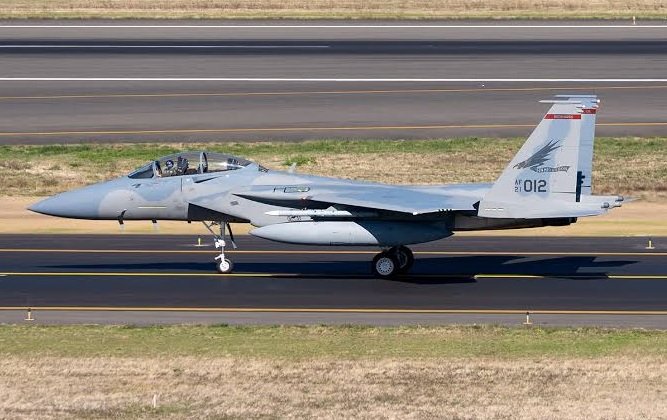 U.S. Air Force Awards Boeing $2.38 Billion Contract for 22 F-15EX Fighter Jets
-
 U.S. Army Awards Heaviside Industries $99 Million Contract for MOTH RF Spectrum Analyzers
Top Trending in 4 Days
-
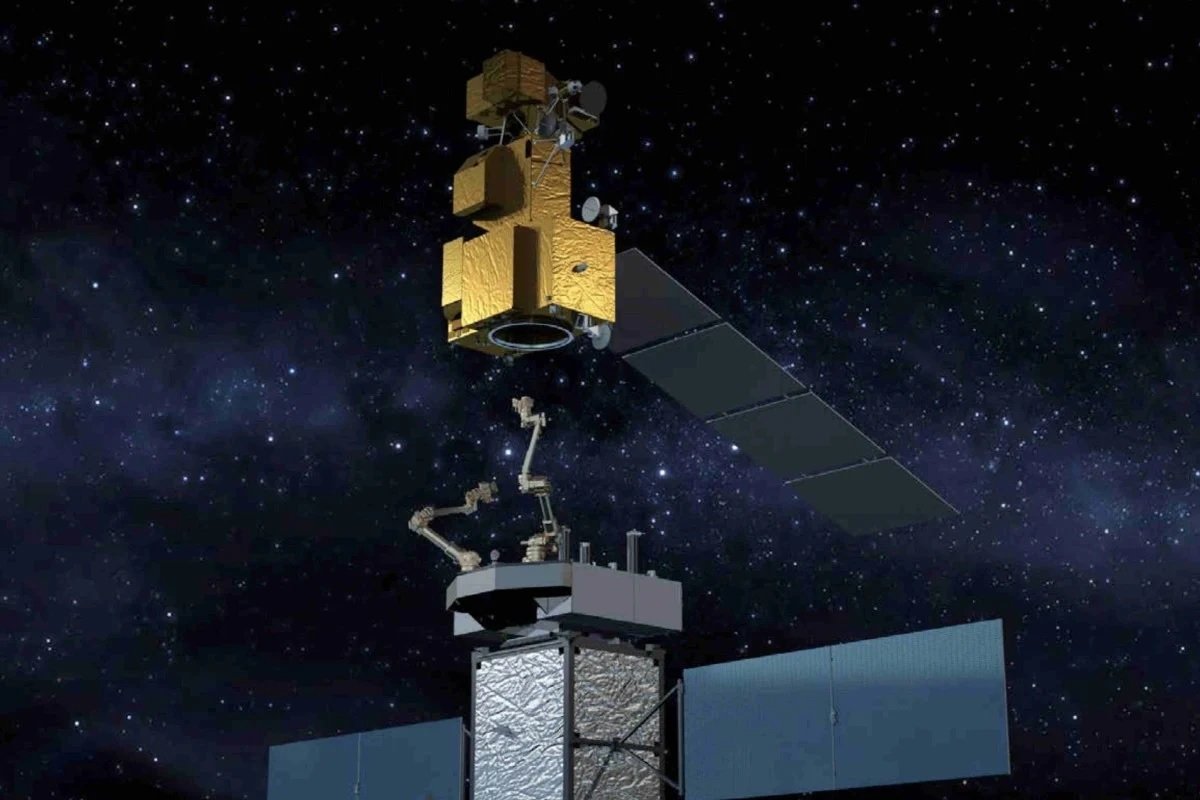 China Reports First High-Orbit Refueling of BeiDou Satellite, but Tracking Data Raise Questions
-
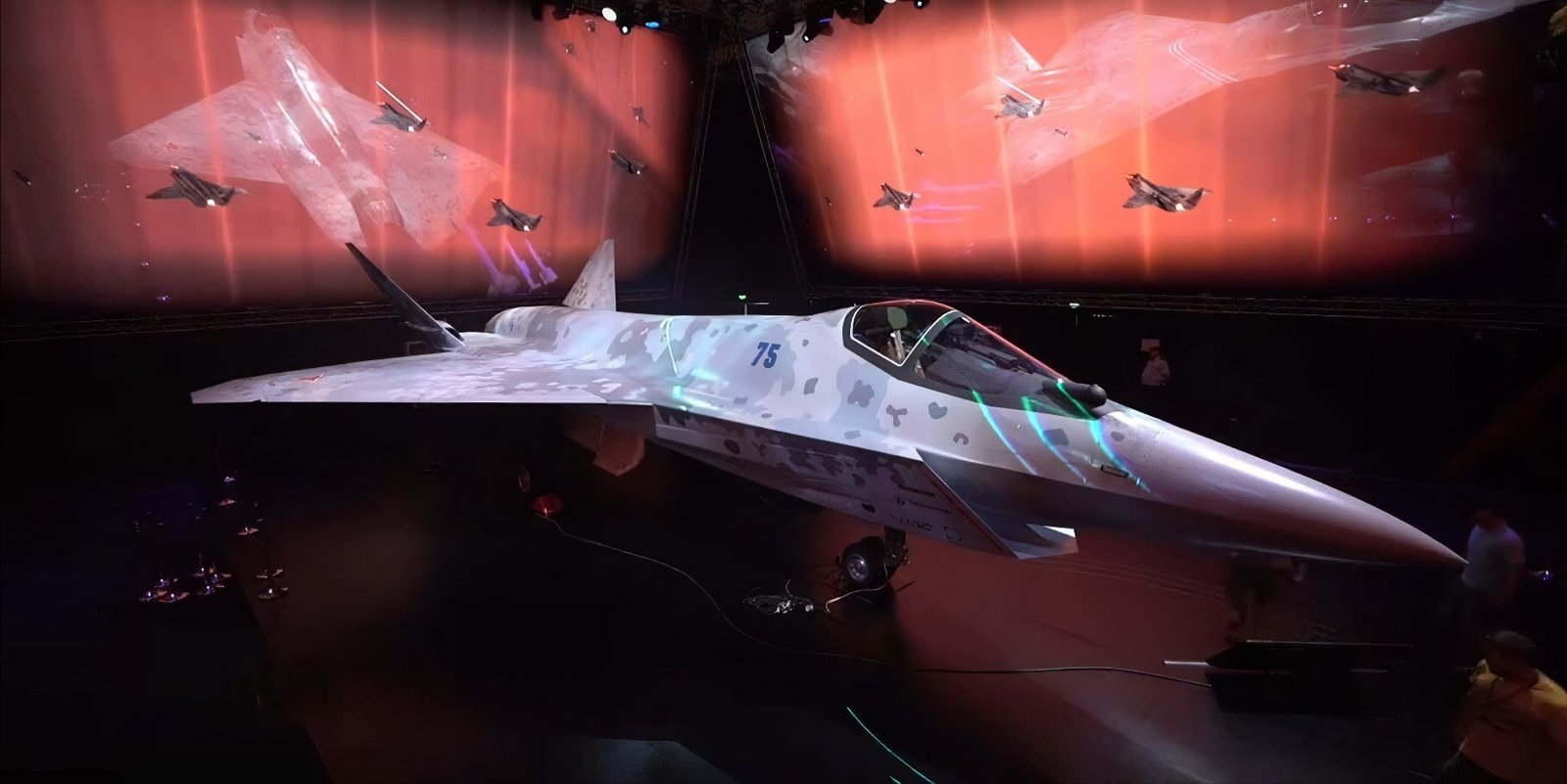 Russia Says Su-75 Checkmate Could Cost Just $25–30 Million, Flight-Hour Costs 6 Times Lower Than F-35
-
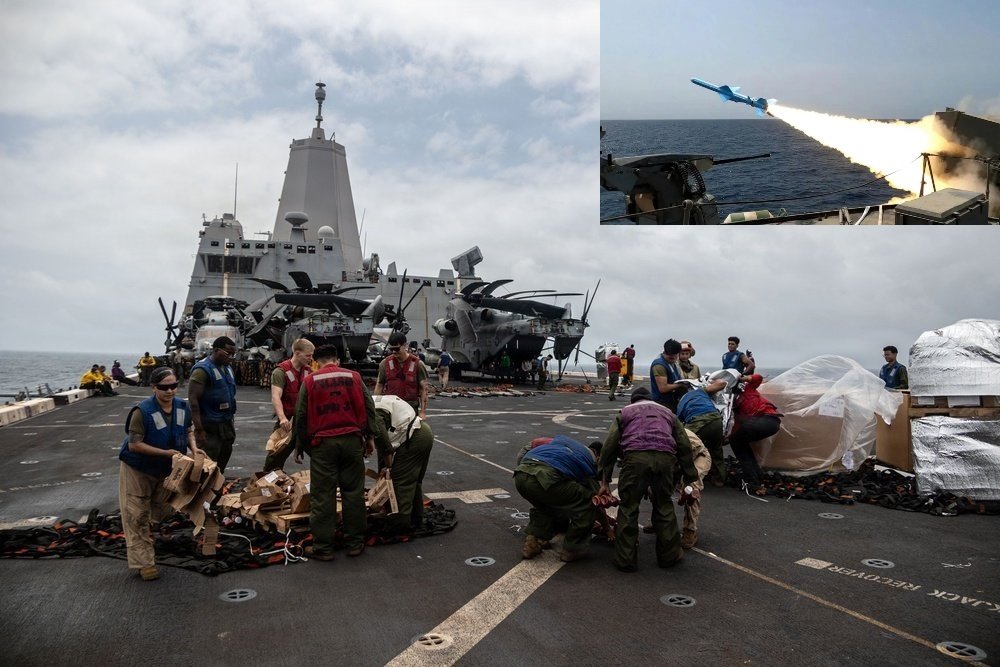 Eight U.S. Marines Injured in Iranian Missile Strike on U.S Vessel in Strait of Hormuz
-
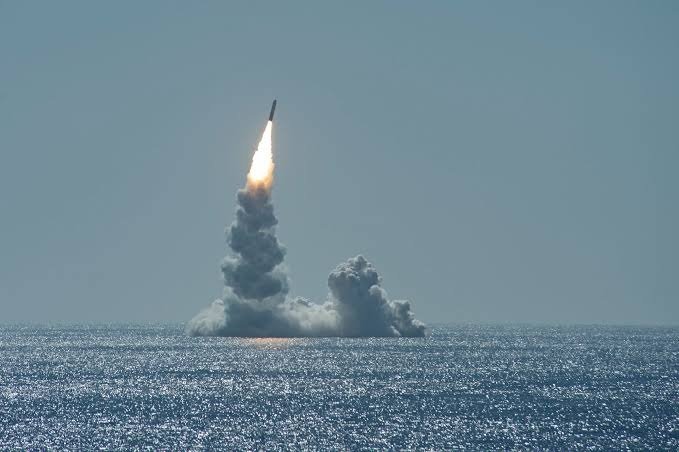 UK Offers Nuclear Deterrence for Its Northern European Defence Partners
-
 U.S. and Russia Remove Human-Review Rules From Draft UN AI Weapons Framework
-
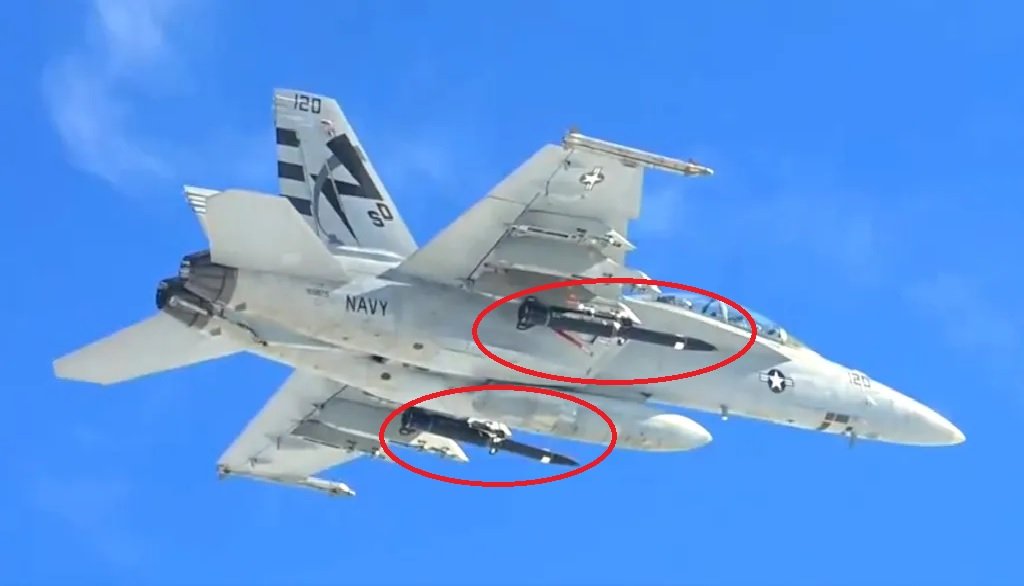 U.S. Navy Begins Flight Testing Blackbeard Hypersonic Missile on F/A-18 Super Hornet
-
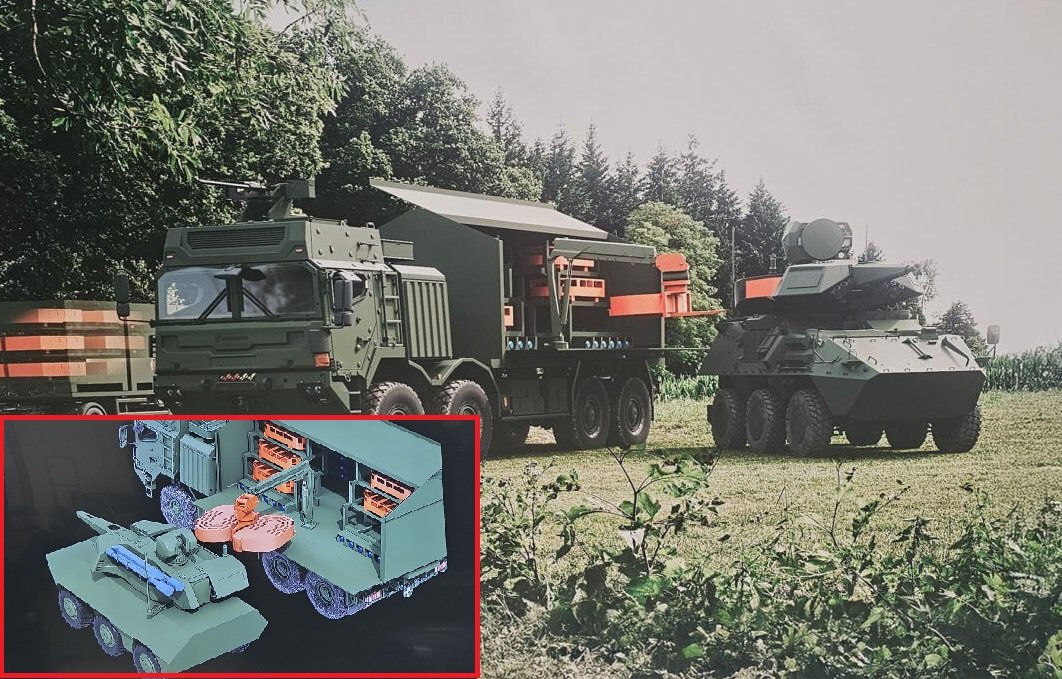 Rheinmetall Develops Automated Reloader for Austrian Skyranger Air Defense System
-
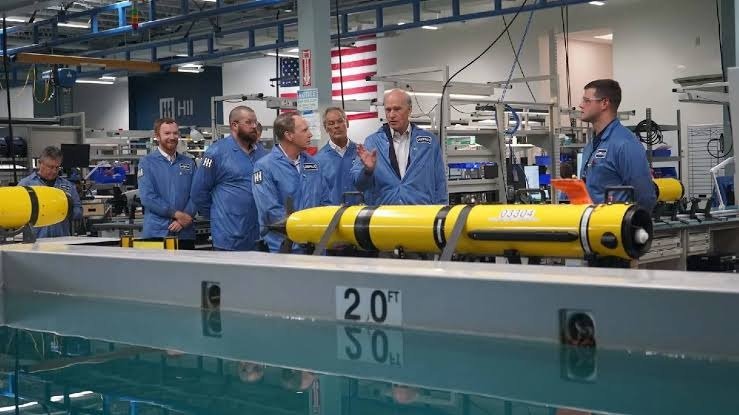 HII Expands Massachusetts Unmanned Systems Facility by 25 Percent to Support U.S. Navy Lionfish Production
