
U.S
WASHINGTON, D.C. — The U.S. Department of State has approved a potential Foreign Military Sale to Norway for 21 UH-60M Black Hawk multirole helicopters and related equipment, with a maximum estimated value of $2.3 billion. The approval was announced on August 21, 2026, but does not represent a final Norwegian order. The deal remains subject to an intergovernmental Letter of Offer and Acceptance. According to the Defense Security Cooperation Agency (DSCA), Norway has requested 21 UH-60M helicopters, 46 T700-GE-701D engines, 25 AN/AAR-57 Common Missile Warning Systems, 25 Common Infrared Countermeasure systems, 25 AN/APR-39E(V)2 Radar Warning Receivers, 50 EAGLE-M+429 Embedded GPS/Inertial Navigation Systems, 100 AN/ARC-231A RT-1987 VHF/UHF/line-of-sight satellite communication radios and 18 M240H machine guns. The package also includes laser warning systems, identification-friend-or-foe transponders and cryptographic equipment, navigation and radio systems, radar altimeters, electro-optical/infrared sensors with laser designators, ballistic armor, internal auxiliary fuel tanks, fast-rope insertion and extraction systems, rescue hoists, dual patient litter systems, external stores support and weather radar. It also covers training devices, spare and repair parts, support equipment, tools, technical data, publications, personnel training, and U.S. government and contractor engineering, technical and logistics support. Four of the 46 engines are identified as spare engines. If the agreement proceeds, Lockheed Martin's Sikorsky unit, based in Stratford, Connecticut, would be the principal contractor. Around 15 U.S. government and 15 contractor representatives would travel to Norway for equipment fielding, system checkout, training and support. Part of Norway's Helicopter Modernization The proposed UH-60M acquisition follows Norway's decision in June 2026 to suspend a project for up to nine HH-60W Jolly Green II combat rescue helicopters, which had initially been valued at $2.6 billion. Norway said further decisions on helicopter fleet modernization would follow, but it has not officially confirmed a connection between the suspended HH-60W project and the UH-60M request. The Black Hawk proposal could also provide an option for replacing Norway's Bell 412 helicopters, which support Army and Special Operations Forces missions. Some of the existing Bell 412s have undergone or are undergoing upgrades to extend their service life. If completed, the purchase would expand the UH-60M's European customer base. Sweden, Latvia, Lithuania and Austria already operate the Black Hawk, while Greece has also ordered the helicopter, with deliveries expected to begin soon. Norway has separately ordered six MH-60R Seahawk maritime helicopters, with deliveries expected to begin within the next several months and all six anticipated by 2027. They are intended primarily for maritime and coast guard roles, replacing previously operated NH90 helicopters. The U.S. State Department said the proposed sale would strengthen Norway's ability to address current and future threats, improve interoperability with U.S. and allied forces, and provide the Norwegian Army and Special Operations Forces with a common rotary-wing platform. The U.S. assessment states that Norway should have no difficulty absorbing the equipment and services, while the sale would not alter the basic military balance in the region or adversely affect U.S. defense readiness. No offset agreement has been identified at this stage, with any such arrangement to be determined during negotiations. The U.S. Congress has been notified of the proposed sale. As a NATO ally, Norway is subject to a 15-day congressional review period.
Read More → Posted on 2026-08-22 11:30:50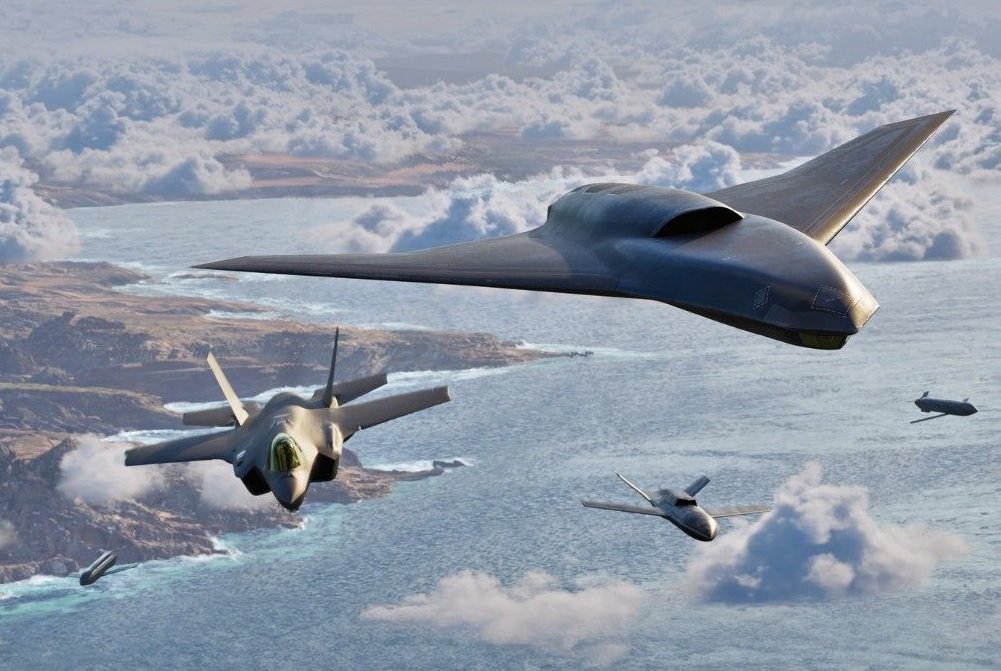
U.S
BRUSSELS — Lockheed Martin is advancing its Vectis collaborative combat aircraft (CCA), an uncrewed platform designed to operate independently or alongside crewed fighters such as the F-35 and future next-generation aircraft. Developed by the company’s Skunk Works division, Vectis was unveiled in September 2025 as a Group 5 survivable and lethal unmanned aircraft for U.S. and allied militaries. Lockheed Martin says the platform is designed around crewed-uncrewed teaming, survivability, autonomy and an adaptable open architecture. Vectis is designed for precision strikes, intelligence, surveillance and reconnaissance (ISR) targeting, electronic warfare, and offensive and defensive counter-air missions. It can perform these missions independently or in coordination with crewed aircraft, with endurance intended for operations in the Indo-Pacific, Europe and U.S. Central Command areas. The aircraft uses a tailless lambda-wing design, top-mounted air intake, shovel-like nose and conformal antennas, reflecting its low-observable design approach. Its exact dimensions remain undisclosed, but Lockheed Martin officials have described it as smaller than an F-16 and larger than the company’s Common Multi-Mission Truck platforms. The current design is runway-dependent. F-35 Integration and Open Architecture Lockheed Martin has conducted classified simulated operational analyses involving Vectis with the F-35 and F-22. The company says pilots in crewed aircraft will be able to control the drones through wide-area touchscreen displays. The aircraft incorporates the Multi-Domain Combat System (MDCX) for autonomous control and multi-domain connectivity. Its development also uses Skunk Works’ Agile Drone Framework, emphasizing modularity, open mission systems and government reference architectures. Lockheed Martin says this approach is intended to prevent vendor lock-in and allow payloads and software to be upgraded as requirements change. Development and Engine Skunk Works is internally funding the program, with components already ordered and a development team working on the aircraft. Lockheed Martin initially set a goal of designing, building and flying Vectis within two years of its September 2025 unveiling, targeting a first flight in 2027. The prototype will use a Williams International FJ44-4 turbofan, which produces more than 3,600 pounds of thrust and features a compact twin-spool design. Company officials have said operational analysis does not indicate a requirement for supersonic speed. Lockheed Martin is using digital engineering and advanced manufacturing methods to pursue an accelerated development schedule and a CCA-level price point. European Interest Lockheed Martin displayed a scale model of Vectis at the Brussels European Defence Exhibition (BEDEX) from March 12 to 14, 2026. The company promoted the aircraft to European customers, including the Belgian Air Component, as a potential “loyal wingman” capability. The company is also discussing the platform with other European countries interested in collaborative combat aircraft. Vectis is intended to complement crewed fifth-generation fighters while retaining the ability to conduct independent missions. Lockheed Martin Vice President and Skunk Works General Manager O.J. Sanchez said the Vectis concept is based on a highly capable, customizable and affordable agile drone framework designed for the future battlespace.
Read More → Posted on 2026-08-21 16:10:38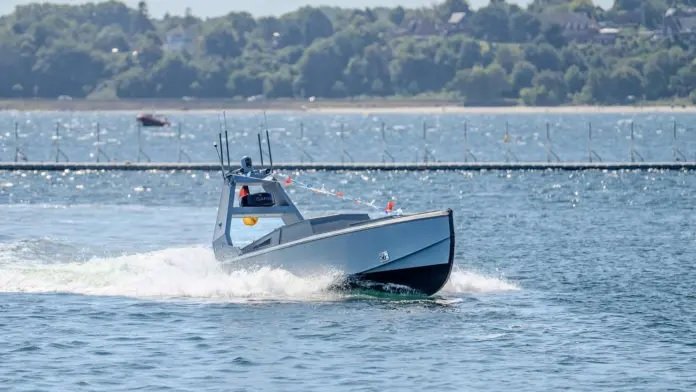
Europe
KIEL, Germany — German defence technology company STARK has delivered the first Seetaube autonomous unmanned surface vessel (USV) to the German Armed Forces’ Cyber and Information Domain Service (Kommando CIR). The six-metre vessel is based on STARK’s Vanta-6 platform and was acquired through an innovation initiative of the Cyber Innovation Hub of the Bundeswehr, in cooperation with the Centre for Digitalisation of the Bundeswehr. The Seetaube was formally christened during a ceremony in Kiel in August 2026. Maritime Reconnaissance and Signal Detection Seetaube is equipped with cameras, sensors and radar for maritime reconnaissance. It can follow pre-programmed routes autonomously while operating within defined parameters. An operator monitors the mission remotely and can take manual control at any time. Data collected by the vessel is transmitted securely in real time to the operator terminal. The USV is designed to provide a second mobile observation point at sea. When operating alongside a manned naval vessel, it can provide an additional bearing point for locating radio signals through cross-bearing measurements. This can help identify suspicious activity and improve the speed and precision of maritime reconnaissance. Sven Weizenegger, head of the Bundeswehr’s Cyber Innovation Hub, said the system increases force effectiveness without requiring another large manned platform. STARK CTO Johannes Schaback said the system provides sensors, range and endurance in the operational area without requiring additional personnel on manned ships. Vanta-6 Specifications and Previous Tests The Vanta-6 can reach more than 45 knots, carry a payload of up to 500 kilograms, and has a range of approximately 1,685 kilometres. It weighs about 2,100 kilograms and can operate in Sea State 4. The Vanta family was developed for reconnaissance and coastal-water operations, as well as the protection of ports and critical maritime infrastructure. Vanta systems participated in the NATO exercises REPMUS and Dynamic Messenger in Portugal in September 2025. During the exercises, the vessels conducted missions including high-value-target escort, harbour-control tasks, over-the-horizon reconnaissance and night-time ISR patrols. The Vanta platform has also been successfully used to launch Cascade loitering munitions from containerised launchers, demonstrating its potential for roles beyond reconnaissance. The Bundeswehr will now conduct further sea trials and operator training over the coming months before the Seetaube is formally taken into service.
Read More → Posted on 2026-08-21 15:57:04
World
ISTANBUL — Turkey has begun the process of seeking Interpol Red Notices for Israeli Prime Minister Benjamin Netanyahu and Afek Moskovitch in connection with a criminal case over the interception of the Global Sumud Flotilla, which was carrying humanitarian aid toward Gaza. Turkish Justice Minister Akın Gürlek announced on August 21 that the Justice Ministry had asked the Interior Ministry to seek Red Notices for Netanyahu and Moskovitch. The relevant documents were also sent to the Foreign Ministry. Arrest Warrants Issued in July The case is being handled by Istanbul’s 11th High Criminal Court under file number 2026/108 and involves 35 defendants, including Netanyahu and Moskovitch. According to Gürlek, arrest warrants for Netanyahu and Moskovitch were issued on July 14, 2026, on a genocide charge. The subsequent request for Interpol Red Notices is intended to seek their international location and provisional arrest in accordance with applicable legal procedures. Turkish authorities say the case concerns the alleged armed interception of civilians traveling by sea with humanitarian aid for Gaza in international waters and the subsequent detention of activists. The charges cited by Turkish authorities include crimes against humanity, genocide, aggravated deprivation of liberty, intentional injury, torture, property damage, aggravated robbery and hijacking of transportation vehicles. Gürlek said Turkey would continue using national and international legal mechanisms in the case. Global Sumud Flotilla The legal proceedings concern the Global Sumud Flotilla, an international civilian initiative that sailed toward Gaza in 2025. The flotilla included more than 40 vessels and roughly 500 participants from more than 40 countries, according to contemporary reporting. Its stated objective was to deliver humanitarian aid to Gaza and challenge Israel’s naval blockade. Israeli forces intercepted the flotilla in international waters in early October 2025. The final vessel was intercepted on October 3, with Reuters reporting that Israeli forces had detained around 450 activists from the flotilla. Israel said the detained participants would be taken to its Ashdod port and subsequently deported. The incident became a major point of dispute between Israel and Turkey. Turkish authorities have described the interception as an unlawful action against civilians, while Israel has maintained that its naval blockade and actions to prevent the flotilla from reaching Gaza were lawful. What an Interpol Red Notice Means An Interpol Red Notice is not an international arrest warrant. According to Interpol, it is a request to law-enforcement authorities worldwide to locate and provisionally arrest a person pending extradition, surrender or similar legal action. Each member country decides what legal action it can take under its own laws. Interpol also states that individuals subject to Red Notices are wanted by the requesting country or an international tribunal, rather than by Interpol itself. Interpol does not have the authority to compel a member country to make an arrest. There is currently no indication that Interpol has issued Red Notices for Netanyahu or Moskovitch. Turkey has requested that the notices be pursued following the arrest warrants issued by the Turkish court. Israel-Turkey Tensions The latest legal move comes as relations between Turkey and Israel remain highly strained. The two countries have sharply disagreed over Israel’s military operations in Gaza, the blockade and developments involving Syria. Israel rejects allegations of genocide and has defended its actions concerning Gaza and the flotilla. Recent tensions have also increased over Israeli military action in Syria and Turkey’s involvement there. Reuters reported that Israeli and Turkish concerns over Turkish military deployments in Syria have become part of the broader dispute between the two countries. Turkey’s request for Interpol action now adds an international legal dimension to the dispute, while the underlying case against the 35 defendants continues before the Istanbul court.
Read More → Posted on 2026-08-21 15:44:12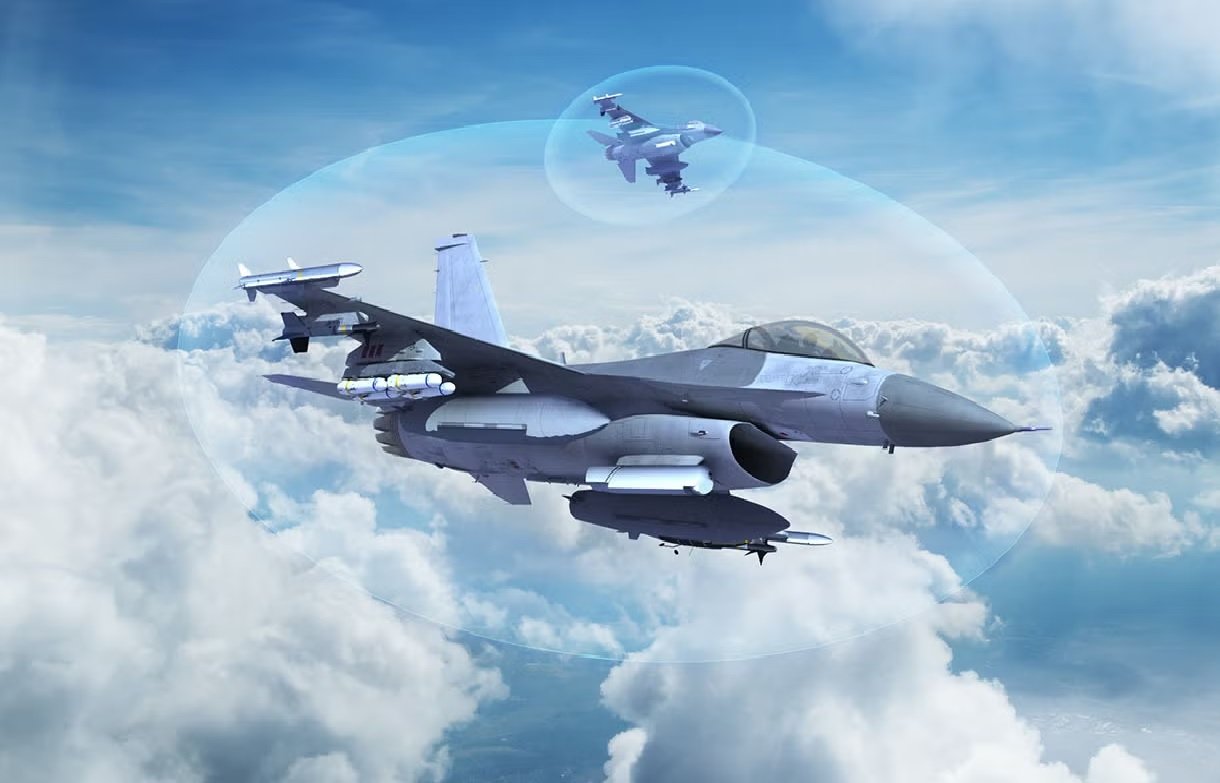
World
LIMA — Peru has selected L3Harris Technologies’ Viper Shield electronic warfare (EW) system for its new F-16 Block 70 fighter fleet, adding an advanced electronic protection capability to the country’s ongoing air force modernization program. L3Harris announced the selection on August 18, 2026. The AN/ALQ-254(V)1 Viper Shield is an all-digital, software-defined EW suite developed by L3Harris in partnership with Lockheed Martin and the U.S. Air Force. The system is designed to provide a virtual electronic shield around the aircraft and help pilots detect, counter and disrupt radar and other electronic threats. Viper Shield Capabilities Viper Shield combines digital threat warning and electronic countermeasure functions in an internally mounted system for the F-16 Block 70/72. Its digital radar warning receiver is designed to work with the F-16’s AN/APG-83 AESA radar, providing pilots with additional awareness of radar threats. The system also uses digital radio-frequency memory technology for electronic jamming and countermeasures. Its software-defined architecture is designed to support future upgrades as threat environments change. L3Harris says Viper Shield can be installed internally on new Block 70/72 aircraft. The company also offers the system for earlier F-16 variants through retrofit and podded configurations. The internal and podded versions use the same physical component hardware, according to the company. Peru’s F-16 Modernization Program The Viper Shield selection is part of Peru’s acquisition of F-16 Block 70 fighters. The U.S. government previously approved a possible Foreign Military Sale to Peru involving F-16 aircraft and related logistics and support, with an estimated value of $3.42 billion. The approval was announced in September 2025. Peru’s broader modernization plan calls for 24 F-16 Block 70 fighters. The initial acquisition involves 12 aircraft, while the Peruvian government has been working toward securing a second batch of 12 aircraft. Peruvian Defense Minister Rafael Belaúnde Llosa said on August 14, 2026, that the government was working to obtain the second batch. The minister said the air force requires 24 fighters to maintain its minimum deterrence capability. Earlier proposals for the F-16 acquisition had placed the value of 12 aircraft at about $3.42 billion. Following changes to the proposal, reports indicated that the planned 24-aircraft acquisition could be valued at approximately $3.5 billion. Viper Shield Production L3Harris said Peru is the eighth country to select Viper Shield. The company is increasing production toward a planned full-rate production level of 233 systems. Christopher Aebli, president of L3Harris’ Communications & Spectrum Dominance segment, said the company is providing Peru with an EW solution supported by an active production line, flight-test program and established supply chain. Viper Shield has already undergone flight testing. L3Harris completed the system’s first flight on a Block 70 F-16 at Edwards Air Force Base in February 2025, and the company has continued flight and environmental testing as the system moves toward wider production. The selection gives Peru an F-16 Block 70 configuration that includes an integrated digital electronic warfare system intended to improve threat warning and electronic protection. It also provides common EW capabilities with other countries operating the F-16 Block 70, supporting interoperability among users of the aircraft.
Read More → Posted on 2026-08-21 15:24:40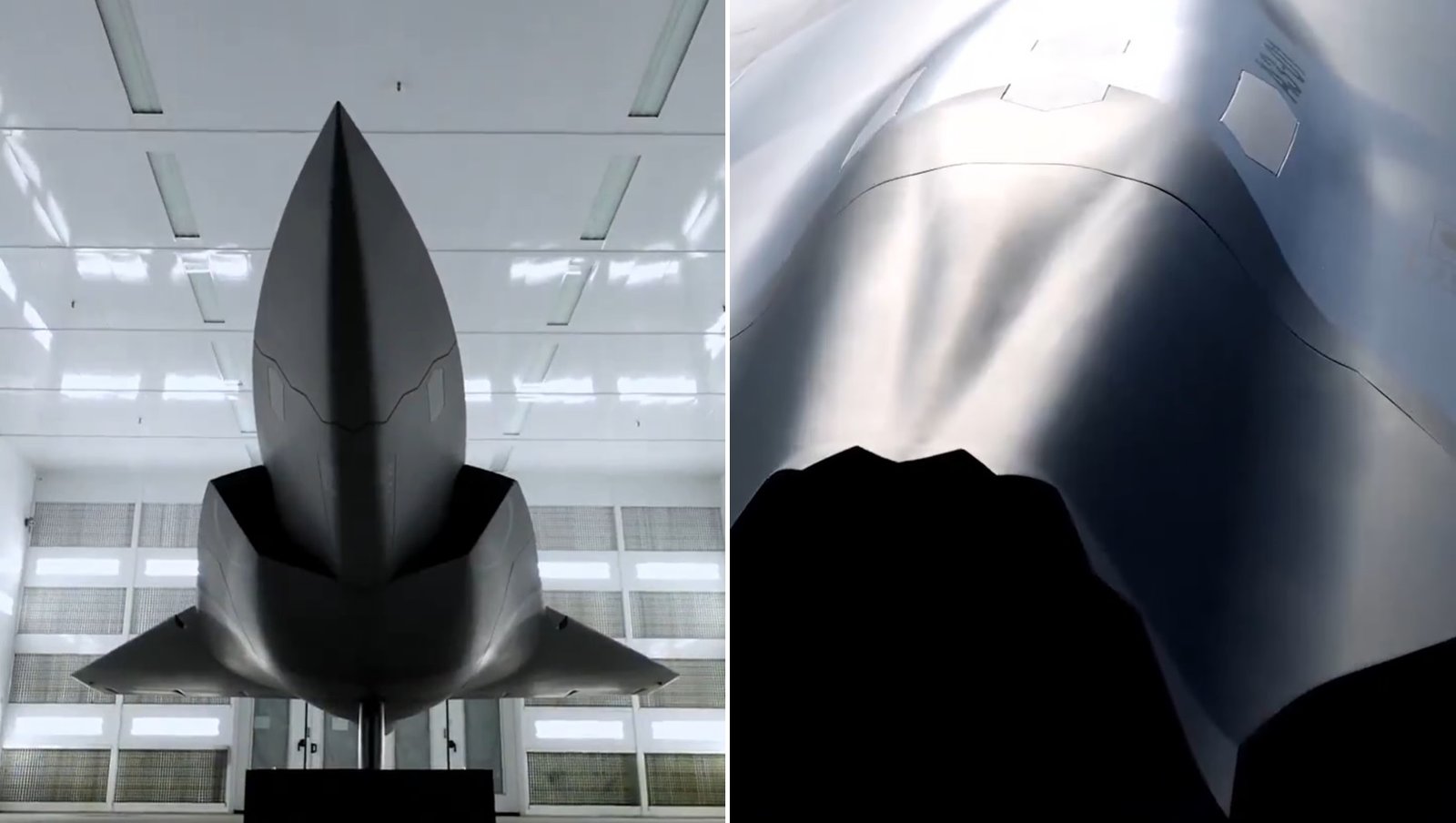
Europe
STOCKHOLM, Sweden — Swedish defence company Saab has released the first public footage of a new unmanned Collaborative Combat Aircraft (CCA) concept marked “A3-01.” Published on August 21, 2026, the video shows an unmanned fighter designed to operate alongside crewed combat aircraft. The aircraft features a delta wing, a single jet engine and two air intakes on either side of the fuselage. Its airframe also uses low-observable shaping. Saab has not confirmed its speed, but German defence outlet Hartpunkt noted that the aerodynamic configuration could support supersonic flight. Saab has not disclosed technical specifications, a formal programme name, customer, funding level or detailed development schedule. It also remains unclear whether A3-01 is an early design study, a planned flight demonstrator or an early representation of a wider programme. pic.twitter.com/47aSxhOxzT — Ovidiu Muca 🇪🇺 (@OvidiuMuca) August 21, 2026 Multi-Domain Unmanned Fighter Saab described the concept as part of a future “system of systems” approach to air combat. “The future of air combat is not just about a single aircraft, it’s about a seamless system of systems,” the company said. Saab said the aircraft is designed to operate with manned aircraft and support multi-domain operations across air, land, maritime, space and cyber domains. CCA aircraft are generally intended to work with crewed fighters and can carry sensors, weapons or electronic warfare equipment while receiving direction from a crewed aircraft or ground controller. Similar programmes are being pursued by countries including the United States and Australia. Possible Link to Sweden's Future Fighter Programme The A3-01 concept comes as Sweden continues studies for its future combat-aircraft capability. In October 2025, the Swedish Defence Materiel Administration (FMV) awarded Saab a contract worth approximately SEK 2.6–2.7 billion for continued studies of future fighter systems. The work covers manned and unmanned solutions from a system-of-systems perspective, technology development and demonstrator activities, with partners including GKN Aerospace. Concept and technology development was scheduled to continue until the third quarter of 2026, while demonstrator activities continue through 2027, including first flights. Swedish public broadcaster Sveriges Radio reported that the new aircraft is planned to enter operational service in about ten years. Earlier this year, Saab executives also said the company planned the first flight of a fighter-sized unmanned demonstrator in 2027. The demonstrator is expected to use Saab's “split core” software architecture, already used on the Gripen E. The architecture separates flight-critical software from tactical mission systems, allowing mission capabilities to be updated without recertifying the basic flight systems. However, neither Saab nor FMV has confirmed that A3-01 is directly connected to the October 2025 contract. Full-Scale Model, Not Confirmed as Flying Aircraft Polish defence publication MILMAG assessed that the aircraft shown in the video appears to be a full-scale model for aerodynamic testing or exhibition rather than a flying prototype. The model also features a sawtooth-shaped exhaust nozzle, consistent with low-observable design practices. Saab has not released further programme details specific to A3-01, while FMV has not issued a public statement on the video. Sweden's wider future fighter studies are intended to provide technical information for a government decision expected by 2030 on how to replace or augment the country's current Gripen fleet. Options under consideration include developing a new system independently, working with international partners or acquiring foreign aircraft. For now, Saab has confirmed only the concept's unmanned, collaborative and multi-domain focus, while its final configuration, performance, mission roles and development status remain undisclosed.
Read More → Posted on 2026-08-21 14:41:24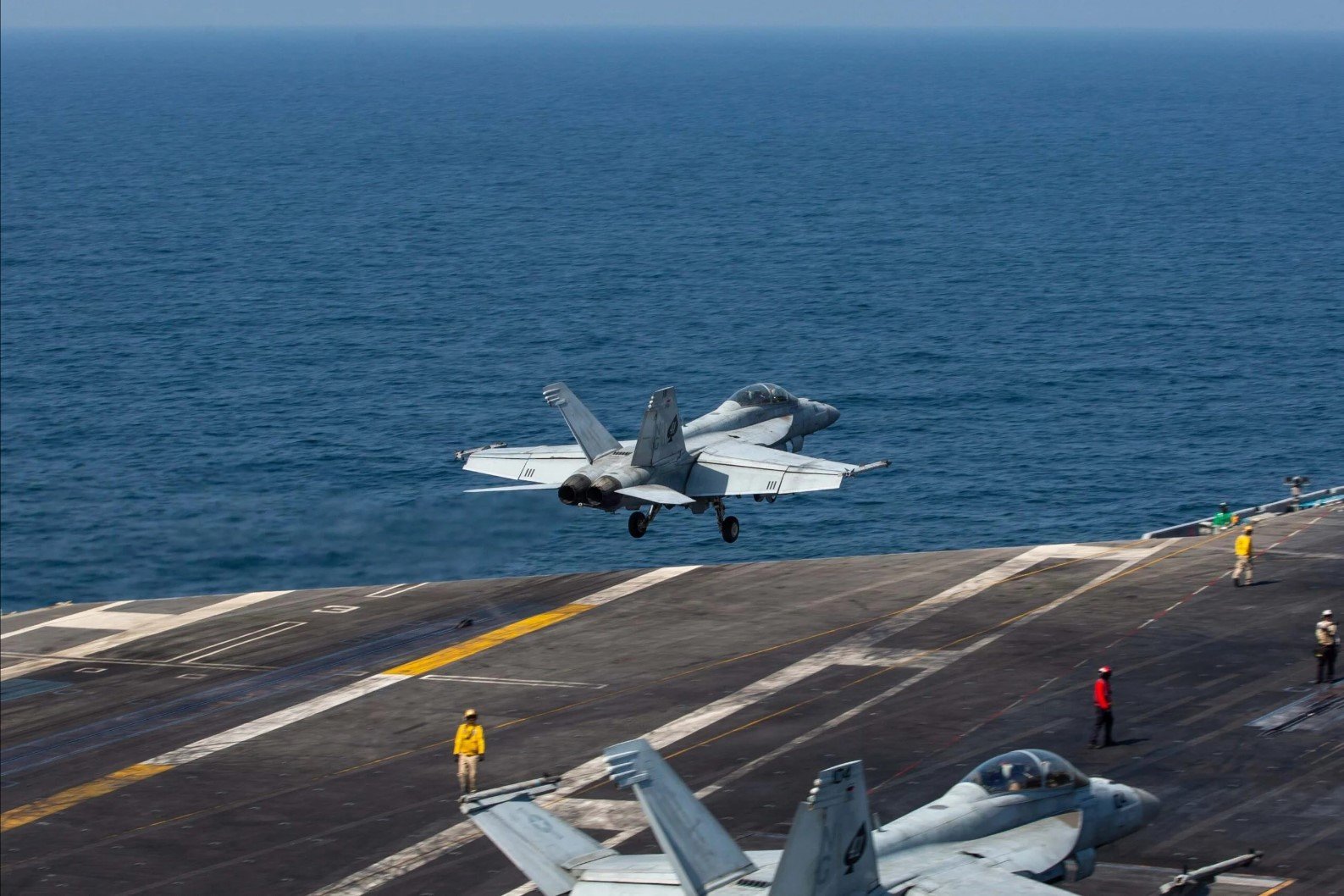
U.S
SAN DIEGO — General Atomics has received a $42.87 million U.S. Navy order to supply spare parts for the Electromagnetic Aircraft Launch System (EMALS) and Advanced Arresting Gear (AAG) installed on in-service Ford-class aircraft carriers. The firm-fixed-price order is valued at $42,871,948 and was issued by Naval Air Systems Command (NAVAIR) at Patuxent River, Maryland, under an existing basic ordering agreement. The contract was not competed. The order covers insurance spares and rotable pool spares for both systems. Insurance spares are kept in reserve for unexpected failures, while rotable pool components can be removed, repaired and returned to service. Work will be performed in Tupelo, Mississippi (61%), San Diego, California (38%), Boston, Massachusetts (0.5%), and Lakehurst, New Jersey (0.5%). The Navy expects the work to be completed by April 2034, using Fiscal Year 2026 other procurement funds. The Navy has not disclosed the number of carrier shipsets covered by the order or which specific carriers will receive the parts. Supporting Ford-Class Carriers EMALS uses a linear induction motor to launch aircraft from the carrier deck, replacing the steam catapults used on Nimitz-class carriers. AAG provides the aircraft recovery function using an electromagnetic-based system. General Atomics designed and built both systems and has operated a related manufacturing facility in Tupelo since 2005. The lead Ford-class carrier, USS Gerald R. Ford (CVN-78), entered service with EMALS in 2017. After early development and reliability challenges, the system has accumulated significant operational use. Pentagon documents cited by Reuters showed that the carrier had completed 36,863 EMALS launches by March 2026. The carrier returned to Naval Station Norfolk on May 16, 2026, after a 326-day deployment. During that deployment, Carrier Air Wing 8 recorded more than 5,760 flight hours and 12,200 aircraft launches. Separate From Doris Miller Decision The spare-parts order is separate from a recent decision involving future Ford-class carriers. On August 13, 2026, President Donald Trump signed a national security memorandum directing the Navy to remove EMALS and Advanced Weapons Elevators from the future USS Doris Miller (CVN-81) and develop a plan to use steam catapults and hydraulic elevators on that ship and subsequent carriers. The directive does not affect USS Gerald R. Ford, USS John F. Kennedy (CVN-79), or USS Enterprise (CVN-80), which will retain EMALS and AAG as built. General Atomics said the change on Doris Miller warrants reconsideration, noting that nearly 50% of production for that shipset was already complete. The company and naval analysts have said changing the design could create significant cost, schedule and integration risks because the Ford-class ships were designed around an all-electric architecture. The new $42.9 million order applies only to EMALS and AAG already installed on carriers in the fleet and is separate from decisions concerning launch and recovery systems on future ships.
Read More → Posted on 2026-08-21 14:25:35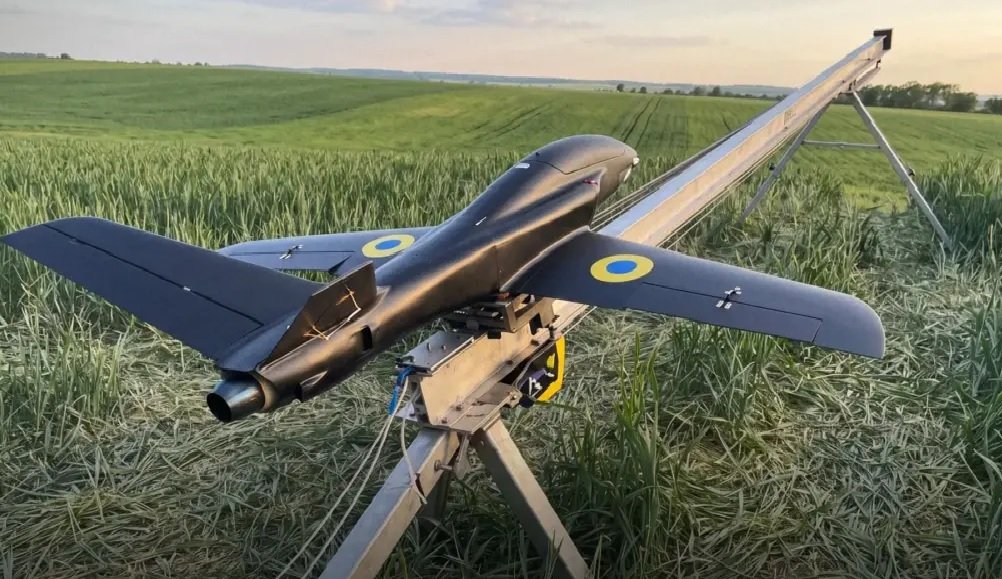
World
KYIV, Ukraine — Ukraine’s Defence Forces have added Alexa Spatium, the country’s first domestically developed jet-powered drone interceptor, to their arsenal, the Ministry of Defence announced. Developed by Ukrainian engineers, the high-speed unmanned aircraft is designed to detect and destroy small aerial, ground and surface targets in combat conditions. Its main purpose is to intercept Russian one-way attack drones, including the Geran-3, Geran-4, Geran-5 and Shahed-131. It can also engage reconnaissance drones, helicopters and other individual targets. Alexa Spatium is powered by a turbojet engine, unlike conventional propeller-driven drones. According to the ministry, the engine provides a substantial combat radius, rapid altitude gain and a flight envelope covering low to medium flight levels. During testing, the interceptor met the tactical and technical specifications stated by its manufacturer. The aircraft measures approximately 1.5 metres by 1.7 metres and has a lightweight, durable composite airframe designed to provide manoeuvrability for sharp turns while maintaining controllability. It combines a high maximum speed with a low minimum speed to allow fuel conservation when required. For target detection, Alexa Spatium uses television and infrared search-and-sighting systems. It can fly to pre-programmed coordinates or operate under direct real-time guidance and has secure control and video-transmission systems. The interceptor can carry different warheads, including high-explosive fragmentation, shaped-charge and thermobaric warheads, allowing it to be configured for different targets. The system is launched from a mobile catapult and can be prepared and launched within several minutes with minimal site preparation. Preparation and launch can be conducted remotely, reducing personnel requirements at the operating position. Its modular and highly automated design allows all components to be transported in a standard pickup truck. If the interceptor does not complete its mission or engage a target, it is designed to return to the launch site for reuse. The Ministry of Defence said Alexa Spatium was developed for rapid response, fast deployment and swift mission execution. The announcement comes as Ukraine expands domestic unmanned-aircraft production. Since the beginning of 2026, the ministry has codified and authorised 413 unmanned aircraft systems for use by the Defence Forces, with almost all manufactured domestically. The manufacturer of Alexa Spatium has not been disclosed.
Read More → Posted on 2026-08-21 14:14:16
U.S
WASHINGTON — The U.S. Department of State has approved a potential $4.5 billion Foreign Military Sale to Qatar covering up to four Boeing KC-46A Pegasus aerial refueling aircraft and a large package of related equipment and support. The approval was announced on August 20, 2026, and the proposed sale has been notified to the U.S. Congress. The notification authorizes the possible sale but does not represent a final contract. The quantities and total cost could change during negotiations, and Congress has the opportunity to review the proposal. Aircraft and Equipment Package Under the proposed deal, Qatar would acquire up to four KC-46A aircraft along with eight Pratt & Whitney PW4062 turbofan engines. Four engines would be installed on the aircraft, while four would be provided as spares. The package also includes: 10 AN/ALR-69A radar warning receivers, including four installed and six spares 15 Guardian Laser Transmitter Assemblies for Large Aircraft Infrared Countermeasure (LAIRCM) systems Eight LAIRCM system processor replacements Missile warning sensors Cartridge and propellant actuated devices Control interface units User data module cards Electronic warfare database support KIV-77 cryptographic modules and KY-100M terminals AN/PYQ-10 simple key loaders AN/APX-119 Identification Friend or Foe transponders Precision navigation systems Aircraft components, parts and spare parts Support equipment and training aids Technical documentation and personnel training Logistics support and other related services The proposed package is therefore considerably broader than the four aircraft themselves, covering the equipment, training, spares and support required to operate and maintain the KC-46A fleet. State Department Rationale The State Department said the proposed sale would support U.S. foreign policy and national security objectives by improving the security of Qatar, which it described as a strategic regional partner. According to the department, the KC-46A acquisition would increase Qatar's ability to respond to current and future threats, while improving interoperability with U.S. and allied forces and reinforcing Qatar's role in regional security. The department also determined that Qatar would be able to absorb the proposed equipment and services into its armed forces. It said the sale would not alter the basic military balance in the region and would have no adverse impact on U.S. defense readiness. Implementation would not require additional U.S. government or contractor representatives to be assigned to Qatar. KC-46A Capability The Boeing KC-46A Pegasus is a multi-role aerial refueling aircraft based on the Boeing 767 platform. In addition to aerial refueling, it can perform cargo and aeromedical evacuation missions. Boeing says the aircraft can use both a refueling boom and hose-and-drogue systems and is designed to support U.S., allied and coalition aircraft compatible with international aerial-refueling procedures. The aircraft also incorporates defensive systems intended to provide warning and protection against threats. Qatar's proposed configuration specifically includes radar warning receivers, missile warning sensors and LAIRCM equipment. If the proposed purchase is completed, Qatar would establish its own KC-46A aerial refueling capability. The aircraft is already operated by the United States, Japan and Israel, making Qatar a potential additional international operator. Boeing delivered the first KC-46A to Israel in May 2026, while Japan became the program's first international customer. Strategic Importance for Qatar Qatar hosts Al Udeid Air Base, a major U.S. military installation in the Middle East and a key part of the U.S.-Qatar security relationship. The country has also played a diplomatic role in regional negotiations, including efforts involving the United States and Iran and other Middle Eastern conflicts. The proposed KC-46A purchase would give Qatar an aerial refueling platform that can support its own military aircraft while also providing additional interoperability with U.S. and allied forces. The sale comes amid continuing U.S.-Qatar security cooperation and a broader regional security environment in which Gulf states have been strengthening their defense capabilities. Contractors and Next Steps The principal contractors identified for the proposed sale are Boeing, Pratt & Whitney Military Engines, RTX Corporation, and Northrop Grumman. The U.S. government said it is not aware of any offset agreement proposed in connection with the potential sale. Any such arrangement would be determined through negotiations between Qatar and the contractors. The $4.5 billion notification is therefore not a finalized purchase agreement. Further negotiations will determine the final quantities, cost, schedule and implementation details, subject to the U.S. congressional review process.
Read More → Posted on 2026-08-21 14:00:45
Ukraine Expands Defense Production in Europe With Drone Plant in Finland and Ammo Plant in Lithuania
Europe
HELSINKI/VILNIUS — Ukrainian defense companies are expanding production in Europe through separate agreements to manufacture Ukrainian-designed drones in Finland and ammunition in Lithuania. Airlogix Plans Drone Production in Finland Ukrainian drone manufacturer Airlogix signed a Letter of Intent with Finnish company Innokas on August 19, 2026, to establish production of Ukrainian-designed unmanned aerial systems in Finland. The agreement was signed at the DALO Industry Days defence exhibition in Denmark by Airlogix Chief Investment and Financial Officer Oleksandr Androshchuk and Innokas CEO Janne Kostamo. The partnership is part of the Build with Ukraine initiative, which aims to expand production of Ukrainian unmanned systems in Europe and increase supplies to Ukraine’s defence forces. Airlogix will provide its technologies and engineering solutions, while Innokas will handle localization, industrial scaling and manufacturing of regulated products in Finland. The companies plan to develop the legal, technical and production framework and are considering establishing a joint venture. No production capacity, investment amount or operational timeline has been announced. Finnish reports have indicated that facilities could be located in the Oulu region, although this remains unconfirmed. A government-level technology transfer agreement would also be required before production begins. Airlogix was founded in Kyiv in 2020 and initially developed civilian cargo drones before shifting to military systems after Russia’s full-scale invasion in 2022. Its main product is the Gor (GOR) tactical reconnaissance UAV, which company data lists as having up to four hours of flight time, a 3,500-metre operating altitude, 260 km flight distance and around 80 km tactical range. The UAV is used by Ukrainian forces for artillery adjustment and target detection. In July 2026, Airlogix also agreed with Czech PBS Group to localize production of PBS turbine engines in Ukraine for drones used by Ukraine’s defence forces. The company is also working with Canada’s Sentinel Research and Development to produce and supply drones to Ukraine under an agreement between the Canadian and Ukrainian defence ministries. DEMZ to Build Ammunition Plant in Lithuania Separately, Ukrainian defense company DEMZ (Dnipro Electromechanical Plant) signed an investment agreement with Lithuania on August 14, 2026. Lithuanian Economy Minister Edvinas Grikšas and DEMZ chief Jevhen Muzykin signed the agreement in Vilnius. DEMZ will manufacture ammunition and components at two locations. Metal shell components will be produced at existing facilities in the Alytus Industrial Park, while a new assembly plant will be built near Balbieriškis in the Prienai district, on a roughly 30.6-hectare site in Ąžuolai village. Construction is scheduled to begin in autumn 2026, with production expected to start by the end of 2027. The project is expected to create up to 450 jobs, and its products will meet NATO standards. Initial supplies are intended for the Ukrainian Armed Forces, with potential later supplies to NATO countries and other allies. The exact investment value has not been disclosed. Lithuania’s Ministry of Defence has also signed a related memorandum of understanding with DEMZ. DEMZ employs about 4,000 people and shifted to military production after 2022. The two agreements reflect Ukraine’s broader effort to expand defense production through partnerships and manufacturing facilities in European countries, increasing industrial capacity while strengthening defense-industrial cooperation with European partners.
Read More → Posted on 2026-08-21 13:48:47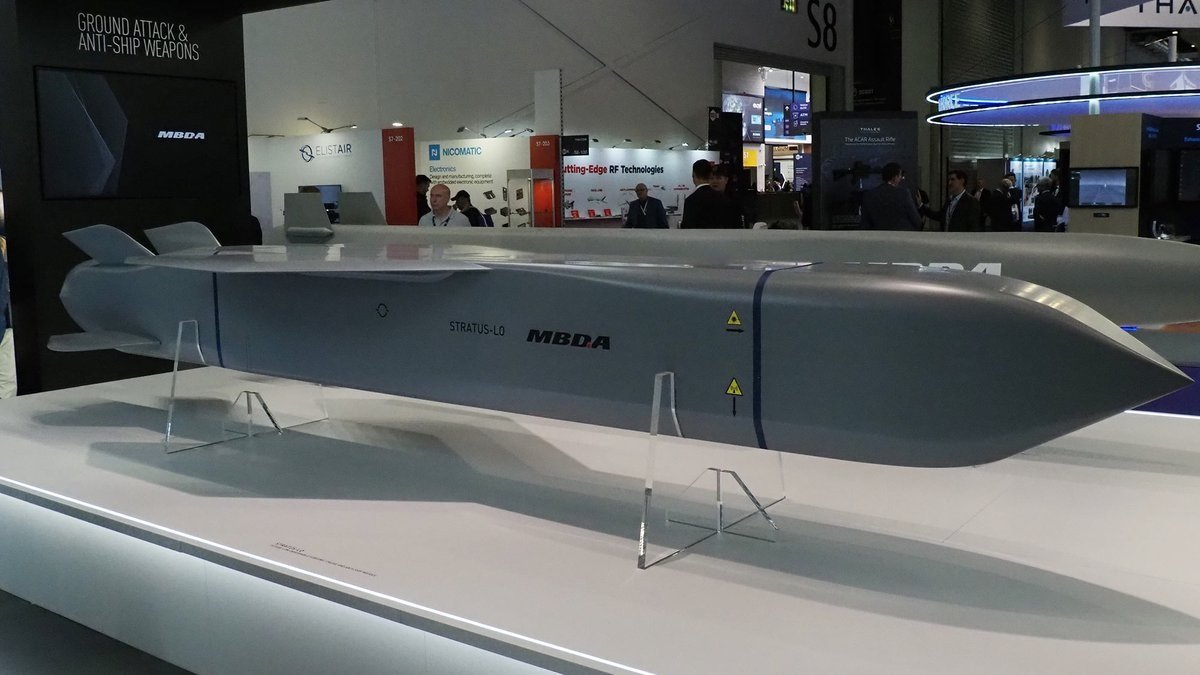
Europe
LONDON — The UK’s Stratus future cruise and anti-ship missile programme is moving toward its Demonstration Phase, with the first full-scale system tests scheduled to begin in 2028, the Ministry of Defence has confirmed. Stratus, formerly known as the Future Cruise/Anti-Ship Weapon (FC/ASW) programme, is being developed by the UK, France and Italy and is led by MBDA. The programme was renamed Stratus at the DSEI defence exhibition in London in September 2025. The weapon is intended to replace the capabilities provided by the Storm Shadow cruise missile for deep land strikes and the Harpoon for anti-ship warfare. Storm Shadow has an approximate range of 560 km, while Harpoon variants typically reach around 220 km. UK Defence Minister Luke Pollard said the programme remains on schedule and that its weapons and subsystems are continuing to mature. He confirmed that testing of the airframe design, engine demonstration, warhead and seeker performance has already been completed. “The first full scale system tests are scheduled from 2028,” Pollard said in a parliamentary response. The Ministry of Defence has not disclosed Stratus’ exact operational range because it is classified. Pollard said the range of the Stratus LO (Low Observable) variant is “significantly greater” than the Storm Shadow and Harpoon weapons it will replace. Previous independent reporting has indicated a possible ship-launched range of around 1,000 km for the LO variant, but this has not been officially confirmed. Two Stratus Variants The programme consists of two complementary missiles. Stratus LO is a subsonic, low-observable missile designed for long-range strikes against land and naval targets. It is led by the UK. Stratus RS (Rapid Strike) is a supersonic, ramjet-powered and highly manoeuvrable missile led by France. It is intended for anti-ship missions, suppression of enemy air defences and related roles. Integration With UK and European Platforms The Ministry of Defence has confirmed that Stratus will be integrated across air and maritime platforms, including Eurofighter Typhoon, Dassault Rafale and selected naval platforms such as the Royal Navy’s Type 26 frigates. Stratus LO is also intended to meet the Royal Navy’s Future Offensive Surface Weapon requirement, including long-range anti-ship and land-attack capabilities compatible with the Mk 41 Vertical Launch System. The UK is introducing eight Type 26 anti-submarine warfare frigates, making the planned integration of Stratus an important part of their future offensive weapon capability. The UK has also allocated £1.4 billion over four years to the Stratus programme. The investment is part of the UK’s wider complex weapons programme and builds on defence cooperation between Britain and France under the Lancaster House framework, later expanded to include Italy. With full-scale testing scheduled from 2028, Stratus is now moving from airframe, propulsion, warhead and seeker development toward complete system demonstration. Earlier planning indicated maritime-launched service could begin around 2028, while air-launched service was expected in the early 2030s, although final in-service dates remain subject to programme progress.
Read More → Posted on 2026-08-21 13:33:16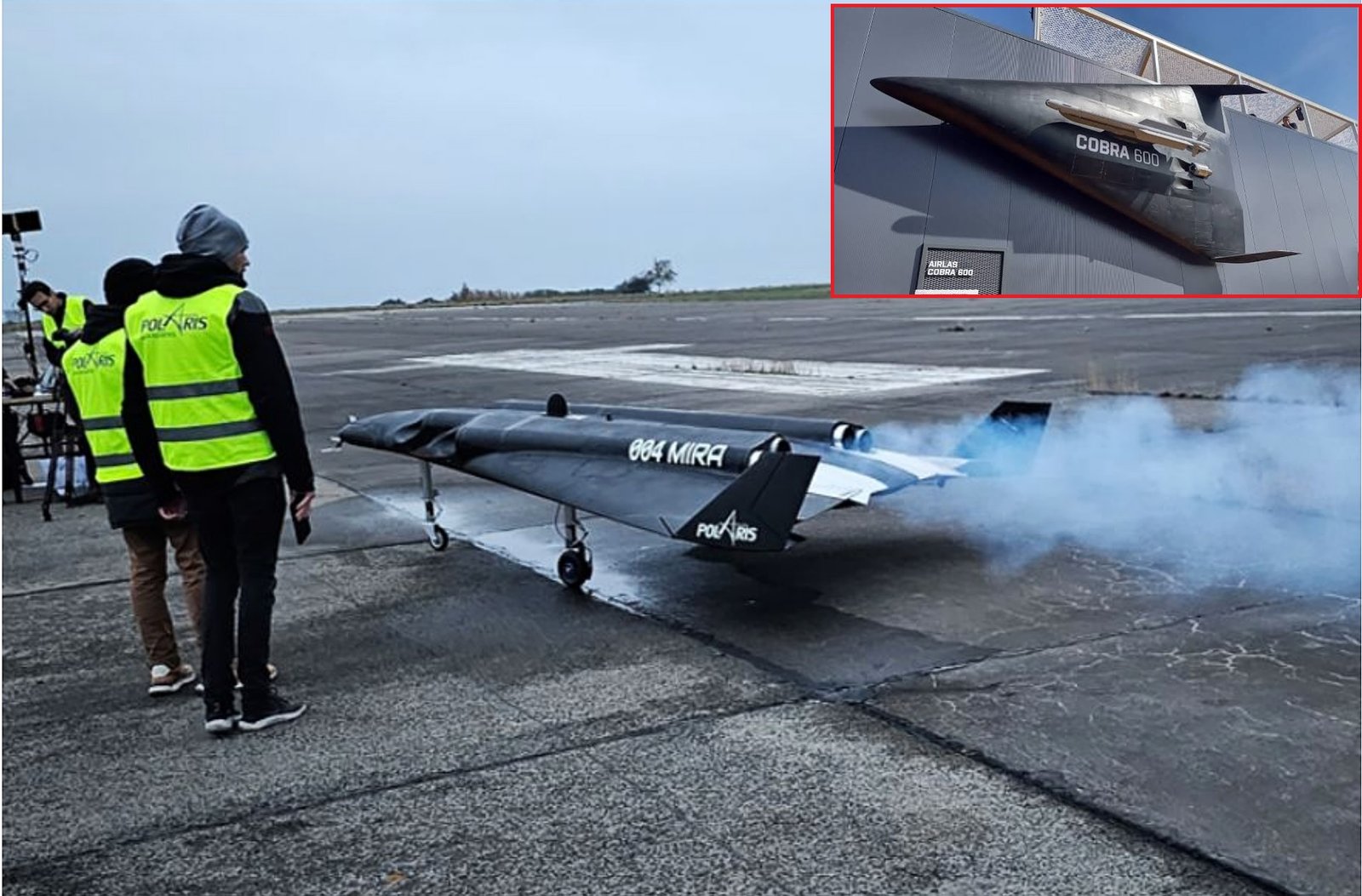
Europe
BREMEN, Germany — German aerospace company POLARIS Spaceplanes has completed the first flight of its COBRA uncrewed aircraft prototype, flying more than 20 kilometers (12 miles) on August 21, 2026. The company described the flight as “perfectly smooth” and said additional test flights are planned in the coming months. Video of the maiden flight is expected to be released soon. The COBRA has a takeoff mass of more than 600 kilograms and is being developed with German defense company Diehl Defence under the Airborne Launching and Attack System (AirLAS) program. The system is designed to carry and launch IRIS-T air-to-air missiles from an unmanned airborne platform. AirLAS is intended to provide a mobile, forward-deployed air-defense capability by moving the missile launch point closer to an approaching target. The system is designed for engagements involving aircraft, drones, cruise missiles and helicopters. POLARIS and Diehl Defence signed an exclusive cooperation agreement for the project at the Paris Air Show in June 2025. The companies publicly unveiled the Cobra 600 demonstrator at the ILA Berlin Air Show in June 2026. The six-meter-long Cobra 600 uses a delta-wing, flying-wing-style airframe with wingtip stabilizers. It was displayed carrying one IRIS-T missile on a top-mounted pylon. The demonstrator uses two JetCat P1000-PRO micro turbojet engines, each producing just under 250 pounds of thrust, while the airframe has intake ports for two additional engines. The aircraft has retractable tricycle landing gear and is designed to operate from conventional runways as well as suitable sections of highway. The system is designed to be reusable when a mission ends without launching its missile, but it can also be used as a one-way asset when required. Reports associated with the Cobra 600 have put its flight range with a combat payload at around 250 to 400 kilometers. The IRIS-T is a short-range, infrared-guided air-to-air missile developed by Diehl Defence and used by multiple European and allied air forces. It weighs 87.4 kilograms, has a stated top speed of Mach 3 and an operational range of about 25 kilometers when launched from an aircraft. Ground-launched IRIS-T SLS and SLM variants have ranges of roughly 12 kilometers and 40 kilometers, respectively, according to the figures provided for the systems. By carrying the missile on an unmanned aircraft, AirLAS is intended to overcome some of the geographic limitations of stationary ground launchers by positioning the launch point closer to the target before firing. POLARIS, based in Bremen, originally focused on reusable hypersonic spaceplanes. The company describes COBRA as a scaled-down derivative of that work adapted for defense applications. Its other programs include the AURORA multipurpose spaceplane, while BAAINBw has also funded POLARIS work on in-flight refueling technology intended to extend the range and payload capacity of its vehicles. AirLAS does not currently have a confirmed procurement contract from the German military or another government. Diehl Defence has said at least one unnamed allied country has expressed investment interest, but no formal purchase agreement has been disclosed.
Read More → Posted on 2026-08-21 13:21:06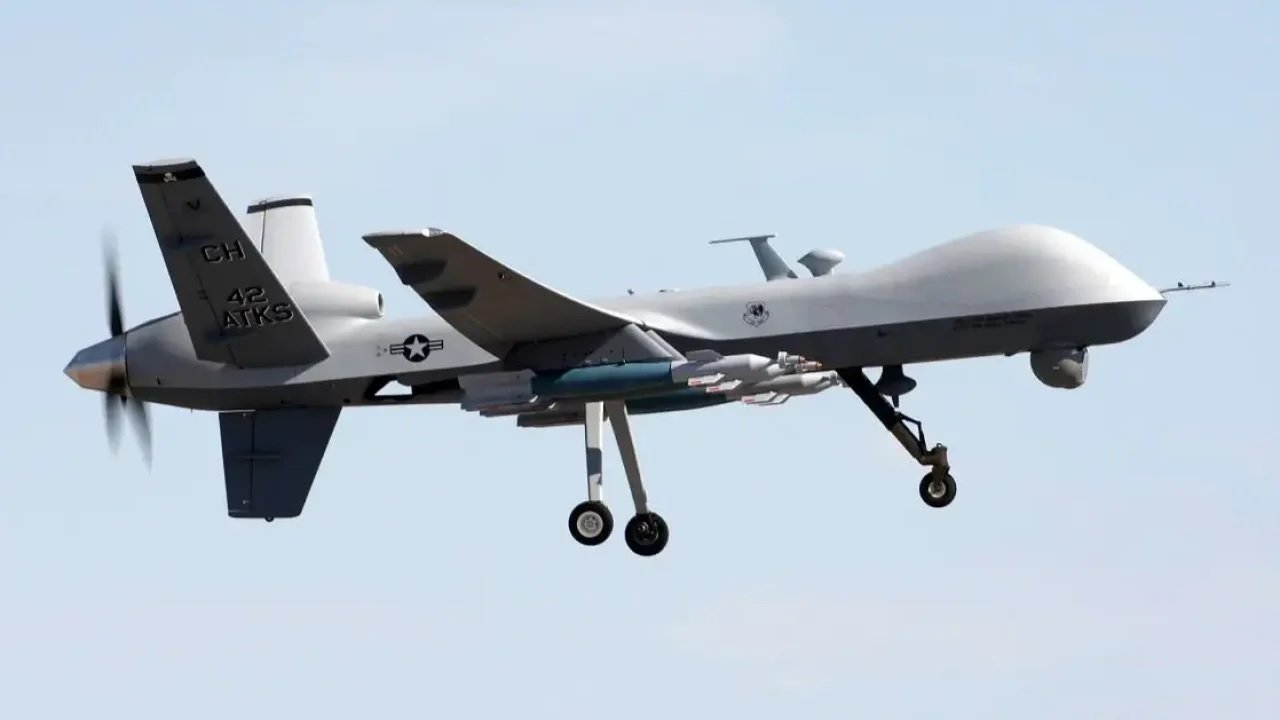
U.S
Middle East — U.S. forces destroyed a $23.6 million MQ-9A Reaper after the drone made a hard landing during a nearly 19-hour mission in the Middle East on August 31, 2025. The incident occurred at an undisclosed location within the U.S. Central Command area of responsibility. The MQ-9A, tail number 13-4245, was assigned to the 432nd Wing at Creech Air Force Base, Nevada, and remotely operated by a pilot and sensor operator from the 89th Attack Squadron at Ellsworth Air Force Base, South Dakota. The Reaper was returning to a regional base when its engine suddenly shut down. Flight data showed a brief fuel-flow spike followed by a complete drop to zero. Two automatic engine restart attempts and two manual attempts by the crew all failed. The crew kept the unpowered aircraft airborne for nearly 10 minutes while following emergency procedures. The crew then selected a relatively flat, isolated desert area for a forced landing away from population centers. The landing was attempted with the landing gear down, but communication was lost below 2,000 feet. The aircraft reached the selected area, but the impact collapsed the landing gear. U.S. forces recovered sensitive equipment from the wreckage and demolished the remaining parts on site to prevent sensitive technology and intelligence materials from potentially falling into enemy hands. No injuries, fatalities or civilian property damage occurred. Investigation Finds Electrical Failure The Air Combat Command Accident Investigation Board report, released on August 13, 2026, determined that the most likely cause was internal electrical wire chafing inside the fuel control unit. According to the investigation, a frayed wire allowed enough voltage to inadvertently close the electrical fuel shutoff valve, cutting fuel to the engine. General Atomics reproduced the sequence in laboratory testing by closing the valve, matching the flight data recorded during the incident. The aircraft was on its first flight after a complete engine replacement during a routine 3,000-hour inspection. During the maintenance, contractors replaced a chafed propeller governor cable, installed an overhauled fuel control unit because of a missing log card, and repaired a leaking compressor seal. The inspection did not include removal of the fuel control unit's top cover, despite the manufacturer having identified known cases of sensor-wire chafing in the component. However, investigators found no evidence that the engine replacement or related maintenance caused the wire failure. The board also identified gaps in planning, briefing and written procedures. MQ-9 maintenance rules do not require a dedicated post-engine-replacement check flight, unlike procedures for most manned Air Force aircraft. The crew was also not informed that the Reaper had received a new engine. The report listed these procedural and communication issues as relevant factors but did not blame the maintenance work for the failure. The incident is one of multiple MQ-9 losses recorded in the region during the previous 18 months.
Read More → Posted on 2026-08-21 13:09:58
U.S
HOHENFELS, Germany — The U.S. Army is preparing to end the specialized role of an experimental drone battalion in Europe that was created to study lessons from the war in Ukraine and improve how unmanned systems are used in combat formations. The decision was first reported by The Wall Street Journal, citing a U.S. Army representative, and was also confirmed by Military Times and CBS News. The battalion, designated the 3rd Battalion, 504th Parachute Infantry Regiment, was formed in January 2026 from elements of the 173rd Airborne Brigade. It has about 600 soldiers and was established to examine how unmanned aerial vehicles (UAVs) and unmanned ground vehicles (UGVs) could be integrated into brigade-level operations. The unit was modeled in part on Ukraine's use of specialized drone formations. Soldiers from the 173rd Airborne Brigade had already been experimenting with and building their own systems, including first-person-view drones, before the battalion was formally activated. Final Mission in Germany The battalion is scheduled to participate in the Saber Junction exercises at Hohenfels, Germany, in August and September 2026. After the exercise, it will submit its findings to Army command for further analysis. The findings are expected to contribute to future Army planning, experimentation and decisions on integrating unmanned systems into larger formations. After completing the study, the battalion will end its specialized unmanned-assault role and return to standard airborne infantry duties as part of a Mobile Brigade Combat Team (Airborne). An Army representative said the service remains committed to accelerating U.S. capabilities in drone warfare but did not provide details about what organization or structure could replace the experimental battalion. Part of a Broader Army Restructuring The decision is part of Acting Chief of Staff of the Army Gen. Christopher LaNeve's broader “back-to-basics” approach. LaNeve assumed the position after Gen. Randy George was dismissed in April 2026. His strategic guidance, known as “Army Azimuth,” places emphasis on core warfighting tasks, homeland defense and power projection. The Army is also making wider structural changes. A Multi-Domain Task Force responsible for cyberspace and electronic warfare is being moved from Europe to South Korea. The Army has also established the 7th Infantry Division (Multi-Domain Command-Pacific). In another major change, the U.S. III Armored Corps, which had previously focused on strengthening the Army's European presence, has been reassigned to the newly established Western Hemisphere Command. Internal Disagreements The rapid organizational and personnel changes have also produced disagreements within the Army's senior leadership. Gen. LaNeve and Secretary of the Army Daniel Driscoll have disagreed over the dismissal of senior commanders and proposed changes to physical fitness standards. Separately, U.S. military leadership recently canceled scheduled presentations by senior Ukrainian officers at the Maneuver Center of Excellence at Fort Benning. The presentations were intended to provide additional insight into lessons from the Ukraine war, but officials did not give a specific reason for the cancellation. The experimental drone battalion's final exercise and subsequent report will provide the Army with another set of findings as it determines how drone and ground-robot technologies should be incorporated into future force structures.
Read More → Posted on 2026-08-21 13:01:42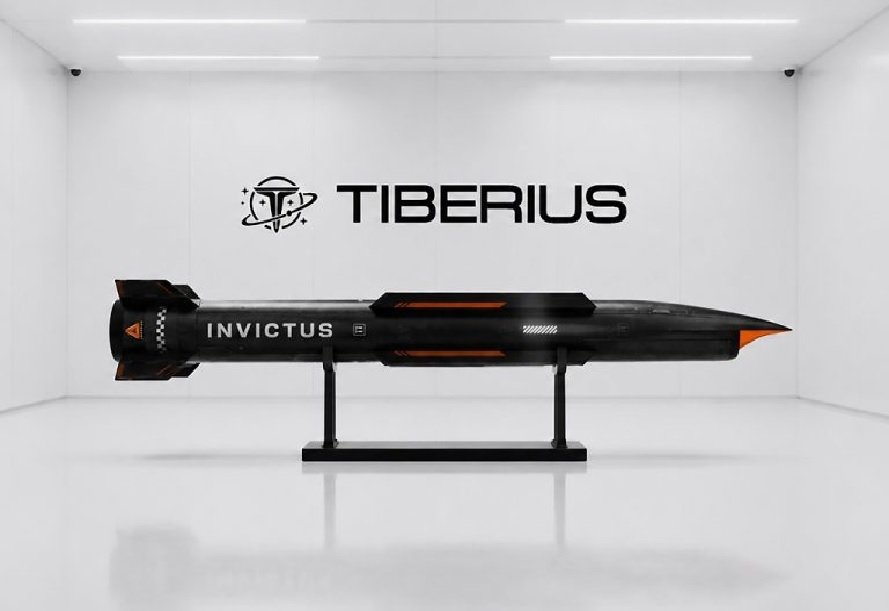
Tiberius Aerospace’s Invictus Enters Formal Engineering Phase – Designed for Mach 3 and 200 km Range
U.S
NEWPORT BEACH, California — Tiberius Aerospace has advanced its Invictus long-range precision strike system from early laboratory development into formal engineering Test & Evaluation (T&E), bringing the program closer to deployment. The company announced on August 20 that testing will focus on the weapon’s propulsion, flight performance, guidance, platform integration and manufacturability. Invictus-200 Capabilities Invictus is a tube-launched, multi-mission weapon based on an open, modular architecture. It is designed for integration with multiple platforms, including autonomous vehicles operating on land and at sea and vertical launch systems such as Tiberius’ autonomous “Vault” containerized launchers. The Invictus-200 combines an integral solid-fuel booster with a ramjet engine. Tiberius says it can reach speeds of up to Mach 3, strike targets at ranges of up to 200 kilometers, and carry a 10–15 kilogram payload. Depending on the guidance configuration, the system is designed to achieve a 5.5-meter circular error probable (CEP). Formal propulsion testing is already underway at Purdue University’s Zucrow Laboratories, where direct-connect tests of the Invictus ramjet engine have demonstrated reliable operation using Jet-A aviation fuel across all conditions tested so far. Experience From Sceptre Program The development of Invictus has been accelerated by Tiberius Aerospace’s earlier Sceptre program, a 155mm guided ramjet artillery munition. Tiberius launched its first Sceptre munition in May 2025. In April 2026, the company successfully demonstrated liquid-fueled ramjet ignition during live-fire testing in New Mexico. The projectile survived launch forces of approximately 16,000 Gs from a standard howitzer. The company said data and technical experience from Sceptre’s propulsion, flight performance and guidance development helped move Invictus into formal engineering testing. Designed for Production and Future Upgrades Tiberius is developing Invictus as Western countries face pressure to replenish long-range precision-strike inventories. The company said the U.S. Army expended virtually its entire stockpile of ATACMS and Precision Strike Missiles during a five-month conflict with Iran, while European and NATO missile inventories have also faced strain. The company says Invictus is intended to address both capability and production requirements through an architecture designed for scalable manufacturing. Tiberius is also using its proprietary GRAIL (Generative Real-time Artificial Intelligence Lethality) platform. The company says GRAIL uses “Cost Effect Lethality Scores” to evaluate weapons and connects program requirements with domestic and allied suppliers capable of producing components and systems at high volume. Chad Steelberg, founder and CEO of Tiberius Aerospace, said the move into formal engineering T&E is a major step toward turning Invictus into a deployable capability. He said Invictus and Sceptre were designed from first principles for cost-effective lethality, high-volume production and an open architecture that can be upgraded without replacing the entire system. Tiberius Aerospace is based in Newport Beach, California, with a UK entity registered in London. The company continues development of both Sceptre and Invictus through its GRAIL platform.
Read More → Posted on 2026-08-21 11:55:30
U.S
WASHINGTON — The U.S. Navy has selected Zone 5 Technologies to develop a maritime strike variant of the AGM-188 Rusty Dagger cruise missile under a $65 million agreement. The contract is part of the Coalition Heterogeneous Affordable Offensive Strike (CHAOS) program, which aims to rapidly field affordable, modular and scalable precision-strike weapons for the United States and its international allies. CHAOS is focused on weapons capable of engaging land targets and maneuvering maritime targets, while providing adaptable and exportable surface-launched strike capabilities. “Zone 5 is proud to partner with the Navy on CHAOS and deliver industry-best scalable maritime strike capabilities to the U.S. and our allies,” said Thomas Akers, CEO of Zone 5 Technologies. He said the program will provide coalition partners with a credible and affordable maritime strike capability. Capt. Sarah Abbott, program manager for the Navy's Precision Strike Weapons program office PMX-201, said advanced area-denial systems are creating challenges for coalition and allied forces seeking modern and affordable anti-ship capabilities. “CHAOS closes this capability gap,” Abbott said. The $65 million Other Transaction Agreement was facilitated by CMG Networks on behalf of the Naval Aviation Systems Consortium. Under the agreement, Zone 5 will design, build, test and deliver the CHAOS variant of the AGM-188 Rusty Dagger. Zone 5 will work with PAE Munitions and the Navy's PMX-201 office. The award is the second contract under the CHAOS initiative, following an earlier award to CoAspire for its Rapidly Adaptable Affordable Cruise Missile-Extended Range (RAACM-ER). The AGM-188A Rusty Dagger was initially developed for the U.S. Air Force's Extended Range Attack Munition (ERAM) program. It is a roughly 500-pound-class, subsonic cruise missile. The provided program information states that the weapon has been deployed in Ukrainian service, where it has struck targets with high precision while maintaining high survival rates in Russian airspace. Zone 5 plans to use this experience as it develops the new maritime variant for U.S. military services and international partners. Founded in 2011, Zone 5 Technologies is an aerospace engineering and production company owned by Kongsberg. The company develops modular, open-architecture counter-UAS interceptors and affordable ground- and air-launched effects. It employs more than 500 engineers, technicians and support personnel across the United States, with major manufacturing operations in California, Texas and Ohio.
Read More → Posted on 2026-08-21 11:32:04
World
Callao, Peru — HD Hyundai Heavy Industries (HD HHI) and Peru’s state-owned shipyard SIMA Perú have launched BAP Chimbote, the second logistics and landing support ship (BALOG) for the Peruvian Navy. The launch took place on August 18, about one week after the launch of the lead vessel, BAP Talara, on August 8. Although BAP Chimbote was launched second, it was the first of the two vessels to be built and carries pennant number 159. BAP Talara carries pennant number 160. Both ships are named after major Peruvian port cities and are designed for personnel and cargo transport, logistics support, disaster relief and emergency-response missions. The launch ceremony was attended by Peruvian President Keiko Fujimori, Defense Minister Rafael Belaunde Llosa, Peruvian Navy Commander General Admiral Federico Javier Bravo de Rueda Delgado, South Korean Ambassador to Peru Choi Jong-uk, and HD HHI President Won-ho Joo. “This launch of B.A.P. Chimbote represents a significant achievement made possible by the combined efforts of Team Korea and close public-private cooperation,” Won-ho Joo said. “We will continue to strengthen the competitiveness of K-Naval solutions and diversify our global export markets.” Ship specifications and role BAP Chimbote is based on HD HHI’s HDL-1400 Landing Craft Unit (LCU) design. It has a full-load displacement of approximately 1,646 tons, is 58.9 meters long and 13.2 meters wide, with a maximum speed of 10 knots. The ship is powered by two Caterpillar C18 diesel engines producing 450 HP and has an estimated range of 1,500 nautical miles. Its payload includes military vehicles, up to 21 shipping containers, 211 cubic meters of freshwater and 223 cubic meters of ship fuel. It also has a 20-ton-capacity crane and a rear aviation deck capable of supporting helicopter take-off and landing operations. The vessels are intended not only for military logistics but also for national emergencies. They can transport heavy rescue equipment, emergency supplies, fuel and potable water to isolated coastal areas, including locations where conventional infrastructure has been damaged or is unavailable. $463 million four-vessel program The ship is being built under an agreement signed by HD HHI and SIMA Perú on April 16, 2024, after HD HHI was selected as the preferred bidder on March 27, 2024. The $463 million contract covers four vessels: one 3,400-ton frigate, one 2,200-ton offshore patrol vessel (OPV) and two 1,500-ton LCUs. It represents the largest order by vessel volume for a Korean shipbuilder in the Latin American defense industry. HD HHI provides the vessel designs, equipment and material packages and technical support, while SIMA carries out block fabrication, assembly, outfitting, testing and sea trials. With HD HHI support, SIMA is scheduled to construct and deliver all four vessels to the Peruvian Navy by 2029. The project also includes the transfer of ship-design, modular-manufacturing and quality-control capabilities to support Peru’s domestic shipbuilding industry. The effort has received support from South Korea’s Ministry of National Defense, DAPA, the Korean Embassy in Peru and KOTRA. HD HHI is also carrying out the basic design of the Peruvian Navy’s next-generation submarine, with plans to proceed to construction of the first submarine after completion of the design. According to HD HHI’s March 2024 announcement, Peru has also planned potential future orders for five frigates, four OPVs and two landing ships over the next 15 years, with HD HHI seeking to work with the Peruvian Navy on its longer-term fleet modernization.
Read More → Posted on 2026-08-20 16:50:58
World
Kyiv, Ukraine — Russian forces carried out a large-scale strike on the night of August 19–20 against Kyiv and Kyiv Oblast using precision-guided weapons launched from ground-, air- and sea-based platforms, along with long-range UAVs. The Russian Defence Ministry said the targets included military-industrial facilities, logistics infrastructure and weapons and fuel storage sites. OSINTWarfare also reported details of the claimed targets. In Kyiv, the reported targets included a Fire Point LLC facility, which the Russian ministry said produces components for long- and medium-range strike UAVs and assembles and stores boosters used in Flamingo cruise missiles. The Ukrspetsystems commercial and warehouse complex was also targeted. According to the ministry, it produces UAV components, conducts large-component assembly of fixed-wing UAVs and stores UAVs. The Antonov State Enterprise was another reported target. The Russian Defence Ministry said it produces the long-range An-196 “Lyutyi” UAV and develops and manufactures various types of manned aircraft. An ammunition warehouse reportedly storing M-900 thermobaric aerial bombs, anti-tank mines and ammunition for Baba Yaga-type UAVs was also struck. In Kyiv Oblast, Russia reported strikes on the Martusivka Transport and Logistics Center, operated by Zamler Group. The facility was described as storing and distributing dual-use goods used in UAV, robotic-system and electronic-warfare production. A Brovary fuel and lubricant warehouse was also targeted; Russia said it contained up to 8,000 cubic metres of fuel intended for the Ukrainian Armed Forces. The Russian Defence Ministry additionally said warehouses containing military equipment were hit on August 19 at the ports of Chornomorsk and Pivdennyi. Ukrainian Air Defence Response Ukraine's Air Force said the attack began around 18:00 on August 19 and primarily targeted the Kyiv region. It reported the use of ballistic-trajectory missiles, including Oniks, Zircon, Iskander-M and S-400, as well as 36 Kh-101/Iskander-K/Kh-59 missiles, eight Kalibr cruise missiles, two Banderol loitering munitions and 168 Shahed-type, Gerbera and Parodiya drones. Nearly half of the Shaheds were reported to be jet-powered. Ukraine said its aircraft, anti-aircraft missile units, electronic warfare systems, unmanned systems units and mobile fire groups shot down or suppressed 31 cruise missiles, all eight Kalibr missiles, both Banderol munitions and 145 drones. Hits were recorded at 28 locations, with debris from downed targets falling at two locations. Casualties and Damage Ukrainian officials reported deaths and injuries in Kyiv and the surrounding region. Kyiv Mayor Vitali Klitschko said at least 12 people were killed and more than 30 injured in the capital. The upper floors of a nine-storey residential building in Solomianskyi district were destroyed, and Klitschko declared August 21 a day of mourning. Other reports put the overall death toll in Kyiv and the region at 13–16 people, with around 40 wounded. Residential buildings, a school, children's hospital, kindergarten, non-residential facilities and warehouses were damaged in the Sviatoshynskyi, Solomianskyi and Darnytskyi districts. Fires were reported at industrial and warehouse sites. Power outages affected tens of thousands of households. DTEK said electricity had been restored to more than half of approximately 90,000 homes that lost power. In Brovary district, one person was killed and an industrial facility was damaged, while additional damage and injuries were reported in Boryspil district. More than 38,000 people, including over 2,000 children, sheltered in Kyiv's subway stations overnight. Emergency services continued working at strike locations. President Volodymyr Zelenskyy described the attack as one of the largest of the war and called for additional air-defence systems, citing shortages of interceptors capable of engaging ballistic missiles. The Russian Defence Ministry described the operation as a targeted strike on military production, storage and logistics infrastructure. Source : OSINTWarfare
Read More → Posted on 2026-08-20 16:39:31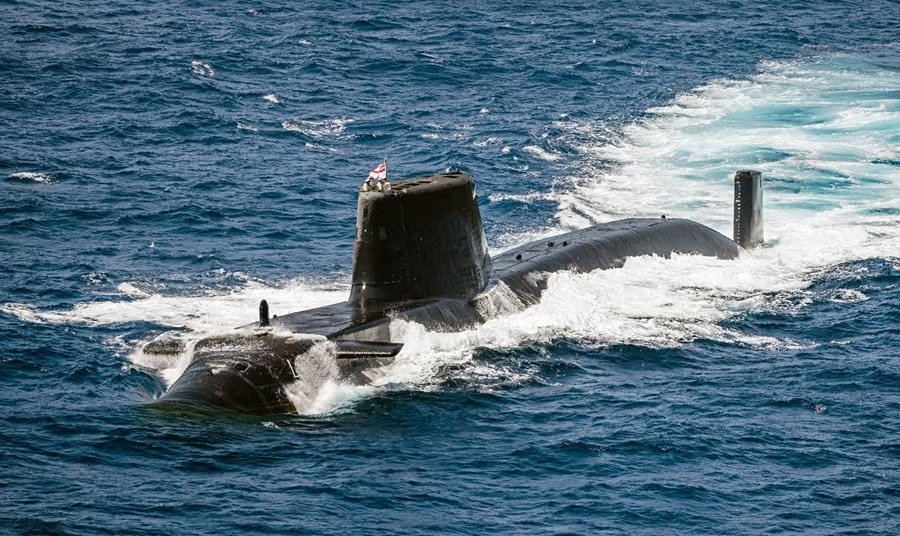
Europe
LONDON, United Kingdom — The United Kingdom plans to expand its fleet of nuclear-powered, conventionally armed attack submarines to as many as 12 under the AUKUS programme. The expansion will take place as the Royal Navy completes its seven-boat Astute-class programme and moves to the next-generation SSN-AUKUS class. The SSN-AUKUS submarines are expected to enter service from the late 2030s and will become the mainstay of the UK's future attack submarine fleet. The commitment to up to 12 boats was confirmed in the 2025 Strategic Defence Review and reaffirmed in the 2026 Defence Investment Plan, with the programme covered by a ring-fenced nuclear allocation. SSN-AUKUS is being developed by the UK, United States and Australia through the AUKUS partnership. It is based on a British design incorporating technology from all three countries. Both Britain and Australia will operate the class, while the programme will help Australia develop the industrial capability needed to support and eventually build its own submarines. The submarines will use nuclear propulsion but will be conventionally armed. The design is expected to incorporate US technology, including a vertical launching system (VLS) for land-attack missiles and shared combat systems. They will remain separate from the Dreadnought-class ballistic missile submarines, which will carry the UK's independent nuclear deterrent. The current Astute-class submarines protect the UK's nuclear-armed ballistic missile submarines during deterrence patrols and conduct wider defence and intelligence missions. Construction of the first UK SSN-AUKUS submarine is due to begin with steel-cutting at BAE Systems' Barrow-in-Furness shipyard in 2027. The Ministry of Defence aims to eventually reach a production rate of one new submarine every 18 months as capacity expands. The programme is part of a wider renewal of the UK's Defence Nuclear Enterprise, which manages hundreds of projects covering submarines, nuclear warheads, fuel and supporting infrastructure. Its portfolio includes two active submarine construction programmes, a future class in design, the Astraea replacement warhead programme and a new nuclear fuels programme. The UK has invested around £6 billion in critical infrastructure at Barrow and Derby to support continuous submarine production. Australia has committed £2.4 billion to expand capacity at the Rolls-Royce site in Derby, which will produce reactors for both British and Australian submarines. Four nuclear reactors are already under construction there. BAE Systems currently employs about 13,500 people at Barrow, while Rolls-Royce Submarines employs around 4,000 people. Babcock provides submarine maintenance and support at Devonport, while Sheffield Forgemasters produces specialised steel castings and forgings for submarine reactor cores. At peak, the SSN-AUKUS programme is expected to support around 21,000 jobs across the UK and generate multi-billion-pound investment in British industry. The wider Defence Nuclear Enterprise currently supports an estimated 47,600 jobs, with demand expected to rise to around 65,000 by 2030. Its supply chain includes more than 6,000 British companies. To meet future workforce requirements, the UK government and industry plan to double defence nuclear apprentice and graduate intakes, creating 22,000 apprenticeships and 9,000 graduate positions over the next decade. The AUKUS programme is intended to strengthen defence and industrial cooperation between the three countries, improve information and technology sharing, and increase supply-chain resilience while expanding the UK's capacity to build and support nuclear-powered submarines.
Read More → Posted on 2026-08-20 16:23:04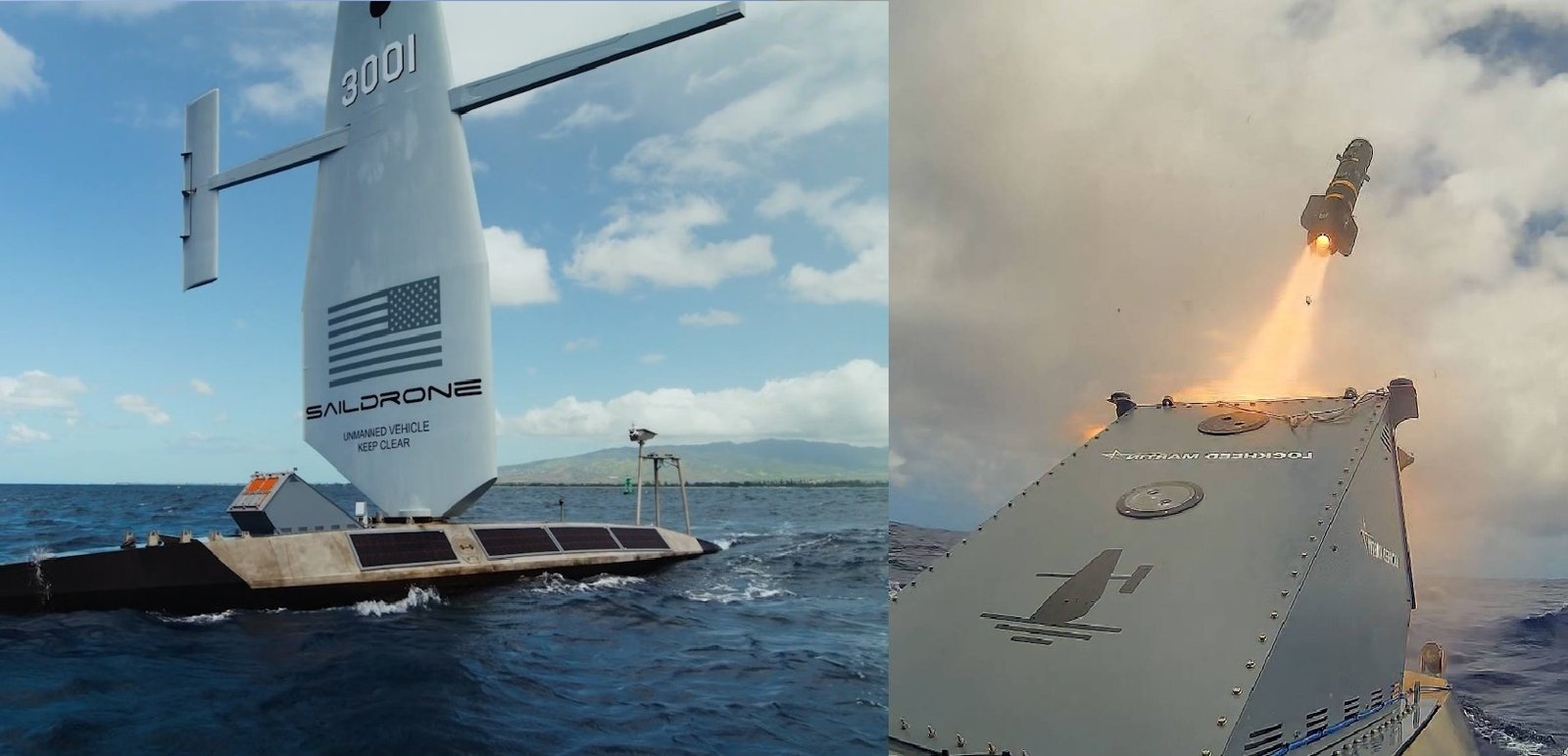
U.S
HAWAII — Saildrone and Lockheed Martin successfully launched two Joint Air-to-Ground Missiles (JAGM) from a Saildrone Surveyor unmanned surface vessel (USV) during the U.S. Navy’s Rim of the Pacific (RIMPAC) 2026 exercise off Hawaii. The test marked the first time missiles have been fired from a Saildrone platform. The demonstration was conducted under the U.S. Navy Fleet Experimentation Program (FLEX), with the Surveyor operating alongside the USS Theodore Roosevelt (CVN-71) Carrier Strike Group-9. The 20-meter USV was fitted with a JAGM Dual Launcher and integrated with the Navy’s Adjunct Remote Engagement System (ARES), a remotely operated combat system. Using target data received through ARES, the Surveyor engaged a surrogate high-speed surface craft. Saildrone said all firing decisions remained under human control and that the demonstration did not involve autonomous weapons. The Surveyor also tested a passive electronic warfare sensor during RIMPAC. Working with a U.S. Navy MH-60S helicopter, the USV detected, classified and identified a surrogate threat radar system. The demonstration followed the Saildrone-Lockheed Martin partnership announced in October 2025, when Lockheed Martin invested $50 million in Saildrone to advance unmanned surface vessel capabilities for the Navy. The companies moved from the concept to a live-fire demonstration in six months. Richard Jenkins, Saildrone founder and CEO, said the JAGM demonstration provides a mission-ready kinetic capability while helping accelerate the integration of more advanced weapons, including the Mk 70 launcher, onto the larger Saildrone Spectre. Paul Lemmo, vice president and general manager of Sensors, Effectors and Mission Systems at Lockheed Martin, said the companies are using industry capabilities to develop containerized systems for national defense and accelerate the deployment of new defense technologies. The JAGM launch is the first in a planned series of integrations ahead of the Saildrone Spectre, the company's largest USV. The 52-meter (170-foot) vessel is designed to carry larger containerized payloads, including the Lockheed Martin Mk 70 launcher and towed-array systems for anti-submarine warfare such as the SURTASS Towed Array. The Surveyor is a multi-mission USV designed for maritime intelligence, surveillance and reconnaissance, deep-ocean mapping and long-endurance operations. Saildrone vessels have operated in remote ocean environments for more than a decade and have been used by the U.S. Navy since 2021. JAGM uses a dual-mode seeker combining semi-active laser and millimeter-wave guidance and is designed for operations across air, maritime and ground domains. The RIMPAC 2026 demonstration showed how a commercial unmanned surface vessel can be integrated with existing Navy combat systems, crewed platforms and proven munitions while retaining human control over weapon employment.
Read More → Posted on 2026-08-20 15:43:59Search
Top Trending in 24 Hours
-
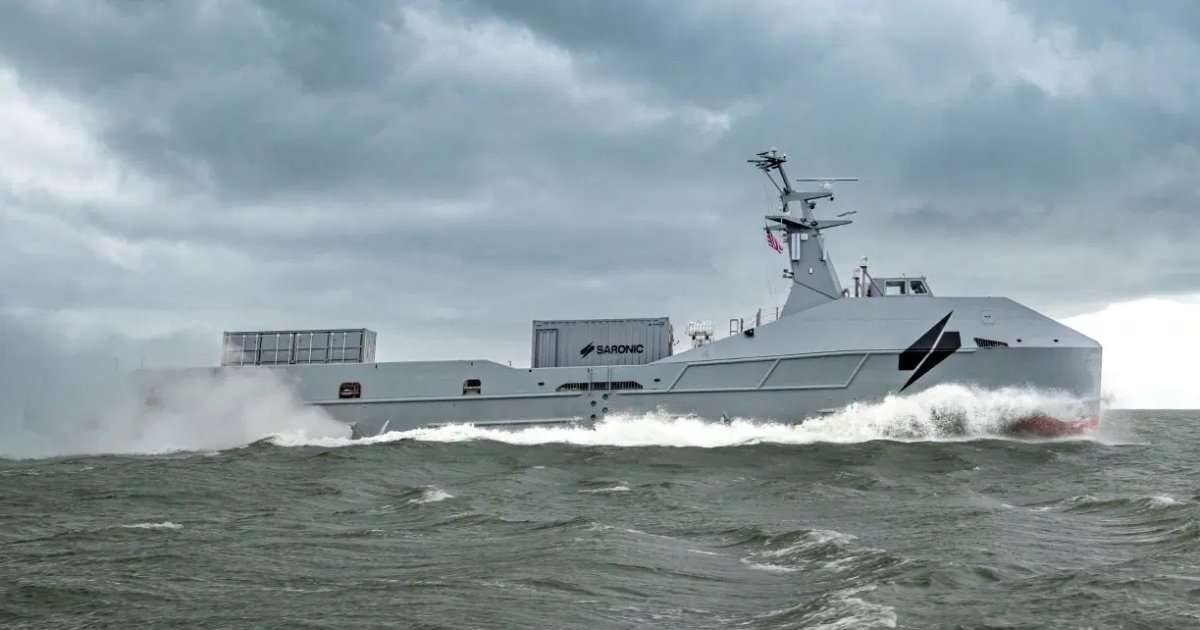 U.S. Navy Awards Production Agreements for 30 Medium Unmanned Surface Vessels, Including 10 Saronic Marauders
-
 Boeing Wins $20 Billion U.S. Navy Contract for F/A-XX Sixth-Generation Fighter
-
 Flydubai Flight to Israel Diverted to Saudi Arabia After Possible Attempted Terror Attack in Cockpit
-
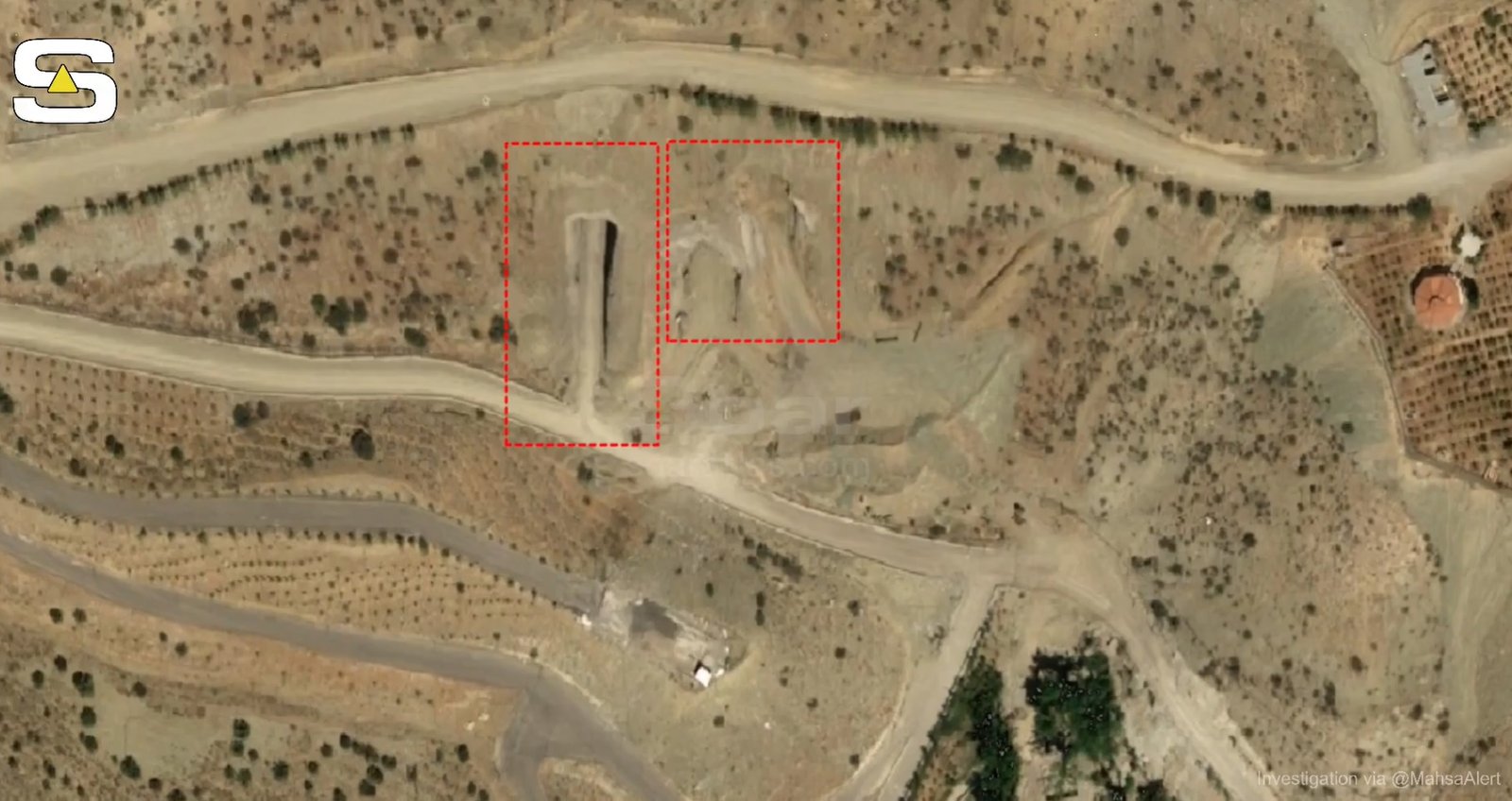 Satellite Imagery Shows Construction Changes at Hillside Site Linked to Iran’s Supreme National Security Council
-
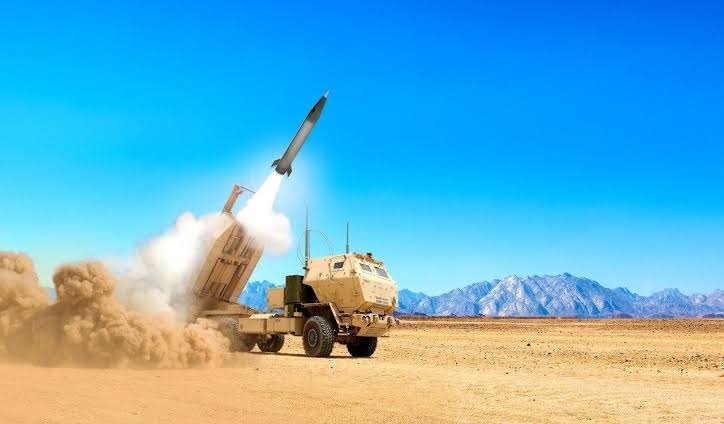 U.S. Army Selects Five Companies to Develop 1,000-Km Precision Strike Missile Prototypes
-
 NASA Adds Blue Origin’s Upgraded New Glenn 9×4 to Launch Services Contract
-
 U.S. Air Force Awards Boeing $2.38 Billion Contract for 22 F-15EX Fighter Jets
-
 Northrop Grumman Delivers First 21 Satellites for Pentagon’s Next-Generation Military Network
Top Trending in 4 Days
-
 Russia Says Su-75 Checkmate Could Cost Just $25–30 Million, Flight-Hour Costs 6 Times Lower Than F-35
-
 China Reports First High-Orbit Refueling of BeiDou Satellite, but Tracking Data Raise Questions
-
 Eight U.S. Marines Injured in Iranian Missile Strike on U.S Vessel in Strait of Hormuz
-
 U.S. and Russia Remove Human-Review Rules From Draft UN AI Weapons Framework
-
 UK Offers Nuclear Deterrence for Its Northern European Defence Partners
-
 U.S. Navy Begins Flight Testing Blackbeard Hypersonic Missile on F/A-18 Super Hornet
-
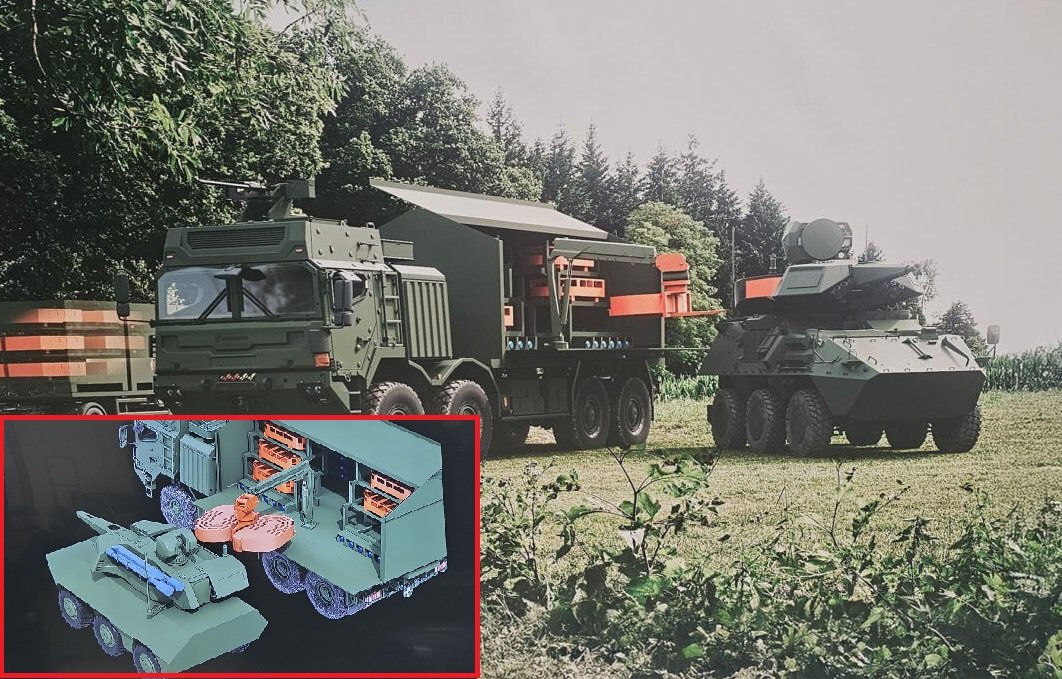 Rheinmetall Develops Automated Reloader for Austrian Skyranger Air Defense System
-
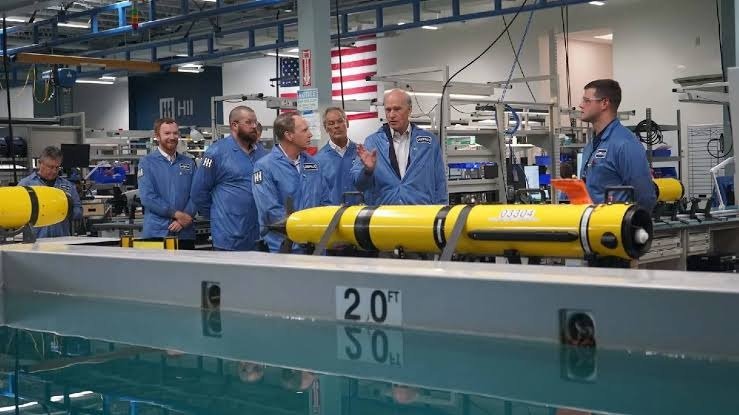 HII Expands Massachusetts Unmanned Systems Facility by 25 Percent to Support U.S. Navy Lionfish Production
