The United States has disclosed new operational details of its most advanced ground-launched hypersonic weapon, the Army’s Long-Range Hypersonic Weapon (LRHW), commonly known as Dark Eagle, underscoring Washington’s effort to strengthen deterrence against major global adversaries while reshaping its strategic command structure.
During a visit to Redstone Arsenal this week, Lieutenant General Francisco J. Lozano, the U.S. Army’s senior official overseeing missile and space acquisition programs, said the Dark Eagle system has an estimated range of approximately 3,500 kilometers. According to Lozano, that reach would enable the weapon to strike strategically significant locations if deployed from key U.S. or allied positions — including mainland China from Guam, Moscow from the United Kingdom, and Tehran from Qatar.
The remarks were made in the presence of U.S. Secretary of Defense Pete Hegseth, who was visiting Redstone Arsenal to formally announce that the installation will become the new headquarters of U.S. Space Command (SPACECOM), a move that places two of the Pentagon’s most consequential future warfighting domains — hypersonic strike and space operations — at the same historic military hub.
A New Phase in Hypersonic Capability
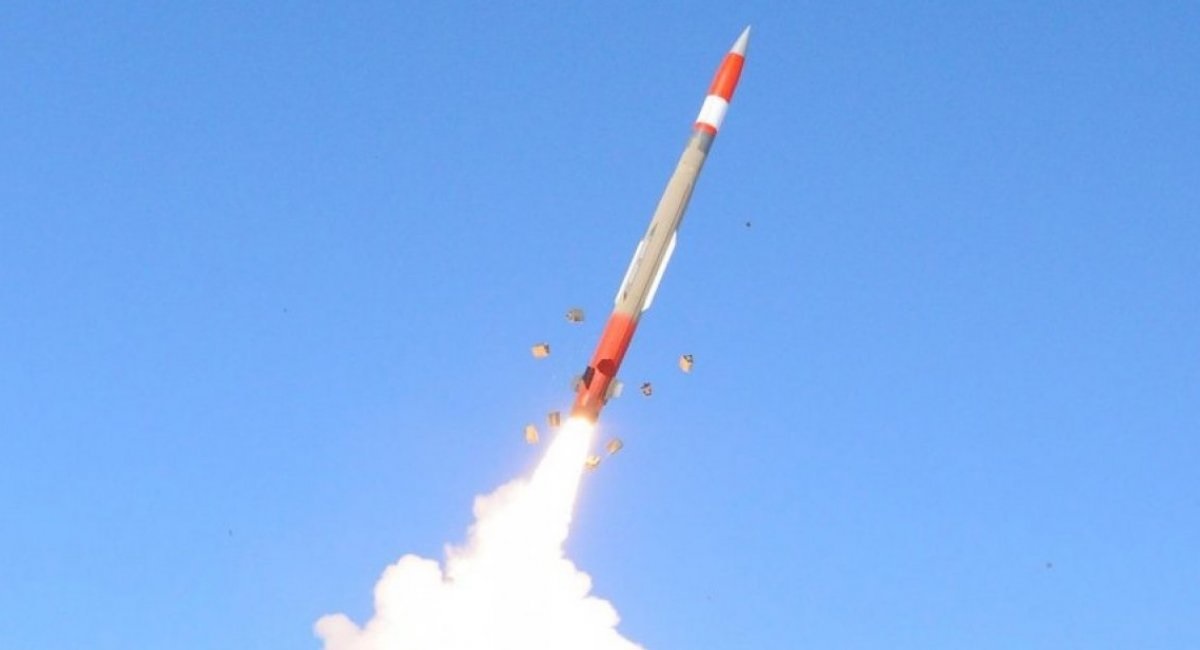
Dark Eagle represents the U.S. Army’s first operational hypersonic weapon and one of the most ambitious modernization programs in the Pentagon’s portfolio. The system consists of a road-mobile, trailer-mounted launcher that fires a rocket booster carrying a hypersonic glide vehicle. After separation, the glide vehicle travels through the atmosphere at speeds exceeding Mach 5 while maneuvering unpredictably toward its target.
Unlike traditional ballistic missiles, hypersonic boost-glide weapons follow lower, flatter trajectories and are capable of mid-course maneuvering, making them significantly harder to detect, track and intercept with existing missile defense systems. U.S. officials have emphasized that Dark Eagle is conventionally armed, designed to deliver rapid, precise strikes against high-value or time-sensitive targets.
Defense officials familiar with the program have said the system’s destructive effect relies less on a large explosive payload and more on extreme speed and kinetic energy, allowing it to penetrate hardened or heavily defended targets. At maximum range, flight times are expected to be measured in minutes rather than hours, providing commanders with what the Pentagon describes as a “prompt strike” capability.
Fielding And Production Timeline
The U.S. Army has been moving steadily toward operational deployment after a series of delays earlier in the program’s testing phase. The first Dark Eagle battery — including launchers, command vehicles and initial missiles — has been delivered to an operational unit, with additional rounds expected to complete acceptance testing as production ramps up.
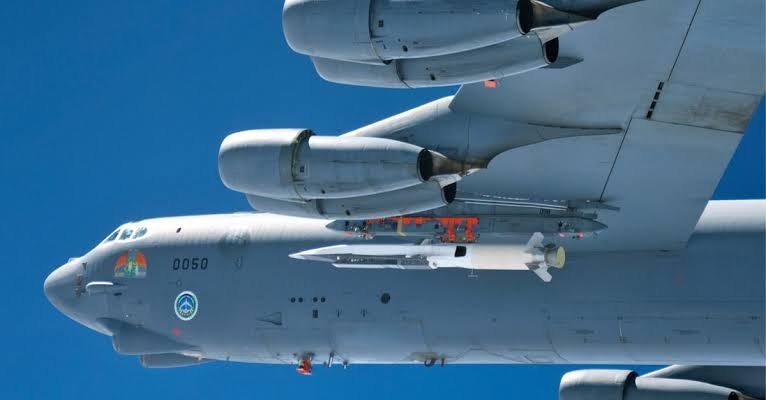
The Army plans to field multiple batteries over the coming years, while continuing test launches to refine reliability and performance. Dark Eagle is part of a broader U.S. hypersonic push that also includes Navy-led sea-based variants and Air Force air-launched systems, reflecting a joint approach to countering similar capabilities developed by China and Russia.
Strategic Implications
Lozano’s public confirmation of the weapon’s approximate range highlights the geopolitical significance of hypersonic systems. A 3,500-kilometer reach dramatically expands the number of potential launch locations and target sets, reinforcing U.S. deterrence but also intensifying concerns among rivals about crisis stability and escalation risks.
Military analysts note that forward deployment of such weapons could place new political pressures on host nations while prompting adversaries to invest further in countermeasures, early-warning systems, and their own hypersonic arsenals. Russia and China have already fielded hypersonic weapons of their own, making the domain an increasingly central element of great-power competition.
Redstone Arsenal and The Future of Space Command
Alongside the hypersonic announcement, Secretary Hegseth confirmed that Redstone Arsenal will become the permanent headquarters of U.S. Space Command, which is responsible for military operations in space, including satellite defense, missile warning, and space domain awareness.
The relocation from Colorado Springs to Huntsville has been politically contentious, but Pentagon leaders argue that Redstone’s deep missile, space and engineering heritage — along with its proximity to NASA facilities and major defense contractors — makes it uniquely suited to host the command long term. The transition is expected to occur in phases to minimize operational disruption.
Taken together, the Dark Eagle revelations and the Space Command relocation signal a U.S. defense posture increasingly centered on speed, reach and integration across domains. While many technical details of the hypersonic weapon remain classified, senior officials have made clear that Dark Eagle is intended to be both a deterrent and a practical battlefield capability.
As the system moves closer to full operational status and Space Command establishes itself at Redstone Arsenal, allies and adversaries alike will be watching closely — not only for what these developments reveal about U.S. military power, but for how they reshape the strategic balance in an era defined by rapid technological change.
——— End of Article ———