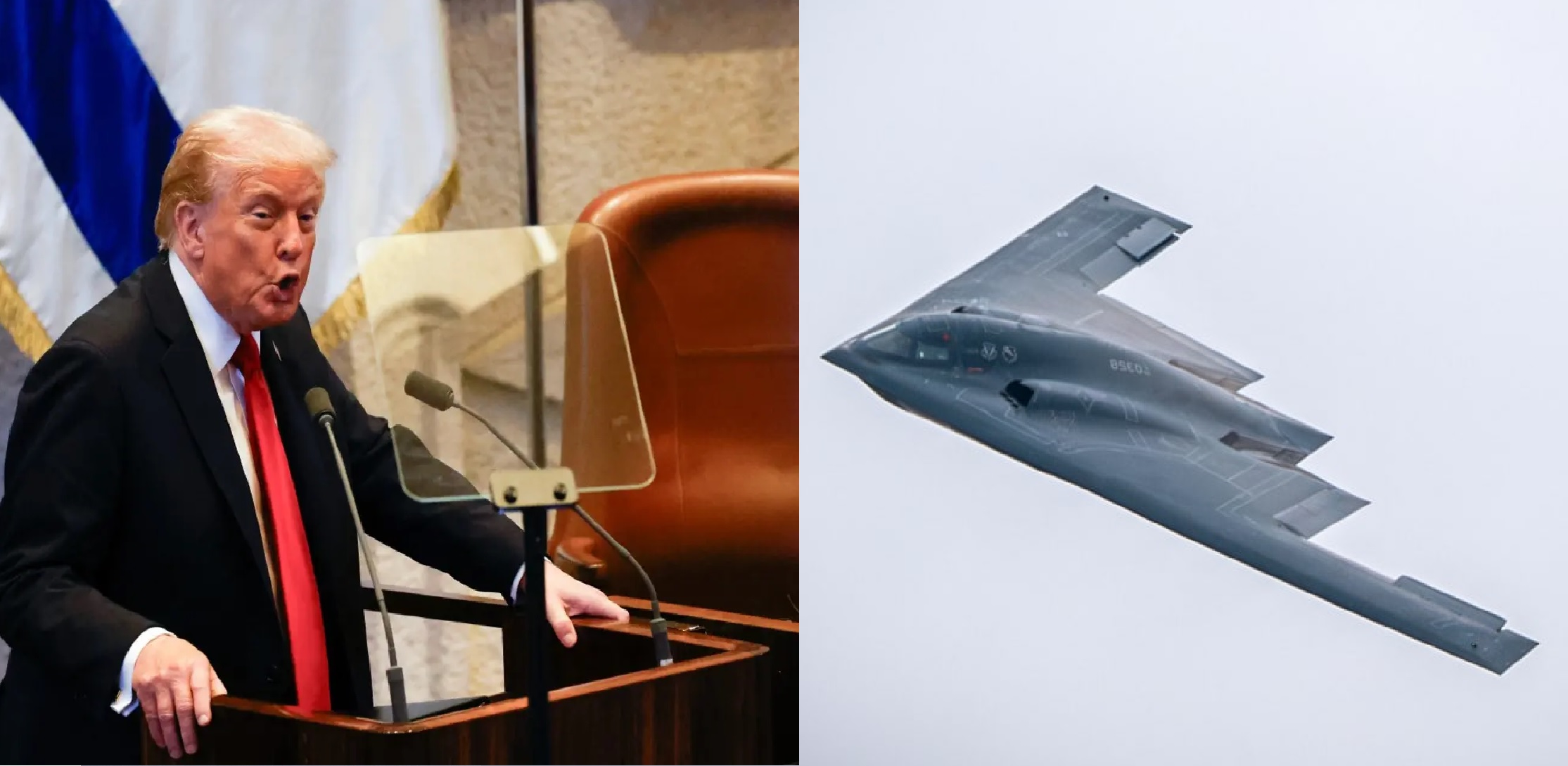
President Donald Trump has told U.S. troops that his administration has ordered “a lot more” B-2 Spirit stealth bombers from Northrop Grumman, citing their central role in this year’s high-profile U.S. airstrikes on Iran’s nuclear facilities. Trump’s remarks, delivered to service members on Thursday, were aimed squarely at Iran—but have also sparked intense discussion in Washington and across NATO about what exactly the White House intends to signal with this announcement.
Trump praised the iconic bat-wing stealth bomber that led Operation “Midnight Hammer” on June 22, when U.S. forces struck Iran’s nuclear sites at Fordow, Natanz, and Isfahan using massive bunker-busting ordnance.
“Those beautiful B-2 bombers, they totally obliterated the nuclear potential of Iran,” Trump told troops. “We just ordered a lot more of them, and the reason we did is they were totally incredible—totally invisible.”
The remarks, first reported by Reuters and later by The Economic Times, have fueled immediate debate about what the U.S. has actually ordered, why the message is being sent now and Can America Really Build Them Again?.
From ‘Midnight Hammer’ to Strategic Symbol
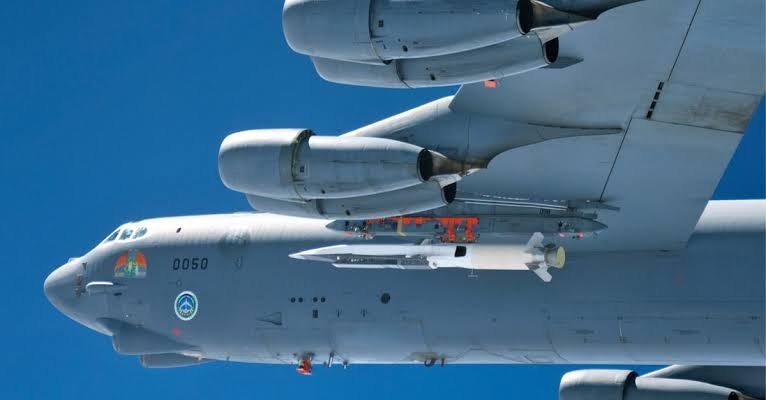
Originally built to penetrate Cold War Soviet air defenses, the B-2 Spirit remains the U.S. Air Force’s only operational long-range stealth bomber. Just 21 aircraft were produced between 1989 and 2000; after accidents, 19 remain in service today.
During Operation Midnight Hammer, seven B-2s from the 509th Bomb Wing at Whiteman Air Force Base executed a grueling 18-hour round-trip mission to Iran. They delivered 14 GBU-57 Massive Ordnance Penetrators, 30,000-lb bombs designed to destroy hardened underground bunkers. Additional targets were struck by Tomahawk cruise missiles.
Trump hailed the mission as a “spectacular military success,” claiming that Iran’s key facilities had been “completely and totally obliterated.”
However, subsequent assessments were more measured. A U.S. intelligence review reported by NBC News and Reuters indicated:
-
Fordow sustained heavy damage, potentially delaying operations there by up to two years.
-
Natanz and Isfahan were damaged but expected to recover more quickly.
Even so, the mission has become a cornerstone of Trump’s narrative that U.S. airpower under his leadership is both devastating and transformational—an example he often cites to bolster claims of American military dominance.
Could the U.S. Really Order New B-2 Bombers?
Trump’s claim that his administration ordered “a lot more” B-2s immediately ran into a major reality check.
-
The B-2 production line closed in 2000.
-
It was shut down after the original plan for 132 bombers was reduced to 21 because of soaring costs.
-
Each aircraft cost around $2 billion, making it one of the most expensive platforms in military history.
Today, Northrop Grumman is focused on building the B-21 Raider, the B-2’s successor, which is currently undergoing flight testing and will replace the B-2 in the coming decade.
Defense experts say it is technically impossible to restart B-2 production. Instead, Trump’s comments almost certainly refer to:
-
Expanded upgrades and modernization for the existing B-2 fleet
-
Enhanced sustainment programs including radar, communications, and weapons improvements
-
Or potentially additional B-21 Raiders, not new B-2 airframes
The Pentagon has not yet disclosed the details of any new procurement or modernization package.
A Strategic Message, Regardless of the Hardware
Even if no new B-2s are being built, the message Trump conveys is unmistakable: the United States wants adversaries to believe its stealth bomber force is being reinforced, not diminished.
For Iran, Russia, and other rival states, the renewed spotlight on the B-2—and Trump’s celebration of the Iran strike—serves as a reminder of America’s ability to deliver long-range, precision, deep-penetration strikes anywhere in the world.
The exact hardware may be debated, but the political and strategic signalling is clear:
Washington intends to highlight the power, reach, and survivability of its stealth bomber fleet.
——— End of Article ———