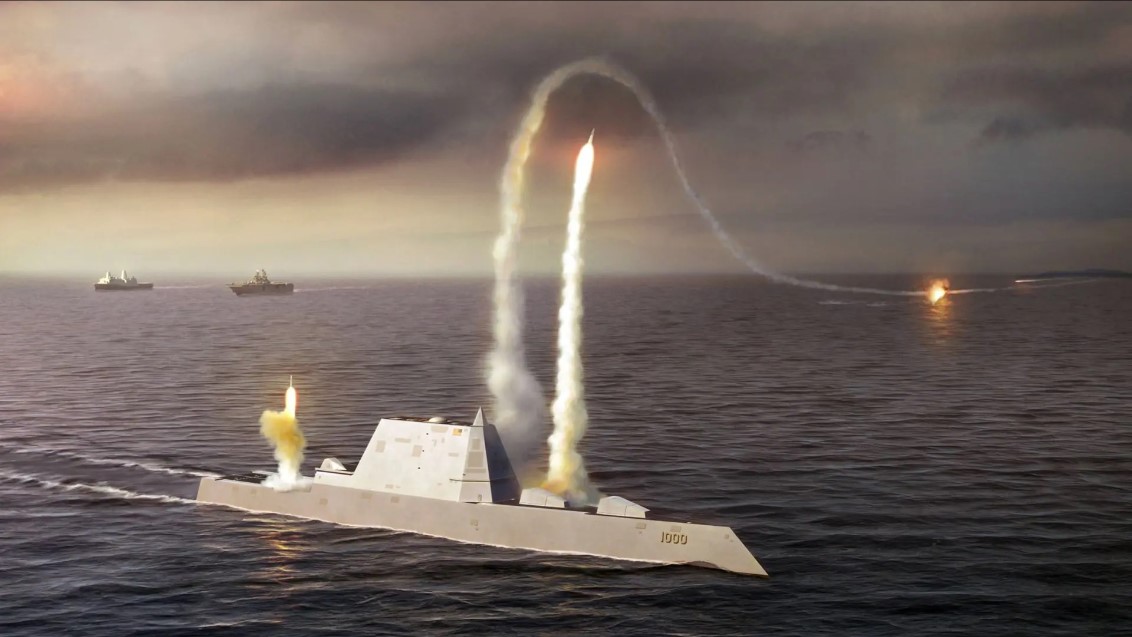
On 28 November 2025, Hawaii Congresswoman Jill Tokuda is demanding detailed clarification from the U.S. Navy over a far-reaching plan that would transform Pearl Harbor into the United States’ first major forward hub for hypersonic strike weapons in the Indo-Pacific — a move that could permanently station all three Zumwalt-class destroyers and multiple Virginia-class submarines armed with Conventional Prompt Strike (CPS) missiles in Hawaii by the end of the decade.
Tokuda told Hawaii News Now she is investigating reports and internal Navy documents indicating that by 2030, Pearl Harbor would host a concentrated inventory of advanced hypersonic systems designed to strengthen U.S. response options against China and Russia. She stressed that Hawaii’s communities “deserve transparency” about the operational, environmental, and infrastructural consequences of hosting what could become the most strategically sensitive weapons on U.S. territory outside the mainland.
A Hypersonic Hub in the Indo-Pacific
According to planning assessments now being reviewed by lawmakers, the Navy’s concept would base:
-
All three Zumwalt-class destroyers, each reconfigured to carry ~12 CPS missiles
-
Two to three Virginia-class submarines equipped with the Virginia Payload Module (VPM), each capable of launching 12 CPS rounds
-
A total inventory of fewer than 60 hypersonic missiles stored and maintained at Pearl Harbor
Senior Navy officials describe this posture as a “distributed forward strike node” that allows the United States to respond within minutes or hours — not days — during a crisis in the Taiwan Strait or Western Pacific.
The plan is tied to broader U.S. assessments that hypersonic glide vehicles and air-breathing hypersonic missiles will define future great-power conflict, with China and Russia both accelerating programs involving nuclear-capable glide vehicles.
Massive Modernization Underway at Pearl Harbor
To support the new mission, Pearl Harbor is undergoing one of the largest naval infrastructure upgrades in decades.
Wharf and Electrical Expansion
-
Upgrades at Wharves M1, M2, B26 and B24 to berth Zumwalt destroyers by mid-2028
-
Installation of a Mobile Utilities Support Equipment substation providing the required 4160-volt shore power
-
Planned permanent electrical installations to replace temporary systems
-
Construction of new parts storage and logistics warehouses supporting long-lead CPS components
Shipyard Overhaul
Pearl Harbor Naval Shipyard is simultaneously:
-
Modernizing Dry Dock 3
-
Building Dry Dock 5, designed for all Virginia-class submarines and the future SSN(X)
-
Preparing for a fleet where most submarines homeported in Hawaii will be Virginia-class by 2030
These upgrades are considered essential for depot-level maintenance of hypersonic-capable platforms.
Zumwalt-Class: From Failed Gunships to Hypersonic Platforms
Once envisioned as advanced coastal fire-support ships, the Zumwalt-class was forced into a new mission after the Navy cancelled ammunition for the Advanced Gun System due to its prohibitive cost.
Their unique design features — tumblehome hull, stealthy composites, and massive electrical power generation — make them ideal for CPS missiles, advanced sensors, and future directed-energy weapons.
Key enhancements include:
-
New CPS launch modules integrated into the Mk 57 VLS
-
SM-6 missile capability for extended air defense
-
Upgraded signals intelligence and new datalinks
-
Expanded range and survivability for independent Indo-Pacific operations
Two destroyers are now in conversion; the third enters modernization in 2026.
Virginia-Class Submarines: Expanding Undersea Strike Power
The introduction of the Virginia Payload Module marks a major increase in submarine missile capacity.
-
The VPM adds four large-diameter tubes, carrying 28 Tomahawks or 12 CPS missiles.
-
USS Arizona (SSN-803) commissions in 2027, followed by USS Barb (SSN-804).
-
Both are expected to be based at Pearl Harbor.
By 2030, Hawaii will host two to three VPM-equipped submarines, giving the U.S. a survivable underwater hypersonic launch capability.
Retired Admiral Joseph Sestak warned that while this force is powerful, “60 hypersonic missiles are not enough to stop a large-scale amphibious invasion,” calling for more redundancy and resilient networks to ensure missile effectiveness.
Why the U.S. Is Accelerating Hypersonics in Hawaii
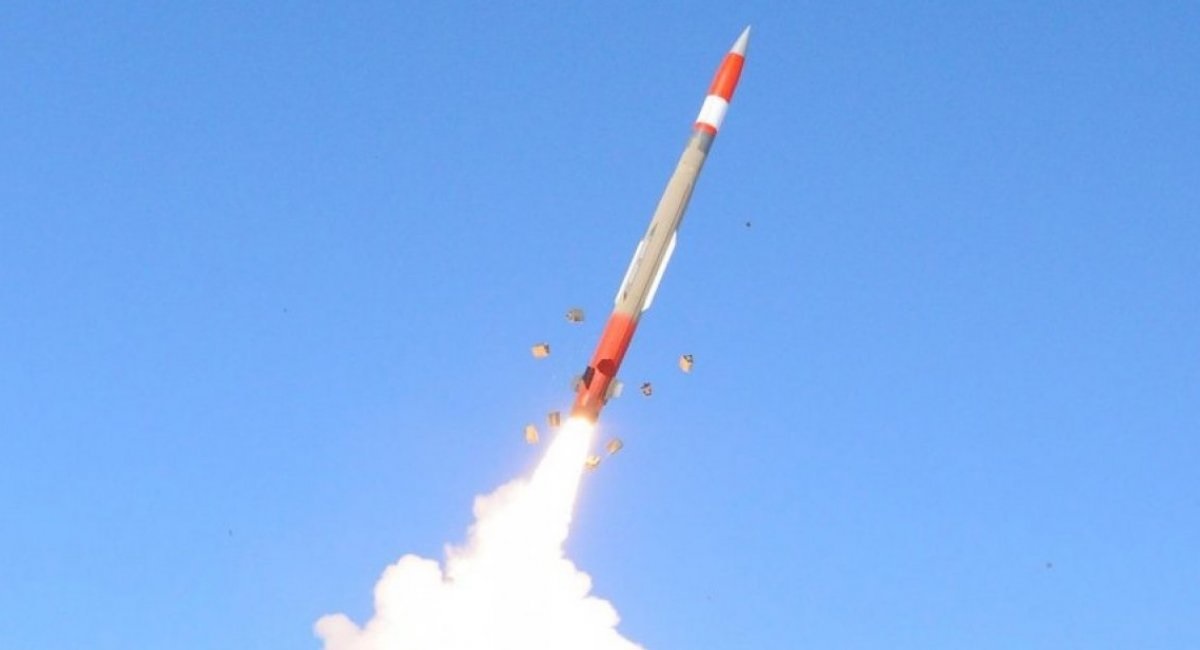
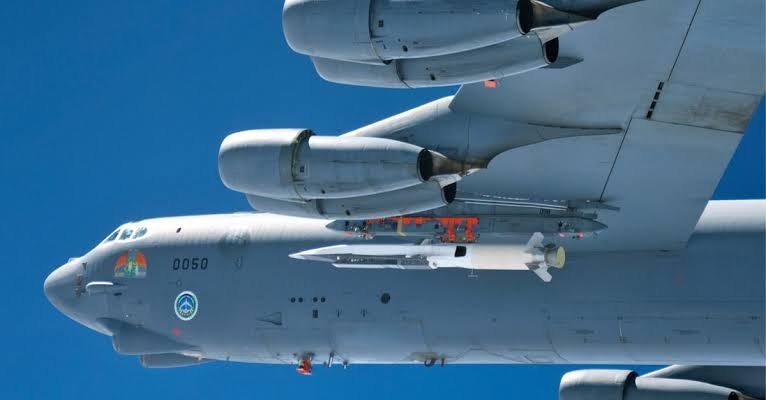
U.S. planners are accelerating hypersonic basing in Hawaii because they now assume that any future conflict with China or Russia will involve maneuverable hypersonic glide vehicles, capable of unpredictable flight paths and speeds exceeding Mach 5, with the potential to carry nuclear or conventional payloads. These systems challenge existing U.S. missile defenses, which struggle to detect, track, and intercept such fast, agile weapons. In response, Washington is pushing forward a full suite of offensive hypersonic programs, including the Conventional Prompt Strike (CPS) missile for the Navy, the Army’s Long-Range Hypersonic Weapon (LRHW), the scramjet-powered Hypersonic Attack Cruise Missile (HACM), and the Air Force’s Air-Launched Rapid Response Weapon (ARRW).
Alongside these strike programs, the Pentagon is also expanding investments in hypersonic defense technologies, pursuing new space-based sensor layers, enhanced command-and-control systems, early high-energy laser prototypes, and continued electromagnetic railgun research. Defense officials argue that Hawaii’s geographic position offers unmatched advantages for early and rapid response, allowing the United States to project first-response coverage across the full Indo-Pacific and reduce reaction time during any high-intensity crisis.
Local Pushback: Environmental Legacy and Public Risk
Native Hawaiian groups and environmental organizations have voiced strong concerns about the Navy’s hypersonic basing plans, pointing to the 2021 Red Hill fuel spill, which contaminated local water supplies, as a reminder of the risks posed by major military infrastructure. They also cite the longstanding effects of naval operations, including persistent noise, hazardous waste, and broader environmental disruption, arguing that these issues have never been fully resolved. Many activists fear that introducing hypersonic weapons could further increase the likelihood of Hawaii becoming a primary target in a future conflict. They warn that the proposal marks “another step in Hawaii’s militarization,” and criticize what they see as insufficient community consultation around decisions that directly affect local safety and environmental health.
Congresswoman Jill Tokuda has echoed these concerns, emphasizing that “any Navy action involving hypersonics must include clear communication about what deployment means and how these risks will be addressed.”
Strategic Objective: A Rapid-Strike Launchpad
Despite concerns, the Navy’s internal assessments emphasize that Pearl Harbor must evolve into a forward time-critical strike hub to reduce response times and deter Chinese coercive activity.
The vision includes:
-
Fast-reaction strikes on maritime invasion fleets
-
Long-range precision attacks on command nodes
-
Distributed operations enabling survivability across the Pacific
-
Integration of destroyers and submarines into joint kill chains
Officials acknowledge that finite missile inventories, evolving Chinese countermeasures, and difficult maintenance requirements impose major limitations.
——— End of Article ———