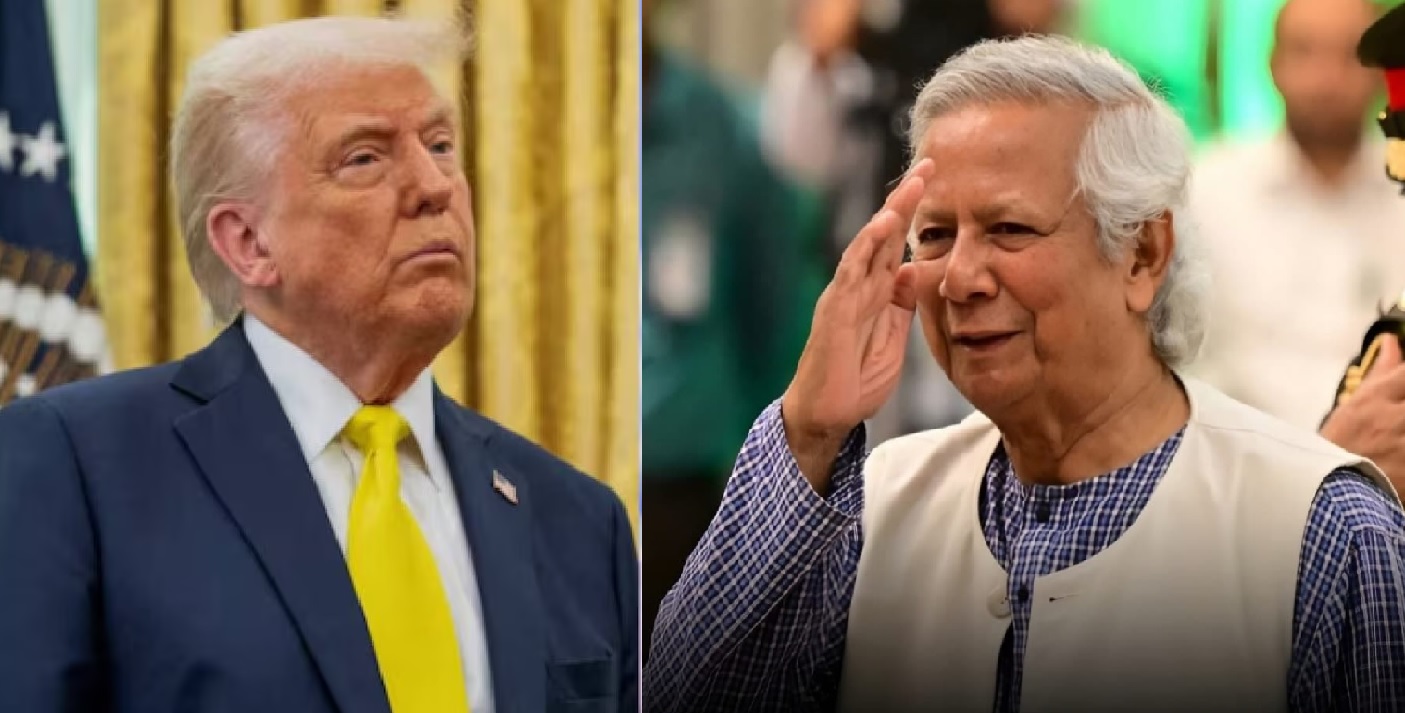
DHAKA/WASHINGTON : The United States and Bangladesh have signed an Agreement on Reciprocal Trade days before Bangladesh’s scheduled general elections on February 12, 2026, formalizing tariff reductions and long-term procurement commitments between the two countries. The deal was concluded with Bangladesh’s interim administration led by Chief Adviser Muhammad Yunus, rather than with an elected government.
Tariff Reductions and Textile Provisions
Under the finalized agreement, the United States will reduce reciprocal tariffs on originating goods from Bangladesh to 19 percent. According to a statement issued by the White House, this rate modifies earlier tariff levels established under Executive Order 14257 on April 2, 2025, and subsequently adjusted under Executive Order 14346 on September 5, 2025.
Bangladesh’s tariff rate had initially been proposed at 37 percent, later negotiated down to 19 percent, according to Lutfey Siddiqi, the Chief Adviser’s Special Envoy on International Affairs. Siddiqi described the reduction as the result of extended negotiations conducted over several months.
The agreement also creates a mechanism granting zero reciprocal tariffs for select Bangladeshi textile and apparel products, provided those goods are manufactured using US-produced cotton and man-made fibers. Bangladesh’s ready-made garments (RMG) sector remains its largest export industry, making textile-related provisions central to the agreement.
Regionally, US reciprocal tariff negotiations are ongoing. India’s rate is reportedly under discussion for reduction from 25 percent to 18 percent, while Pakistan remains subject to a 19 percent rate.
Market Access and Import Commitments
In exchange for tariff reductions, Bangladesh has agreed to eliminate trade barriers for a wide range of US industrial and agricultural goods. The White House outlined that Bangladesh will allow expanded access for US exports including:
-
Chemicals
-
Medical devices
-
Machinery
-
Motor parts
-
Dairy products
-
Poultry
-
Fruits and tree nuts
Bangladesh has also agreed to import US cars, motorcycles, and related parts under the framework of the agreement.
The trade pact incorporates specific long-term procurement commitments. Bangladesh will import approximately $3.5 billion in US agricultural products, including wheat, soy, cotton, and corn. In addition, Dhaka has committed to purchase an estimated $15 billion in US energy products over a 15-year period.
Furthermore, Bangladesh has agreed to procure aircraft from Boeing. The country recently reached an understanding to purchase up to 25 aircraft, valued between $2.46 billion and $2.87 billion (Tk 30,000–35,000 crore).
Domestic Economic Discussion
The agreement has generated discussion within Bangladesh regarding its potential economic implications. Analysts note that Bangladesh is not a major exporter of high-technology industrial equipment and relies heavily on its ready-made garments (RMG) sector. The textile industry has experienced operational pressures in recent years due to global demand fluctuations and cost increases.
Opening Bangladesh’s domestic market to US dairy and agricultural imports has prompted concerns among local producers regarding competition with US agricultural goods. Observers indicate that local dairy farmers and agricultural businesses may face pricing pressures once US imports expand under the agreement’s framework.
Political Context and Timing
The timing of the agreement—signed just days before national elections—has drawn political scrutiny. The deal was concluded by an unelected interim administration, rather than by a government formed through the February 12 electoral process.
Opposition figures, including former Prime Minister Prime Minister Sheikh Hasina, have previously characterized Chief Adviser Muhammad Yunus as a proxy for US interests, alleging that his appointment was facilitated by the Central Intelligence Agency (CIA).
There have also been claims in political discourse alleging involvement of the Central Intelligence Agency (CIA) in past political developments, including the removal of Sheikh Hasina’s government.
Some political critics argue that the sequence of events — including the timing of the agreement, the nature of the procurement commitments, and the absence of a broader parliamentary debate — indicates that Muhammad Yunus is acting in alignment with US strategic interests. These critics claim that the agreement was finalized behind closed doors and structured in accordance with US demands. However, no official documentation has been released publicly to confirm that the agreement was negotiated outside formal governmental procedures.
Critics of the new trade agreement further argue that signing a long-term commercial framework before national elections limits the policy flexibility of any future elected government. Given Bangladesh’s past political instability and current transitional context, some analysts state that revising or withdrawing from such an agreement could carry diplomatic and economic consequences.
Broader Implications
The US–Bangladesh Reciprocal Trade Agreement formalizes tariff adjustments, sector-specific trade conditions, and multi-year procurement obligations across agriculture, energy, aviation, and industrial goods. The agreement reduces US tariffs on Bangladeshi exports while requiring Bangladesh to expand market access and commit to substantial US imports.
With national elections scheduled for February 12, 2026, the agreement’s long-term implementation will likely be overseen by the next elected government. Its economic and political impact will depend on how future administrations interpret and execute the commitments outlined in the framework.
——— End of Article ———