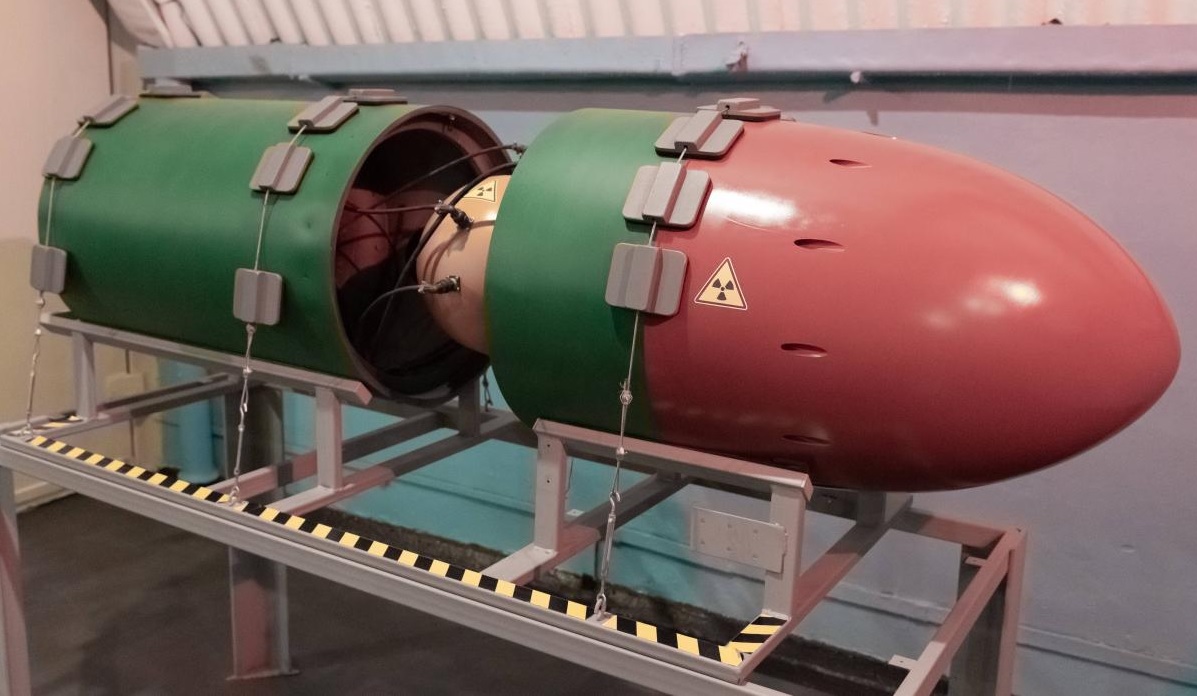
WASHINGTON, D.C. — March 5, 2026 : The United States has reiterated its opposition to any effort by European allies to develop independent nuclear weapons programs, emphasizing that NATO’s existing nuclear deterrence framework remains the preferred structure for maintaining strategic stability in Europe. The position was outlined by Elbridge Colby, who said Washington would strongly oppose hypothetical scenarios in which countries such as Poland, Germany, or the Nordic countries pursue their own nuclear arsenals.
Colby made the remarks during a discussion hosted by the Council on Foreign Relations, where he addressed questions about the possibility of European governments seeking independent nuclear capabilities amid rising security concerns across the continent.
U.S. Position on Independent Nuclear Arsenals
During the event, Colby stated that Washington has not received credible information suggesting that European governments are actively planning to build their own nuclear weapons. However, he said the United States would oppose such efforts if they emerged.
“I think, of course, we would at least strongly oppose it. It’s hypothetical, but we are opposed to that possibility,” Colby said in response to questions about whether Washington would accept independent nuclear programs in Europe.
The remarks were made in the context of discussions about potential nuclear programs in Germany, Poland, or the Scandinavian region. Colby emphasized that such initiatives would conflict with the commitments of those countries under the Treaty on the Non-Proliferation of Nuclear Weapons, commonly known as the Nuclear Non-Proliferation Treaty (NPT).
According to Colby, the United States would attempt to dissuade allies from pursuing autonomous nuclear capabilities and would take diplomatic and policy measures to prevent the emergence of new nuclear programs among NATO member states.
Emphasis on NATO’s Nuclear Deterrence Structure
While opposing the development of independent arsenals, Colby stated that Washington supports stronger European participation within North Atlantic Treaty Organization nuclear planning and deterrence structures.
The United States maintains an extended nuclear deterrent for NATO allies, a longstanding policy under which U.S. nuclear forces provide strategic protection to alliance members. Under NATO nuclear sharing arrangements, certain allied countries host U.S. nuclear weapons and participate in planning and operational exercises related to deterrence.
Colby said it is “appropriate and reasonable” for European nations to assume a larger role in supporting the alliance’s nuclear deterrence framework rather than pursuing independent capabilities.
He also noted that the nuclear forces maintained by France and the United Kingdom already contribute to NATO’s overall deterrence posture. Both countries maintain their own independent nuclear arsenals, which are considered part of the broader strategic environment supporting the alliance.
Remarks at the Munich Security Conference
The U.S. position was also reiterated earlier in February during the Munich Security Conference, where Colby addressed NATO defense ministers and officials.
At that meeting, he stated that Washington does not support the concept of “friendly proliferation,” referring to the spread of nuclear weapons among allied nations. He said the United States intends to continue fulfilling its role in NATO’s collective deterrence system while encouraging European allies to strengthen their conventional and strategic contributions within the alliance framework.
European Debate on Nuclear Security
Colby’s comments come amid renewed discussions across Europe about nuclear deterrence and strategic autonomy, largely influenced by the ongoing security environment following Russian invasion of Ukraine.
The debate has also been shaped by proposals from Emmanuel Macron, who has suggested expanding the reach of France’s nuclear deterrent to provide broader protection for European allies. The proposal, often described as a potential European “nuclear umbrella,” has sparked discussion among governments and security analysts about how nuclear deterrence in Europe could evolve.
Colby expressed skepticism regarding the feasibility of France extending its nuclear protection to other countries. He noted that the French deterrent was originally designed primarily for national defense and that extending credible nuclear protection to countries hundreds of miles away would involve substantial logistical and strategic challenges.
He also highlighted the distinction between changing a country’s declaratory policy—statements regarding nuclear defense commitments—and establishing the operational capabilities required to provide extended deterrence to other nations.
NATO Expansion and Regional Security Concerns
Recent changes in NATO membership have further intensified discussions about deterrence policy in Europe. The accession of Sweden and Finland has expanded the alliance’s northern flank and increased attention to security arrangements across the Baltic and Arctic regions.
In Poland, some political figures and security analysts have raised the possibility of alternative deterrence arrangements, including participation in expanded European nuclear programs or potential long-term nuclear capabilities. Similar discussions have occasionally surfaced in Germany, though both countries remain bound by the NPT and existing alliance commitments.
Strategic Considerations for the United States
Colby indicated that allowing additional allied states to develop nuclear weapons would complicate broader U.S. strategic planning. He noted that nuclear proliferation among allies could undermine the global non-proliferation regime and create challenges for U.S. military priorities, particularly in the Indo-Pacific, where Washington has increasingly focused defense resources.
In a February speech discussing NATO reforms, Colby argued that the alliance should evolve into what he described as a “partnership, not dependency.” He suggested that European allies should increase defense spending to around three percent of gross domestic product while continuing to rely on shared nuclear deterrence rather than building independent arsenals.
U.S. Nuclear Authority and Alliance Policy
Under NATO’s current nuclear posture, the authority to authorize the use of U.S. nuclear weapons ultimately rests with the President of the United States. This structure was reaffirmed in responses submitted by the Pentagon to the U.S. Senate Armed Services Committee, which oversees military policy and strategy.
Colby reiterated that maintaining centralized nuclear decision-making within NATO’s established framework helps preserve alliance cohesion and strategic stability.
Background on Elbridge Colby
Colby previously served in the administration of Donald Trump and played a key role in developing the 2018 National Defense Strategy. He assumed the role of Under Secretary of Defense for Policy in January 2025.
In recent congressional testimony, Colby described the nuclear arsenals of Russia and North Korea as among the primary strategic threats facing the United States and its allies.
The Pentagon has indicated that further details regarding NATO’s nuclear posture and alliance deterrence planning are expected to be discussed during upcoming NATO defense ministerial meetings.
——— End of Article ———