HANOI / TEL AVIV : Vietnam has taken a significant step toward modernizing its infantry capabilities and expanding its domestic defense manufacturing base after reportedly concluding a major agreement with Israel’s Rafael Advanced Defense Systems for the acquisition and licensed production of the Maoz loitering munition system, internationally marketed as the Spike Firefly.
According to information first reported by Intelligence Online, the agreement is valued at approximately USD 250 million and includes provisions for full local manufacturing in Vietnam. The deal reflects a broader shift in Hanoi’s procurement policy, prioritizing technology transfer and sovereign production over conventional off-the-shelf imports.
Local Manufacturing and Industrial Framework
At the core of the agreement is the establishment of a dedicated production line within Vietnam, operated by a designated domestic defense enterprise under license from Rafael. The arrangement reportedly includes the transfer of manufacturing documentation, system integration procedures, quality control processes, and maintenance know-how required to sustain long-term domestic production.
Vietnamese sources indicate that the objective is not limited to final assembly but extends to progressively increasing local content, including airframe components, launch canisters, and selected electronic subsystems. This approach aligns with the Ministry of National Defense’s long-standing policy of strengthening the national defense-industrial base and reducing dependence on single external suppliers.
System Overview
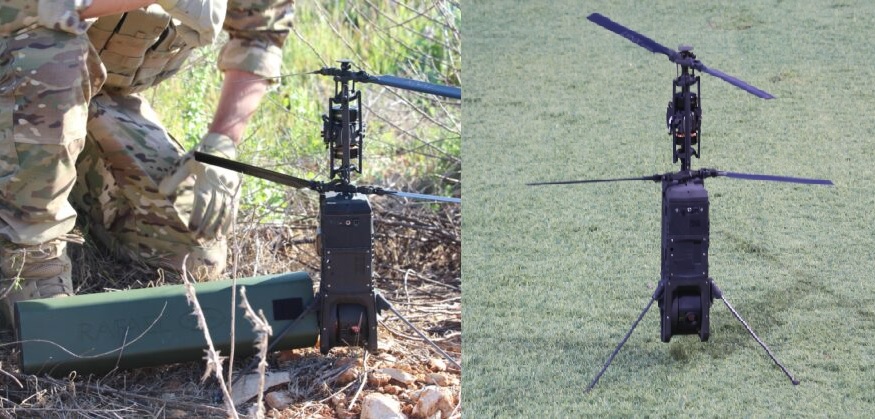
The system acquired by Vietnam is known within the Israel Defense Forces as Maoz, while Rafael markets it globally as the Spike Firefly or L-Spike 1x. It is a man-portable loitering munition designed for use at the small-unit level, bridging the gap between reconnaissance drones and direct-fire precision weapons.
The Firefly employs a coaxial rotor configuration, enabling vertical takeoff and landing as well as stable hovering. This design allows the system to operate effectively in confined environments such as urban terrain, forests, and complex topography where line-of-sight weapons are limited.
The munition is launched from a compact canister and controlled via a handheld operator console. Real-time electro-optical imagery is transmitted back to the operator throughout the mission, allowing continuous situational awareness and positive target identification.
Operational Characteristics
Technical data associated with the Vietnam program indicates an operational range of up to approximately five kilometers, depending on terrain, altitude, and mission profile. Endurance is sufficient to allow extended loitering over a target area before engagement.
A defining feature of the system is its man-in-the-loop control architecture. The operator retains full authority over target engagement and can abort an attack seconds before impact, redirecting the munition back into a loitering pattern if conditions change or if non-combatants are detected. The warhead is optimized for use against personnel and lightly protected targets, consistent with close-combat infantry operations.
Combat Employment Background
The Maoz system has been used operationally by Israeli ground forces, including during recent combat operations in Gaza. Israeli infantry units employed the loitering munition for close-range reconnaissance, room-to-room threat detection, and precision engagement of fortified positions in dense urban environments, reducing exposure of troops to direct fire.
Rafael states that the broader Spike family of guided weapons is in service with more than 40 armed forces worldwide. Within this portfolio, the Firefly occupies a specialized role as a single-use reconnaissance-strike asset intended for squad- and platoon-level employment rather than long-range anti-armor missions.
Strategic Implications
For Vietnam, the agreement provides access to a modern precision capability tailored to contemporary land warfare while simultaneously advancing domestic manufacturing capacity. The focus on licensed production and technology transfer reflects Hanoi’s efforts to diversify defense partnerships and enhance self-reliance amid evolving regional security dynamics.
The deal also underscores the expanding defense relationship between Vietnam and Israel, which in recent years has included cooperation in areas such as air defense, sensors, avionics, and small arms. While neither government has released detailed timelines for production start or initial operational deployment, the program is expected to contribute to the gradual modernization of Vietnam’s infantry formations over the coming years.
If implemented as outlined, the Maoz/Spike Firefly program would represent one of Vietnam’s most advanced examples of localized production of a modern precision-guided munition, combining foreign technology with domestic industrial participation.
——— End of Article ———