TEHRAN : Researchers at the University of Tehran have developed a fully indigenous, high-precision satellite positioning software platform intended primarily for defense and national security applications, according to technical documentation and deployment details released alongside the project.
The system is designed to provide reliable, centimeter-level positioning for military users by eliminating dependence on foreign-controlled navigation correction services. While it processes signals from global navigation satellite systems—including GPS (United States), Galileo (European Union), BeiDou (China) and GLONASS (Russia)—all data processing, correction generation and network control are performed within domestically managed infrastructure.
Defense-Oriented Design
Unlike commercial positioning services, the platform has been engineered to operate as a closed and controlled network suitable for military use. The architecture allows defense authorities to maintain uninterrupted access to precise navigation data even in environments where external services may be degraded, restricted or unavailable.
The software supports a distributed network of more than 50 permanent reference stations and can simultaneously serve up to 200 authenticated users. This configuration enables coordinated operations across wide geographic areas, with baseline lengths of up to 70 kilometers while maintaining high accuracy.
According to performance specifications, the system achieves horizontal accuracy of approximately 2 centimeters and vertical accuracy of around 3 centimeters in static mode, with latency below 0.5 seconds. These parameters align with requirements for time-sensitive defense applications that depend on continuous and accurate positioning updates.
Core Technical Features
The platform relies on carrier-phase-based Real-Time Kinematic (RTK) processing rather than standard code-based positioning. By measuring the phase of the satellite radio carrier wave and resolving phase ambiguities in real time, the software computes precise distances between satellites and receivers.
To preserve accuracy under operational conditions, the system incorporates real-time atmospheric correction models. Distortions caused by the ionosphere and troposphere are continuously estimated using data from the reference station network and removed from the positioning solution.
The software also includes monitoring, integrity checking and network management functions designed to meet military reliability standards, ensuring consistent service quality and rapid fault detection.
Integration With National Defense Infrastructure
The positioning platform has already been deployed in high-reliability environments, including within the permanent station network of the National Iranian South Oil Company, demonstrating its stability under demanding conditions. Defense-sector integration is expected to follow a similar model, with secure access controls and isolated data pathways.
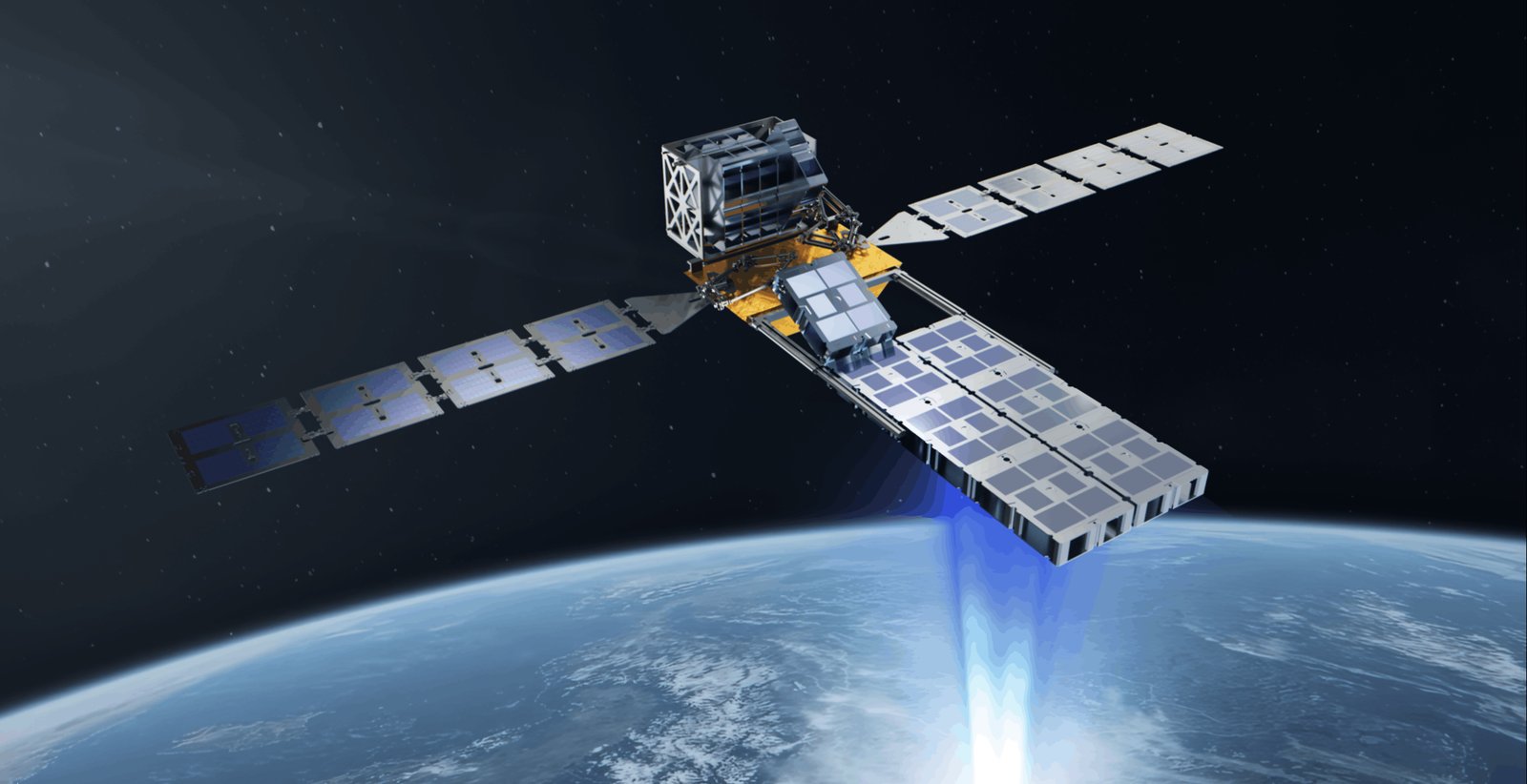
The system’s introduction aligns with broader developments in Iran’s space and defense infrastructure. The Iranian Space Agency recently confirmed successful initial in-orbit testing of three domestically built satellites—Paya, Kowsar and Zafar-2—launched in late December 2025. Together, domestically produced satellites and ground-based processing software form a self-contained positioning and surveillance support framework.
Military Applications
The platform provides positioning and timing data suitable for a range of defense uses, including command-and-control coordination, navigation of unmanned systems, targeting support, infrastructure protection and training exercises. Its closed, domestically controlled design allows military planners to rely on consistent precision navigation without external dependencies.
University of Tehran researchers involved in the project stated that further development will focus on enhancing resilience against signal interference, expanding secure network coverage and aligning the software with additional defense-specific systems and platforms.
——— End of Article ———