KYIV, Ukraine — Ukraine is developing a new anti-ballistic missile system under the FREYJA project, built around the FP-7.x interceptor developed by Ukrainian defense company Fire Point. The project combines a Ukrainian missile with European radar, guidance and command-and-control technologies and is intended to provide an additional European capability against ballistic missile threats.
The project was formally backed on July 13, 2026, when Ukraine and nine European countries — Denmark, France, Germany, Italy, the Netherlands, Norway, Spain, Sweden and the United Kingdom — announced the creation of the Integrated Anti-Ballistic Missile Coalition in Paris. The coalition described the initiative as a purely defensive effort to develop a shared European anti-ballistic missile capability.
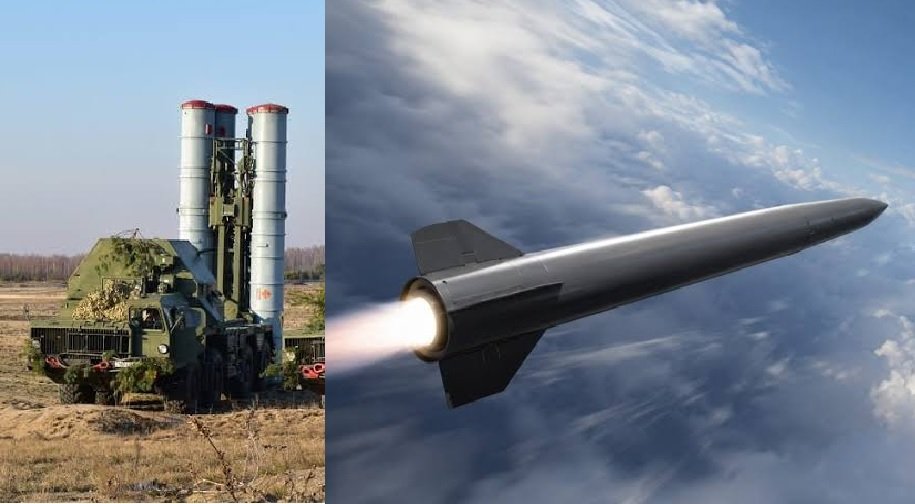
At the center of the project is the FP-7.x, which draws on technology associated with the Soviet-era S-300 missile family. Fire Point is using an established missile-production base rather than developing an entirely new interceptor from the beginning.
From S-300 technology to FP-7.x
The history of the project goes back to the Soviet development of the 5B55 missile family for the S-300P air-defense system. The 5B55 was designed primarily to engage aircraft and other aerodynamic targets.
The broader S-300 missile family later developed into the heavier 48N6 series, which provided greater performance and was also designed to engage ballistic targets during their terminal flight phase.
Fire Point's current FP-7.x is associated with this later S-300 missile heritage. Defense publications have reported that the interceptor is based on the 48N6 family rather than being a completely new missile design.
This heritage is important because Ukraine already has experience with the production of S-300-family missiles. The Soviet-era Vizar plant near Zhytomyr was involved in production of S-300 missiles, providing an existing industrial background for the current Ukrainian effort.
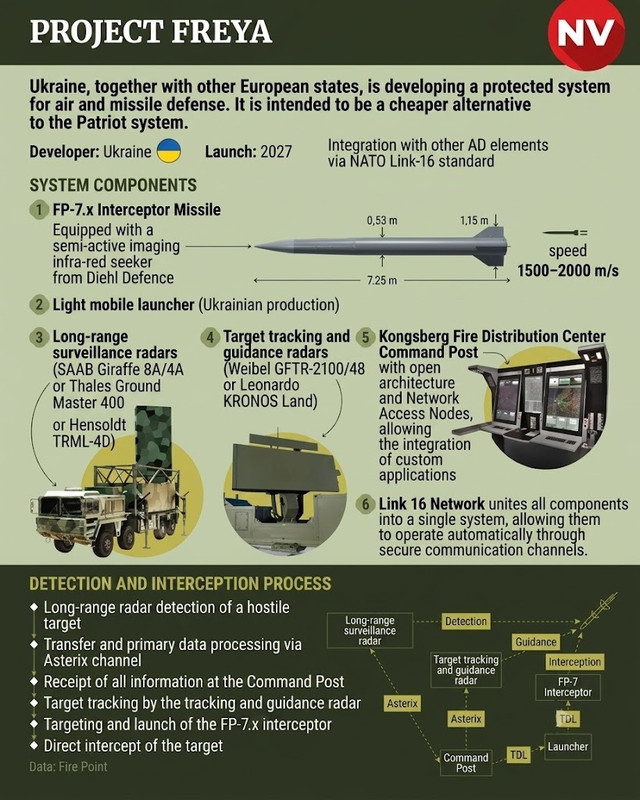
The FP-7.x is a large interceptor. Fire Point has stated a length of 7.25 meters, while its fuselage diameter has been reported at approximately 0.53 meters. Its reported speed is in the 1,500–2,000 meters-per-second range.
Designed for the terminal phase of ballistic missile defense
The main challenge for FP-7.x is different from that faced by a conventional surface-to-air missile.
A ballistic missile's warhead can approach its target at very high speed during the final stage of flight. An interceptor therefore has to detect, track and engage the target within a short period.
Fire Point has developed the FP-7.x specifically for this role. According to company statements reported by Janes, the current development is aimed at interception at approximately 20–25 kilometers altitude. Fire Point has also discussed an eventual maximum speed of about 2,200 m/s, while earlier testing reportedly reached about 1,800 m/s.
Earlier published specifications for the missile gave a speed of 1,500–2,000 m/s, a length of 7.25 meters and a 150-kilogram combat load.
The project is therefore focused on the lower layer of ballistic missile defense rather than attempting the type of high-altitude or exo-atmospheric interception associated with systems such as THAAD or SM-3.
Infrared seeker is a major part of the upgrade
One of the most important changes is the missile's guidance system.
Fire Point's FP-7.x is being developed with an imaging infrared seeker, with German defense company Diehl Defence involved in the technology partnership. Earlier descriptions of the Freya architecture identified an infrared imaging seeker as one of the key components of the interceptor.
The use of an infrared seeker is intended to provide the interceptor with terminal guidance against the target after the wider air-defense network has detected and tracked it.
The exact final configuration of the seeker and its integration into the complete Freya system remains part of the development process.
Current interceptor uses a fragmentation warhead
The first FP-7.x configuration is not based on a pure kinetic hit-to-kill approach.
Fire Point CEO Iryna Terekh told Janes that the current version uses a blast-fragmentation warhead, while the company is considering development of a future hit-to-kill interceptor.
The distinction is important. A hit-to-kill interceptor attempts to destroy the incoming target through a direct physical collision. The current FP-7.x instead uses an explosive warhead to damage or destroy the target.
Fire Point has said that moving toward a hit-to-kill configuration is part of the longer-term development path. The company therefore sees the present missile as an initial configuration rather than the final form of the interceptor.
Mass production is central to the concept
The Freya project is also being developed around a different economic model from high-cost ballistic missile interceptors.
Fire Point has cited a target cost of approximately $700,000 per interceptor, compared with around $3.8 million for a Patriot PAC-3 interceptor in figures reported by the Financial Times.
The $700,000 figure is a developer estimate rather than a confirmed production price. Early production is expected to be more expensive, particularly because the final cost depends on imported components.
Fire Point has also stated a production objective of approximately 2,000 interceptors per year for Freya, with the possibility of increasing production depending on requirements.
The idea is for a lower-cost interceptor to supplement existing systems rather than replace them. More expensive interceptors could remain available for targets requiring the highest level of interception capability, while a larger number of lower-cost missiles could provide additional defensive coverage.
Freya will combine Ukrainian and European systems
Fire Point is not developing the entire missile-defense system alone.
The company is responsible for the FP-7.x interceptor and serves as a central industrial participant in the Freya concept, while European partners are expected to provide other elements of the system.
One confirmed part of the architecture is the use of European radar technology. Hensoldt's TRML-4D has been identified in connection with the project, while Diehl Defence is associated with the missile's infrared seeker technology.
The broader Freya concept is based on an open architecture, allowing different European sensors, command systems and communications equipment to be integrated rather than relying on one closed system.
The project has also been described as intended for integration with NATO-standard communications, including Link 16.
Other European defense companies have been discussed in connection with the wider coalition and system architecture, but not all reported companies have been formally confirmed as suppliers of specific Freya components.
Ten-country coalition established in Paris
The political framework for the project was established on July 13, 2026, in Paris.
The founding members of the Integrated Anti-Ballistic Missile Coalition are:
- Denmark
- France
- Germany
- Italy
- Netherlands
- Norway
- Spain
- Sweden
- Ukraine
- United Kingdom
The coalition's joint declaration calls for common operational requirements, technical working groups, governance arrangements and a roadmap toward initial operational capabilities. It also supports joint research and development and greater information exchange among participating countries.
The Ukrainian presidency said the coalition remains open to additional countries that share its objectives.
Testing and development timeline
The FP-7.x has already undergone flight testing. Fire Point said in June that the missile had completed testing of its flight characteristics, while the first flight test had earlier been described as successful by company officials.
However, a flight test of the interceptor is different from a successful interception of a ballistic target.
According to Janes, Fire Point CEO Iryna Terekh said the first ballistic interception test for Project Freyja is expected around July 2027.
This makes the schedule more cautious than earlier political statements about rapidly creating an integrated system. The project still has to complete interceptor development, seeker integration, radar and command-system integration and ballistic interception testing.
A new European layer, not a replacement for every existing system
The Freya project represents an attempt to combine Ukraine's experience with missile development and production with European radar, electronics and defense-industry capabilities.
Its approach is based on using the FP-7.x as a relatively large, mass-produced interceptor while incorporating modern European components around it. The system is intended to add another layer to Europe's ballistic missile defenses rather than replace every existing system.
For now, the most important milestones remain the integration of the European components and the first demonstrated interception of a ballistic target. Until those tests are completed, the final performance of the FP-7.x and the complete FREYJA system remains to be demonstrated.
Source : topwar
——— End of Article ———