Prague / Kyiv, — April 8, 2026 : Ukraine’s defense industry is encountering a critical production constraint as a shortage of mini turbojet engines limits the output of long-range strike drones, a key component of its deep-strike strategy against targets inside Russian territory. Despite rapidly growing operational demand, current engine supply remains restricted to the low hundreds per month, far below the required scale of several thousand units.
Supply Bottleneck Emerges as Primary Constraint
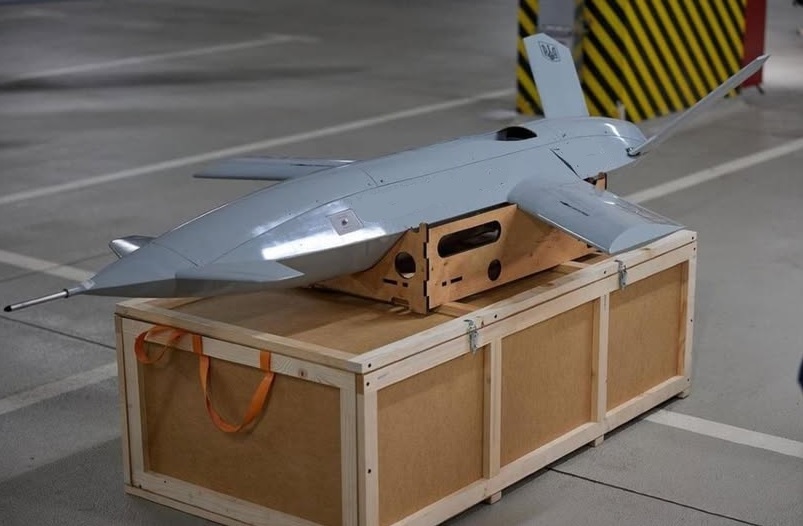
Industry representatives, government officials, and arms experts across Europe confirm that the limited availability of compact jet engines has become the primary bottleneck in Ukraine’s missile-type drone programme. These engines power jet-driven unmanned aerial vehicles designed for long-range precision strikes and are increasingly viewed as a cost-effective alternative to conventional cruise missiles.
A source within Ukraine’s defense sector, speaking on condition of anonymity, stated that the shortage of mini jet engines is “probably the main limiting factor” in current production levels, describing the situation as a significant challenge for the country’s broader missile programme.
Maria Popova, Chief Operating Officer of the Ukrainian Defense Industry Council, also confirmed ongoing shortages not only of turbojet engines but also of the specialized materials required to manufacture them. She noted that supply constraints persist globally, with more acute limitations within Ukraine itself.
Strategic Role of Jet-Powered Drones
Ukraine’s shift toward jet-powered drones reflects both operational and economic considerations. These systems are capable of reaching speeds of up to 900 kilometers per hour, significantly faster than propeller-driven drones, which typically operate at around 185 kilometers per hour.
The cost advantage is substantial. A single jet-powered long-range drone is estimated to cost between $50,000 and $200,000, whereas a cruise missile with comparable range capabilities exceeds $1 million. This disparity enables Ukraine to conduct sustained deep-strike operations at a fraction of the cost, making high-volume production a strategic priority.
These drones are also part of Ukraine’s response to systems such as Russia’s Geran-5 drones, reinforcing the importance of scalable, lower-cost strike capabilities.
Highly Specialized Engine Manufacturing
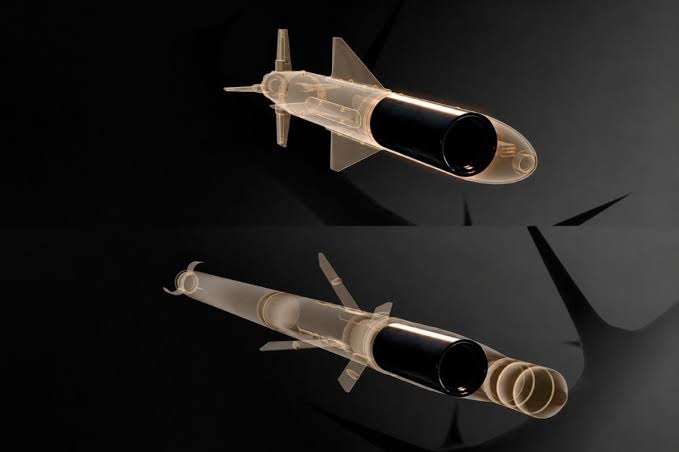
Mini turbojet engines used in these drones are typically less than 30 centimeters in diameter and require advanced manufacturing techniques. They are constructed from lightweight, high-strength materials such as titanium alloys and frequently incorporate 3D-printed components to achieve the necessary balance between weight and thrust.
In addition to long-range strike drones, these engines are also used in loitering munitions and missile interceptors, further increasing demand across multiple defense applications.
However, the global industrial base for this class of engine remains extremely limited. Major aerospace companies have largely avoided the segment due to high development costs and relatively low margins, leaving production concentrated among a small number of specialized European manufacturers.
Dependence on European Suppliers
Ukraine currently relies on a narrow network of European suppliers for mini turbojet engines. Key manufacturers include PBS Group and ZofiTech in the Czech Republic, JetCat in Germany, and Destinus in the Netherlands.
ZofiTech is producing approximately 200 engines per month, with nearly its entire output directed to Ukraine. Meanwhile, PBS Group has expanded its production capacity fivefold since 2023 and expects to achieve an eightfold increase by the end of 2026. Approximately 25 percent of PBS deliveries are currently allocated to Ukraine.
Another defense company, CSG, has entered the segment following the acquisition of a Serbian manufacturer and aims to produce around 1,000 turbojet engines in 2026, with a significant portion intended for Ukrainian use.
Despite these expansion efforts, supply continues to lag behind demand, with industry representatives noting that production scaling is constrained by material costs, manufacturing complexity, and long lead times.
Domestic Development Efforts in Ukraine
In response to external supply limitations, Ukrainian manufacturers have initiated multiple domestic engine development programmes aimed at reducing dependence on foreign suppliers.
Among these is the Shepit engine, developed by SCOPA Industries for drone platforms with a range of approximately 200 kilometers. Another project, the AI-PBS-350, is being developed jointly by Ukraine’s Ivchenko-Progress and the Czech Republic’s PBS Group, though it is designed for larger systems, including cruise missiles rather than smaller drones.
Additionally, Ukraine has introduced the Hrim-17, a low-cost pulsejet engine currently undergoing testing.
While these initiatives represent progress toward self-sufficiency, most remain in development, testing, or early-stage production. Achieving large-scale, cost-efficient serial manufacturing continues to present structural challenges.
Broader European Industrial Constraints
The shortage of mini jet engines reflects wider limitations within Europe’s defense industrial base. Experts and officials describe the sector as a significant production bottleneck, emphasizing its importance for reducing reliance on external technologies, particularly from the United States.
At the same time, Russia is reported to source comparable engines from China, highlighting a divergence in supply chain dependencies between the two sides.
New entrants are attempting to address the gap. German drone manufacturer Quantum Systems, in partnership with Airbus, has begun developing jet-powered unmanned platforms. However, these efforts have not yet translated into immediate increases in available engine supply for Ukraine.
——— End of Article ———