Kyiv, — March 31, 2026 : Ukraine’s defense technology sector is advancing the development of autonomous interceptor drones equipped with infrared seeker heads (IR SH), aiming to strengthen the country’s layered air defense against persistent threats from kamikaze drones and reconnaissance unmanned aerial vehicles (UAVs).
The initiative focuses on reducing reliance on human operators during interception by integrating automated target acquisition and tracking systems. According to Denys Lohvynenko, head of the UAV division at the defense technology cluster Brave1, active research is underway to combine infrared homing with complementary sensor systems to streamline engagement processes. He noted that the primary technical challenge remains ensuring consistent reliability under combat conditions.
Infrared Seeker Technology and Evolution
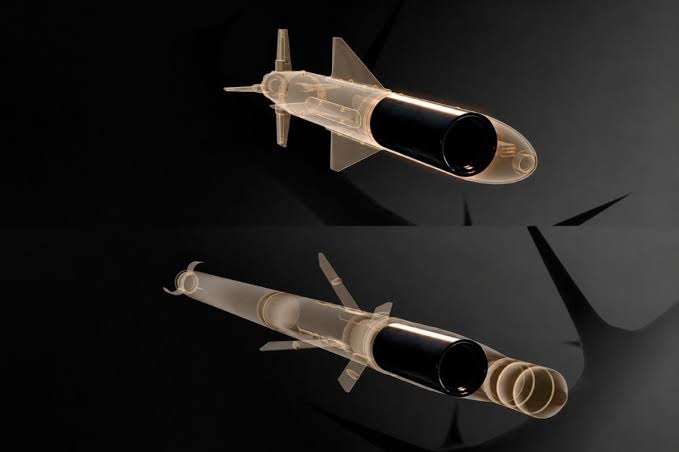
Infrared seeker heads are widely used in modern missile systems due to their relatively compact size and lower cost compared to active radar seekers such as those deployed on the AIM-120 AMRAAM and the Russian R-77. These systems enable autonomous tracking after launch without requiring continuous external guidance.
Recent advances in infrared technology have significantly improved detection and tracking capabilities. Modern sensors are capable of identifying temperature differences as small as 1°C between a target and its surroundings. Imaging infrared (IIR) arrays, which became widely adopted in the 2000s, generate full two-dimensional thermal images rather than focusing on a single heat source such as an engine exhaust. This development has increased targeting accuracy and reduced susceptibility to countermeasures like heat decoys.
Earlier systems relied on linear photodetectors, which were easier to manufacture and commonly used in tank sights and early surface-to-air missiles. These systems employed mechanical scanning techniques, using oscillating or rotating mirrors to construct a two-dimensional image of the target.
Addressing Low-Thermal Signature Targets
One of the primary operational challenges for infrared-guided systems is detecting and tracking small UAVs with minimal heat signatures, including quadcopters and reconnaissance drones such as the Orlan-10.
To address this limitation, developers are exploring hybrid guidance solutions that combine infrared sensors with visible-spectrum cameras. A comparable approach is used in Japan’s Type 91 MANPADS, which employs optical targeting during daytime operations before transitioning to infrared tracking. Similar configurations are being considered for Ukrainian interceptor drones to improve performance against low-signature aerial targets.
Eclipse Interceptor Drone and Technical Specifications
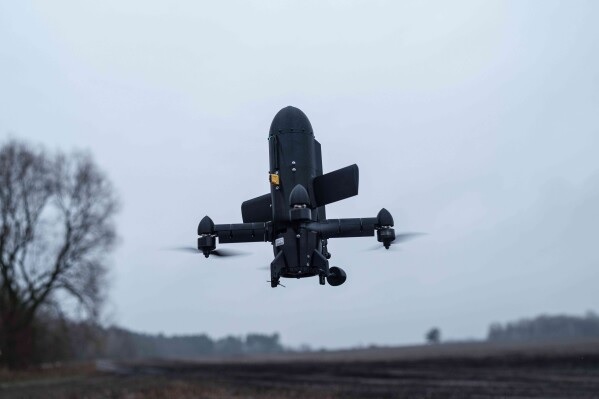
Ukrainian company Kolos Defense has introduced the “Eclipse”, a fixed-wing interceptor drone designed for autonomous engagement of enemy UAVs, including Shahed-type loitering munitions.
The Eclipse is powered by an electric motor and carries a high-explosive warhead. It is capable of reaching speeds of up to 250 km/h, with an operational range of 40 kilometers and a service ceiling of 5,000 meters. The drone engages targets at distances of up to 7 meters and has demonstrated operational effectiveness in combat testing. In one recorded instance, it successfully destroyed a target at a distance of 33 kilometers while maintaining stable video transmission and control.
The platform incorporates a terminal guidance system developed in cooperation with foreign specialists, enabling autonomous pursuit and engagement even in environments affected by electronic warfare and signal jamming.
Its communication system automatically switches across frequencies ranging from 400 to 1200 MHz to maintain link stability. Some variants under testing utilize LTE-based communication. The drone also employs beacon-based positioning through triangulation, providing more precise location data compared to conventional radar-based systems regardless of terrain conditions.
Pixel Lock Targeting System
A key component of the Eclipse system is the “Pixel Lock” automatic detection and homing system, developed in partnership with the French company Alta Ares. The system operates in three modes.
In search mode, the drone remains under manual control while automatically identifying potential targets and displaying detection probability on the operator’s interface. In lock mode, the operator selects a target, triggering a zoomed identification window for confirmation. Once verified, the system transitions to automatic guidance mode, in which the drone independently navigates toward the object. The operator retains final authority to detonate the warhead.
Production and Strategic Impact
The Eclipse drone currently consists of approximately 40 percent Ukrainian-produced components. This share can be increased to 70 percent domestic and 30 percent European components if required, reducing reliance on external supply chains.
These developments are part of a broader effort by Ukraine to expand domestic production of interceptor drones and address shortages in air defense systems. By deploying autonomous drones that are significantly less expensive than traditional surface-to-air missiles, Ukraine is working to establish a scalable and cost-effective defense layer capable of countering large-scale drone attacks without depleting high-value missile inventories.
——— End of Article ———