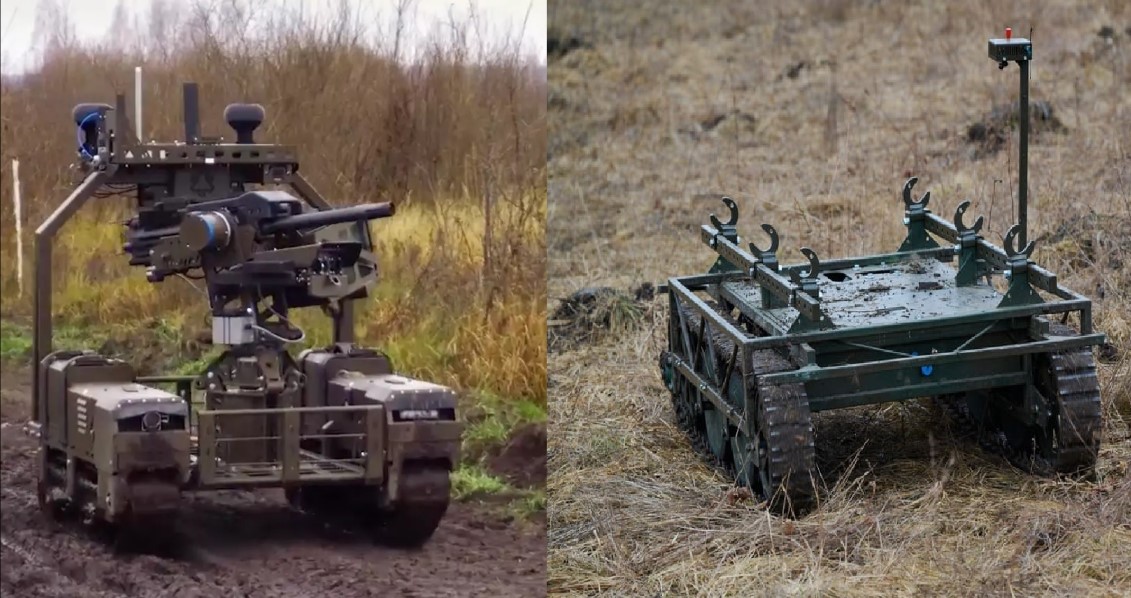
KYIV : Ukraine’s Ministry of Defence has confirmed that ground robotic systems (GRS) carried out more than 7,000 combat and logistics missions along the frontline in January, marking a significant expansion in the routine use of unmanned ground platforms across operational units.
The ministry stated that the integration of ground robotics into daily military activity is aimed at reducing direct exposure of personnel to enemy fire while maintaining continuity of supply, evacuation, and battlefield support operations.
Logistics and Evacuation Now Routinely Automated
According to official data, the majority of the January missions were focused on frontline logistics. Thousands of transport and resupply operations that were previously conducted by troops in contested zones were instead executed by unmanned ground systems.
The ministry indicated that its operational objective is to transfer frontline logistics functions to robotic platforms to the maximum feasible extent. This includes ammunition delivery, supply transport, and medical evacuation in areas assessed as high risk.
Minister of Defence Mykhailo Fedorov outlined the pace of adoption, noting that six months ago the use of ground robots for casualty evacuation was limited and irregular. He stated that robotic platforms now routinely enter high-risk areas to deliver ammunition, sustain logistics operations, and evacuate wounded personnel in situations where deploying additional troops would increase risk.
Recent field operations have included automated medical evacuations conducted by frontline formations, including the 17th Separate Heavy Mechanized Brigade, demonstrating the operational use of unmanned systems in direct support roles.
Institutional Expansion Planned for 2026
To support continued integration of unmanned ground systems, the Ministry of Defence has formalized expansion measures for 2026. These measures include increased production, expanded procurement, and supporting infrastructure development.
Under the production and acquisition plan, Ukraine will scale up manufacturing volumes of domestically produced ground robotic systems. The ministry emphasized domestic industrial participation as a key component of long-term supply sustainability.
Infrastructure modernization is also planned, including upgrades to communications hardware and command-and-control (C2) networks. These upgrades are intended to ensure secure and reliable remote operation of robotic platforms in contested electronic environments.
In addition, the ministry confirmed that units will be able to procure specialized interchangeable modules and components. This modular approach is designed to allow base robotic platforms to be adapted to specific mission requirements, including transport, evacuation, engineering support, and other tactical applications.
Procurement Managed Through Army of Drones Framework
The acquisition and distribution of ground robotic systems are administered through the “Army of Drones Bonus” programme. The initiative is structured to scale the most effective battlefield technologies across Ukrainian forces.
Through the centralized Brave1 Market platform, military units currently have access to 13 distinct models of ground robotic systems. The ministry stated that procurement operates through a structured reward mechanism in which units accumulate “combat points” based on confirmed battlefield engagements recorded within the military’s DELTA digital tracking system.
These digital credits can then be used to order equipment through the internal marketplace. The Ministry of Defence described the system as designed to maintain rapid allocation, transparency in distribution, and alignment with immediate operational requirements at the frontline.
The January operational data reflects what the ministry describes as the transition of ground robotic systems from limited experimental use to standard operational practice across multiple units.
——— End of Article ———