KYIV / LONDON — March 18, 2026 : Ukraine has deployed more than 200 military counter-drone specialists to the Middle East to assist partner nations in defending against Iranian-designed Shahed-type loitering munitions. The deployment, confirmed by Volodymyr Zelenskyy during an address to the British Parliament on March 17, forms part of a broader international effort to strengthen regional air defense against low-cost unmanned aerial threats.
According to Ukrainian and European reporting, a total of 201 specialists are already deployed, with an additional 34 personnel on standby for rapid deployment if required.
Deployment Scope and Timeline
Ukrainian counter-drone teams are currently operating in multiple Gulf states. Active deployments include the United Arab Emirates, Qatar, and Saudi Arabia, while additional units are en route to Kuwait. Ukrainian personnel have also reportedly supported defensive measures linked to U.S. military installations in Jordan as part of the initial rollout phase.
The deployment was formalized following a rapid sequence of diplomatic and military coordination. On March 2, the United Kingdom signaled plans to involve joint British and Ukrainian expertise in supporting Middle Eastern partners. After consultations with the United States, European allies, and countries neighboring Iran, Zelenskyy publicly confirmed the initiative on March 8. The first teams departed the following day.
The Ukrainian government stated that formal operational agreements have been concluded with multiple partner nations. The initiative follows defense assistance requests from at least 11 countries, including the United States.
Strategic Context and International Coordination
The deployment reflects growing concern among Middle Eastern states over the increasing use of Iranian-designed one-way attack drones across regional conflicts. Shahed-type UAVs have been widely employed due to their relatively low cost, long range, and ability to evade traditional air defenses.
Speaking before British lawmakers, Zelenskyy emphasized that the mission is intended to prevent the expansion of drone-based attacks in the region. The address was attended by Mark Rutte, underscoring the broader NATO-linked coordination surrounding the effort.
Ukrainian officials described the deployment as part of a wider framework of defense cooperation, including a previously proposed “drone deal” with the United States. The initiative is designed to combine operational support, training, and long-term defense-industrial collaboration.
Ukrainian Operational Experience and Tactics
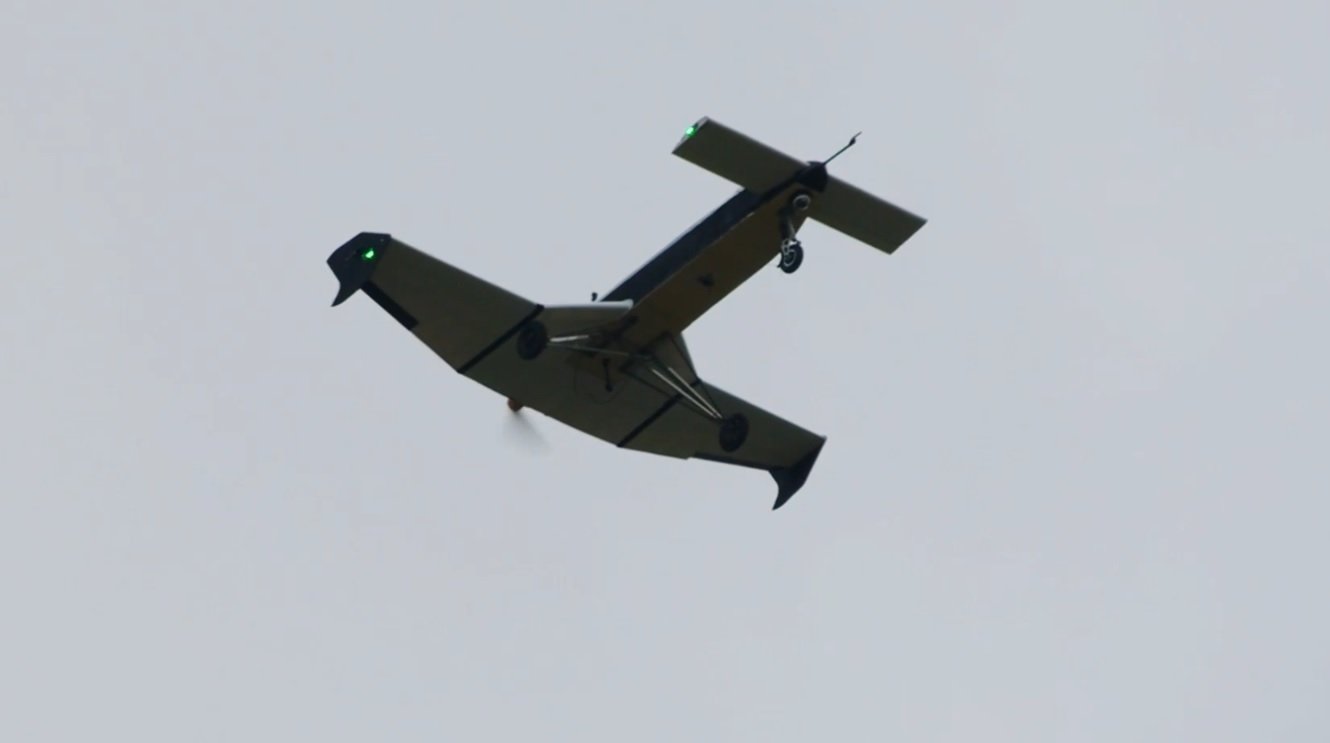
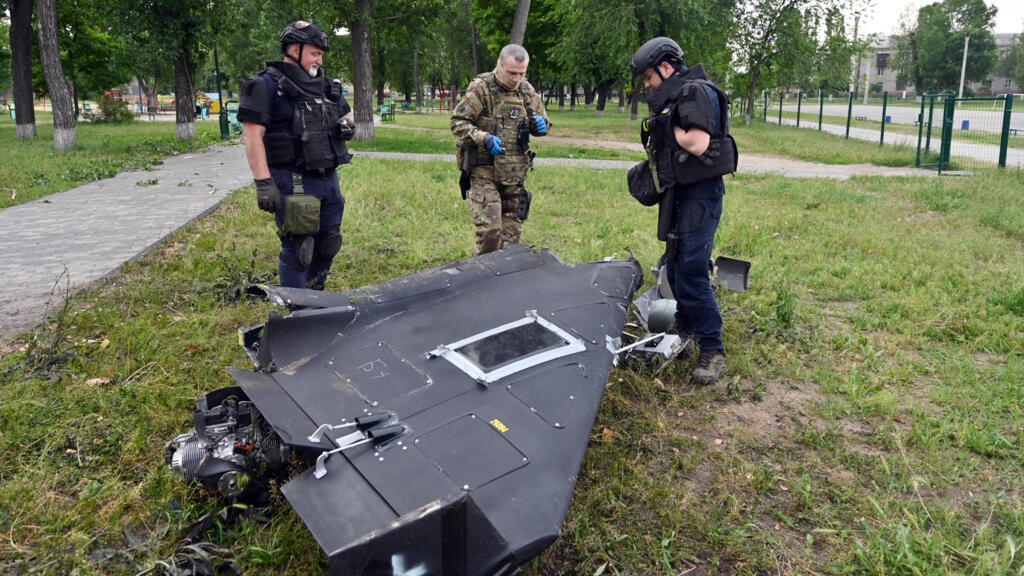
Ukrainian forces have accumulated extensive combat experience countering Shahed-type drones during the ongoing war with Russia. Variants such as the Shahed-136—also produced in Russia under the designation Geran-2—have been used extensively against Ukrainian infrastructure.
These systems typically feature a range of up to 2,500 kilometers, cruising speeds around 185 km/h, and warheads of approximately 50 kilograms. More recent variants incorporate radio-beacon navigation antennas to improve performance in electronically contested environments.
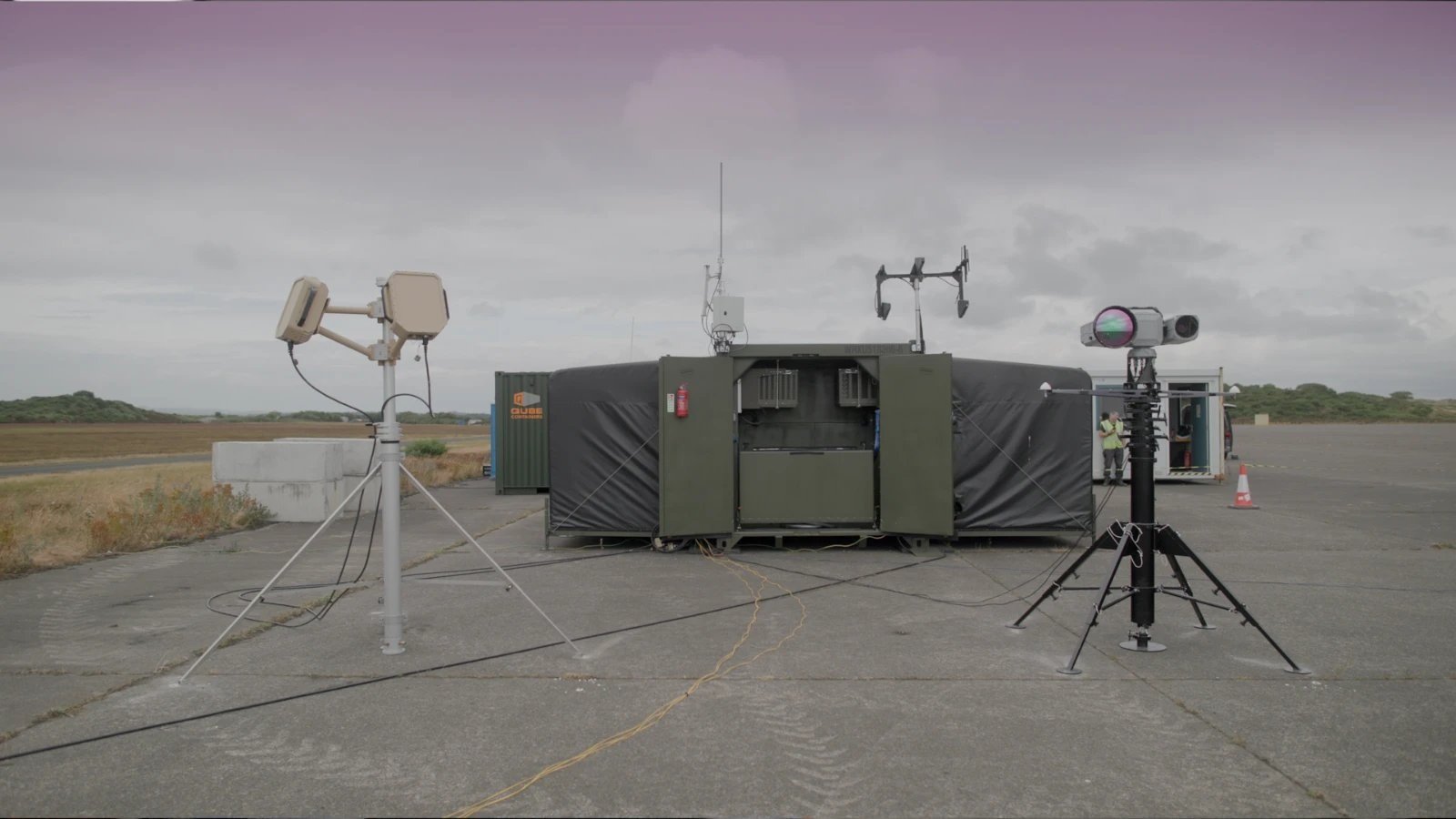
In response, Ukrainian units have developed layered counter-drone tactics. These include the use of radar-linked detection systems, electronic warfare measures, and increasingly, interceptor drones designed specifically to destroy incoming UAVs at low cost.
Combat units such as the Ukrainian drone group Wild Hornets have documented engagements against advanced Shahed variants, contributing to the refinement of interception techniques now being exported to partner countries.
Nature of Assistance and Training
While full operational details remain undisclosed, defense analysts indicate that Ukrainian support in the Middle East is likely structured across three main areas.
First, mobile air defense teams equipped with interceptor drones are expected to be deployed to protect critical infrastructure and military installations. Second, Ukrainian personnel are providing training programs for local forces, focusing on detection, tracking, and neutralization of low-altitude UAV threats. Third, assistance is being offered in establishing integrated command-and-control systems to coordinate responses to mass drone attacks.
Initial reports suggest Ukrainian teams have already participated in defensive operations, including intercepting incoming drones targeting infrastructure in the United Arab Emirates.
Defense Economics and Equipment Procurement
A key factor driving the cooperation is the cost imbalance between traditional air defense systems and low-cost drones. Interceptor missiles used by systems such as the Patriot can cost several million dollars per launch, while Shahed-type drones are estimated at approximately $50,000 per unit.
Ukraine has addressed this challenge by developing high-speed interceptor drones costing between $800 and $3,000. These systems are capable of engaging hostile UAVs at significantly lower cost while maintaining high interception effectiveness.
Several Middle Eastern countries—including Saudi Arabia, the UAE, Qatar, and Kuwait—are currently in discussions with Ukrainian manufacturers to procure such systems. Ukraine’s defense industry has scaled production capacity to approximately 2,000 interceptor drones per day and has indicated it can supply up to 1,000 units daily to partner nations if agreements are finalized.
Among the systems under consideration are interceptor models developed by Ukrainian groups such as Wild Hornets, as well as platforms reportedly associated with developers like General Cherry and Skyfall.
Expanding Defense Cooperation
The deployment marks one of the first large-scale international applications of Ukraine’s battlefield-developed counter-drone capabilities. Ukrainian Unmanned Systems Forces and specialized military units are providing the deployed personnel.
Officials in Kyiv indicated that further deployments and additional agreements with partner countries are under preparation. The initiative is expected to expand as regional demand grows for cost-effective solutions to counter unmanned aerial threats.
The program reflects a broader shift toward distributed, low-cost air defense systems, with Ukraine positioning itself as a key provider of operational expertise and technology in countering modern drone warfare.
——— End of Article ———