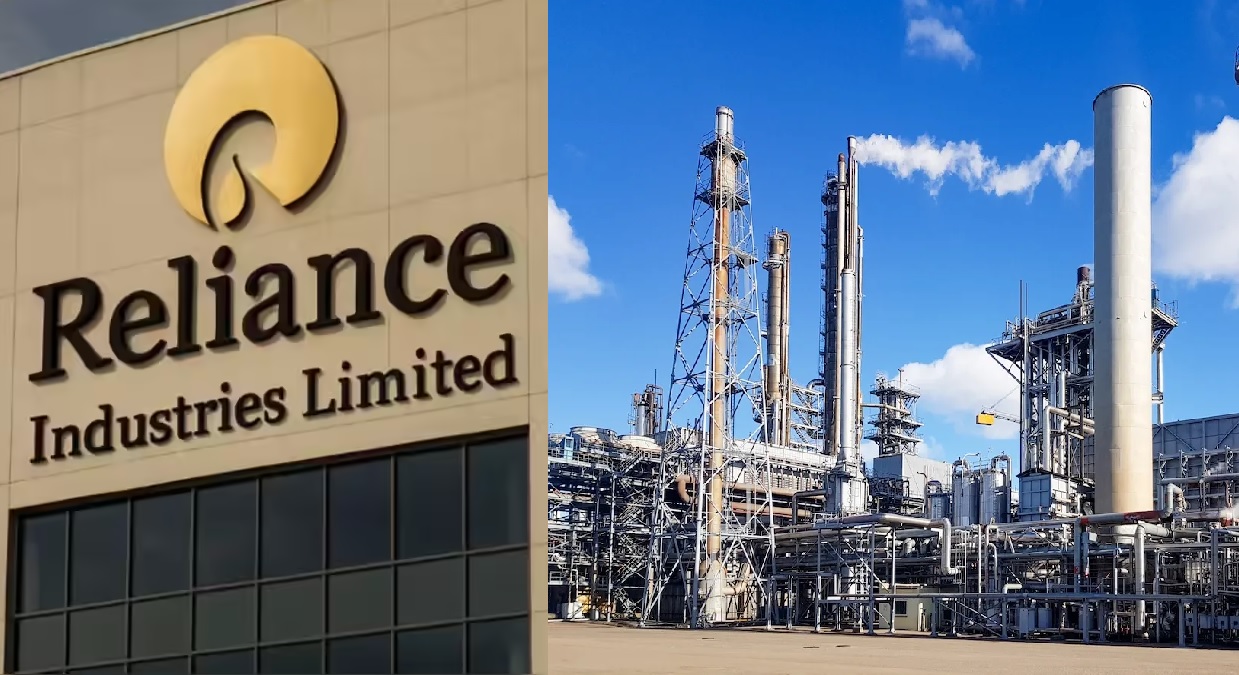
BROWNSVILLE, TEXAS — March 11, 2026 : The United States government has announced plans for the construction of the first major new oil refinery built in the country in approximately five decades. The facility will be developed at the Port of Brownsville in South Texas under a project led by America First Refining, with investment support from India-based Reliance Industries.
The announcement was made by Donald Trump, who described the initiative as the largest energy investment agreement ever associated with a refinery project in the United States. The project includes a long-term supply and product distribution arrangement valued at approximately $300 billion over two decades.
Construction of the refinery is scheduled to begin in the second quarter of 2026.
Project Location and Development Structure
The refinery will be built at the Port of Brownsville, a strategic Gulf Coast port located near the U.S.–Mexico border. The project is being organized by the American development company America First Refining.
According to the announcement, the facility will be designed specifically to process American light shale crude oil produced from domestic shale formations. The refined products will include gasoline, diesel, jet fuel, and petrochemical feedstocks intended for both domestic use and export markets.
Groundbreaking is planned for the second quarter of 2026. Federal and state officials indicated that the project is expected to generate thousands of jobs in South Texas during construction and operational phases.
The refinery has been described by the administration as being engineered to operate with modern environmental controls and efficiency standards, with officials referring to it as potentially “the cleanest refinery in the world.”
Structure of the $300 Billion Agreement
While the project has been publicly characterized as a $300 billion energy deal, industry disclosures indicate that the figure represents the total economic value of a 20-year offtake agreement linked to the refinery’s operations rather than the direct construction cost alone.
Under the agreement:
-
The facility will purchase approximately 1.2 billion barrels of American shale crude oil over a 20-year period.
-
The refinery will produce and distribute roughly 50 billion gallons of refined petroleum products during that time.
-
The initial capital investment provided by Reliance Industries is expected to be in the hundreds of millions of dollars, with additional financing likely to come from project partners and lenders.
The offtake arrangement ensures long-term demand for U.S. shale oil while establishing predictable refining output for international markets.
First Major U.S. Refinery Since the 1970s
No major new oil refinery of comparable scale has been built in the United States since the 1970s. The last major facility to break ground was the Marathon Oil Garyville Refinery, developed when Richard Nixon was serving as U.S. president.
At the time, global crude oil prices were approximately $3 per barrel, highlighting the scale of economic change in the global energy market since the previous refinery construction wave.
In the decades that followed, the United States expanded refining capacity largely through upgrades and expansions of existing facilities rather than building entirely new refineries.
Role of Reliance Industries
The primary foreign investor in the Brownsville project is Reliance Industries, controlled by the Ambani family, which holds a 50.39 percent promoter stake in the company.
Reliance operates the Jamnagar Refinery Complex, widely recognized as the largest single-site refinery complex in the world with a combined refining capacity of approximately 1.24 million barrels per day.
Participation in the Brownsville refinery provides Reliance with an operational presence in U.S. shale refining while expanding its global refining footprint beyond its flagship Jamnagar operations.
The investment also diversifies the company’s crude supply exposure by allowing processing of U.S. shale crude, rather than relying primarily on oil shipments from the Persian Gulf.
Strategic Context: Strait of Hormuz Disruptions
The project announcement comes amid disruptions affecting energy shipping routes in the Strait of Hormuz, a critical global oil transit corridor.
Ongoing military tensions involving Iran have contributed to instability in the region, with maritime risks affecting insurance coverage and tanker traffic through the strait. The waterway normally carries a large share of globally traded crude oil.
Shipping risks have been compounded by reports of extensive defensive deployments by the Islamic Revolutionary Guard Corps, which maintains multiple operational commands responsible for maritime defense in the area.
The instability has increased costs and operational uncertainty for energy shipments originating from the Gulf.
U.S. Energy Security Considerations
Despite being one of the world’s largest crude oil producers, the United States has historically relied on both domestic and foreign refining infrastructure to convert crude oil into finished petroleum products.
Disruptions affecting maritime shipping routes such as the Strait of Hormuz have highlighted the vulnerability of global supply chains that depend on long-distance crude transport.
The Brownsville refinery is expected to strengthen domestic refining capacity by processing U.S.-produced shale crude directly within the country, reducing reliance on overseas refining facilities.
Officials state that expanding domestic refining infrastructure helps ensure stable production of gasoline, diesel, jet fuel, and petrochemical feedstocks using American oil resources.
India’s Multi-Aligned Energy Strategy
Reliance’s participation in the U.S. project coincides with India’s broader energy policy approach under Prime Minister Narendra Modi, which emphasizes diversified energy partnerships rather than alignment with a single supplier bloc.
India continues to import large volumes of discounted crude oil from Russia, accounting for more than 40 percent of its total crude imports in recent months.
On March 7, Indian officials rejected the characterization of a U.S. 30-day waiver allowing continued Russian oil purchases as “permission,” stating publicly that India’s energy decisions are determined independently.
At the same time, India maintains logistical access to Iranian crude supplies through infrastructure connected to the Chabahar Port, a port development project supported by New Delhi to maintain trade routes into Central Asia.
India’s international partnerships also include participation in the Quadrilateral Security Dialogue, defense cooperation with Israel, and economic ties with Gulf states hosting approximately 10 million Indian expatriate workers.
Next Steps
Further technical details about the Brownsville refinery — including its final refining capacity, engineering specifications, and environmental compliance framework — are expected to be released by America First Refining and Reliance Industries in the coming weeks.
If completed as planned, the facility would represent the first entirely new large-scale refinery built in the United States in approximately half a century while linking American shale production with international refining investment from India.
——— End of Article ———