Washington / Tehran / Muscat : On 4 February 2026, Iran has formally requested changes to both the venue and agenda of high-level negotiations with the United States scheduled for Friday, February 6, introducing fresh uncertainty into a diplomatic effort aimed at reducing regional tensions, according to reporting by Reuters and The Wall Street Journal.
Diplomatic sources say Tehran has asked that the talks be moved from Istanbul to Muscat and that discussions be limited strictly to nuclear-related issues. The requests are now under consideration by U.S. officials, with no final decision publicly confirmed as of Wednesday.
Push to Shift Talks from Istanbul to Oman
Iranian officials have conveyed through diplomatic channels that they prefer Muscat, Oman, as the location for the talks rather than Istanbul, Turkey. Tehran argues that Oman has historically served as a neutral and discreet venue for sensitive U.S.–Iran contacts, including the back-channel negotiations that preceded the 2015 Joint Comprehensive Plan of Action (JCPOA).
Iranian diplomats have described the proposed Oman setting as an extension of prior technical-level discussions, rather than a new political summit. According to regional officials cited by Reuters, Tehran believes this framework would better suit its objectives and reduce the visibility associated with a larger international meeting.
U.S. officials were initially reluctant to change the venue, but Axios reported that the Trump administration may be prepared to accept the shift in order to preserve the opportunity for talks. The White House has not officially announced whether the location has been finalized.
Dispute Over the Scope of Negotiations
Alongside the venue issue, Iran has sought to sharply restrict the agenda of the discussions. Tehran has stated that negotiations should focus exclusively on nuclear matters, including uranium enrichment levels, monitoring mechanisms, and sanctions relief linked to the nuclear program.
Iran has communicated that its ballistic missile program and its regional activities are not open for negotiation, describing these areas as non-negotiable. Iranian officials have also expressed opposition to discussing regional security issues in the same forum as nuclear talks.
The U.S. position differs significantly. Washington has indicated that it favors a broader framework that would address not only nuclear concerns but also Iran’s missile capabilities and its involvement in regional conflicts. The American delegation was prepared to pursue what officials have described as a comprehensive agreement.
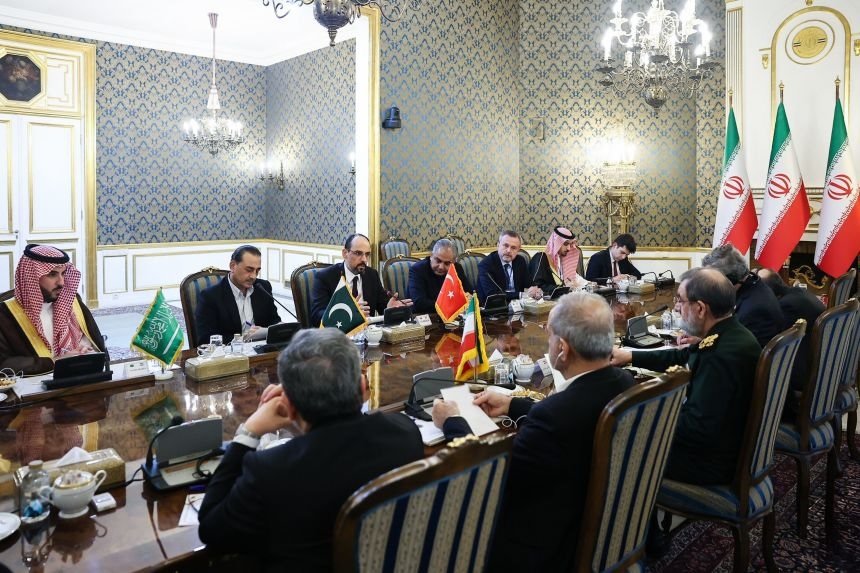
Iran has also requested that the talks be conducted on a strictly bilateral basis. Under the original Istanbul plan, Turkey, Qatar, Egypt, and Saudi Arabia were expected to attend as observers or participants in certain sessions. Tehran is now asking that these regional actors be excluded from the negotiating room.
Threats to Withdraw if Conditions Are Not Met
According to The Wall Street Journal, senior Iranian officials have privately warned that Iran could withdraw from the talks altogether if its demands regarding the venue and agenda are rejected. Diplomats familiar with the discussions say these warnings are intended to increase pressure on Washington as the deadline approaches.
Analysts cited in the report assess that Tehran is attempting to test the Trump administration’s willingness to compromise. By signaling a readiness to cancel talks involving senior U.S. figures, Iran appears to be seeking leverage to secure a narrower agenda and preferred logistics.
These diplomatic maneuvers are taking place against a backdrop of heightened military activity in the region. President Donald Trump recently stated on social media that serious consequences would follow if negotiations fail, a message Iranian officials have interpreted as negotiating under military pressure.
Negotiators and Ongoing Preparations
Despite the disagreements, preparations for the Friday session have continued. The United States is expected to be represented by Steve Witkoff and Jared Kushner. Iran’s delegation is led by Foreign Minister Abbas Araghchi.
Diplomatic sources say that logistical planning remains provisional, pending a final decision on the location and format of the meeting.
Military Incident Adds to Tensions
The diplomatic uncertainty coincides with recent military developments in the region. On February 3, a U.S. F-35 fighter jet intercepted and shot down an Iranian Shahed-139 drone that approached the USS Abraham Lincoln while it was operating in the Arabian Sea.
White House Press Secretary Karoline Leavitt confirmed the incident, describing it as serious but stating that it had not led to an immediate cancellation of the planned talks. She said the negotiations remain “scheduled for now” and emphasized that the United States is engaging diplomatically while maintaining its military posture.
Uncertain Outlook Ahead of Friday Deadline
As of Wednesday afternoon, governments and analysts are closely monitoring developments. If Washington agrees to relocate the talks to Oman, it would mark a concession to Iranian preferences on procedure. However, unresolved disagreements over the scope of the negotiations continue to pose a risk to the meeting.
Diplomatic sources caution that a failure to bridge these gaps before Friday could result in a last-minute collapse of the talks, potentially prolonging diplomatic deadlock and maintaining elevated military tensions in the Gulf region.
——— End of Article ———