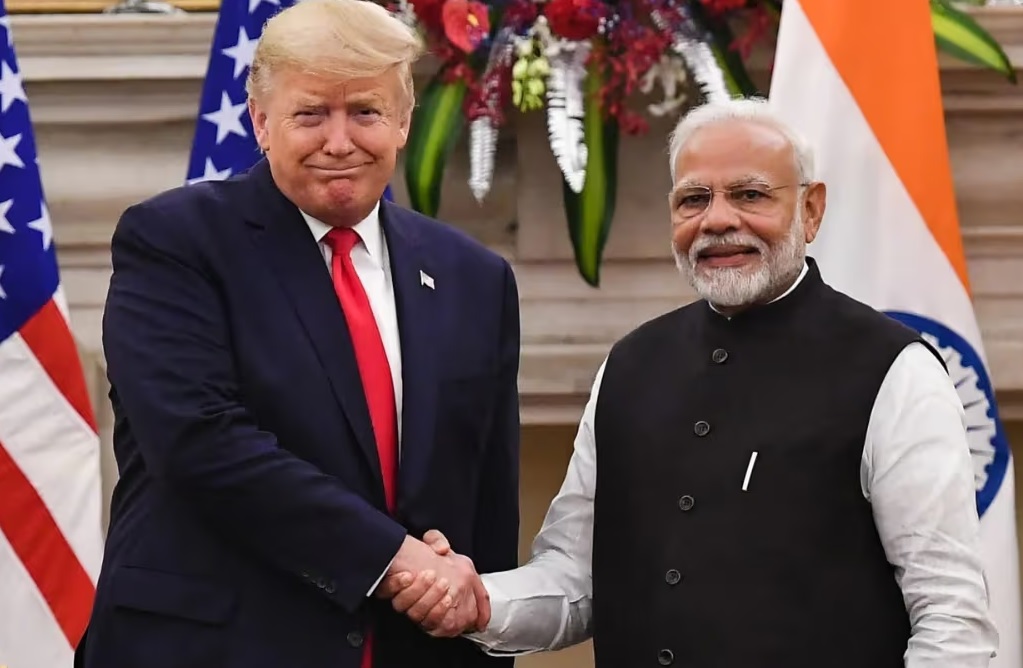
New Delhi / Washington : The United States and India have reached a significant trade understanding that reduces tariffs on Indian exports to the US to 18%, ending months of uncertainty triggered by punitive duties that had climbed to 50%. The announcement was made jointly by US President Donald Trump and Indian Prime Minister Narendra Modi, marking a reset in bilateral trade relations between the two largest democracies.
The decision restores competitiveness for a wide range of Indian exports and brings immediate relief to sectors that had been strained by reciprocal tariffs and additional penalties imposed over India’s energy purchases from Russia. While the formal trade agreement is yet to be signed and technical details are still being finalised, officials on both sides indicated that the new tariff rate will take effect immediately.
Background to the Tariff Rollback
The breakthrough follows a prolonged stalemate after the Trump administration imposed a 25% reciprocal tariff on Indian goods, followed by an additional 25% levy linked to India’s continued import of Russian crude oil. These measures pushed the effective tariff burden to 50%, sharply eroding the price competitiveness of Indian exports in the US market.
Pressure for a resolution intensified after India concluded a comprehensive Free Trade Agreement (FTA) with the European Union in late January. Analysts view that agreement as a key catalyst that prompted Washington to accelerate negotiations with New Delhi to prevent a relative erosion of US commercial influence in India.
India’s Comparative Position After the Deal
With tariffs reduced to 18%, India now enjoys a more favourable position compared to several competing manufacturing hubs in Asia. Goods from Malaysia and Thailand face tariffs of around 19%, while exports from Vietnam and Bangladesh are subject to 20%. Chinese exports to the US continue to attract significantly higher duties of about 34%.
Commerce and Industry Minister Piyush Goyal told Parliament that the agreement gives India a “very good” comparative advantage, particularly for labour-intensive industries. Trade specialists from EY and Deloitte noted that the shift moves India from being a tariff-hit exporter to a negotiated partner with a defined stake in the US market, reinforcing its position as a “China-plus-one” supply-chain alternative.
Energy Commitments and the Russian Oil Question
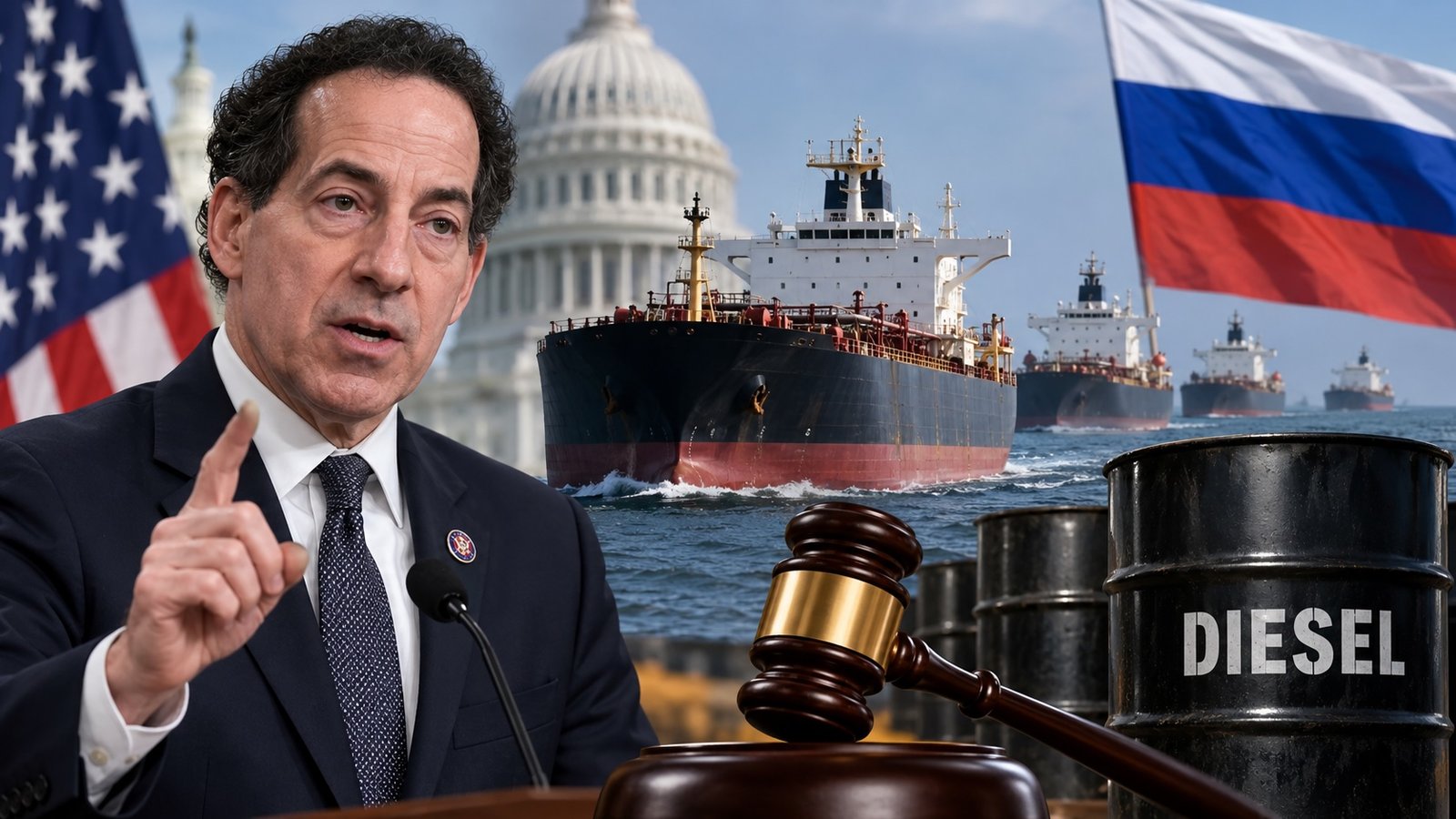
A central element of the US announcement relates to energy. In a post on Truth Social, President Trump said that India had agreed to stop buying Russian oil and instead increase purchases from the United States, with Venezuelan crude also cited as a possible alternative.
Moscow has stated that it has not received any official communication from New Delhi confirming a policy shift. However, shipping and customs data show that India’s dependence on Russian crude had already been easing before the announcement. According to Kpler, Russia’s share of India’s crude imports fell to 33.7% between April and November 2025, down from 37.9% a year earlier. In volume terms, imports declined from about 1.8 million barrels per day in November 2025 to 1.16 million barrels per day in January 2026. Over the same period, the US share rose to 8.1% from 4.6%.
Energy analysts caution that Russian supplies are unlikely to fall sharply in the immediate term, as existing contracts and refinery configurations limit rapid substitution. An SBI Research report estimates that India could save close to $3 billion annually if part of its Russian oil intake is replaced with Venezuelan heavy crude, provided discounts of $10–$12 per barrel are maintained to offset higher freight and insurance costs. Venezuelan heavy crude is currently priced at around $51 per barrel.
Impact on Key Export Sectors
The revised tariff regime covers nearly 60% of India’s exports to the US and is expected to stabilise margins across several industries. Gems and jewellery exports, which had fallen by about 44% during the high-tariff phase, are expected to recover as the effective duty burden eases. Textiles and garments stand to gain from India’s lower tariff relative to Bangladesh and Sri Lanka, while pharmaceuticals—where the US accounts for 30–40% of sector revenues—are expected to see improved predictability in pricing and volumes.
Economists estimate that the rollback could add around 30 basis points to India’s headline GDP growth, broadly offsetting the drag created by the earlier tariff regime. Goldman Sachs has projected an annualised GDP boost of about 0.2 percentage point, while Barclays estimates an impact closer to 30 basis points.
Market and Currency Reaction
Financial markets responded positively to the announcement. The Sensex recorded its fifth-largest single-day gain on record, adding approximately ₹12 lakh crore to investor wealth. Foreign institutional investors were net buyers, with inflows of ₹5,236 crore during the session.
The Indian rupee strengthened sharply, appreciating by 124 paise to 90.27 against the US dollar. This marked its strongest single-day gain in seven years and the best performance since late 2018.
Agriculture and Dairy Remain Protected
Despite President Trump’s reference to a “Buy American” commitment involving up to $500 billion in purchases and investments, Indian officials reiterated that sensitive sectors remain safeguarded. Minister Goyal confirmed that agriculture and dairy were excluded from tariff liberalisation, a position also acknowledged by US Trade Representative Jamieson Greer.
Agriculture and allied activities support the livelihoods of more than 700 million people in India and are considered non-negotiable due to food security and rural income considerations. India maintains agricultural tariffs ranging from zero to 150%, while the US also applies high duties on select products, including tariffs of up to 350% on tobacco.
Why the Deal Came Together Now
Negotiations continued throughout the period of elevated tariffs, with sustained engagement between senior ministers and officials on both sides. The arrival of US Ambassador Sergio Gor and the momentum created by India’s agreement with the EU are seen as key factors that helped close the remaining gaps.
Next Steps
A joint statement outlining the detailed provisions of the agreement is expected in the coming days. Analysts have welcomed the announcement but emphasise the importance of reviewing the final text to assess sector-specific implications and safeguard mechanisms.
For now, the tariff reduction marks a clear easing of trade tensions and restores a degree of predictability to India–US commercial relations, setting the stage for a broader recalibration of economic ties between the two countries.
——— End of Article ———