PABRADĖ, Lithuania — June 10, 2026 : U.S. Army soldiers have successfully tested the German-built Helsing HX-2 artificial intelligence-enabled strike drone during the latest phase of Project Flytrap, a multinational military exercise focused on counter-drone operations and autonomous battlefield technologies. The exercise, conducted at the Pabradė Training Area in Lithuania near NATO’s eastern frontier, demonstrated the drone’s ability to detect, track, and engage targets in a heavily contested electronic warfare environment.
The results, released on June 9, 2026, highlight growing interest within the U.S. military in autonomous precision-strike systems capable of operating when communications and satellite navigation networks are disrupted.
HX-2 Demonstrates High Effectiveness in Combat Scenarios
The testing took place during Project Flytrap 5.0, an initiative led by the U.S. Army’s V Corps to accelerate the development and fielding of counter-unmanned aerial systems (C-UAS) and next-generation drone technologies. Soldiers from the 2nd Squadron, 2nd Cavalry Regiment operated the HX-2 in a series of realistic battlefield scenarios designed to replicate modern drone warfare conditions.
During the exercise, the drone achieved 15 direct target kills and two near-misses across 17 combat engagements, demonstrating a high level of accuracy and effectiveness. The system was also used for reconnaissance and target acquisition missions, where it successfully identified, tracked, and followed designated targets despite active electronic jamming intended to disrupt GPS signals and communications links.
Project Flytrap 5.0 involved personnel from the United States, the United Kingdom, and Australia, along with industry partners. More than 20 different systems were evaluated during the exercise, while approximately 200 drone flights were conducted to collect operational data and assess performance under realistic field conditions.
Designed for Operations in GPS-Denied Environments
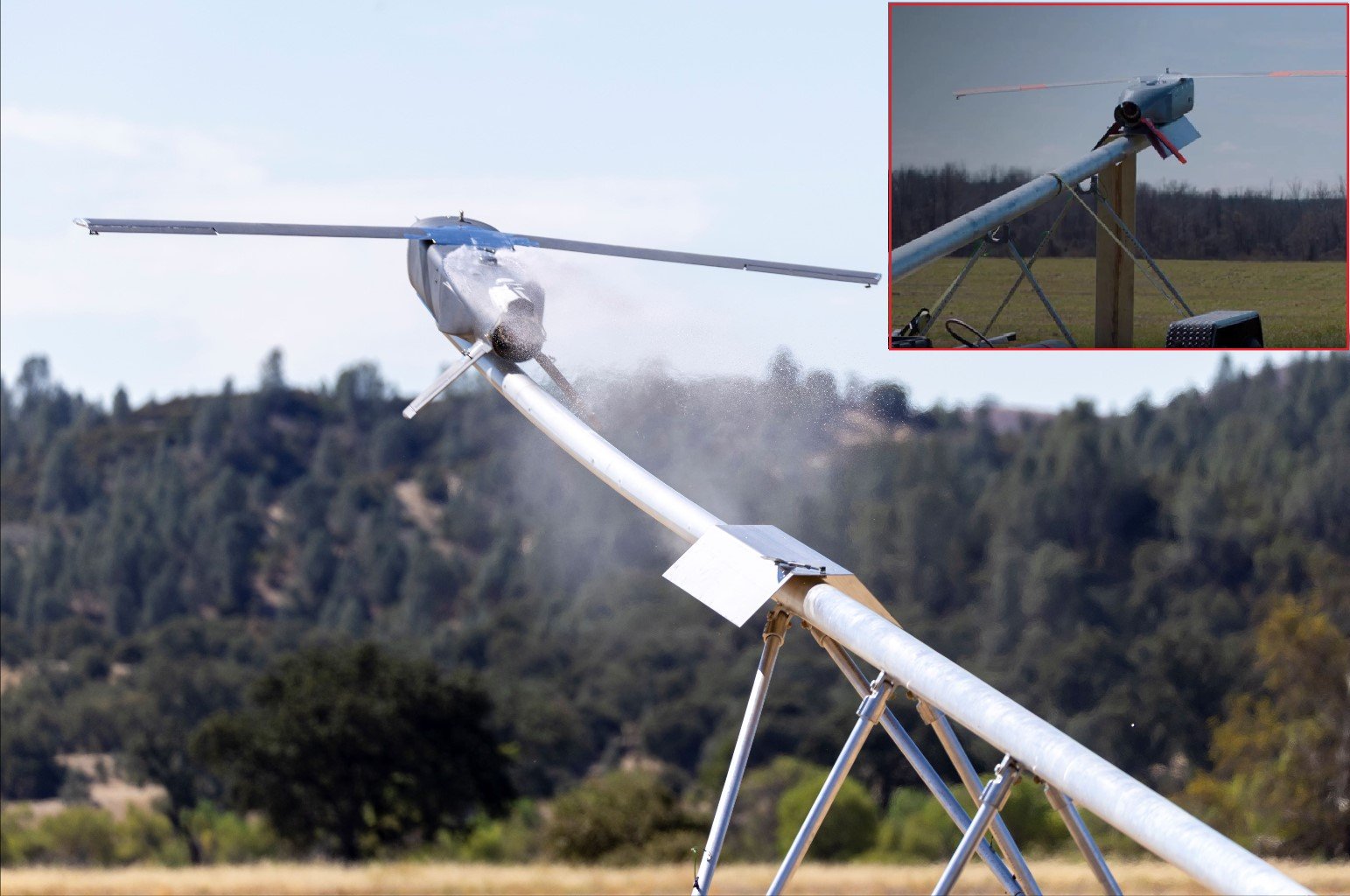
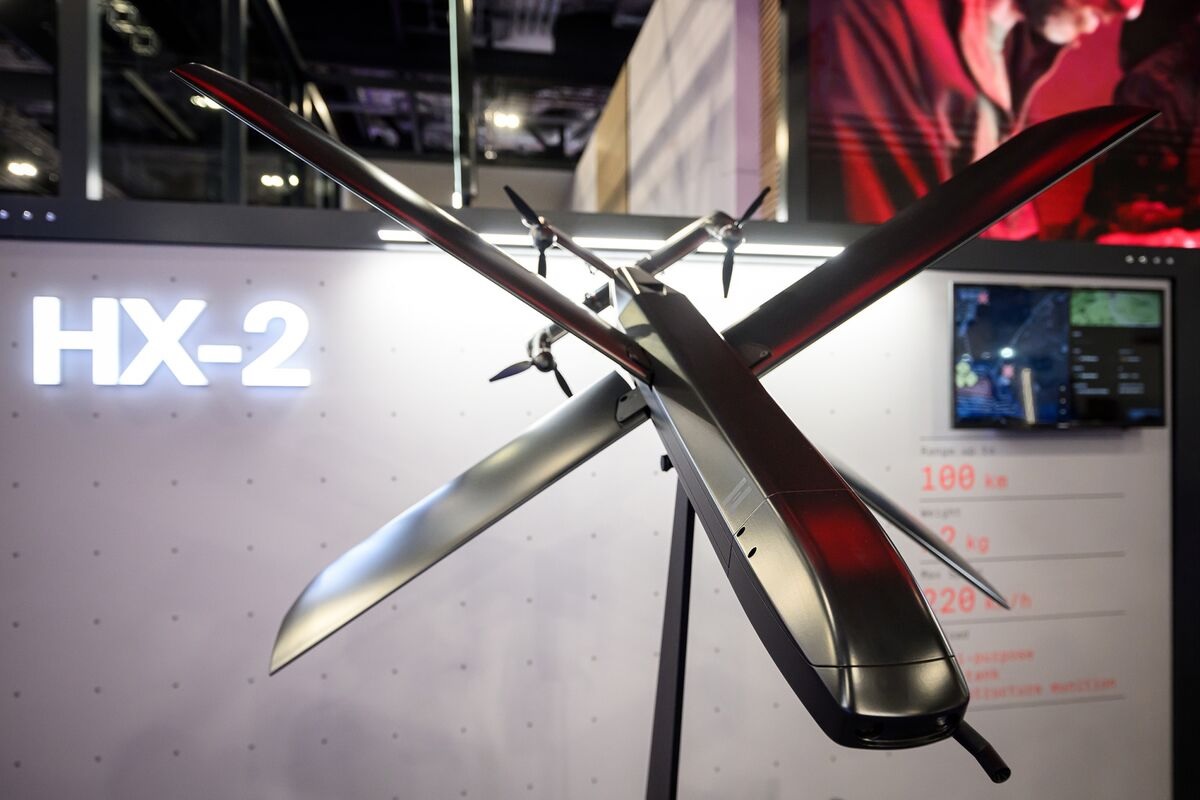
Developed by Munich-based defense technology company Helsing, the HX-2 is a software-defined loitering munition designed for large-scale production and deployment. First unveiled in late 2024, the drone features a distinctive X-shaped wing and quadcopter configuration, combining the advantages of vertical takeoff capability with efficient forward flight.
One of the HX-2’s key capabilities is its ability to operate independently of satellite navigation systems. Rather than relying solely on GPS, the drone uses onboard artificial intelligence, stored mapping data, and terrain-recognition technology to navigate and continue missions even when navigation signals are unavailable or jammed.
Its AI-powered computer vision system enables the drone to search for, identify, re-identify, and track targets autonomously, allowing operations to continue even when data links with operators are temporarily interrupted.
Technical Specifications of the HX-2
The electrically powered HX-2 weighs approximately 12 kilograms and can carry payloads of up to 5 kilograms. The drone is capable of carrying multiple warhead options, including anti-tank and anti-structure shaped-charge munitions designed to engage armored vehicles, artillery systems, and fortified positions.
Powered by four rear-mounted electric motors, the drone can reach speeds of up to 220 kilometers per hour and engage targets at distances of up to 100 kilometers beyond the operator’s line of sight.
Helsing describes the HX-2 as a mass-producible strike platform that receives over-the-air software updates, allowing capabilities to be upgraded without major hardware modifications.
Integration with Altra Software Platform
The HX-2 is integrated with Helsing’s Altra reconnaissance-strike software platform, which enables multiple drones and other battlefield assets to coordinate missions and share targeting information. The networking capability supports coordinated strike operations and swarm tactics while maintaining human oversight.
Although the drone can autonomously navigate and track targets, Helsing follows a “human on the loop” operational concept, ensuring that a human operator remains responsible for supervising missions and authorizing critical engagement decisions.
According to Alex Miller, Chief Technology Officer of the U.S. Army, the HX-2 was initially evaluated for one-way attack and counter-drone missions but demonstrated additional value as a reconnaissance and loitering platform during the exercise. Company engineers were present throughout the testing to support operational assessments and gather performance feedback from soldiers.
Growing U.S. Interest in European Autonomous Strike Systems
The successful performance of the HX-2 reflects increasing U.S. military interest in European-developed autonomous strike systems that can operate effectively in contested environments. Official U.S. Army imagery released from Project Flytrap showed at least one HX-2 launch during the exercise, while Gen. Christopher Donahue, commander of U.S. Army Europe and Africa, was photographed examining an HX-2 transport container.
Founded in 2021, Helsing has rapidly expanded its position in the defense technology sector. The company has secured agreements to supply thousands of HX-2 drones, including systems funded for Ukraine, and operates a dedicated production facility in southern Germany. The platform was developed with input from Ukrainian operators and builds on operational experience gained from earlier systems such as the HF-1.
Project Flytrap to Support Future NATO Drone Capabilities
The latest evaluation follows earlier multinational testing conducted in 2025, during which soldiers from several countries successfully operated the HX-2 after limited training periods. The drone’s performance in Lithuania reinforces the growing role of autonomous systems in enhancing battlefield awareness, survivability, and precision strike capabilities in electronic warfare environments.
Project Flytrap is expected to continue expanding, with future phases planned to reach brigade-level operations. Military officials say the operational data collected during these exercises will help shape future U.S. Army and NATO requirements for counter-drone operations and AI-enabled precision-strike systems.
——— End of Article ———