WASHINGTON — March 28, 2026 : The United States has initiated the deployment of the Nimitz-class nuclear-powered aircraft carrier USS George H.W. Bush (CVN-77) and its Carrier Strike Group (CSG) to the U.S. Central Command (CENTCOM) area of responsibility, according to a report by CBS News citing multiple U.S. officials.
The carrier departed from its homeport at Naval Station Norfolk earlier this week and is currently en route toward the Middle East. Officials indicated that the strike group could join ongoing combat operations against Iran upon arrival in the CENTCOM theater, depending on operational requirements.
The deployment is being carried out under the authority of United States Central Command, which oversees U.S. military operations across the Middle East and surrounding regions.
Strike Group Composition and Training Certification
The USS George H.W. Bush Carrier Strike Group recently completed its Composite Training Unit Exercise (COMPTUEX) on March 5, 2026. This exercise certified the entire formation for sustained, high-intensity combat operations following integrated training across air, surface, and command elements.
Carrier Air Wing 7 (CVW-7), assigned to the carrier, includes nine squadrons comprising approximately 2,400 personnel. During COMPTUEX, the air wing conducted 1,586 flight sorties, validating readiness for operational deployment.
The strike group includes multiple surface combatants that have already begun deployment:
- USS Ross (DDG-71): Departed Norfolk, Virginia, on March 25
- USS Donald Cook (DDG-75): Departed from Florida earlier this week
- USS Mason (DDG-87): Also departed from Florida to integrate with the group
These Arleigh Burke-class guided-missile destroyers provide air defense, missile strike capability, and escort functions for the carrier.
Air Wing Capabilities and Operational Role
USS George H.W. Bush is capable of carrying 70 to 90 aircraft, significantly enhancing U.S. aerial and strike capacity in the region. Carrier Air Wing 7 typically includes:
- F/A-18E/F Super Hornet multirole fighters
- EA-18G Growler electronic warfare aircraft
- E-2D Hawkeye airborne early warning and command aircraft
- MH-60 Seahawk helicopters for anti-submarine and utility missions
This mix enables the strike group to conduct air superiority, precision strike, intelligence, surveillance, reconnaissance (ISR), and electronic warfare operations.
Naval Positioning and Ongoing Operations
Existing U.S. Carrier Presence in the Region
Prior to this deployment, two U.S. carrier strike groups were already operating in the CENTCOM area:
- USS Abraham Lincoln (CVN-72)
- USS Gerald R. Ford (CVN-78)
The USS Gerald R. Ford recently sustained an onboard fire that caused damage to ventilation systems and living quarters. The vessel is currently undergoing repairs at a naval facility in Souda Bay.
U.S. defense officials have not confirmed whether USS George H.W. Bush will replace the Ford during its repair period or operate alongside existing carriers. If all groups remain active, it would result in a three-carrier presence in the region, supporting ongoing operations under Operation Epic Fury.
Transit time for the Bush Carrier Strike Group to reach the operational theater is estimated at 10 to 12 days once fully underway.
Strategic Context and Regional Developments
The deployment comes amid continued military exchanges involving the United States, Israel, and Iran.
Coalition operations led by the U.S. and Israel have focused on Iranian military infrastructure, nuclear facilities, and industrial sites. In response, Iran has conducted retaliatory drone and ballistic missile strikes targeting U.S. and allied assets.
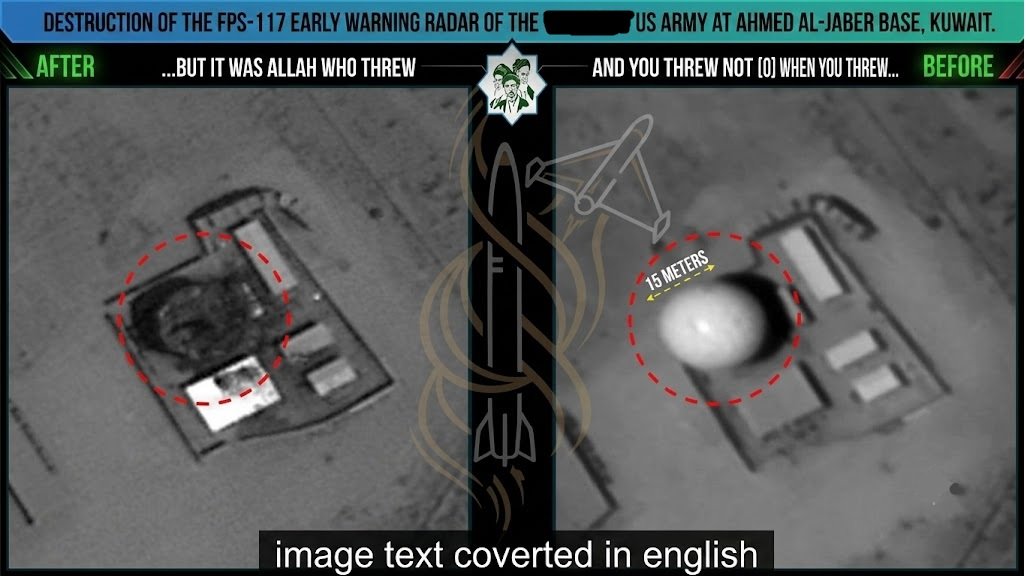
Recent reports indicate an Iranian missile strike on Prince Sultan Air Base, resulting in injuries to U.S. personnel and damage to refueling aircraft.
In parallel, the U.S. Navy’s increased presence is aimed at maintaining maritime security in critical waterways, particularly the Strait of Hormuz, where disruptions to shipping traffic have been reported during the ongoing conflict.
Command Structure and Operational Scope
The USS George H.W. Bush is commanded by Capt. Robert Bibeau, while Rear Adm. Alexis Walker leads Carrier Strike Group 10.
This deployment marks the strike group’s first major operational mission since returning from its previous deployment cycle in August 2023.
U.S. officials stated that the movement aligns with existing CENTCOM operational requirements and does not represent a change in broader military strategy. The carrier strike group remains prepared for a full spectrum of missions, including air operations, maritime security, and multi-domain combat support, while maintaining continuous forward presence in the region.
——— End of Article ———