WASHINGTON, D.C., — April 6, 2026 : The U.S. Department of Defense has requested funding for 38 F-35A Lightning II fighters for the U.S. Air Force as part of its fiscal year 2027 (FY2027) budget submission, according to the Procurement Programs (P-1) document released in April 2026 by the Office of the Under Secretary of Defense (Comptroller). The request places the fifth-generation aircraft within a broader department-wide acquisition plan totaling 85 Joint Strike Fighters across the U.S. military.
The FY2027 defense budget proposal, submitted to Congress on April 3, 2026, by the Office of Management and Budget, outlines a total national defense spending plan of $1.5 trillion. Within this framework, the Joint Strike Fighter procurement reflects a coordinated approach across the Air Force, Navy, and Marine Corps.
Procurement Structure and Service Allocations
The 85-aircraft total includes 38 F-35A conventional takeoff and landing variants for the Air Force, 37 F-35C carrier-based variants for the U.S. Navy, and 10 F-35B short takeoff and vertical landing aircraft for the U.S. Marine Corps. Of these, 32 aircraft are funded through the base discretionary budget, while 53 are proposed under reconciliation legislation.
The FY2027 request represents an increase compared to the 47 F-35 aircraft requested in FY2026. Within the Air Force inventory specifically, the requested 38 F-35As mark a recovery from 24 aircraft funded in FY2026 and align more closely with the 40 aircraft requested in FY2025. The figures indicate a return to a steadier procurement rate following the temporary reduction in the previous fiscal cycle.
The Air Force aircraft procurement account allocates a total of $30.6 billion for aviation programs in FY2027, with the F-35A forming a key component of that funding line.
Platform Role and Operational Characteristics
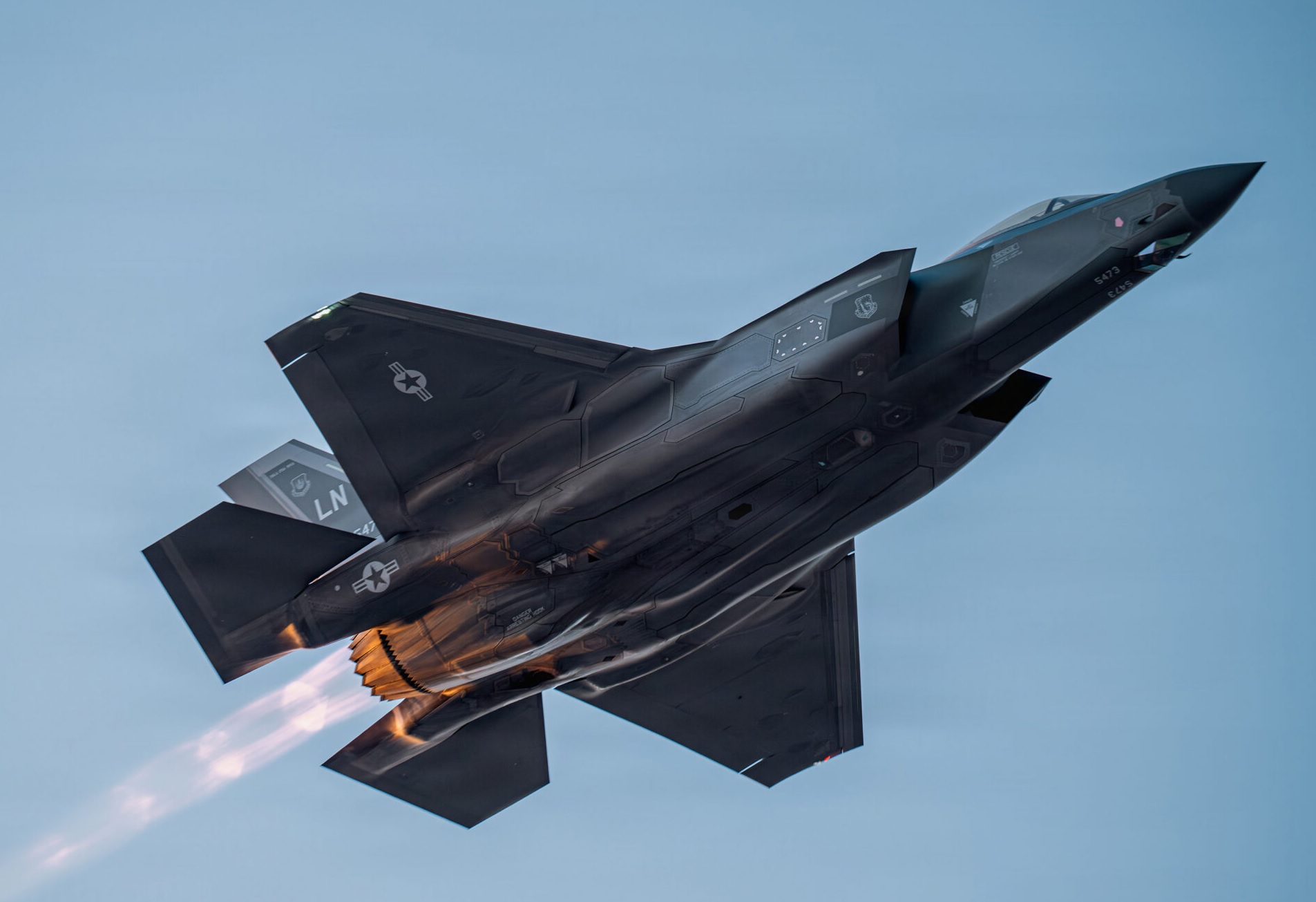
The F-35A serves as the conventional takeoff and landing variant of the Joint Strike Fighter program and is designed as a multirole combat aircraft capable of operating in high-threat environments. The platform supports up to 9g maneuverability and incorporates low observable (stealth) characteristics, sensor fusion, advanced situational awareness, and network-enabled data sharing.
Operational roles assigned to the F-35A include air penetration missions, tactical counter-air operations, precision strike, and suppression of enemy air defenses (SEAD). Program documentation identifies the aircraft as a forward sensing and weapons platform capable of contributing to joint all-domain operations by linking assets across air, land, sea, space, and cyber domains.
Through its onboard systems, the aircraft can collect, process, and distribute real-time battlefield data, enabling it to function both as a shooter and as a node within a wider combat network.
Joint Architecture and Interoperability
The procurement approach maintains a common fifth-generation combat architecture across U.S. military services. This structure supports standardized tactics, training frameworks, sustainment processes, and mission data development.
It also enables interoperability with allied nations operating the F-35 in regions including Europe and the Indo-Pacific, where partner air forces rely on compatible systems for joint and coalition operations.
The program continues to involve Lockheed Martin as the prime contractor, supported by a global supplier network contributing to production and sustainment.
Modernization Funding and Block 4 Upgrades
The FY2027 Air Force procurement tables include approximately $497.97 million allocated for F-35 modifications. This funding supports ongoing modernization of the aircraft as part of its evolution as a combat system rather than a fixed configuration platform.
The allocation aligns with the Block 4 upgrade program, which is intended to integrate additional capabilities to address emerging and peer-level threats. The Government Accountability Office (GAO) has previously identified Block 4 as a long-term modernization pathway involving incremental capability enhancements across the fleet.
Advance Procurement and Industrial Base Continuity
The budget request also includes advance procurement funding within the Air Force F-35 program line. This mechanism allows the Department of Defense to secure long-lead production components and maintain continuity within the industrial base across fiscal cycles.
Such funding supports supplier stability and production planning, ensuring that manufacturing timelines remain consistent despite annual budget variations.
Budget Context and Program Outlook
While the P-1 document specifies procurement quantities and associated funding lines, it does not provide a consolidated total cost for the 85 aircraft, consistent with standard budget documentation practices. Detailed cost breakdowns are typically included in accompanying justification materials and are expected to be examined during upcoming congressional budget hearings.
The FY2027 request maintains the F-35 program as a central element of U.S. tactical airpower planning. By sustaining procurement across all three services and increasing the Air Force’s acquisition rate, the Department of Defense continues to prioritize fifth-generation aircraft for force recapitalization, operational readiness, and integration within joint and allied combat frameworks.
——— End of Article ———