WASHINGTON : The United States is weighing potential logistical support for Israeli military action against Iran’s ballistic missile infrastructure if ongoing diplomatic efforts fail, according to sources familiar with internal national security discussions.
The deliberations come as U.S. and Iranian officials prepare for a second round of indirect nuclear negotiations in Geneva this week, following initial talks held in Oman. The diplomatic track is proceeding alongside a visible expansion of U.S. military deployments in the Middle East.
Contingency Planning After Mar-a-Lago Meeting
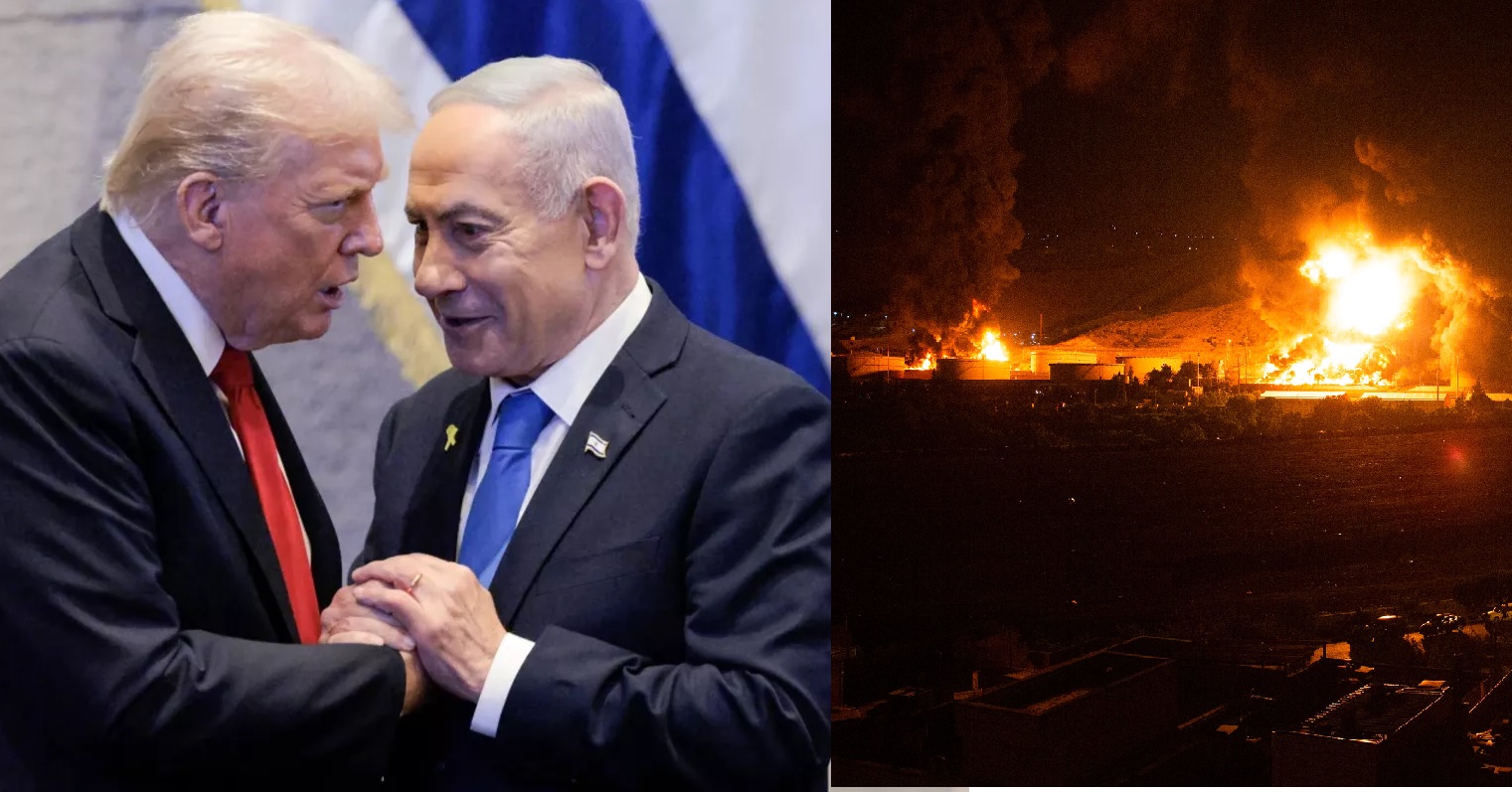
According to two individuals briefed on the matter, U.S. military and intelligence planning has increasingly focused on how Washington could assist Israel in the event of renewed strikes on Iranian missile facilities. The discussions follow a December meeting at Mar-a-Lago between President Donald Trump and Prime Minister Benjamin Netanyahu.
During that meeting, Trump informed Netanyahu that the United States would support Israeli military action targeting Iran’s missile program if Washington and Tehran are unable to reach a negotiated agreement, the sources said.
Current U.S. deliberations are centered less on Israel’s operational capability and more on the mechanics of potential American assistance. Among the options under consideration is providing aerial refueling for Israeli combat aircraft to extend their operational range during long-distance missions.
Airspace Access Remains a Key Constraint
One of the primary operational challenges involves securing overflight permissions. Any potential Israeli strike on Iran would require transit through the airspace of neighboring states.
Jordan, Saudi Arabia, and the United Arab Emirates have issued public statements declaring they would not permit their airspace to be used for strikes against Iran or for retaliatory Iranian attacks directed at third-party countries. These positions complicate potential routing options and factor into U.S. and Israeli military planning.
Expanded U.S. Naval Presence
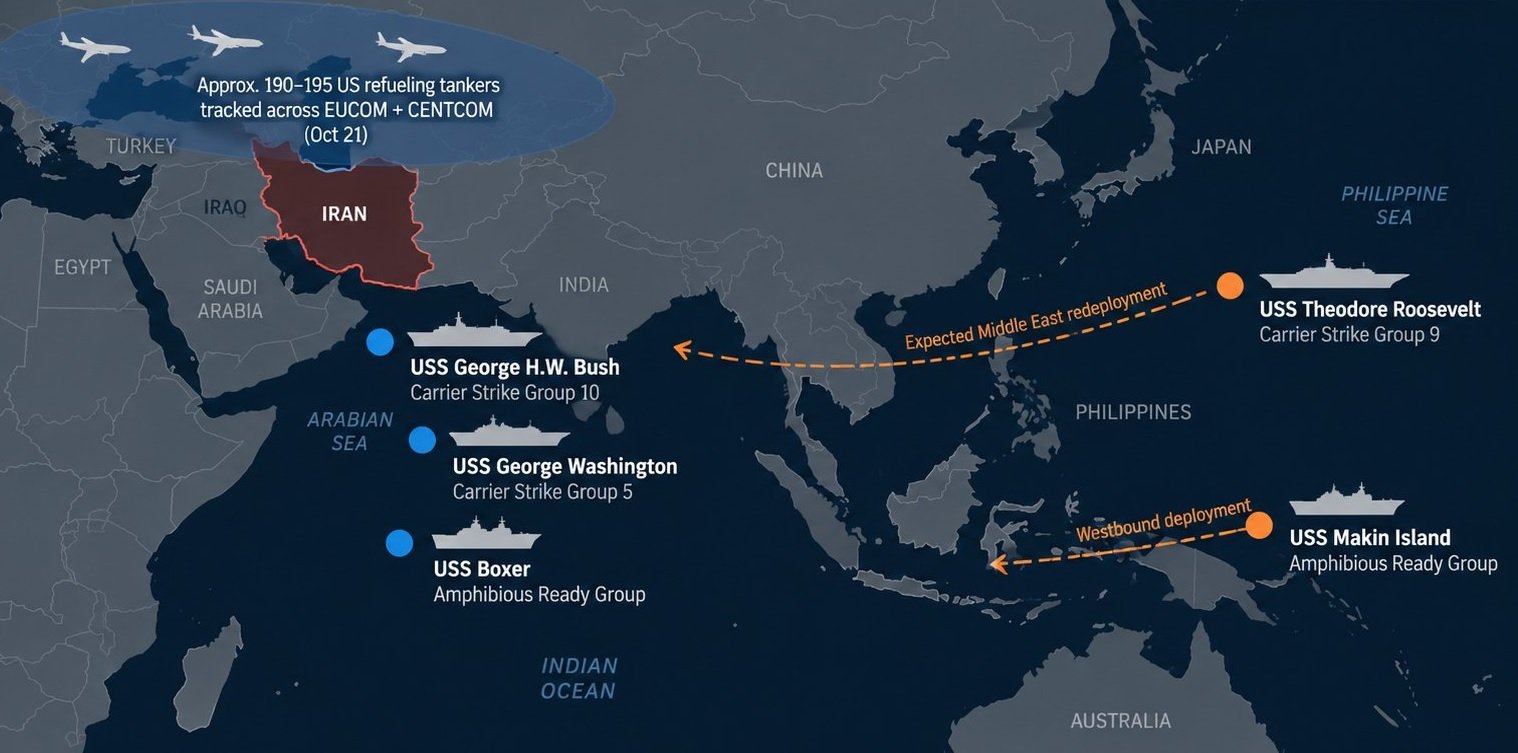
At the same time, the United States has expanded its naval footprint in the region. Four U.S. officials confirmed that the aircraft carrier USS Gerald R. Ford and its accompanying carrier strike group are being deployed to the Middle East from the Caribbean. The carrier will join an existing U.S. naval presence that includes the USS Abraham Lincoln.
Speaking at the White House, President Trump described the deployment of the USS Gerald R. Ford as “prudent insurance” in the event negotiations with Iran do not produce results. The additional carrier strike group increases U.S. naval capabilities in the region during a period of diplomatic engagement.
Second Round of Talks in Geneva
The military posture coincides with continued diplomatic efforts to reach a nuclear understanding with Tehran. After an initial round of indirect negotiations in Oman, U.S. and Iranian representatives are scheduled to meet again in Geneva on Tuesday.
Iranian state media, corroborated by the Associated Press, reported that Foreign Minister Abbas Araghchi and a delegation are traveling to Geneva for the talks. Iranian officials have indicated a conditional willingness to curb certain elements of their uranium enrichment activities in exchange for sanctions relief, though specific terms have not been publicly defined and no written agreement has been announced.
Representing the United States, envoys Steve Witkoff and Jared Kushner are traveling to Switzerland to participate in the discussions. Secretary of State Marco Rubio confirmed their travel plans on Sunday, describing the meetings as important and reiterating that President Trump prefers a diplomatic resolution.
“We’ll see how that comes out,” Rubio said.
Israeli Position on Scope of Any Agreement
Prime Minister Netanyahu has maintained a cautious stance toward the diplomatic process. During a visit to Washington last week, he held talks with President Trump and reiterated Israel’s position that any agreement with Iran must extend beyond its nuclear program.
Netanyahu has repeatedly stated that a prospective accord should include strict limitations on Iran’s ballistic missile development and a full halt to Iranian support for proxy groups operating across the Middle East.
As negotiations resume in Geneva, U.S. military contingency planning, expanded regional deployments, and continued diplomatic engagement are proceeding in parallel under a dual-track approach.
——— End of Article ———