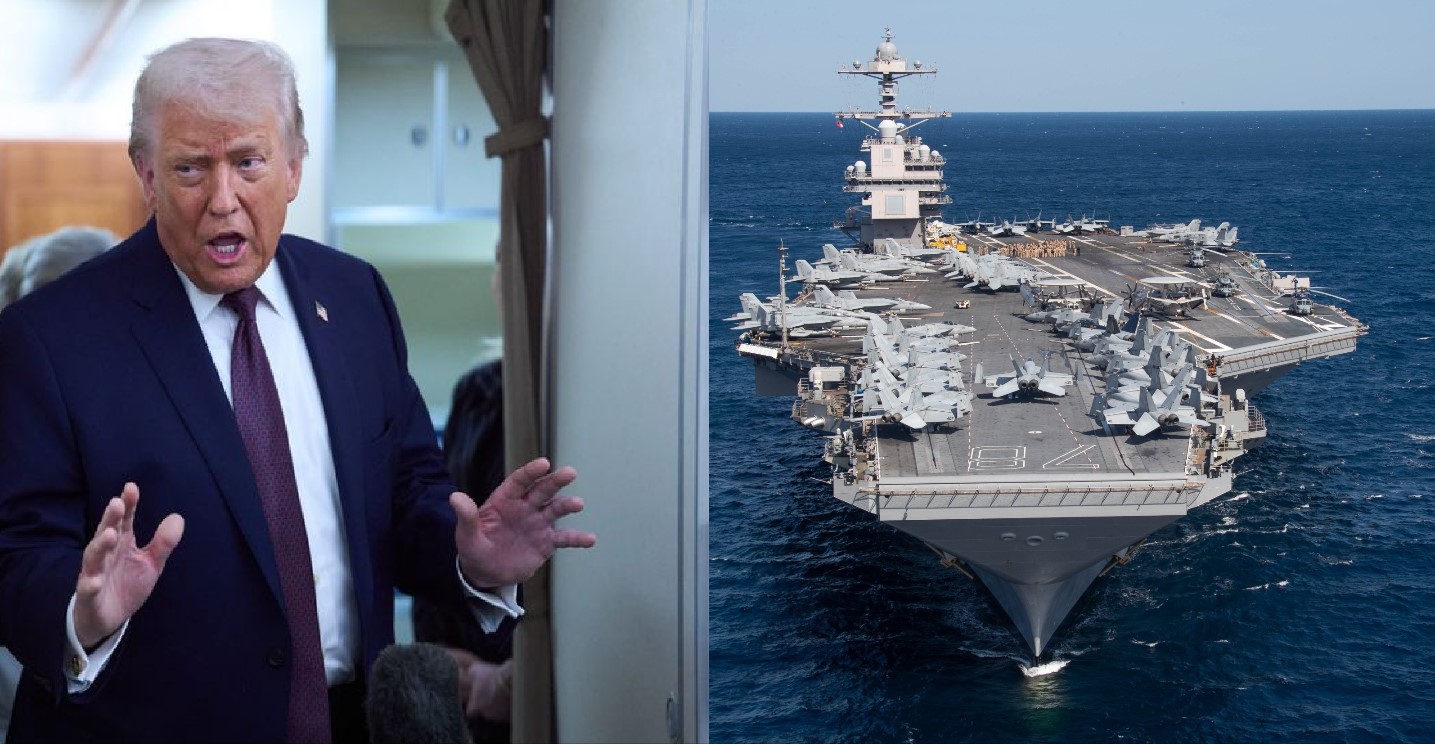
WASHINGTON : President Donald Trump has directed the deployment of the USS Gerald R. Ford carrier strike group to the Middle East, significantly increasing U.S. naval presence in the region as negotiations with Iran over its nuclear program continue. The move will position two American aircraft carrier strike groups in the Persian Gulf, alongside the USS Abraham Lincoln, which is already operating under U.S. Central Command (CENTCOM).
U.S. officials confirmed the decision on Friday, describing it as part of a broader strategy to maintain military pressure while diplomatic efforts remain ongoing.
Expanded Naval Deployment
The USS Gerald R. Ford, the U.S. Navy’s newest and most advanced aircraft carrier, is currently operating in the Caribbean Sea following counter-narcotics missions and the operation that led to the capture of Venezuelan leader Nicolás Maduro. According to defense officials, the vessel is expected to arrive in the Middle East within three to four weeks.
Commissioned in 2017, the Ford is designed to support higher sortie generation rates compared to earlier Nimitz-class carriers. It can carry more than 90 aircraft, including fighter jets, early warning aircraft, electronic warfare platforms, and helicopters. The ship is equipped with electromagnetic aircraft launch systems (EMALS), upgraded radar systems, and expanded power generation capacity.
Once deployed, the Ford will operate alongside the USS Abraham Lincoln and its accompanying carrier strike group. The Lincoln strike group includes guided-missile cruisers and destroyers equipped with Tomahawk land-attack missiles, as well as multiple fighter squadrons. The combined presence restores a two-carrier posture in the region, a configuration previously maintained during the height of the Gaza conflict.
White House Consultations and Diplomatic Track
The deployment order was finalized after a meeting at the White House between President Trump and Israeli Prime Minister Benjamin Netanyahu earlier this week. According to administration sources, discussions focused on Iran’s nuclear activities, ballistic missile development, and support for regional proxy groups.
Following the meeting, Netanyahu stated that any agreement with Iran must address not only uranium enrichment but also missile capabilities and regional security concerns. He expressed skepticism about the prospects for a comprehensive agreement but noted that President Trump appeared more optimistic about negotiations.
President Trump, speaking to reporters in the Oval Office on Thursday, said that Iran should agree to terms quickly. He indicated that while he is prepared to continue negotiations, he expects measurable progress within the coming month and warned of significant consequences if an agreement is not reached.
Impact on Negotiations with Tehran
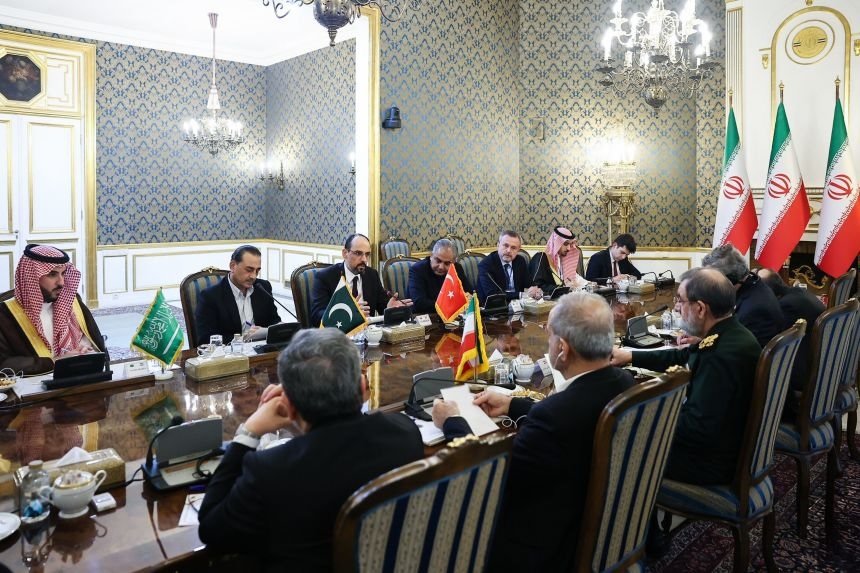
The deployment comes as indirect talks between Washington and Tehran continue. A second round of discussions is tentatively expected next week, although no official date has been announced.
The Trump administration views the increased military buildup as leverage intended to influence negotiations over enrichment limits, missile programs, and broader regional security issues. Iranian officials have repeatedly stated that they will not negotiate under the threat of military action and have cautioned against further escalation.
Diplomatic observers note that the arrival of a second carrier strike group could either accelerate discussions or complicate the negotiation process.
Operational and Logistical Considerations
The redeployment of the Gerald R. Ford extends its operational timeline. The carrier was initially deployed in November 2025 and had been operating in the Caribbean before receiving new orders.
In January, Admiral Daryl Caudle, Chief of Naval Operations, described the Ford as a critical strategic asset for the President but cautioned against repeated deployment extensions, citing their impact on crew readiness, morale, and long-term maintenance schedules. Extended operations can delay scheduled refits and affect overall fleet preparedness.
The Ford will transit the Atlantic Ocean before entering the CENTCOM area of responsibility. Military planners will coordinate integration with naval and air assets already stationed in the region.
Regional Assessment
The presence of two U.S. carrier strike groups in the Persian Gulf increases American air power, missile capability, and maritime security operations near the Strait of Hormuz, a key corridor for global energy shipments. Defense analysts are monitoring how the expanded deployment influences regional security dynamics, diplomatic negotiations, and maritime stability.
The next several weeks, as the Gerald R. Ford transits toward the Middle East and diplomatic talks proceed, will determine whether the reinforced U.S. posture affects the pace and direction of negotiations between Washington and Tehran.
——— End of Article ———