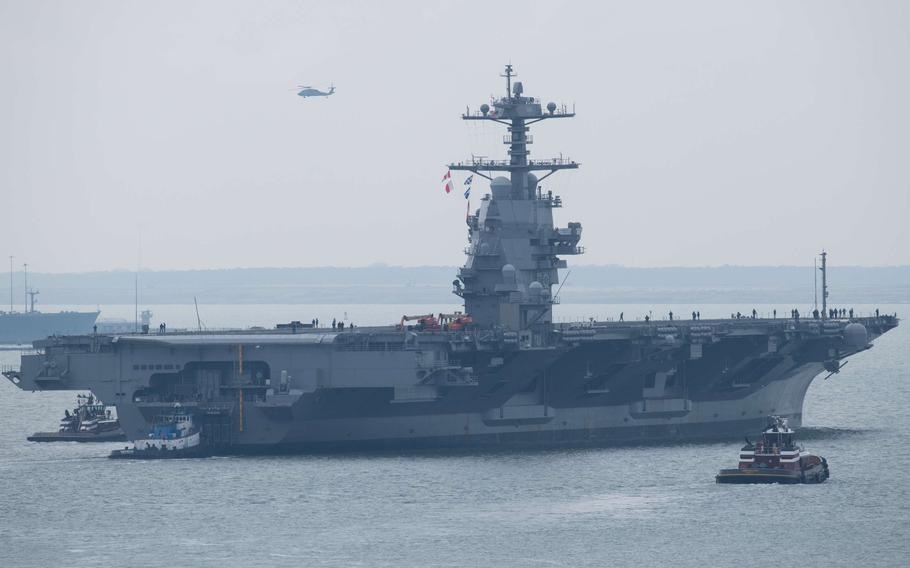
Newport News, Virginia : American shipbuilder Huntington Ingalls Industries announced on February 5, 2026, that the nuclear-powered aircraft carrier USS John F. Kennedy (CVN 79) has successfully completed its first builder’s sea trials and returned to Newport News, marking a major milestone in the construction of the U.S. Navy’s second Gerald R. Ford-class aircraft carrier.
The sea trials were conducted by Newport News Shipbuilding, the only shipyard in the United States capable of building and refueling nuclear-powered aircraft carriers. During the initial period at sea, shipyard personnel and Navy representatives evaluated the carrier’s core systems under operational conditions. These assessments included propulsion performance, steering and navigation, electrical power generation and distribution, and overall ship control, all of which are essential prerequisites before the vessel can advance toward formal delivery.
Sea Trials and Program Progress
Builder’s sea trials are a standard but critical phase in the aircraft carrier construction process. Unlike later acceptance trials led by the Navy, these early trials allow the shipbuilder to verify system performance, identify deficiencies, and make technical adjustments before the ship enters the Navy’s final testing phase. According to the shipyard, the completion of these trials confirms that major mechanical and electrical systems are operating as designed.
Following its return to Newport News, USS John F. Kennedy will undergo further inspections, system refinements, and outfitting work. The ship is then expected to proceed to Navy acceptance trials, during which the United States Navy will independently evaluate the carrier’s readiness for delivery and commissioning.
Strategic Context and Production Tempo
The progress of CVN 79 comes as U.S. defense leaders place increased emphasis on the pace of aircraft carrier construction. The U.S. Secretary of Defense has recently called for accelerating production of Ford-class carriers, citing the rapid growth and modernization of China’s aircraft carrier force. China has commissioned multiple carriers in recent years and continues work on more advanced designs, prompting concerns in Washington about the long-term naval balance, particularly in the Indo-Pacific region.
Within this strategic environment, maintaining a steady flow of new large-deck carriers is viewed as central to sustaining U.S. power projection and carrier-based air operations. USS John F. Kennedy is the second ship intended to incorporate lessons learned from the lead ship, with the goal of improving reliability and stabilizing costs across the class.
The Ford-Class Carrier Program
USS John F. Kennedy is part of the Gerald R. Ford-class program, which forms the backbone of the Navy’s long-term aircraft carrier recapitalization plan. The class is designed to replace Nimitz-class carriers on a one-for-one basis, ensuring the Navy maintains a force of at least eleven nuclear-powered aircraft carriers.
The Navy has planned a total of ten Ford-class ships, designated CVN 78 through CVN 87. Construction contracts are awarded incrementally to Newport News Shipbuilding, reflecting a multi-decade investment measured in hundreds of billions of dollars. The first six ships, from CVN 78 USS Gerald R. Ford through CVN 83 USS Enterprise, have already been authorized and are under construction or under contract.
Design and Technical Characteristics
While similar in size to the Nimitz class at roughly 100,000 tons displacement, the Ford class represents the most significant technological redesign of a U.S. aircraft carrier since the 1970s. The ships are powered by a new generation of nuclear reactors that generate substantially more electrical power than their predecessors, supporting modern combat systems and allowing growth capacity for future technologies.
A key feature of the class is the Electromagnetic Aircraft Launch System (EMALS), which replaces traditional steam catapults. The system allows more precise control over aircraft launches, reduces stress on airframes, and supports a wider range of aircraft, including lighter and unmanned platforms. The carriers are also equipped with Advanced Arresting Gear, designed to improve aircraft recovery performance and reliability.
Automation and digital control systems play a central role in the Ford-class design. Compared with Nimitz-class carriers, Ford-class ships are intended to operate with a smaller crew through automated weapons handling, advanced machinery controls, and improved maintenance access. These changes are aimed at reducing manpower requirements and lowering total lifecycle costs over an expected service life of more than 50 years. The redesigned flight deck is also intended to increase sortie generation rates during sustained operations.
Operational Outlook
The operational baseline for the class has been established by USS Gerald R. Ford (CVN 78), which has already conducted deployments and real-world operations as part of U.S. carrier strike groups. Experience from the lead ship has informed design and construction updates on CVN 79, intended to improve system maturity and ease integration of combat systems.
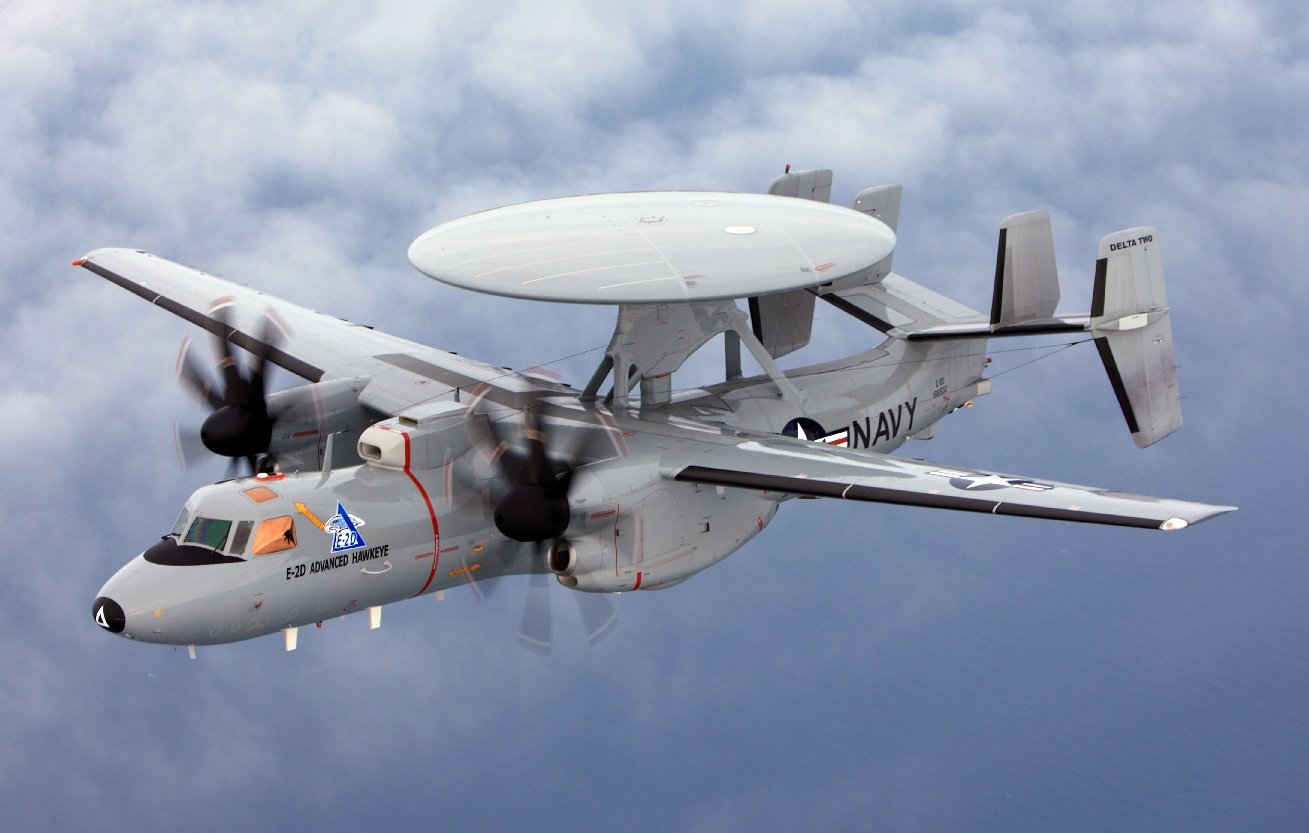
Once commissioned, USS John F. Kennedy is expected to operate a modern carrier air wing centered on the F-35C Lightning II, supported by airborne early warning, electronic warfare aircraft, and future unmanned systems. With builder’s sea trials complete, the carrier’s progression toward delivery represents another step in the Navy’s effort to sustain carrier-based naval aviation and meet long-term strategic requirements.
——— End of Article ———