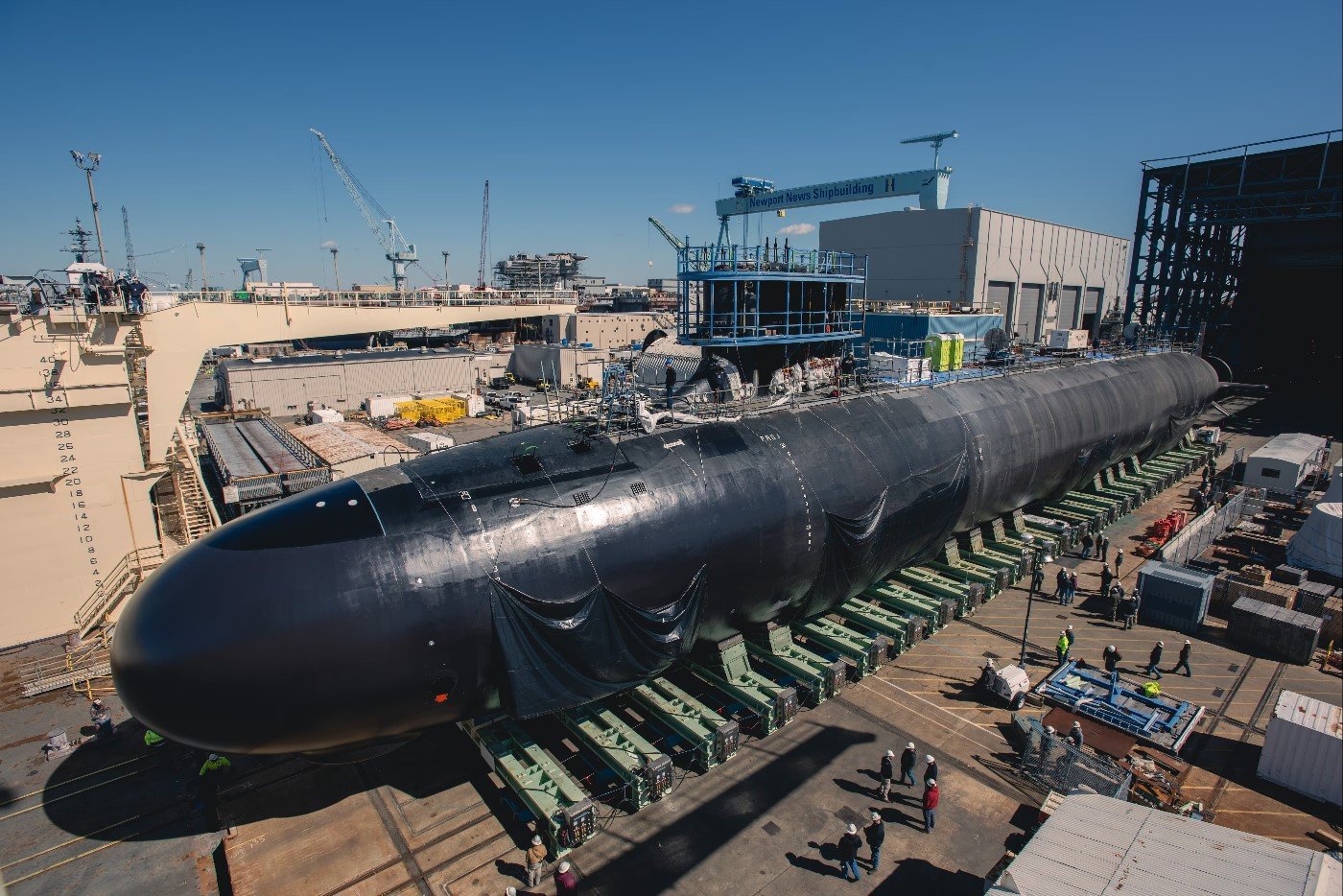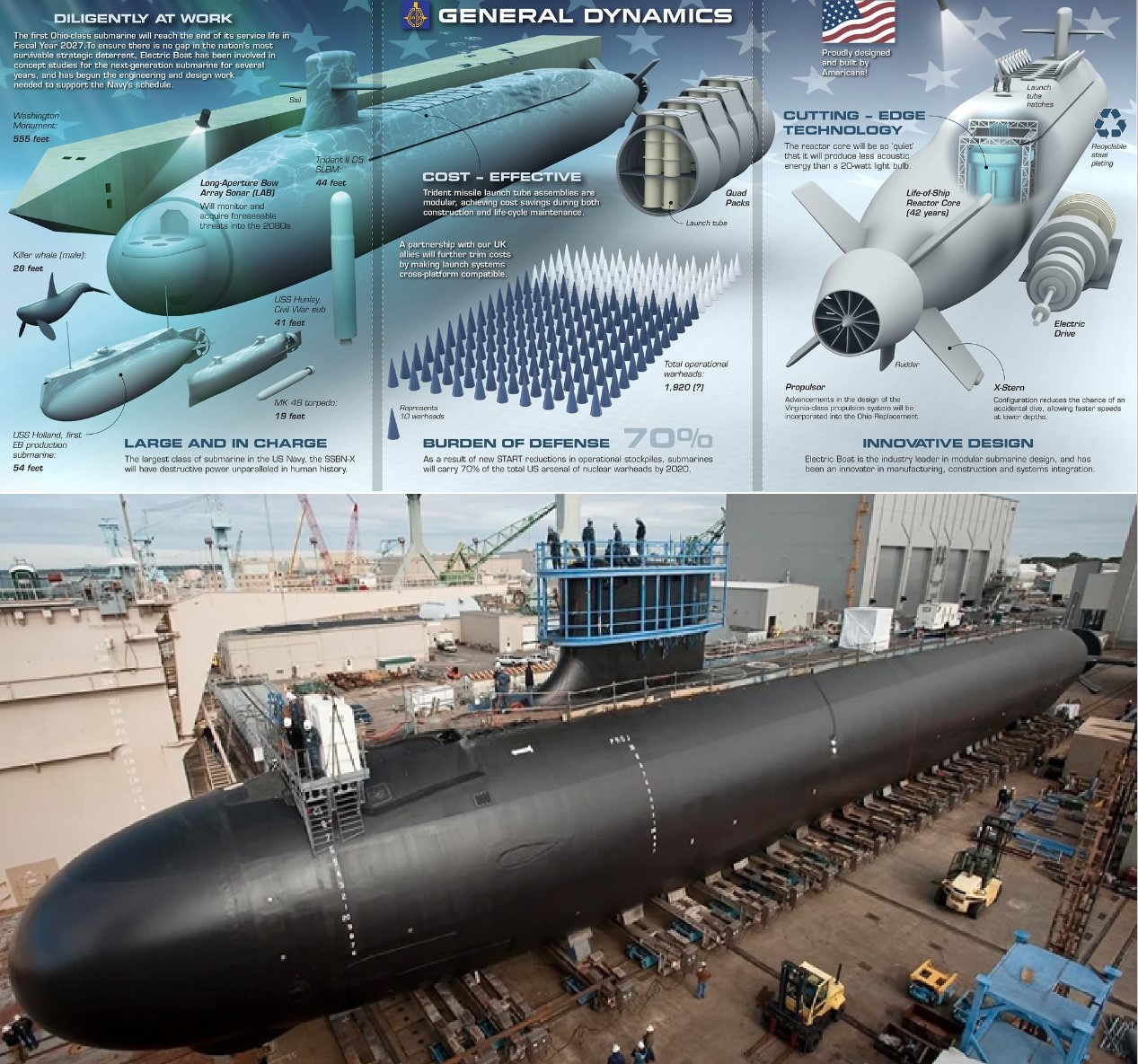
WASHINGTON : The U.S. Navy’s Columbia-Class Ballistic Missile Submarine Program is facing mounting Schedule and Cost Pressures that are reshaping the timeline for replacing the nation’s aging Undersea Nuclear Deterrent. Navy officials now project that the lead submarine, USS District of Columbia, will be delivered in 2029, roughly 17 Months later than the Statutory Delivery Date of October 2027.
The revised schedule also shifts the submarine’s first Operational Strategic Deterrent Patrol to approximately 2031. That adjustment comes as the Navy prepares to begin retiring its existing Ohio-Class SSBN Fleet starting in 2027–2028, narrowing the buffer that was built into the transition plan to maintain Continuous At-Sea Deterrence.
Central Role In The Nuclear Force
The Columbia Program is designed to replace all 14 Ohio-Class Ballistic Missile Submarines with a new fleet of 12 Boats. Each Columbia-Class Submarine will carry 16 Trident II D5 Ballistic Missiles and, collectively, the class is expected to deploy roughly 70 Percent of the United States’ Operationally Deployed Nuclear Warheads. For that reason, Navy leadership has repeatedly described the program as its Highest Acquisition Priority.
The replacement strategy was structured around a tightly sequenced “One-Out, One-In” approach. As each Ohio-Class Submarine reaches the end of its service life, a Columbia-Class Boat was expected to enter service, preserving the Navy’s requirement to have a minimum number of Ballistic Missile Submarines available for Patrol and Surge Operations. The delay to the first Columbia hull disrupts that alignment and places increased reliance on extending the Service Lives of several Ohio-class submarines beyond their original Design Expectations.
Industrial Constraints And Workforce Pressures
Construction of the Columbia Class is shared between General Dynamics Electric Boat in Connecticut and HII Newport News Shipbuilding in Virginia. Both shipyards are also responsible for producing Virginia-Class Attack Submarines, creating sustained pressure on Facilities, Labor, and Suppliers.
Navy assessments and oversight reviews have identified Workforce Shortages as a persistent challenge. The construction of Ballistic Missile Submarines requires experienced Welders, Pipefitters, Electricians, and Engineers with specialized training and Security Clearances. While hiring and training pipelines have expanded in recent years, the pace of workforce growth has not fully offset Retirements and Attrition, particularly among Highly Skilled Trades.
Supply Chain Performance has also been uneven. Components unique to ballistic missile submarines, including Missile Tube Structures, Propulsion Equipment, and certain Electrical Systems, have experienced Delivery Delays and Quality Issues. Many suppliers operate with limited Surge Capacity, a condition that traces back to decades of reduced submarine production following the Cold War.
Interaction With The Virginia-Class Program
The Columbia Schedule has also been affected by its interaction with the Virginia-Class Attack Submarine Program, which continues to face its own Production Challenges. Although the Navy has attempted to prioritize Columbia Work within the shipyards, both programs draw from the same Industrial Base. Materials, Tooling, and Skilled Labor are often interchangeable between the two lines, making it difficult to isolate delays entirely.
Navy officials have stated that steps are being taken to stabilize Production Rates, including targeted investments in Supplier Capacity and revised Construction Sequencing. Even so, oversight bodies have noted that progress remains Uneven and vulnerable to further Disruption.
Cost Profile And Long-Term Commitments
Financially, the Columbia Program has continued to expand in scale. Current Navy estimates place the Total Construction Cost for the 12-submarine fleet at more than $130 Billion, making it the Most Expensive Shipbuilding Effort undertaken by the United States. When Research And Development, Operations, Maintenance, and eventual Decommissioning over an expected 42-Year Service Life are included, total Lifecycle Costs approach $350 Billion.
The Government Accountability Office has repeatedly cautioned that earlier Cost and Schedule Projections relied on optimistic assumptions about Workforce Growth, Supplier Performance, and Construction Learning Curves. GAO reports have emphasized that First-Of-Class Submarines historically encounter Technical and Integration Issues during Testing and Early Operations, factors that can drive additional delays if not carefully managed.
Managing The Transition Period
To bridge the gap created by the revised Columbia Timeline, the Navy plans to extend the Operational Lives of several Ohio-Class Submarines. These extensions involve additional Maintenance Periods and System Upgrades intended to preserve Safety and Reliability. While Navy officials say the Ohio Class remains capable, each extension increases Maintenance Demands and places additional strain on Aging Hulls And Systems.
The revised schedule does not yet reflect additional delays beyond the Lead Boat, but defense planners acknowledge that any further slippage during Construction, Testing, or Certification could compress the Transition Window further. As a result, the Columbia Program is now operating with Minimal Schedule Margin.
For the Navy, the challenge is to stabilize Production, strengthen the Industrial Base, and execute Testing And Certification without further delay, while simultaneously sustaining the existing Ohio-Class Fleet. The outcome of that effort will shape the Undersea Leg of the U.S. Nuclear Deterrent for decades to come.
——— End of Article ———