NATIONAL HARBOR, Md., — April 20, 2026 : The U.S. Navy will award the Engineering and Manufacturing Development (EMD) contract for its F/A-XX sixth-generation carrier-based fighter in August, Chief of Naval Operations Adm. Daryl Caudle confirmed on Monday at the Sea-Air-Space Conference 2026. The timeline follows a series of senior-level discussions between Navy leadership, the Pentagon, and Deputy Secretary of Defense Steve Feinberg, resulting in agreement to proceed with the long-delayed program.
The planned award represents a transition of the F/A-XX from concept and preliminary design into full development, marking a key milestone in the Navy’s effort to field a next-generation strike fighter for carrier air wings in the 2030s.
Program Role and Operational Requirements
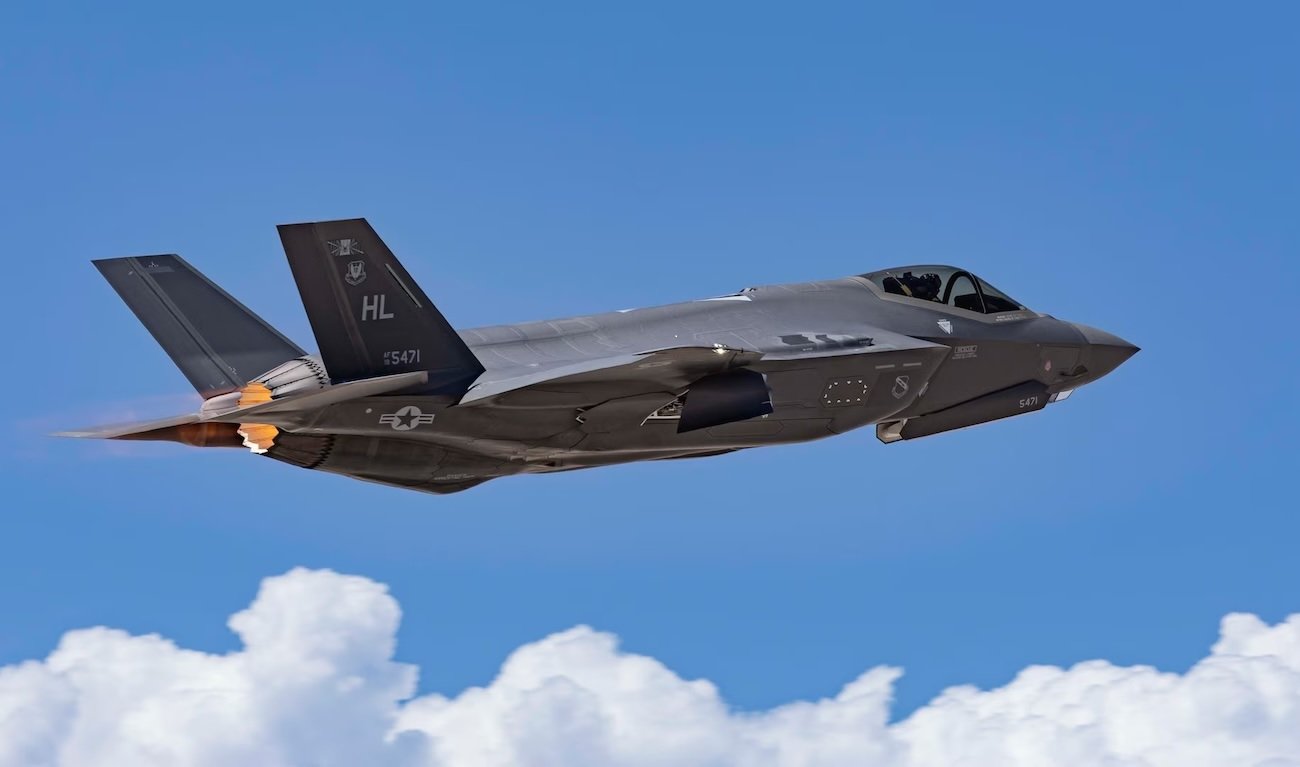
The F/A-XX is intended to replace the Boeing F/A-18E/F Super Hornet and the Boeing EA-18G Growler while complementing the Lockheed Martin F-35C Lightning II. It is being developed as a multirole platform capable of air combat, ground attack, surface warfare, and close air support, with additional roles in electronic warfare and intelligence, surveillance, and reconnaissance.
The aircraft is designed to operate in contested anti-access/area-denial (A2/AD) environments, with requirements including advanced stealth, increased combat radius, higher payload capacity, and compatibility with both Nimitz-class and Ford-class aircraft carriers. Navy officials have indicated the platform will provide approximately 25 percent greater range than the F-35C.
The program originated from a Navy request for information issued in 2012 and has since evolved into the crewed component of the service’s broader Next Generation Air Dominance (NGAD) family of systems, distinct from the Air Force’s parallel effort.
Industrial Competition and Contractor Selection
The competition for the EMD contract has narrowed to Boeing and Northrop Grumman. Lockheed Martin, initially part of the competition, was eliminated in March 2025 following reported difficulties in meeting Navy-specific requirements, including carrier suitability and advanced radar integration.
Adm. Caudle stated that industrial base considerations influenced the decision timeline, noting that Boeing has already been selected to produce the Air Force’s sixth-generation F-47 fighter, while Northrop Grumman remains heavily engaged in production of the B-21 Raider.
According to Caudle, the Department of Defense adopted a “check twice, cut once” approach to ensure that the selected contractor can meet schedule requirements without overextending existing production capacity.
Strategic Drivers and Threat Environment
The Navy’s decision to advance the F/A-XX program is driven by evolving threat conditions, particularly the expansion of advanced air defense systems among peer competitors and the increasing availability of sophisticated weapons to regional actors and non-state groups.
Navy leadership has assessed that current aircraft, including the F/A-18 series, will face growing limitations in survivability and operational effectiveness in high-threat environments over time. The F/A-XX is expected to address these challenges through a combination of low observable design, extended range, and integrated electronic warfare capabilities.
Technology and System Integration
The F/A-XX is being developed as part of a broader “family of systems” concept. It will incorporate manned-unmanned teaming (MUM-T) capabilities, enabling it to control multiple Collaborative Combat Aircraft (CCA), often described as semi-autonomous “loyal wingmen.”
The Navy is currently working with five companies—Anduril Industries, Boeing, General Atomics, Lockheed Martin, and Northrop Grumman—to develop these systems.
In addition, the aircraft will operate alongside the MQ-25A Stingray, which is expected to reach initial operational capability (IOC) later in 2026. The MQ-25A will provide carrier-based aerial refueling to extend the operational reach of both current and future carrier aircraft, including the F/A-XX.
The platform is also expected to feature an open architecture design, allowing rapid integration of new sensors, weapons, and software updates throughout its service life.
Funding, Budget Disputes, and Congressional Action
The program’s progression to an August 2026 contract award follows a period of budget uncertainty. In the Fiscal Year 2026 budget request, the White House and Pentagon proposed allocating approximately $74 million for the F/A-XX while suggesting delays due to concerns about managing two sixth-generation fighter programs simultaneously.
Congress subsequently intervened, restoring funding through a combination of appropriations and legislation, including the One Big Beautiful Bill Act. Lawmakers added approximately $897 million in one tranche and ultimately directed the Navy to proceed with a single EMD contract award. Additional funding actions increased total support to roughly $1.69 billion for fiscal year 2026, following earlier allocations including $750 million to support the final contractor selection process.
The Navy’s fiscal year 2027 budget request includes a further $140 million for continued development.
Program Timeline and Outlook
The F/A-XX program will formally enter the Engineering and Manufacturing Development phase following the August 2026 contract award. While specific design characteristics, payload configurations, and performance metrics remain classified, early conceptual designs from competing contractors have included tailless, twin-engine stealth configurations with options for manned or optionally unmanned operation.
Initial flight testing is projected toward the end of the decade, with initial operational capability expected in the mid-2030s.
The program is intended to ensure the continued effectiveness of U.S. Navy carrier air wings in contested environments, integrating with both existing platforms and emerging unmanned systems as part of a networked operational architecture.
——— End of Article ———